


Did you know that nearly 40% of Commercial Real Estate loans are refinanced too early? This is often because of bad prepayment terms or missing out on good market rates. This shows how important timing is in refinancing decisions.
Refinancing at the right time can save property owners a lot of money. They can avoid prepayment penalties and get better rates. But figuring out when to do this can be really hard.
Getting expert advice is key to understanding Commercial Real Estate Refinancing. It helps property owners make smart choices that fit their financial plans.
Key Takeaways
- Understanding prepayment penalties is crucial for avoiding unnecessary costs.
- Market rates significantly impact the refinancing process.
- Timing is everything in CRE Refinancing.
- Expert advice can help navigate complex refinancing decisions.
- Balancing prepayment penalties and market rates is key to successful refinancing.
The Strategic Importance of Refinance Timing
Knowing when to refinance can save you a lot of money over time. It can also lower your monthly mortgage payment. But, refinancing is a big decision that needs careful thought. You must consider market cycles, interest rate trends, and the benefits of refinancing early.
Market Cycles and Interest Rate Trends
Market cycles and interest rates are key to finding the best time to refinance. Interest rates are affected by the economy. Knowing these trends helps you make a smart choice. For example, when the economy is slow, interest rates drop, making it a good time to refinance.
The Cost-Benefit Analysis of Early Refinancing
Refinancing early can save you a lot on interest. But, think about the costs of refinancing, like penalties and fees. A detailed analysis will show if early refinancing is right for you.
By looking at market conditions and your goals, you can decide when to refinance. This could save you thousands and boost your financial health.
Understanding CRE Refinancing Fundamentals
Refinancing commercial real estate (CRE) is different from refinancing homes. Owners of commercial properties face complex loan structures and penalties. They also need to time their refinancing right to get the best deal.
Key Differences from Residential Refinancing
CRE refinancing is not like refinancing a home. Commercial loans are bigger and have more detailed checks. Also, lenders see commercial properties as investments that make money, which changes how they look at risk and loan terms.
Common CRE Loan Structures and Terms
It’s important to know about CRE loan types and terms for a smooth refinancing. These loans vary based on interest rates and how you pay them back.
Fixed-Rate vs. Variable-Rate Commercial Loans
Fixed-rate loans mean your monthly payments stay the same. But, variable-rate loans might start lower and could go up if rates rise. Your choice depends on how much risk you’re willing to take and what you think the market will do.
Typical Term Lengths and Amortization Schedules
CRE loans can last from 5 to 20 years. But, you might have to pay back the whole loan in a few years. This means you need to plan for refinancing or paying off the loan.
The best time to refinance is when your credit score or finances improve. Knowing these basics helps you navigate CRE refinancing well.
Types of Prepayment Penalties in Commercial Mortgages
When you think about refinancing a commercial mortgage, knowing about prepayment penalties is key. These penalties are fees for paying off a loan early. They can really affect your decision to refinance.
Defeasance Explained
Defeasance is a way to avoid prepayment penalties. It involves using government securities to match the loan’s payments. This method is complex but can save you money.
For example, a business might choose defeasance to refinance. They buy government securities that match the loan’s payments. This is good for loans with high penalties.
Yield Maintenance Calculations
Yield maintenance is another penalty type. It helps the lender make up for lost interest if you pay off early. The calculation compares the loan’s remaining payments to its current balance.
The formula is: Yield Maintenance = Present Value of Remaining Payments – Outstanding Loan Balance. This ensures the lender gets the same income as if you paid until the end.
Step-Down Prepayment Penalties
Step-down penalties decrease over time. For example, a 5% penalty in the first year drops to 4% in the second. This encourages refinancing later when penalties are lower.
Soft vs. Hard Prepayment Provisions
Prepayment rules can be soft or hard. Soft rules offer more flexibility, like partial payments or delayed prepayments. Hard rules are stricter and can have big penalties for early repayment.
| Prepayment Penalty Type | Description | Flexibility |
|---|---|---|
| Defeasance | Replaces collateral with government securities | High |
| Yield Maintenance | Compensates lender for lost interest | Low |
| Step-Down | Decreases over time | Medium |
Knowing about these penalties is crucial for commercial mortgage refinancing. By understanding the costs of prepayment, you can make better financial choices.
Defeasance: When and Why It Applies
Defeasance is key in commercial real estate (CRE) refinancing. It lets borrowers pay off loans early without big penalties. They replace the original collateral with government securities that match the loan’s cash flow.
The Mechanics of Defeasance
The defeasance process is detailed and involves several steps. First, the borrower picks a portfolio of government securities to swap for the original loan. A third-party defeasance consultant helps in choosing the right securities and managing the deal.
These securities are bought and kept in a separate account. They generate cash flows that pay off the original loan. This way, the borrower can pay off the loan early without penalty.
Cost Considerations and Calculations
The cost of defeasance can be high and includes several parts. A big factor is the securities pricing impact, which is the cost of buying the securities needed for defeasance.
Securities Pricing Impact
The price of securities for defeasance changes with market conditions. This includes interest rates and the availability of suitable securities. Borrowers need to work with their consultants to find the best deals and keep costs low.
Third-Party Costs in the Defeasance Process
Besides securities costs, borrowers face third-party costs. These include fees for legal advice, accounting, and defeasance consulting. These costs can add up fast, so it’s important to include them in the cost-benefit analysis of defeasance.
Understanding defeasance’s mechanics and costs helps commercial property owners make smart refinancing choices. This way, they can take advantage of good market conditions and save a lot of money.
Yield Maintenance: Calculating Your Potential Costs
Yield maintenance is important for commercial real estate borrowers. It’s a penalty for early loan repayment. It helps lenders get back the interest they would have made if the loan wasn’t prepaid.
The Mathematical Formula Behind Yield Maintenance
The yield maintenance formula helps lenders make up for lost interest. It’s based on the loan’s interest rate and the current market rate. The formula is:
| Variable | Description |
|---|---|
| PV | Present Value of remaining loan payments |
| R | Loan Interest Rate |
| r | Current Market Rate |
| n | Number of remaining payments |
The yield maintenance amount is found using this formula: Yield Maintenance = PV * (R – r).
Real-World Examples and Scenarios
Let’s say a commercial property has a $1 million loan at 6% interest. It has 5 years left. If the market rate is 4%, the penalty would be based on the difference.
For example, if the present value of payments is $800,000, the penalty is $16,000. This is 2% of $800,000. It’s the lender’s way of getting back lost interest.
In summary, knowing about yield maintenance is key. It helps borrowers understand the costs of refinancing their commercial real estate loans.
Call Protection Periods: Working Within the Timeline
Call protection periods are key when refinancing commercial properties. They help lenders by preventing early loan repayment. This ensures lenders get the expected return on their investment.
Understanding Lock-Out Periods
A lock-out period stops or heavily penalizes early loan repayment. Knowing these periods is essential for a smooth refinance. For example, a 5-year lock-out means big penalties for early repayment.
- Check your loan agreement for the lock-out period.
- Plan your refinance to avoid penalties.
- Try to negotiate with your lender to change the lock-out terms.
Strategies for Different Call Protection Structures
Each call protection structure needs its own strategy. For instance, a defeasance provision lets you prepay by replacing the original collateral with new securities. Knowing your loan’s call protection structure is crucial for a successful refinance.
“The key to navigating call protection periods is understanding the fine print of your loan agreement and planning according.”
Strategies include waiting out the lock-out, negotiating with the lender, or using financial tools to meet call protection rules. Each method has its benefits and should fit your financial goals.
Market Rate Analysis: When Lower Rates Justify Penalties
In a world where interest rates are falling, property owners must choose wisely. They can either refinance and risk penalties or keep their current loan. Looking at market rates is key, as it affects how much they can save by refinancing.
Break-Even Analysis Methods
To see if refinancing is worth it, owners need to do a break-even analysis. This means finding out when the savings from the new loan will cover the costs of refinancing. The formula looks at the rate difference, loan amount, and penalty cost.
Here’s how to do a simple break-even analysis:
- First, add up all the costs of refinancing, including penalties.
- Then, figure out how much you’ll save each month with the new rate.
- Lastly, divide the total cost by the monthly savings to find when you’ll break even.
Future Value Considerations
It’s also important to think about the future value of the refinanced loan. This means looking at how market rates might change over time.
Interest Rate Forecasting Tools
Using interest rate forecasting tools can help predict future rate changes. These tools look at past data, economic signs, and market trends to guess rate movements.
Economic Indicators to Monitor
Several economic indicators can show when interest rates might change. Important ones include inflation, GDP growth, and unemployment rates. Watching these can help owners make smart refinancing choices.
The Refinancing Break-Even Point Calculation
Knowing the break-even point is key to figuring out if refinancing a commercial real estate loan makes sense. It helps investors and property owners see if the benefits of refinancing are worth the costs. This includes prepayment penalties and other fees.
The break-even analysis is a simple yet powerful tool. It compares the costs of refinancing with the expected savings. To do this right, you need to look at the new interest rate, loan terms, and any costs like origination fees and prepayment penalties on the current loan.
Factoring in All Costs and Savings
When figuring out the break-even point, you must include all refinancing costs. These are:
- Prepayment penalties on the existing loan
- Origination fees for the new loan
- Closing costs
- Any other associated fees
The savings from refinancing are mainly from lower interest payments. Let’s look at an example:
| Costs | Amount |
|---|---|
| Prepayment Penalty | $50,000 |
| Origination Fee | $20,000 |
| Closing Costs | $15,000 |
| Total Costs | $85,000 |
The table shows the total costs for refinancing are $85,000. To break even, the monthly savings from the new loan must cover this amount over time.
“The break-even analysis is not just about numbers; it’s about understanding the strategic implications of refinancing on your business.”
Time Value of Money in Refinancing Decisions
The time value of money (TVM) is key in refinancing decisions. It says money now is more valuable than money later because it can earn more. When figuring out the break-even point, it’s important to think about TVM to get the true value of future savings.
For example, a dollar saved today is more valuable than a dollar saved a year later because it can earn interest. So, when looking at refinancing savings, it’s important to discount future savings to their present value.
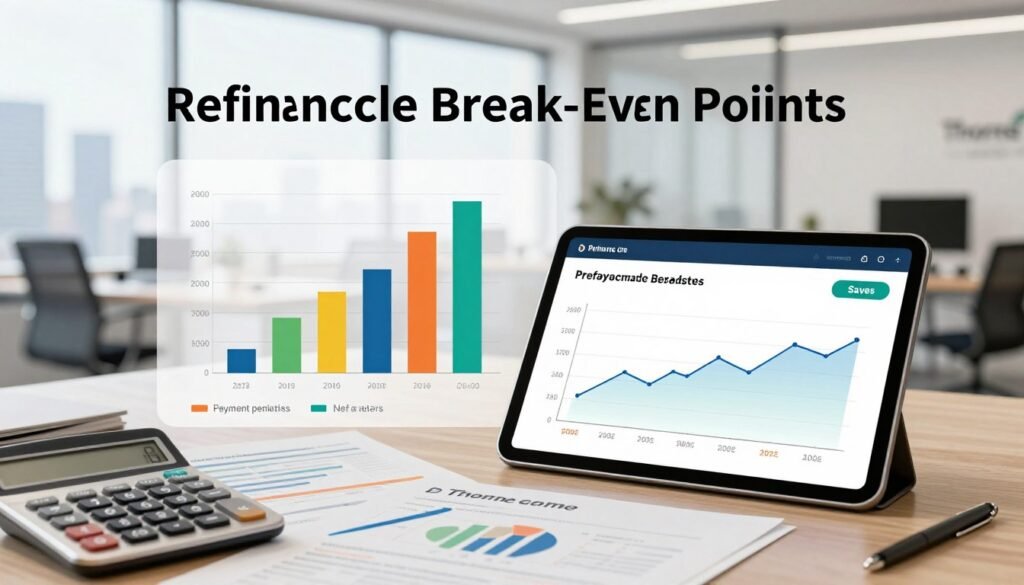
By understanding and using these principles, investors can make better decisions about refinancing their commercial real estate loans. This ensures the benefits are greater than the costs in the long run.
Negotiating Prepayment Terms in Your Original Loan
Negotiating prepayment terms in your original loan can help avoid penalties. It’s important to know your loan agreement well. This way, you can avoid unexpected financial problems. “A well-negotiated loan is a safeguard against future financial strain,” say financial experts.
Lender Flexibility Points
Lender flexibility is key for prepayment terms. Some lenders offer step-down prepayment penalties that get smaller over time. It’s a good idea to ask about these options during talks.
Knowing about lender flexibility points can help you negotiate better. These points can be used to get better terms. This might mean a higher interest rate or extra fees upfront.
Alternative Structures to Consider
Looking into alternative structures can also help. For example, a defeasance clause lets you use government securities as collateral. This way, you can meet your loan obligation without prepaying the loan.
Another choice is a soft prepayment provision. This allows for prepayment but with less severe penalties than usual.
By exploring these options, borrowers can handle the complex world of commercial real estate financing. They can also reduce the risk of prepayment penalties.
Tax Implications of Prepayment Penalties
When you think about refinancing, it’s key to look at the tax side of prepayment penalties. These penalties, like defeasance or yield maintenance, can change how much you pay in the long run. They can also affect your finances in ways you might not expect.
Deductibility Considerations
How you can deduct prepayment penalties is a big deal. Usually, these penalties are seen as business expenses you can write off. But, it depends on the loan and why you own the property.
- Deductible Expenses: Prepayment penalties are often seen as business expenses. This means they can lower your taxable income.
- Consult a Tax Professional: Talking to a tax expert can help you understand how these penalties apply to your case.
Timing Refinances for Tax Advantages
Choosing the right time to refinance can help you save on taxes. Knowing how penalties affect your taxes can guide your decisions.
- Think about the tax year: Refinancing at tax year’s end might have different tax benefits than at the start.
- Look at your finances: Check your current money situation and future earnings to pick the best refinance time.
Case Studies: Successful CRE Refinancing Timing Strategies
Refinancing commercial real estate (CRE) at the right time can save a lot of money. This section looks at two examples of successful refinancing strategies. They show how these moves can lead to big financial gains and long-term benefits.
Office Building Refinance During Rate Drop
When interest rates fell, a smart investor refinanced an office building. This move cut down monthly payments and boosted cash flow.
Analysis of Penalty vs. Savings
The penalty for early refinancing was high, but the savings from lower rates were greater. The penalty was paid back in just six months.
Long-Term Financial Impact
In the long run, refinancing brought big financial wins. The property’s value went up because of better cash flow. This made it more appealing to buyers. The investor could then use this increased value to fund other projects.
Multi-Family Property Refinance Before Maturity
Another example was refinancing a multi-family property before its loan was up. The owner expected interest rates to go up and wanted to lock in a good rate.
Analysis of Penalty vs. Savings
Refinancing early meant paying a penalty, but it was worth it. The owner saved thousands each year on interest.
Long-Term Financial Impact
The long-term effects were good, with the property’s NOI going up. This increase in NOI raised the property’s value. This boosted the owner’s wealth.
These examples show that with the right planning, CRE refinancing can lead to big financial gains. Understanding when to refinance can help investors make smart choices and increase their returns.
Working with Financial Advisors on Refinance Timing
Collaborating with financial advisors is key for the best refinance timing. They offer deep knowledge and experience in commercial real estate (CRE) refinancing. This helps property owners understand the complex process better.
When to Consult Specialists
It’s important to talk to financial advisors at the right time. This usually happens when you’re looking at refinancing options or when market conditions are changing. Advisors can share insights on market trends and guide you in making smart choices.
Some signs it’s time to seek a specialist include:
- Significant changes in interest rates
- Shifts in market dynamics
- Upcoming loan maturities
Questions to Ask Your Advisor
When working with financial advisors, it’s vital to ask the right questions. This ensures you get the most from their expertise and make informed decisions about your refinance timing.
Consider asking these questions:
| Question | Purpose |
|---|---|
| What are the current market trends? | Understand the context of your refinance decision |
| How will prepayment penalties affect my refinance? | Calculate the cost-benefit analysis of early refinancing |
| What are the potential savings from refinancing now? | Evaluate the financial impact of your decision |

By working closely with financial advisors and asking the right questions, you can optimize your refinance timing. This can lead to significant financial benefits.
Conclusion
Effective CRE refinancing needs a deep understanding of prepayment penalties and market rates. The timing of refinancing is key to getting the most benefits and saving costs.
Property owners should analyze market cycles and interest rate trends to make smart decisions. They need to look at different factors like the type of prepayment penalty and call protection periods. They also need to calculate the break-even point.
CRE refinancing success also depends on negotiating prepayment terms and knowing the tax implications. Working with financial advisors and looking at real-world examples helps property owners create a strategy for the best refinance timing.
The goal of CRE refinancing is to find the right balance between prepayment penalties and market rates. This balance can lead to big savings and improve a property owner’s financial health.