
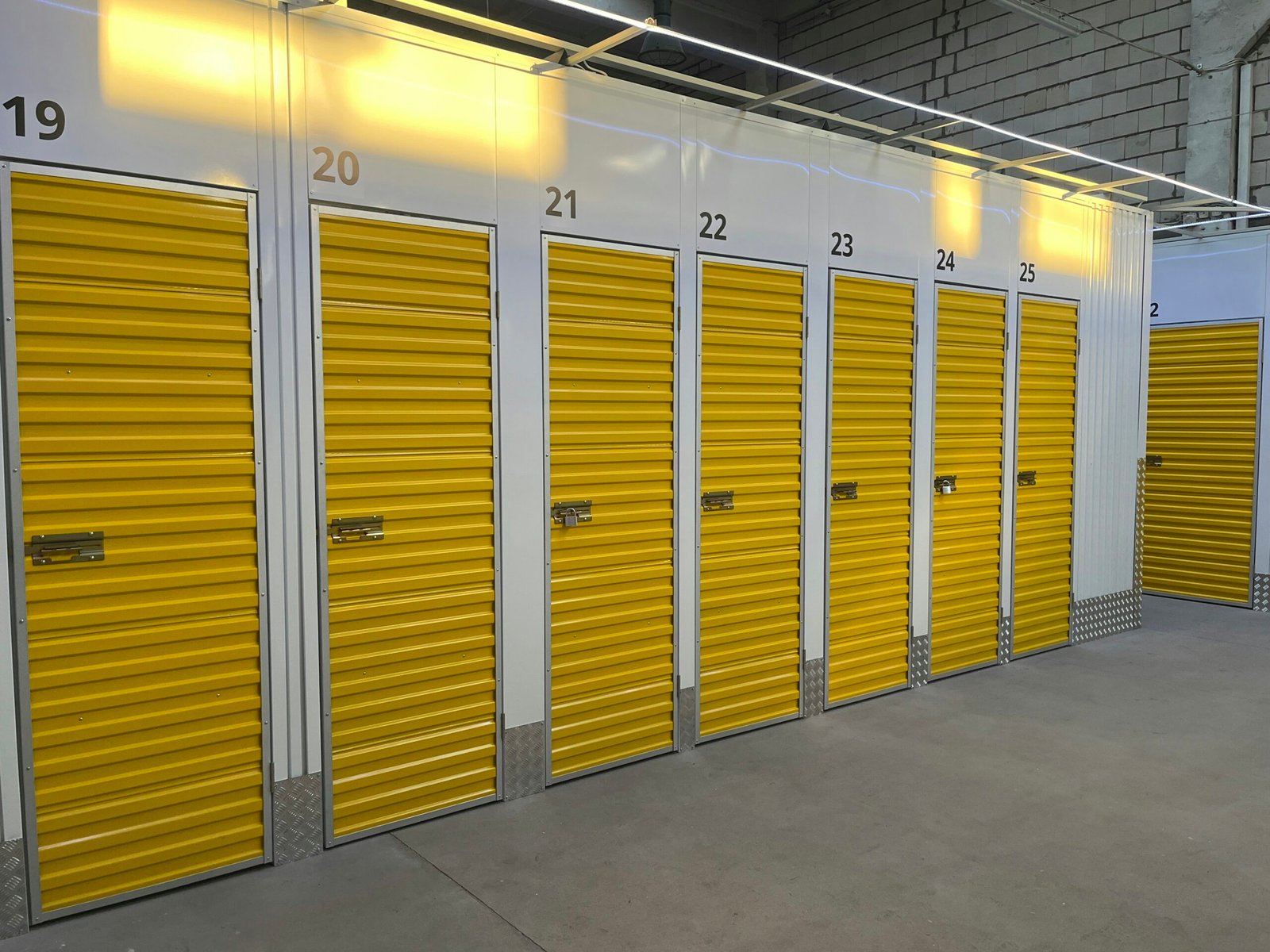
The U.S. self-storage sector is stable, with an average occupancy rate of 89-91%. This is according to Stortrack’s Self Storage Industry Statistics for 2025. This steady demand shows great potential for growth and investment.
Understanding the financial aspects is key for investors and developers. Loan options and underwriting criteria are crucial in self-storage financing. They can either make or break a project.
Getting through the complex world of self-storage financing needs a deep understanding. This guide will give you the insights to make smart choices.
Key Takeaways
- Understanding the current state of the self-storage industry
- Exploring available loan options for self-storage projects
- Learning about the underwriting criteria for self-storage loans
- Analyzing occupancy trends and their impact on financing
- Navigating the complexities of self-storage financing
Understanding the Self-Storage Industry Landscape
The self-storage industry is changing fast. This is because of more people moving to cities, wanting to travel, and changing how they live. This shift means more people need places to store their stuff, making it a great time for investors and developers.
Current Market Trends and Growth Projections
The self-storage market is growing fast. Research And Markets says it will grow by 6% each year. By 2034, it’s expected to hit USD 104.7 billion.
This growth comes from more people living in cities, wanting to travel, and needing extra storage. It’s key for those in the industry to keep up with these trends and projections.
Why Self-Storage Is Considered a Resilient Asset Class
Self-storage is seen as a strong investment because it does well even when the economy is down. People and businesses always need places to store things, no matter the economy.
It also offers steady income from rent. This makes it appealing to investors looking for reliable returns.
Self-Storage Financing Explained
Understanding self-storage financing is key for investors in this growing field. It’s different from other commercial real estate financing. Knowing these differences is crucial.
How Self-Storage Financing Differs from Other Commercial Real Estate
Self-storage facilities are a unique asset class in commercial real estate. They make money mainly from renting out individual storage units. This makes their income more varied. Lenders see self-storage as a stable investment because of its steady demand and simple operations.
Key differences in self-storage financing include:
- Simplified lease structures
- Diversified revenue streams
- Lower tenant turnover
- Less susceptibility to economic downturns
Key Financial Metrics Lenders Evaluate
Lenders look at several financial metrics when reviewing self-storage loans. The Debt Service Coverage Ratio (DSCR) is very important. It shows if a property can pay off its loan from its income.
| Financial Metric | Description | Importance |
|---|---|---|
| DSCR | Debt Service Coverage Ratio | High |
| LTV | Loan-to-Value Ratio | High |
| Occupancy Rate | Percentage of occupied units | Medium |
A financial expert says, “A high DSCR shows a self-storage facility’s good financial health and debt service ability.” Lenders also check the loan-to-value (LTV) ratio and occupancy rates.
“A well-structured self-storage loan portfolio can provide stable returns even in volatile economic conditions.”
Types of Self-Storage Projects That Qualify for Financing
Self-storage financing is available for many project types. It meets different investor needs and goals. Lenders support various initiatives, from starting new projects to improving existing ones.
New Construction Projects
Financing is available for new self-storage construction. This lets developers create new facilities. Lenders check if the project is feasible based on demand, location, and cash flow.
Experts say, “The demand for self-storage keeps growing. This is because of urbanization and the need for flexible storage solutions.”
Acquisition of Existing Facilities
Investors can get financing to buy existing self-storage facilities. Lenders look at the property’s value, income potential, and the buyer’s credit. This financing helps investors grow their portfolios and use existing infrastructure.
Refinancing Opportunities
Owners of self-storage facilities can refinance to use equity, improve cash flow, or change debt. Refinancing can help optimize investment returns and adjust to market changes.
A financial analyst says, “Refinancing is a smart choice for self-storage owners wanting to use their assets wisely.”
Conventional Bank Loans for Self-Storage
Conventional bank loans are a top choice for financing self-storage facilities. Banks and financial institutions provide these loans. They offer benefits for investors and developers in the self-storage field.
Terms, Rates, and Structures
These loans come with competitive interest rates and structured repayment plans. Loan terms can last from 5 to 10 years. Amortization periods can go up to 25 years or more.
The interest rates depend on the market, the borrower’s credit, and the property’s performance.
Key Features of Conventional Bank Loans:
- Competitive interest rates
- Structured repayment plans
- Flexible loan terms
- Amortization periods up to 25 years
Advantages and Limitations
Conventional bank loans have several benefits. They offer lower interest rates and the chance to get larger loans. But, they also have downsides.
They require stricter criteria and a big down payment. This can limit who can get these loans.
| Advantages | Limitations |
|---|---|
| Lower interest rates | Stricter underwriting criteria |
| Larger loan amounts | Significant down payment required |
| Structured repayment plans | Potential for prepayment penalties |
In conclusion, conventional bank loans are a good option for self-storage projects. They offer competitive terms and rates. Knowing the pros and cons is key for smart decisions in the self-storage industry.
SBA Loan Options for Self-Storage Facilities
SBA loans are a great way to finance self-storage facilities. They offer good terms and flexible payment plans. This makes them popular among investors and developers.

SBA 7(a) Loan Program
The SBA 7(a) loan program is great for many business needs. It’s perfect for buying or building self-storage facilities. It has flexible terms and low interest rates, making it a top choice for financing.
SBA 504 Loan Program
The SBA 504 loan program is for long-term investments. It’s great for self-storage owners who want to grow or update their properties. It offers low down payments and long repayment times.
Eligibility Requirements
To get an SBA loan, self-storage facilities need to meet certain criteria. They must be for-profit, in an eligible industry, and meet size standards. Borrowers also need to show they can repay the loan and have good credit.
| Loan Program | Maximum Loan Amount | Down Payment | Use of Funds |
|---|---|---|---|
| SBA 7(a) | $5 million | Varies | Working capital, equipment, real estate |
| SBA 504 | $5.5 million | 10%-20% | Fixed assets, real estate |
CMBS Loans in the Self-Storage Sector
CMBS loans are key for self-storage projects, offering big funding. They are great because they have fixed rates. This makes them stable and easy to plan for investors.
Structure and Characteristics
CMBS loans are non-recourse, so the borrower isn’t personally responsible if the loan defaults. The loan is secured by the property. This is good for investors because it reduces their risk.
These loans also have longer terms, usually 5 to 10 years. This gives investors more freedom to manage their properties.
CMBS loans have fixed rates and can fund big self-storage projects. They are often used for big deals, like buying a lot of properties or starting new projects.
When CMBS Financing Makes Sense
CMBS financing is good for investors who want a lot of money without personal risk. It’s best for big projects or if you want a fixed rate. You should think about CMBS loans if your property has strong cash flow.
CMBS loans are a strong choice for self-storage investors. They provide the money needed for growth and help manage risks.
Agency Financing Through Fannie Mae and Freddie Mac
Fannie Mae and Freddie Mac offer special financing for self-storage owners. They provide competitive rates and flexible terms. This makes them a great choice for investors and developers.
Program Guidelines
Fannie Mae and Freddie Mac have clear rules for their financing. They set limits on loan amounts and LTV ratios. For example, Fannie Mae loans can be from $1 million to $50 million, with up to 80% LTV for some properties.
To apply, you need to follow several steps. First, there’s the pre-application. Then, underwriting and closing. You’ll need to share financial details, appraisals, and business plans. Lenders check this to see if you can repay the loan.
Benefits for Self-Storage Owners
Agency financing through Fannie Mae and Freddie Mac has many perks. The interest rates are competitive, and the terms are flexible. This helps with cash flow. Plus, the credit requirements are often easier than with regular loans.
Another big plus is the chance to get bigger loans. This is great for financing large projects. Also, working with Fannie Mae and Freddie Mac can make you more attractive to other lenders.
| Program Features | Fannie Mae | Freddie Mac |
|---|---|---|
| Loan Amount Range | $1 million – $50 million | $1 million – $50 million |
| Maximum LTV Ratio | 80% | 80% |
| DSCR Requirement | 1.25x | 1.25x |
Knowing the rules and benefits of Fannie Mae and Freddie Mac’s financing can help self-storage owners. It guides them through the complex world of financing. This knowledge is key to getting the funding needed to grow their businesses.
Private Equity and Hard Money Loan Options
In the world of self-storage financing, private equity and hard money loans are great alternatives to bank loans. They are perfect for projects that need to move fast or have special needs that banks can’t handle.
These financing options are flexible and quick, making them great for some self-storage projects. Here are some important points to think about:
Short-Term Financing Solutions
Private equity and hard money loans are great for short-term needs. They provide the money needed for self-storage projects that must be done fast. These loans are useful for:
- Renovation or redevelopment projects
- Fix-and-flip strategies
- Bridging financial gaps until long-term financing is secured
Cost Considerations and Use Cases
While private equity and hard money loans have many benefits, they also have higher interest rates than traditional loans. It’s important to consider these costs and the benefits. Here are some things to keep in mind:
- Interest Rates: Higher than traditional loans, reflecting the increased risk taken by lenders.
- Fees: Origination fees and other charges can add to the overall cost.
- Use Cases: Ideal for projects requiring quick execution, renovation, or when traditional financing is not an option.
Understanding private equity and hard money loans helps self-storage investors make smart financing choices.
Self-Storage Loan Structure and Terms
It’s key to understand self-storage loan structures and terms well. This knowledge helps in making smart financing choices. The right loan structure and terms can make a self-storage project work well.
Fixed vs. Variable Rate Options
Self-storage loans come with fixed or variable interest rates. Fixed-rate loans mean your monthly payments stay the same. On the other hand, variable-rate loans can change with the market, possibly altering your payments. It’s a trade-off between knowing what to expect and the chance to save with variable rates.
Amortization Periods and Balloon Payments
The amortization period affects how your monthly payments are figured out. Longer periods can lower your monthly costs but increase the total interest paid. Some loans require balloon payments, a big payment at the end. It’s important to plan for these big payments.
Prepayment Penalties and Exit Strategies
Lenders might charge prepayment penalties if you pay off early. Knowing about these penalties is vital for a good exit plan. Think about if you might need to refinance or sell before the loan ends.
By looking closely at loan structures and terms, self-storage investors can make better choices. This helps them navigate the financing world more effectively.
Understanding Self-Storage Loan Underwriting Criteria
Knowing the underwriting criteria for self-storage loans is key for investors and developers. Lenders look at different metrics to decide if a loan is good. Knowing these can help get a loan approved.

Property Performance Metrics
Lenders check how well a property does financially. They look at revenue growth, operating costs, and net operating income (NOI). A property that does well financially is more likely to get good loan terms.
Occupancy Trends and Requirements
Occupancy rates are very important for lenders. They want to see a certain occupancy rate to make sure the property can pay back the loan. Keeping occupancy rates high helps get a loan approved.
Market Analysis Factors
A good market analysis is also key. Lenders look at local competition, demographic trends, and demand to see if a property will succeed. A thorough analysis can be the difference in getting a loan.
To improve your chances of getting a self-storage loan, focus on these areas. Work closely with lenders and provide all the necessary information. This will help your loan application stand out.
Debt Service Coverage Ratio (DSCR) Requirements
The Debt Service Coverage Ratio (DSCR) is a key metric lenders use to evaluate self-storage loan applications. It measures a property’s ability to generate enough income to cover its debt payments.
How DSCR Is Calculated for Self-Storage Properties
DSCR is calculated by dividing the property’s Net Operating Income (NOI) by its annual debt service. For example, if a self-storage facility has an NOI of $200,000 and an annual debt service of $150,000, its DSCR would be 1.33 ($200,000 ÷ $150,000). Lenders usually look for a DSCR that shows the property can easily pay its debts.
Minimum DSCR Thresholds by Lender Type
Different lenders have different minimum DSCR requirements. Conventional lenders often require a DSCR of at least 1.2 to 1.5. For instance, a lender might ask for a minimum DSCR of 1.3 for a self-storage loan. On the other hand, more cautious lenders or those dealing with riskier projects might demand a DSCR of 1.5 or higher. Knowing these thresholds is key for borrowers to make their loan applications stand out.
Loan-to-Value Considerations in Self-Storage Financing
In self-storage financing, LTV matters a lot. It affects the loan’s terms and if it’s approved. Lenders look at the loan-to-value ratio to see how risky it is to lend on self-storage properties.
Maximum LTV Ratios by Loan Type
There are different loan types for self-storage financing. For example, conventional bank loans usually offer LTV ratios from 70% to 75%. CMBS loans might go up to 80%. It’s important for borrowers to know these differences to pick the right financing.
Conventional Bank Loans: Typically offer LTV ratios between 70% and 75%.
CMBS Loans: May offer higher LTV ratios, up to 80%, but often come with less favorable terms.
Impact of LTV on Interest Rates and Terms
The LTV ratio also affects the interest rates and terms of self-storage loans. Loans with higher LTV ratios are seen as riskier. This can lead to higher interest rates and stricter repayment terms. Borrowers should think about their LTV ratio to get the best loan conditions.
Interest Rates: Higher LTV ratios may result in higher interest rates due to increased lender risk.
Repayment Terms: Loans with lower LTV ratios often have more favorable repayment terms, including longer amortization periods.
Economic Conditions Affecting Self-Storage Financing
It’s key to know how the economy impacts self-storage financing. The self-storage industry stands strong even when the economy is down. Lenders see it as a safe bet. But, the economy can change how you get loans and what you pay.
Interest Rate Environment Impact
Interest rates play a big role in self-storage financing. Low rates make borrowing cheaper, encouraging more investment. But, high rates can make loans pricier, slowing down investment. Important things to think about include:
- The current interest rate environment and its impact on borrowing costs
- How interest rate changes affect loan terms and conditions
- Strategies for dealing with interest rate changes in self-storage financing
Recession Resilience and Lender Confidence
Self-storage is seen as a safe choice during tough times. People might need storage for their stuff when they downsize or face financial issues. This makes lenders more confident, making it easier to get financing for self-storage projects. Important things that affect lender confidence include:
- How self-storage has done in past recessions
- Current market trends and how full facilities are
- The overall economic outlook and its effect on self-storage
Knowing these points helps investors and developers deal with self-storage financing, even when the economy is tough.
Navigating the Self-Storage Loan Application Process
Understanding the self-storage loan application process is key to getting the funding you need. It involves several important steps that need careful preparation and detail.
First, knowing the required documentation is crucial. Lenders ask for detailed financial statements like income statements and balance sheets. You might also need to provide business licenses, property appraisals, and insurance details.
Required Documentation
The list of documents needed for a self-storage loan can be long. You’ll need to share financial data, such as past occupancy rates and rental income. Lenders might also want to know about the property’s management and any debts.
Business Plan Requirements
A solid business plan is vital for the loan application. It should explain how you plan to manage the property, including marketing and future plans. A good plan shows lenders you understand the property’s potential and have a clear investment strategy.
By knowing what documents and plans are needed, you can boost your chances of getting a self-storage loan. This will help you reach your investment goals.
Working with Lenders Specializing in Self-Storage
When you need financing for self-storage projects, it’s smart to work with lenders who know this field well. They understand the unique challenges and needs of the self-storage industry.
Benefits of Industry-Specific Lending Expertise
Lenders with industry-specific lending expertise offer great insights and help during the loan application. They know the self-storage market well. This lets them create financing plans that fit your needs perfectly.
Building Relationships with Self-Storage Lenders
Building relationships with self-storage lenders can get you better loan terms. It makes the financing process easier. With a good relationship, you might find more competitive financing options.
Working with lenders who focus on self-storage can really help you get the right financing for your project.
Conclusion
Understanding self-storage financing is key for investors and developers. The demand for storage facilities is growing. This is due to urbanization and more people moving around.
There are many loan options available. These include bank loans, SBA loans, CMBS loans, and private equity financing. Each has its own benefits and challenges. It’s important to carefully consider these options and understand the underwriting criteria.
By understanding self-storage financing, investors and developers can make smart choices. This knowledge helps them succeed in the industry. Keeping up with the latest trends and financing options is crucial for finding new opportunities in self-storage financing.