


The global hospitality market is changing fast. New hotel types like select-service and limited-service hotels are on the rise. This change is due to more people wanting hotel rooms and the introduction of fresh ideas.
Limited-service hotels are gaining fans for their simple, quick stays. On the other hand, full-service hotels offer a wide range of amenities and services. Knowing the financing options for these hotel types is key for investors and developers aiming to meet the growing demand.
Key Takeaways
- Understanding the differences between limited-service and full-service hotels is essential for investors.
- Financing options vary significantly between the two types of hotels.
- The global hospitality market is seeing a rise in innovative hotel concepts.
- Investors must consider the unique characteristics of each hotel type when making financing decisions.
- The demand for hotel rooms continues to drive growth in the hospitality industry.
The Evolution of Hotel Types in the American Market
The U.S. hotel scene is changing. New types of hotels are popping up to meet different traveler needs. This change comes from what people want, new tech, and hotels trying to stand out.
Defining Limited-Service Hotels
Limited-service hotels are all about affordable stays. They have minimalist room designs and limited amenities. They’re perfect for travelers who want a simple, clean place to stay without spending a lot.
Defining Full-Service Hotels
Full-service hotels offer a lot more. They have on-site dining, fitness centers, and concierge services. These hotels are for those who want a fancy and easy stay.
Emerging Hybrid Models
New hybrid hotel models are showing up. They mix the best of both worlds. These hotels aim to be affordable yet still offer important amenities, attracting more guests.
Operational Fundamentals That Impact Financing Decisions
Financing decisions for hotels are greatly influenced by their operational basics. How a hotel runs impacts its profits, sustainability, and appeal to investors and lenders.
Staffing Requirements and Labor Costs
Staffing and labor costs are key factors in hotel financing. Full-service hotels need more staff for their wide range of services. This means higher labor costs, affecting overall expenses.
Revenue Streams: Single vs. Multiple
Diversity in revenue streams is vital. Limited-service hotels mainly earn from room bookings. Full-service hotels, with more services like food and spa, have more revenue streams. This can lower financial risks and boost returns.
| Hotel Type | Primary Revenue Stream | Additional Revenue Streams |
|---|---|---|
| Limited-Service | Room Bookings | Limited |
| Full-Service | Room Bookings | Food & Beverage, Spa, Other Amenities |
Operational Efficiency Comparisons
Operational efficiency is key for hotel finances. Full-service hotels need advanced management to stay efficient. Limited-service hotels, with simpler operations, control costs better.
Understanding these basics helps investors and lenders make better financing choices. The differences in staffing, revenue, and efficiency between hotel types affect their financial health.
Financial Performance Metrics That Drive Investment
Financial metrics are key in hotel investment decisions. They help investors see potential returns and make smart choices.
RevPAR and ADR Expectations by Hotel Type
Revenue Per Available Room (RevPAR) and Average Daily Rate (ADR) are important. They change a lot between limited-service and full-service hotels. Limited-service hotels aim for high occupancy to boost RevPAR. Full-service hotels focus on ADR because of their complex revenue.
RevPAR and ADR Comparison:
| Hotel Type | RevPAR | ADR |
|---|---|---|
| Limited-Service | $80 | $100 |
| Full-Service | $120 | $180 |
Profit Margin Differentials
Profit margins vary between limited-service and full-service hotels. Limited-service hotels have higher Gross Operating Profit (GOP) margins. This is because of their simpler operations and lower labor costs.
Data Point: Select-service hotels can have even higher GOP margins because of their lower costs.
Break-Even Analysis Comparison
Break-even analysis is vital for investors. It shows when an investment will start making money. The break-even point changes between limited-service and full-service hotels. This is because of different initial investments, costs, and revenue.
By looking at these metrics, investors can understand hotel types better. This helps them make better investment choices.
Initial Capital Requirements and Development Costs
Initial capital is key to starting hotel projects. The costs can change a lot based on the hotel type and other factors.
The investment for a hotel includes several important parts. Knowing these is vital for investors and developers to see if a project will work.
Land and Location Investment Differences
The cost of buying land can change a lot between different hotel types. Location is very important, with city areas usually costing more than suburbs or rural places. Full-service hotels, in top locations, often pay more for land.
Construction Cost Variances
Construction costs are a big part of the initial investment. Full-service hotels usually cost more to build because they need more facilities like restaurants and meeting rooms. Limited-service hotels, with simpler rooms, cost less to build.
Reports show that full-service hotels cost more to build. This is because of their complex design and many amenities.
Pre-Opening Expenses Comparison
Expenses before opening, like marketing and hiring, also vary. Limited-service hotels have lower pre-opening costs because they are simpler. Full-service hotels spend more to set up their brand and operations.
It’s crucial for investors to understand these differences. This helps them make better choices for their hotel investments.
Fundamentals of Hospitality Financing for Different Hotel Types
Knowing the basics of hospitality financing is key for those investing in hotels. The world of hotel financing is complex. It changes a lot based on the hotel’s type.
Private credit fund lenders are now financing hotel projects more. This change is opening up new chances for hotel developers and investors.
Debt Financing Structures
Debt financing is a big part of hotel funding. The way it’s set up can change based on the hotel’s type. Limited-service hotels usually have simpler financing because they’re easier to run.
Full-service hotels, on the other hand, need more complex financing. This is because they have more income sources and are harder to run.
- Senior Debt: This is used for most of the cost of buying or building a hotel.
- Mezzanine Debt: This fills the gap between senior debt and equity. It’s used in more complicated financing situations.
Equity Requirements by Hotel Category
How much equity is needed varies a lot between limited-service and full-service hotels. Full-service hotels need more equity because they cost more to build and run.
Equity investors in full-service hotels look for long-term gains. They consider the potential for more income from things like food, spa services, and events.
Mezzanine and Bridge Financing Options
Mezzanine financing is very important for hotel funding, but more so for full-service hotels. It gives extra money for things like updates, growth, or changes in how the hotel is run.
Special Considerations for Flagged Properties
Flagged hotels, whether limited-service or full-service, have special financing needs. Being part of a brand can affect how loans are offered. Branded hotels might get better loan terms because they’re seen as less risky.
Important things to think about for flagged hotels include:
- The brand’s reputation and how well it’s known in the market.
- The terms of the franchise deal, including fees and what’s expected of the hotel.
- How the brand’s standards might affect costs for updates and running the hotel.
By understanding these basics, investors and developers can handle the challenges of financing different types of hotels better.
Underwriting Criteria for Limited-Service Hotel Loans
The underwriting process for limited-service hotel loans is detailed. It looks at financial and operational factors. Lenders check these to see if the investment is good and if the borrower can repay the loan.
Key Financial Ratios Lenders Examine
Lenders look at key financial ratios for limited-service hotel loans. The Debt Service Coverage Ratio (DSCR) is important. It shows if the hotel can pay its debts. A higher DSCR means less risk for lenders.
The Loan-to-Value (LTV) ratio is also key. It compares the loan to the hotel’s value. Lenders like lower LTV ratios to reduce their risk.
| Financial Ratio | Description | Preferred Value |
|---|---|---|
| Debt Service Coverage Ratio (DSCR) | Measures ability to cover debt payments | 1.2 or higher |
| Loan-to-Value (LTV) ratio | Compares loan amount to hotel’s value | 70% or lower |
Collateral Evaluation Methods
Lenders also evaluate the hotel’s collateral. They look at the hotel’s location, market, and physical state. This helps them understand its value and revenue potential.
Borrower Qualification Standards
Lenders also check the borrower’s qualifications. They look at the borrower’s experience in the hotel industry. A good track record can help get a loan.
Knowing these criteria helps developers and investors prepare better. It can increase their chances of getting a loan.
Underwriting Complexities for Full-Service Hotel Financing
Full-service hotels are tricky to finance because of their complex operations and many income sources. They are different from limited-service hotels. Full-service hotels need a detailed financing approach, considering various income sources, management deals, and market strategies.
Department Revenue Analysis Requirements
Understanding departmental revenues is key in underwriting full-service hotels. This includes looking at income from rooms, food, spa services, and more. Lenders must study past financials to predict future earnings.
Departmental Revenue Streams in Full-Service Hotels:
| Department | Revenue Contribution | Key Performance Indicators |
|---|---|---|
| Rooms | 60% | Occupancy Rate, ADR |
| Food & Beverage | 25% | Revenue per Available Seat Hour (RevPASH) |
| Spa & Wellness | 10% | Revenue per Square Foot, Customer Retention Rate |
| Other Amenities | 5% | Usage Rate, Average Spend per User |
Management and Franchise Agreement Impact
Examining management and franchise agreements is also important. These agreements can greatly affect a hotel’s finances and operations. Lenders must review the terms, including fees, contract lengths, and any restrictions that could impact profits.
Market Penetration Assessment
Understanding the market is vital for a full-service hotel’s success. This means looking at the competition, demand, and the hotel’s share of the market. Lenders must check the hotel’s brand, location, and marketing to see if it can draw and keep guests.
By looking at these factors, lenders can grasp the challenges of financing full-service hotels. This helps them make better investment choices.
Capital Expenditure (CapEx) Needs and Reserve Requirements
Capital expenditure (CapEx) needs and reserve requirements are key in hotel financing. They greatly affect a hotel’s long-term success. It’s important for investors and developers to understand these needs well.
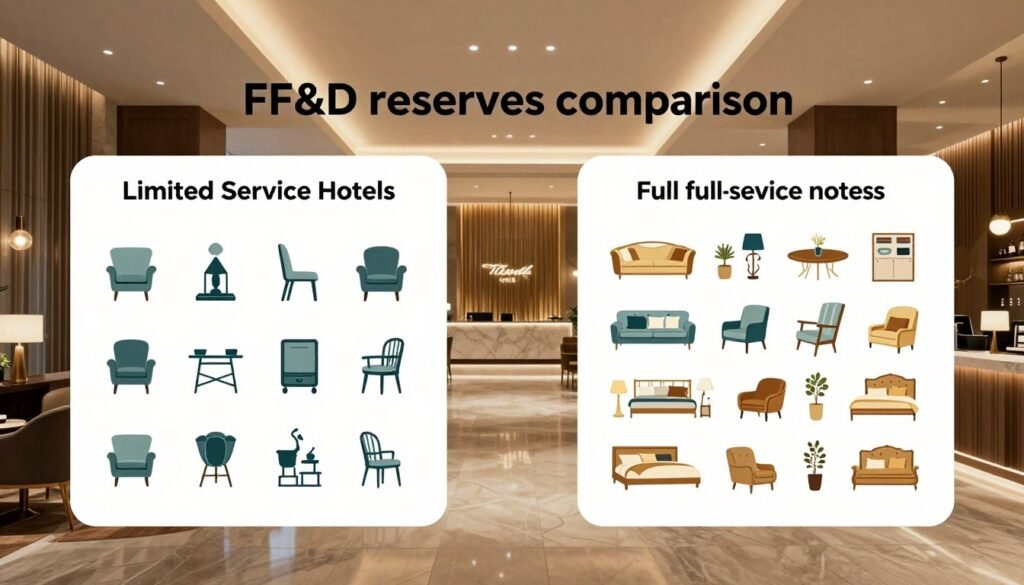
FF&E Reserve Differences by Hotel Type
FF&E (Furniture, Fixtures, and Equipment) reserves change a lot between limited-service and full-service hotels. Limited-service hotels need less FF&E because they are simpler. For example, select-service hotels have basic furnishings and fewer amenities, leading to lower costs.
Renovation Cycles and Budget Planning
Renovation cycles and budget planning are key for a hotel’s CapEx strategy. Full-service hotels need more frequent and expensive renovations. Good budget planning means setting aside enough for future renovations.
Technology Infrastructure Investment Disparities
Investments in technology also vary by hotel type. Modern hotels, like full-service ones, spend a lot on technology. This includes fast internet, mobile check-in, and smart rooms. Limited-service hotels spend less on technology compared to full-service hotels.
Knowing the differences in CapEx needs helps investors and developers make better choices. This ensures the long-term success and financial health of their projects.
Current Trends in Hospitality Financing
The hospitality financing world is always changing. Lender preferences, interest rates, and new funding options are key. Knowing these trends helps investors and developers in the complex world of finance.
Lender Preferences in Today’s Market
Lenders are now more careful, looking for projects with good return chances. Private credit fund lenders are big players, mainly in operational real estate. They’re financing hotel projects, showing a move towards more flexible loans.
Interest Rate Impacts on Different Hotel Types
Interest rates change how hotels get financed. Different hotels react differently to these changes. Limited-service hotels might not feel the rate changes as much. But full-service hotels, with their complex operations and costs, are more affected.
| Hotel Type | Impact of Interest Rate Increase | Impact of Interest Rate Decrease |
|---|---|---|
| Limited-Service | Moderate | Low |
| Full-Service | High | Moderate |
Emerging Alternative Funding Sources
New funding options are growing in the hospitality world. Private equity, REITs, and crowdfunding are becoming more common. These options give hotels more ways to get financed, reducing their need for banks.
Key alternative funding sources include:
- Private equity firms
- Real estate investment trusts (REITs)
- Crowdfunding platforms
In summary, the hospitality finance scene is changing fast. It’s influenced by lender choices, interest rates, and new funding sources. Investors and developers need to keep up with these changes to make smart choices.
Risk Assessment: Limited-Service vs. Full-Service Investment
Investors need to understand the risks of limited-service and full-service hotels. Knowing the differences helps in making smart choices. It’s key to reduce risks and increase profits.
Economic Downturn Resilience Comparison
Limited-service hotels do better in tough economic times because they cost less to run. Studies show they can adjust easier to market changes. Full-service hotels, with their complex operations and high costs, find it harder during recessions.
Key differences in economic downturn resilience:
| Characteristics | Limited-Service Hotels | Full-Service Hotels |
|---|---|---|
| Operational Costs | Lower | Higher |
| Business Model Complexity | Simpler | More Complex |
| Flexibility in Economic Downturns | More Flexible | Less Flexible |
Operational Risk Factors
Operational risks differ a lot between limited-service and full-service hotels. Limited-service hotels worry about brand and guest satisfaction. Full-service hotels handle more services, like dining and activities, which adds to their risks.
Operational risk factors to consider:
- Brand reputation management
- Guest satisfaction
- Service quality across multiple departments
Exit Strategy Considerations
Having a solid exit plan is crucial for hotel investments. Limited-service hotels might be easier to sell off because of their simpler setup. Full-service hotels, with their bigger size and complex operations, need more detailed exit plans.
Exit strategy considerations:
- Market conditions
- Property valuation
- Potential for renovation or rebranding
Real-World Financing Case Studies
Looking at real-world financing case studies shows us different strategies in the hospitality industry. This is true for both limited-service and full-service hotels. These examples give us insights into the financing choices and decisions made by investors and developers.
Limited-Service Success Stories
Limited-service hotels have thrived with simple and efficient financing models. For example, private credit fund lenders helped with the refinancing of Shiva’s BoTree Hotel in London. This shows that alternative lending can work well for boutique and limited-service hotels.
Success in these models comes from several key factors:
- Streamlined operations that cut costs and boost profits.
- Strategic location choices that lead to high occupancy rates.
- Flexible financing structures that meet the unique needs of limited-service hotels.
Full-Service Financing Structures
Full-service hotels need more complex financing due to their varied income streams and higher costs. A luxury hotel chain’s financing is a good example. It used a mix of debt and equity to fund new properties.
“The key to successful financing for full-service hotels lies in understanding the intricacies of their revenue streams and operational costs.” – Hospitality Finance Expert
Financing for full-service hotels might include:
- Debt financing with flexible repayment terms.
- Equity investment for high-end amenities and services.
- Mezzanine financing for extra capital needs.
Turnaround Situations and Lessons Learned
Hotel financing turnaround cases teach us a lot. A case study on a struggling full-service hotel shows the value of strategic repositioning and effective management.
Important lessons from these cases are:
- The need for a detailed market analysis to grasp the hotel’s potential.
- The importance of operational efficiency in boosting profitability.
- The role of flexible financing options in supporting turnaround efforts.
Decision Framework for Investors and Developers
A solid decision framework is key for those looking into hotel investments. It should cover important parts to help make smart choices.
Market Analysis Considerations
Market analysis is a big part of the framework. Investors need to look at local market trends. This includes demand, supply, competitors, and who lives there.
They should also understand what people want. For example, a deep dive might show chances for unique hotels or spots where people need more places to stay.
Financial Modeling Approaches
Financial modeling is also vital. Investors should make detailed plans for different scenarios. They should look at Net Operating Income (NOI), Capitalization Rate (Cap Rate), and Internal Rate of Return (IRR) closely.

Long-Term Value Creation Strategies
Creating long-term value is important. Strategies might include brand improvement, property updates, and making operations better. They should also think about changing the hotel’s use if needed.
By focusing on these areas, investors and developers can make better choices. This helps them reach their goals.
Conclusion
Financing hotels, whether they are limited-service or full-service, needs a deep understanding of the hospitality world. This includes knowing the differences between hotel types and the various financing options available. By looking at how hotels operate and their financial health, investors and developers can find their way through the complex world of financing.
Hospitality financing isn’t the same for every hotel. Limited-service hotels, with their simple operations, might need easier financing options. On the other hand, full-service hotels, with their many income sources, might need more complex financing plans. Knowing these differences is key to getting the right financing.
The hospitality industry is always changing. It’s important to keep up with market trends, what lenders like, and new funding options. By staying informed, investors and developers can make smart choices and take advantage of hotel market opportunities.