

Investing in mobile home parks can be very profitable. But, it needs careful planning and smart decisions. The demand for affordable housing has grown a lot. This has made the value of these investments go up, making refinancing and exit strategies crucial for investors.
Knowing about Mobile Home Park Financing and MHP refinance options is important. It helps investors understand the complex world better. Whether you want to refinance or get out, knowing your options is key to reaching your financial goals.
Key Takeaways
- Refinancing can help investors tap into the increased value of their mobile home park investments.
- Understanding MHP refinance options is crucial for making informed decisions.
- A well-planned exit strategy can maximize returns on investment.
- Mobile Home Park Financing options vary, and choosing the right one is key.
- Investors should consider their financial goals when deciding to refinance or exit.
Understanding the Mobile Home Park Investment Landscape
The real estate market is always changing, making it key for investors to know about MHP investments. The world of mobile home park investments is complex. It’s shaped by things like the economy, laws, and who lives there.
Current Market Trends in Mobile Home Park Investments
The demand for affordable housing is growing, and there’s a shortage of mobile homes. This makes the market competitive. Investors are looking to make good money from these investments.
There’s a trend towards smarter investment strategies. Investors want to do more than just buy properties. They’re looking at ways to improve the parks and make more money.
Why Mobile Home Parks Continue to Be Attractive Investments
Mobile home parks are appealing because they offer stable income and low costs. The rent from lots provides a steady income. This makes them a good choice for investors who want reliable returns.
There’s also a lack of land and it’s hard to build new parks. This makes existing parks more attractive to investors.
Risk and Return Profile of MHP Investments
The risks and rewards of MHP investments are complex. They can offer high returns from rent and property value. But, they also face risks like changes in laws, market ups and downs, and running the park.
To understand the risks and rewards, investors need to look at the park’s location, how full it is, and the condition of the homes. By examining these factors, investors can make better choices in the MHP market.
The Fundamentals of Mobile Home Park Financing
Mobile home park financing has many paths to get funds. It’s key for investors to know these options well. This helps them make choices that fit their goals.
Traditional Financing Options for Mobile Home Parks
Traditional financing for mobile home parks usually means bank loans or mortgages. These loans depend on the property’s value and the borrower’s credit. Conventional loans have set repayment terms and interest rates, helping investors plan better.
Government-Backed Loan Programs for MHP Investments
Government-backed loans, like those from the FHA or USDA, are another choice. These loans might have better terms, like lower down payments and good interest rates. This makes them appealing to investors.
Private Lending Options in the MHP Space
Private lending is big in mobile home park financing. Private lenders offer flexibility and fast closings. But, they often have higher interest rates and fees.
| Financing Option | Key Features | Typical Interest Rate |
|---|---|---|
| Traditional Bank Loans | Predictable repayment terms, based on property value and creditworthiness | 4-6% |
| Government-Backed Loans | Favorable terms, lower down payments | 3.5-5.5% |
| Private Lending | Flexible, quicker closing times, higher interest rates | 8-12% |
Each financing option has its pros and cons. Investors need to weigh these carefully. They should consider their financial situation, goals, and how much risk they can take.
When to Consider Refinancing Your Mobile Home Park
Knowing when to refinance your mobile home park is crucial for better returns. Refinancing can lead to lower interest rates and more cash flow. It’s a smart move.
Signs That Indicate It’s Time to Refinance
There are clear signs it’s time to refinance. Look for lower interest rates, a better credit score, or higher property value. These are key.
Key indicators include lower interest rates, better credit, and higher property value.
Market Conditions That Favor Refinancing
Good market conditions make refinancing appealing. Low interest rates, for example, cut down your monthly payments and debt. It’s a big plus.
Evaluating Your Current Loan Terms
Before deciding, check your current loan terms. Look at your loan agreement for penalties, balance, and rate. It’s important.
Understanding your loan terms helps decide if refinancing is right for your investment.
Strategic Benefits of MHP Refinance Opportunities
Investors can gain a lot by refinancing their mobile home parks. This can lead to better financial outcomes and a stronger investment plan. Refinancing brings several advantages that boost the value of mobile home park investments.
Lowering Interest Rates and Monthly Payments
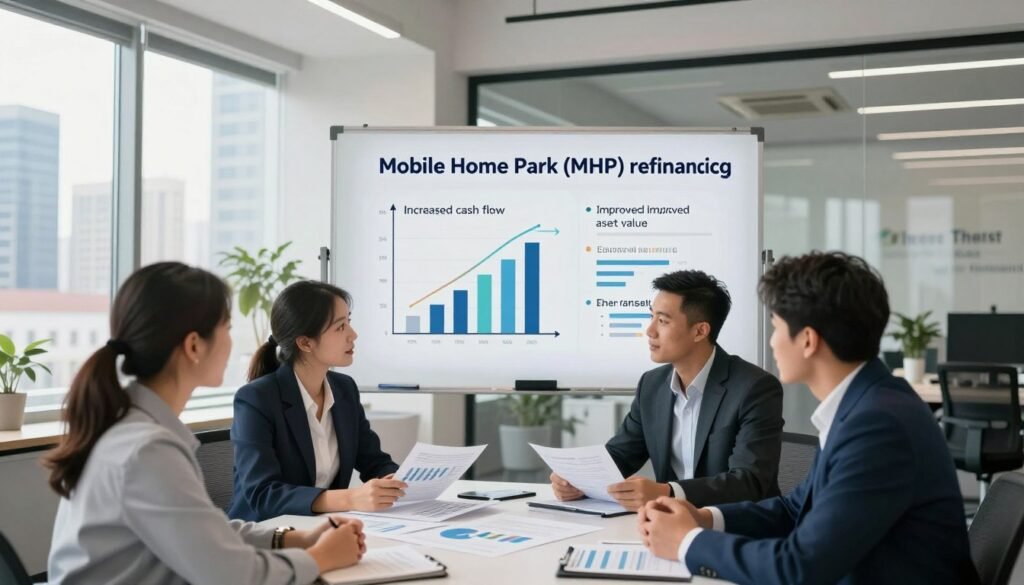
One key benefit is the chance to lower interest rates and monthly payments. Recent data shows refinancing can save a lot, thanks to falling interest rates. “Refinancing can save mobile home park owners thousands of dollars in interest payments over the life of the loan,” a financial expert notes.
Accessing Equity for Property Improvements
Refinancing also lets you tap into the property’s equity. This equity can fund improvements, expansions, or other investments. It’s great for parks wanting to upgrade or boost occupancy.
Restructuring Debt for Better Cash Flow
Refinancing also helps in restructuring debt. This can extend loan terms or switch to fixed rates, improving cash flow. It makes managing finances easier for investors.
Consolidating Multiple Properties Under One Loan
Investors with several parks can refinance to combine them under one loan. This simplifies financial management and can cut borrowing costs.
Refinancing a mobile home park is a smart move. It offers many financial benefits that can improve investment performance. By understanding these benefits, investors can make better choices to grow their investments.
Navigating the Mobile Home Park Financing Process for Refinancing
To refinance a mobile home park, investors must know the financing process well. Refinancing can help improve investments, but it needs careful planning and action.
Preparing Your Financial Documentation
Getting your financial documents right is key for a smooth refinancing. You’ll need historical financial statements, current rent rolls, and expense reports. Lenders will check these to see if the property is worth it and can make more money in the future. As David Stevens, a renowned expert in real estate financing, once said, “The quality of your financial documentation can make or break your refinancing deal.”
Property Valuation Considerations
Getting the property’s value right is also very important. Investors need to give detailed info about their property, like its condition, how full it is, and how it might grow.
Working with Lenders Specialized in MHP Financing
It’s important to work with lenders who know mobile home park financing well. These lenders get the special needs and chances of MHP investments. They can guide you through the refinancing and help get good terms.
Timeline Expectations for Refinancing Completion
The refinancing process can take weeks to months, depending on the deal and the lender. Investors should plan ahead, allowing time for checks, appraisals, and loan processing. It’s a good idea to start refinancing at least 60 days before the current loan ends.
By knowing these key parts of the refinancing process, mobile home park investors can handle MHP financing better. This helps them reach their investment goals.
Understanding and Managing Prepayment Penalties
Prepayment penalties can greatly affect your decision to refinance or sell a mobile home park. These penalties are fees for paying off a loan early. They can increase the loan’s overall cost.
Types of Prepayment Penalties in MHP Loans
There are two main types of prepayment penalties in MHP loans: yield maintenance and defeasance. Yield maintenance penalties are based on the loan’s interest rate and the current market rate. Defeasance involves replacing the loan’s collateral with government securities that match its cash flows.
Calculating the Cost of Early Loan Termination
To figure out the cost of prepayment penalties, you need to calculate the total cost of early loan termination. This includes the penalty itself, any savings from refinancing, and the sale proceeds of the property.
| Loan Amount | Interest Rate | Prepayment Penalty | Total Cost |
|---|---|---|---|
| $1,000,000 | 6% | 3% | $30,000 |
| $500,000 | 5% | 2% | $10,000 |
Negotiating Prepayment Terms in New Financing
When getting new financing, MHP investors can talk about prepayment penalties. They might agree to a lower penalty for a higher interest rate. Or, they could structure the loan to avoid penalties after a while.
Understanding and managing prepayment penalties is key to making the most of mobile home park investments. By knowing the types of penalties, calculating their cost, and negotiating better terms, investors can make smarter choices about refinancing or selling.
Maximizing Proceeds from Your MHP Refinance
To get the most from your mobile home park refinance, use strategies that boost property value and better loan terms. Refinancing is a powerful tool for owners. It gives access to capital for improvements, debt restructuring, and new investments.
Strategies to Increase Property Value Before Refinancing
Boosting your mobile home park’s value before refinancing can greatly increase your proceeds. Invest in property upgrades like better infrastructure, amenities, and looks. Experts say, “Improvements can significantly increase your property’s value, helping you get better loan terms.”
Key areas to focus on include:
- Upgrading infrastructure to improve functionality and appeal
- Enhancing amenities to attract higher-paying tenants
- Improving the overall aesthetic appeal to increase property value
Negotiating Better Loan-to-Value Ratios
Getting a better loan-to-value (LTV) ratio is key to maximizing refinance proceeds. A higher LTV ratio lets you borrow more against your property’s value. To get this, show your property’s value with appraisals, financial records, and market analysis. A financial analyst notes, “A solid property valuation can greatly improve your negotiating power with lenders.”
Timing Your Refinance for Optimal Returns
Timing is crucial for refinancing your mobile home park. Market conditions, interest rates, and your property’s finances all affect the best time to refinance. Staying informed about these factors can help you take advantage of good market conditions and secure better loan terms.
Allocating Refinance Proceeds Strategically
After securing refinance proceeds, it’s vital to use them wisely. Consider spending on property improvements, debt repayment, or new investments. Experts stress, “Strategic use of refinance proceeds is key to maximizing returns and reaching long-term financial goals.”
By using these strategies, mobile home park owners can maximize their refinance proceeds. This sets them up for long-term financial success.
Planning Your Exit Strategy from the Beginning
Investing in a mobile home park means planning your exit from the start. A good exit plan can greatly improve your investment’s success. It helps you get the most out of your investment and make smart choices along the way.

Setting Clear Investment Timelines
Having a clear timeline for your investment is key. You need to decide how long you’ll hold the property. This choice affects your investment strategies and goals.
- Determine your investment horizon
- Align your investment goals with your timeline
- Regularly review and adjust your timeline as needed
Establishing Return on Investment Goals
Setting clear ROI goals is crucial for judging your investment’s success. Your ROI goals should be realistic and based on the market, the property’s potential, and your strategy.
Key considerations for ROI goals:
- Cash flow expectations
- Appreciation potential
- Tax implications
Building Exit Flexibility into Your Business Plan
A flexible business plan is vital for handling market changes or surprises. By making your plan flexible, you can tackle challenges and seize opportunities as they come.
To build exit flexibility, consider:
- Maintaining a diversified investment portfolio
- Staying informed about market trends and conditions
- Having contingency plans in place
Evaluating the Right Time to Exit Your Mobile Home Park Investment
Knowing when to exit a mobile home park investment is as crucial as knowing when to invest. It requires a deep look at market trends and personal goals. To exit right, you must consider several key factors that affect your investment’s success.
Market Cycle Considerations
Market cycles are key in deciding when to sell. Knowing the market’s current phase – peak, trough, or in between – guides your decisions. Selling at a peak can bring high returns, while selling during a downturn might reduce losses.
Personal Investment Goals and Timelines
Your personal goals and timelines are vital in deciding when to exit. Regularly check your financial goals and adjust your exit plan. Whether you aim to retire, invest elsewhere, or cash out, aligning your exit with your goals is key.
Tax Implications of Selling
The taxes you’ll pay when selling a mobile home park can greatly affect your earnings. Understanding tax laws and potential liabilities is crucial. A tax expert can help you make the most of your exit strategy.
Analyzing Cap Rate Trends in Your Market
Cap rate trends in your market are also important. Watching cap rates gives insights into the market’s view of income properties like mobile home parks. A rising cap rate might mean it’s time to sell, as it could show increasing market values or lower property incomes.
By looking at market cycles, personal goals, tax implications, and cap rate trends, investors can make smart exit decisions. This approach helps maximize returns and meet financial goals.
Disposition Strategies for Mobile Home Park Owners
Mobile home park owners have many ways to sell their properties. The best choice depends on the owner’s goals, the park’s state, and the local market.
Traditional Sale to Another Investor
Selling to another investor is common. This means selling the park to a real estate investor or a company that specializes in mobile home parks.
Seller Financing Options
Seller financing lets the seller offer financing to the buyer. It’s good for both sides. The seller gets a steady income, and the buyer might get better terms than usual.
Resident-Owned Community Conversion
Turning the park into a resident-owned community is unique. It means selling the park to the residents or setting up a cooperative.
Benefits of Selling to Residents
Selling to residents is beneficial. It lets the owner leave the investment while giving the residents control and ownership.
Structuring a Resident Purchase Agreement
Creating a purchase agreement for residents needs careful planning. You must decide on the sale price, payment terms, and any sale conditions.
Partial Interest Sales and Partnerships
Partial interest sales and partnerships are also options. They involve selling part of the park to another investor or forming a partnership to co-own and manage it.
It’s crucial to weigh the pros and cons of each strategy. The table below highlights key points about the discussed options:
| Disposition Strategy | Key Benefits | Considerations |
|---|---|---|
| Traditional Sale | Quick exit, lump sum payment | Potential for lower sale price, loss of control |
| Seller Financing | Steady income stream, attractive to buyers | Risk of buyer default, ongoing management |
| Resident-Owned Community | Community preservation, potential tax benefits | Complex transaction, resident financing challenges |
| Partial Interest Sales/Partnerships | Shared risk, potential for synergies | Shared control, potential for conflicts |
Each strategy has its own benefits and challenges. Understanding these helps mobile home park owners make informed decisions that fit their goals and situations.
Preparing Your Mobile Home Park for Sale
Getting your mobile home park ready for sale takes several important steps. A well-prepared park can sell for more and attract buyers faster. It’s all about making it look its best.
Physical Improvements to Maximize Value
To boost your park’s value, think about making some physical changes. You could upgrade community spaces, improve the landscaping, or fix any infrastructure issues. Improving community facilities like the clubhouse or laundry rooms can really make a difference.
Optimizing Park Operations and Management
Running your park smoothly is key to showing it’s well-managed. Make sure maintenance is current, rent is collected efficiently, and tenants are happy. Keeping detailed records of your operations can prove your management skills.
Addressing Deferred Maintenance Issues
Ignoring maintenance can scare off buyers. Fixing any broken parts, updating old facilities, and checking the condition of homes is crucial. This makes your park more appealing before you even list it.
Cleaning Up Financial Records and Lease Agreements
Having tidy financial records and lease agreements is vital for a smooth sale. Make sure all financial documents are current, lease agreements are up to date, and any problems are solved. Clear financial records build trust with potential buyers.
| Preparation Step | Description | Benefit |
|---|---|---|
| Physical Improvements | Upgrade facilities and infrastructure | Increased park value |
| Operational Optimization | Streamline management and maintenance | Improved buyer perception |
| Deferred Maintenance | Address outstanding maintenance issues | Enhanced attractiveness |
| Financial Record Cleanup | Organize financial documents and lease agreements | Transparent and attractive to buyers |
Working with Brokers and Investment Advisors
Brokers and investment advisors are key to selling mobile home parks well. They help with the complex steps of selling, making sure sellers get the best deal.
Selecting the Right Representation
Finding the right broker or advisor is very important. You need someone with a good track record in mobile home park sales. Look for advisors who know the local market well and have a big network of buyers.
What to Expect from a Quality MHP Broker
A good broker will have a solid marketing plan. They use their skills and resources to find buyers. They also handle negotiations, making sure the seller’s needs are met.
Negotiating Broker Agreements and Commissions
When you hire a broker, know their fee structure and agreement terms. Negotiating a fair commission can increase your returns. Here’s a table showing typical broker fees.
| Sale Price Range | Typical Commission Rate |
|---|---|
| $0 – $1 million | 6% – 8% |
| $1 million – $5 million | 5% – 7% |
| $5 million+ | 4% – 6% |
Creating an Effective Marketing Package
A good marketing package is key to drawing in buyers. It should have detailed property info, financial records, and marketing materials. A well-made package can really help the selling process.
Tax Considerations When Exiting Mobile Home Park Investments
Investors in mobile home parks face complex tax rules when they sell. It’s key to understand these to get the most from their investments.
Understanding Capital Gains Implications
When selling a mobile home park, investors must pay capital gains tax on their profit. The tax rate depends on their income level and how long they owned the property.
Capital Gains Tax Rates:
| Ownership Duration | Tax Rate |
|---|---|
| Less than 1 year | Ordinary Income Tax Rate |
| More than 1 year | Long-term Capital Gains Rate (0%, 15%, or 20%) |
1031 Exchange Opportunities
A 1031 exchange lets investors delay capital gains taxes. They can reinvest the sale proceeds into a similar property. This is great for diversifying their investments.
Installment Sales and Tax Deferral Strategies
Installment sales let investors sell a property over years. This spreads out the tax liability. It can greatly benefit cash flow and taxes.
Working with Tax Professionals Specialized in Real Estate
Mobile home park tax laws are complex. Investors should team up with real estate tax experts. These pros offer crucial advice on taxes and strategies.
Conclusion: Building a Successful Mobile Home Park Investment Strategy
A well-planned investment strategy is key for success in MHP investments. We’ve looked at many aspects of mobile home park investments. This includes understanding the market, financing, and exit strategies.
Creating a successful strategy means looking at many factors. These include market conditions, property value, and taxes. By knowing these and making smart choices, investors can get the most out of their investments.
Whether you want to refinance or exit your investment, having a plan is crucial. You need to check your loan terms, the market, and your goals. This helps you make choices that fit your investment goals.
In the end, a good investment strategy in MHP investments needs careful planning and management. By using the tips from this article, investors can create a strong strategy for long-term success.