

Surprising fact: nearly 70% of lender approvals in the region hinge on clear cash-flow models and sponsor strength, not just property value.
This guide is written for owner-users buying a facility and investors acquiring or refinancing income-producing real estate. It sets a practical tone for a small, relationship-driven lending environment where underwriting favors steady cash flow and proven sponsors.
Expect disciplined deal structures and a premium on lender-ready documentation. Strategic approaches here mean choosing the right loan program, sizing leverage to realistic cash flow, and syncing timelines to appraisal and lender requirements.
What you’ll learn: how property type, occupancy, location, and sponsor strength shape options; when to match financing to a stabilized versus transitional asset; and how organized financials improve outcomes.
Use the eight-section roadmap ahead to jump to the topics most relevant to your purchase, refinance, expansion, or construction plans.
Key Takeaways
- Prepare lender-ready documents that highlight cash-flow stability and sponsor strength.
- Match loan programs to asset stability—stabilized vs. transitional matters.
- Size leverage to realistic income projections, not optimistic forecasts.
- Expect conservative underwriting and relationship-based decisions.
- Focus on timing: appraisals, lender due diligence, and closing windows must align.
Montana’s Commercial Lending Landscape Today
Local lenders prize steady cash flow and clear borrower track records over speculative upside. Relationship depth and transparent materials speed approvals in smaller markets.

Why relationships and conservative underwriting matter
Smaller buyer pools raise perceived risk. A strong deposit or referral relationship can tilt a bank toward approval.
Underwriting trends favor lower leverage, durable cash flow, and experienced sponsors who can show realistic projections.
What “good” looks like today
Good means stable historical NOI, conservative loan-to-value, clear repayment sources, and sponsors with relevant experience.
Key underwriting themes lenders scrutinize
- Debt service coverage and liquidity reserves
- Tenant quality, lease rollover, and saleability in the local market
- Expense realism for utilities, heating, snow removal, and insurance
- Credit trends, guarantor strength, and contingent liabilities
| Lender Type | Typical Focus | Terms Tend To |
|---|---|---|
| Community / Regional Banks | Owner-occupied, essential-use assets | Lower leverage, relationship pricing |
| Credit Unions | Owner-occupied and small loans | Competitive on small deals, local underwriting |
| Institutional / National Lenders | Large, stabilized properties in primary markets | Scaled terms, selective participation |
How to win: deliver an organized package, stress realistic expenses, and highlight sponsor experience. That makes a lender’s yes much easier.
Montana Commercial Real Estate Financing Options for Owner-Occupied and Investment Properties
Occupancy and use shape which programs and terms make sense. Lenders treat owner-occupied and investment assets as different risk profiles, so choose a path that fits how you will operate the site.
Owner-occupied financing for offices, warehouses, retail, and manufacturing
Owner-occupied typically means the owner uses at least 50% of the building. Lenders will evaluate the operating business alongside the physical asset.
They look at business cash flow, revenue durability, and whether the space supports long-term operations. Common types include office, warehouse/industrial, retail storefronts, and manufacturing plants.
SBA programs or bank loans tied to the business can be more flexible when the business is the primary occupant.
Investment property financing for multifamily, rentals, and mixed-use buildings
Lenders focus on in-place income for investment deals. That means rent roll, lease lengths, tenant quality, and market rent support matter most.
Typical financed assets include multifamily units, rental properties, and mixed-use buildings. Loan sizing is driven by Net Operating Income and market comparables.
How occupancy and property use affect leverage, structure, and approval
- Owner-occupied: underwriting blends business and property cash flow; may allow lower rates or SBA terms.
- Investment: property-level underwriting, higher scrutiny on vacancy and market rents.
- Mixed-use: expect both business and property financial statements; lenders may require stronger reserves.
| Loan Profile | Typical Leverage | Best Fit |
|---|---|---|
| Owner-occupied | Lower-to-moderate LTV | Long-term business base |
| Investment | Moderate-to-higher LTV | Stabilized income properties |
| Transitional/Bridge | Lower LTV, higher rates | Repositioning or renovations |
Decision framework: if the business needs a permanent home, prioritize stable fixed-rate structures. If you plan repositioning, plan for bridge or transitional loans and extra equity.
Documentation: owner-occupied deals need business financials; investment loans need property-level statements; mixed-use requires both.
Loan Programs Available in Montana and Where They Fit Best
Lenders match product to purpose: pick a program that fits your hold period, risk tolerance, and cash needs.
Conventional loans are the default for stabilized properties over $1,000,000. Typical guideline rates run about 5.05%–8.95% with up to 80% LTV. They work when in-place income is strong and documentation is clean.

Conduit / CMBS
Best for larger, stabilized investment assets ($2M+). Rates often sit near 5.96%–7.92%. Expect tight structure, securitization terms, and prepayment rules.
Insurance lender programs
Target high-quality, long-term holds with large ticket sizes ($5M+). Rate ranges: 5.36%–8.75%. These lenders favor top-tier sponsors and steady income.
- FHA / HUD and USDA: agency options offering higher leverage (up to 83.3% or 85% LTV) and competitive rates, but with longer timelines and added compliance.
- SBA: tailored for owner-occupied purchases and expansions. Rates commonly 5.45%–8.95% with high LTVs for qualifying businesses.
- Bridge: fast execution for repositioning or lease-up. Rates range 5.95%–12.95%; require clear exit plans.
- Construction: supports ground-up and renovation work. Expect 5.7%–8.95%, draws by milestone, and takeout planning.
| Program | Rate Range | Typical LTV |
|---|---|---|
| Conventional | 5.05%–8.95% | Up to 80% |
| Conduit / CMBS | 5.96%–7.92% | Up to 75% |
| Bridge / Construction | 5.7%–12.95% | Up to 83.3% (varies) |
Practical tip: choose the loan type by property stability, timeline, and how much documentation you can deliver. For help mapping options to a specific deal, see this commercial real estate financing guide.
Property Types Lenders Prefer and Assets That Face Tighter Underwriting
Lenders favor assets that show steady cash receipts, easy resale paths, and predictable local demand. In practice, that means underwriters reward clarity over complexity.
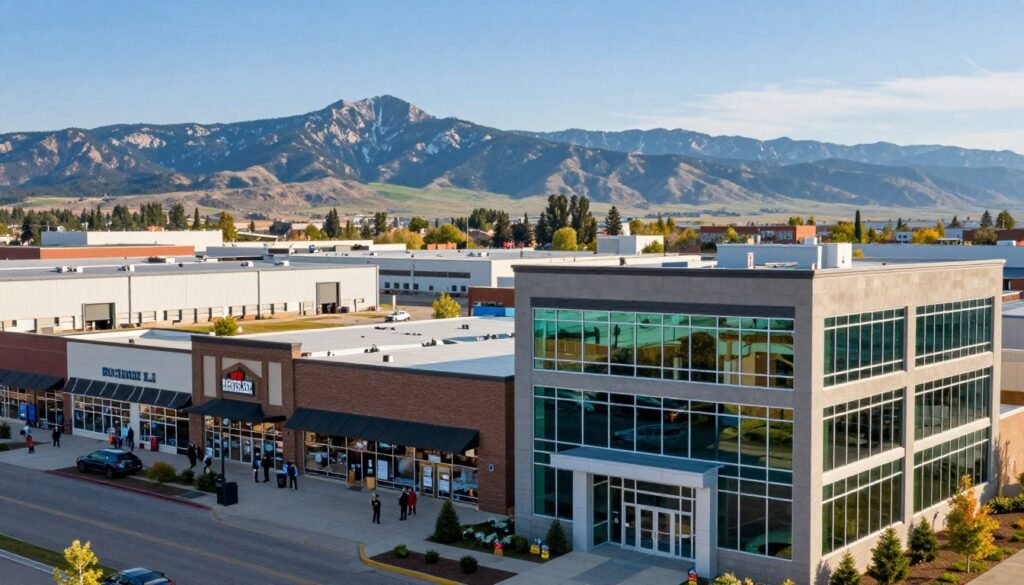
Lender-friendly assets
Essential-use properties—medical clinics, grocery-anchored retail, and service hubs—get stronger terms. Stabilized multifamily in population centers is also attractive because occupancy and rent rolls are reliable.
Industrial and warehouse space performs well when tenancy and operations tie to regional supply chains. That steady rent profile helps with loan sizing and credit review.
Assets that face tighter underwriting
Office buildings are scrutinized, especially older stock and small-town offices with thin tenant depth. Lenders watch lease length and tenant quality closely.
Hospitality and resort properties see lower leverage. Seasonality and tourist swings create cash volatility that pushes higher reserves and stricter covenants.
Seasonality, value-add risk, and borrower tactics
Value-add or transitional deals require larger equity cushions. Lenders stress-test lease-up assumptions and timing, then reduce appraised income.
- Stress income for slow months and show liquidity to cover gaps.
- Use third-party market studies and conservative pro formas.
- Highlight strong sponsors and realistic exit plans to improve approval odds.
Market-by-Market Strategy Across Montana
Regional dynamics shift by city; a one-size lending plan rarely fits every local market. Tailor assumptions for liquidity, tenant depth, and exit buyers before you underwrite.

Bozeman
Bozeman shows strong growth and active bank interest. Expect pricing pressure but conservative leverage.
Plan: bring disciplined pro formas, solid sponsor history, and strong documentation to win approvals.
Billings
Billings trades on stability. Industrial, owner-occupied, and essential-use properties see steady appetite.
Benefit: clearer credit committee paths when NOI and tenant profiles match local comps.
Missoula
Missoula lending is consistent thanks to education and healthcare demand. Lenders still want realistic expenses.
Focus on supported income and conservative vacancy assumptions to improve loan outcomes.
Rural areas
Rural markets need deep relationships, stronger guarantors, and lower leverage. Local bank fit matters most.
Structure deals with larger equity cushions and credible exit plans for lower-liquidity locations.
- Go/no-go checklist: local comps availability, tenant demand, exit buyer pool, reliance on rapid lease-up.
| Market | Typical Leverage | Key Consideration |
|---|---|---|
| Bozeman | Moderate | Growth but conservative underwriting |
| Billings | Moderate–High | Stable industrial and owner-occupied demand |
| Rural | Low | Relationship and guarantor focus |
How to Qualify and Strengthen Your Commercial Loan Request
Start by putting a clean, verifiable package in front of a lender—clarity speeds decisions.
Preparing a lender-ready package
Provide trailing 12-month NOI, a current rent roll, signed leases, and operating statements. Add borrower financial statements, tax returns, entity docs, and a clear sources/uses summary.

What lenders look for in credit, equity, and experience
Lenders evaluate borrower credit, global cash flow, liquidity, and sponsor track record. Show past ownership or operating experience and cleanly documented equity sources—seasoned funds or verified sale proceeds help.
Expense realism and Montana-specific modeling
Model expenses conservatively. Reconcile heating, utility, insurance, and maintenance line items to local cost drivers. Add seasonal revenue swings and verify major repairs with estimates.
Process, specialty needs, and refinancing strategies
- Initial call → term sheet → underwriting → appraisal → closing.
- Consider a commercial line of credit for short-term working capital or capital asset financing for equipment and expansion.
- Refinance when debt service, property performance, and timing align to secure better rates, longer terms, or cash-out.
| Action | What to provide | Why it matters |
|---|---|---|
| Loan submission | NOI, rent roll, sources/uses | Speeds underwriting |
| Credit support | Tax returns, statements, liquidity | Demonstrates repayment |
| Refinance prep | 3–12 months performance, reserves | Improves pricing and timing |
Bottom line: a clean, well-documented package cuts lender questions, shortens the process, and strengthens negotiating leverage on terms.
Conclusion
Closing a successful loan starts with a clear plan that aligns the property, timeline, and lender product. In this market, capital is available but cautious, so use conservative assumptions and crisp documentation to shorten the path to approval.
Most financeable profiles are owner-occupied sites, stabilized multifamily, industrial/warehouse, and essential-use properties because they show steady income and easy resale paths. Tougher classes—office, hospitality, and heavy value-add—can still gain traction when sponsors bring equity, experience, and a realistic execution plan.
Match bridge versus permanent loans to your hold period, and pair construction funding with a clear takeout plan. Prepare a lender-ready package, state whether the asset is owner-occupied or investment, and present a concise request tied to your needs. Rates vary by program and risk; strengthening cash flow and cutting uncertainty improves offers and supports growth for your business and buildings.