

Surprising fact: nearly 40% of deal failures stem from slow funding, not price—speed often decides winners in this sector.
This buyer’s guide is a practical roadmap for Connecticut Commercial Real Estate Financing in today’s market. It helps owner-users buying space and investors evaluating income-producing property to pick clear decision points for purchase, refinance, or growth.
Strategy matters: align property type, business plan, and cash flow to the right loan and rate structure. We contrast underwriting and documentation differences between residential and commercial lending so you know what to prepare.
Expect focused sections on local market forces, core loan options, mortgage structures, lender selection, the loan process, and a document checklist. For actionable speed tactics and term comparisons, see our fast-track financing guide for practical steps to close deals quicker.
Key Takeaways
- Prepare financials: strong statements and an executive summary speed underwriting.
- Match cash flow to the right loan type and term.
- Compare terms on pricing, prepayment, and recourse—not just rates.
- Use private or SBA options to accelerate closings when needed.
- Choose lenders and brokers with proven speed and documentation workflows.
What buyers need to know about Connecticut’s commercial real estate market right now
Understanding how interest, credit, and the local economy interact will help you choose the right loan structure and property. Interest rate movement changes affordability, coverage ratios, and lender appetite. Rate volatility can make fixed, floating, or swap choices more or less attractive even when the purchase price stays constant.
Credit standards shape proceeds, required equity, covenants, and the documentation lenders request. When underwriting tightens, expect higher down payments and more restrictive covenants. When standards ease, lenders may offer broader options and faster closings.
Owner-occupied vs. investor risk perspectives
Lenders view owner-occupied property through the operating business’s cash flow. Strong operations can offset weaker in-place income.
By contrast, investor underwriting centers on net operating income, tenant stability, and lease rollover. Stable tenants and long-term leases usually lower perceived investment risk and improve terms.
Common property types and choosing the right space
- Types financed: apartments, office, medical offices, warehouses, and retail.
- Each asset class carries different underwriting sensitivities—vacancy and rent growth matter more for retail and office; tenant credit matters for medical and warehouses.
- Pick stabilized tenancy for broader lending options or clearly defined value-add plans if you accept tighter covenants and more documentation.
Connecticut Commercial Real Estate Financing options for purchases, refinances, and growth
Loan selection drives deal outcomes—pick options that match purchase timing, stabilization, and cash needs. Below are practical loan types mapped to common buyer goals so you can match structure to strategy.

Loans for building purchase and improvement
Real estate loans for acquisition or rehab focus on property condition, tenancy, and your operating profile.
Lenders review rents, vacancy, and repair needs before setting proceeds and amortization.
Construction and renovation loans
Construction loans use draw schedules tied to inspections and milestones.
Plan contingencies and align timing with a mini-perm or long-term takeout to avoid funding gaps.
Mini-perm and long-term takeout
Mini-perm loans bridge to permanent financing once leasing and income stabilize.
Stabilization is defined by steady leasing, income consistency, and a short operating history post-completion.
Term loans, lines of credit, equipment, and SBA 504
Term loans and lines support working capital and preserve cash flow during down payments or growth.
Equipment loans free up liquidity for asset upgrades without tapping revolving credit.
SBA 504 suits owner-occupied businesses seeking low down payment, fixed-term purchases; many banks offer application help.
- Acquisition: acquisition loan or real estate loan with clear underwriting.
- Construction: draw-based construction loan with contingency planning.
- Stabilized asset: mini-perm then takeout permanent financing.
How to compare commercial mortgage structures, rates, and terms
An apples-to-apples framework makes comparing offers simple and fair. List index or fixed coupon, spread, amortization, maturity, upfront fees, required reserves, covenants, and ongoing reporting side by side.

Fixed, floating, and swap choices
Fixed gives rate certainty and predictable debt service. It suits long-hold borrowers with stable cash flow.
Floating often starts lower and fits short-term or flexible borrowers who can handle rate movement.
Swap tools can lock in a synthetic fixed rate while keeping a floating loan structure—useful when a lender only offers floating loans but you want certainty.
Intermediate-term vs. long-term permanent financing
Intermediate-term loans bridge stabilization or recap phases. They minimize near-term cost but can create refinance risk.
Long-term permanent financing reduces refinance risk with longer maturities and full amortization for buy-and-hold strategies.
Prepayment flexibility and total cost
Prepayment rules alter exit cost: step-down schedules, yield maintenance, or defeasance change recovery of lender economics.
Negotiate windows and stepped fees if you expect an early sale or refinance; small fee differences can change total cost materially.
Recourse vs. non-recourse and lender expectations
Non-recourse limits borrower guarantee exposure, but lenders expect stronger assets, higher coverage, or tighter covenants.
Recourse loans ask for personal or entity guaranties and carve-outs; they are common when credit or asset strength is limited.
Earn-outs and performance-based proceeds
Earn-outs release additional proceeds after leasing milestones or NOI targets. Lenders use them to bridge uncertainty on transitional assets.
Evaluate earn-outs by timeline, measured KPI, and how shortfalls affect overall cash flow and covenants.
- Practical tip: weigh structure against asset stability, capex needs, tenant rollover, and long-term goals before choosing a mortgage.
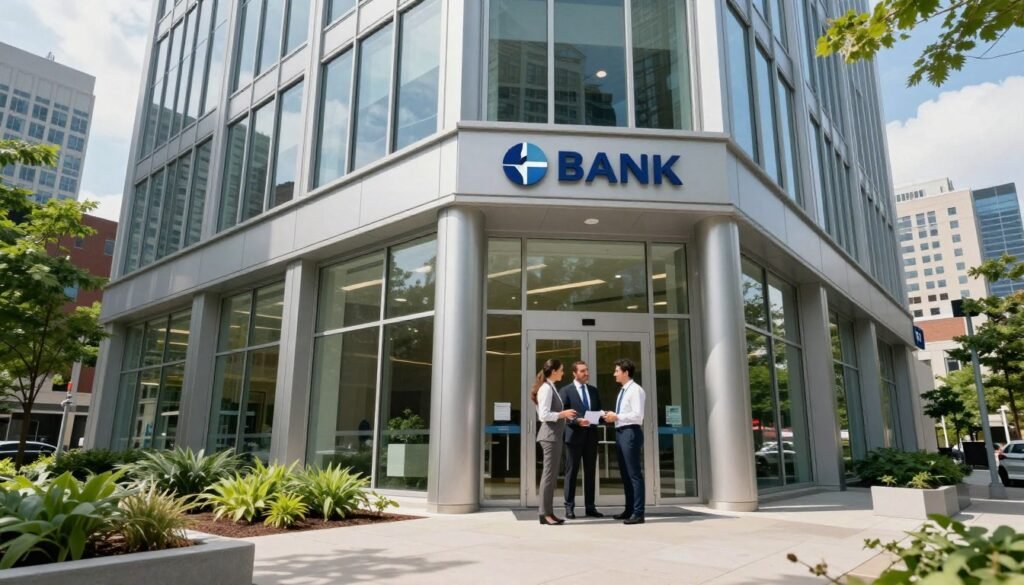
Choosing the right lender in Connecticut: banks, relationship teams, and decision speed
Choosing a lender is about execution, not just the lowest headline rate. Speed, certainty, and responsiveness matter more when diligence timelines are tight.
Why local decision-making shortens timelines
Local branches and regional teams cut handoffs. That means faster feedback on conditions and clearer approval milestones.
Fewer layers speed closing and reduce surprises during due diligence.
What relationship-based guidance looks like
A commercial lending officer scopes structure, flags documentation gaps, and coordinates the process. That hands-on support keeps a deal moving.
At The First Bank of Greenwich contact Maureen Hanley (203-302-2479), Kevin O’Connell (203-302-4378), or Ryan Sheflott (914-908-5435) for responsive officer support.
Evaluating competitive rates and tailored solutions
Compare full economics: fees, prepayment, covenants, reporting, and flexibility—not just headline rates. A bank’s footprint and capacity matter for multi-property growth.
Practical tip: weigh speed and relationship strength alongside pricing when your business needs certainty.
The commercial loan process from first conversation to closing
Start with a clear objective: decide if you need acquisition, refinance, construction, or working capital. This choice sets timeline, required documents, and the likely loan types to pursue.

Defining your business needs and matching the right loan type
Begin by stating purpose, ownership structure, and target close date. Lenders evaluate owner-occupied versus investor use differently, so a clear plan guides the proper product and term.
Eligibility and underwriting: what lenders analyze
Lenders review property fundamentals, in-place or projected income, borrower credit, and global cash flow. They stress-test assumptions on vacancy, tenant rollover, and operating expenses.
Key underwriting checks:
- Debt service coverage and rent roll stability
- Borrower credit and business cash flow
- Physical condition, appraisal value, and title/environmental flags
Comparing loan options and term sheets
Use a consistent template to compare rate, spread, amortization, maturity, fees, prepayment, and covenants. This apples-to-apples view reveals true cost and refinance risk across offers.
| Feature | Short-term loan | Permanent loan | Construction loan |
|---|---|---|---|
| Typical term | 1–5 years | 10–30 years | 12–36 months |
| Rate type | Floating or fixed | Often fixed | Floating with draws |
| Prepayment | Flexible | Yield maintenance/defeasance | Limited until stabilization |
| Best for | Bridge or recap | Buy-and-hold | New build or rehab |
Submitting the application and keeping the sale on track
Organize documents early: ownership records, financials, leases, and budgets. Track appraisal, environmental, and title milestones so reports arrive on schedule.
Communication best practices: name a single point of contact, use clear deadlines, and confirm receipt of each deliverable with lenders, attorneys, and third parties.
For rate negotiation tactics and deeper term comparisons, see our guide to securing the best possible which complements this process checklist.
What to prepare before you apply: documentation checklist for faster underwriting
A tidy application folder helps underwriters verify cash flow and collateral quickly.
Bring complete, consistent documents to shorten review cycles. Lenders expect clear links between the loan request, the business plan, and property income.

Business and legal documents
- Business licenses and articles of incorporation (or formation documents)
- Ownership roster, operating agreements, and any company-level contracts
- Relevant agreements that affect title or control (management, guaranties)
Financial statements and credit support
- Personal and business tax returns (past 2–3 years)
- Recent bank statements and profit & loss reports
- Audited or compiled financial statements, and a concise business plan
Property items that reduce uncertainty
- Current rent roll, leases or the building lease for owner-users
- Operating statements, insurance certificates, appraisal or inspection reports
Packaging tips: use matching entity names, clean PDFs, and a one-page summary that ties the loan amount to projected cash flow.
| Category | Example Documents | Why lenders ask |
|---|---|---|
| Legal | Articles of incorporation, licenses | Proves ownership and authority to borrow |
| Financial | Tax returns, bank statements, P&L | Validates credit and repayment ability |
| Property | Rent roll, leases, insurance | Confirms collateral quality and income |
Conclusion
Make financing a strategic tool: choose structures that protect cash flow and keep optionality for future exits or growth. Insert a strong, clear financing plan early to guide underwriting and timing.
Key takeaways: align asset type and business plan to the right loan and evaluate rates, terms, and lender flexibility as one package. Prepare documents early to avoid funding delays.
Decision checklist: define property type (for example, office or mixed-use), confirm if the asset is stabilized or transitional, set recourse expectations, and lock a target closing schedule.
Talk with a lending officer before finalizing offers to validate proceeds, underwriting assumptions, and the timeline. Request a financing review, compare term sheets, and build a funding plan that supports long-term growth.