
Designing Capital Stacks for Seattle and Washington State CRE Investments

a large white boat in a large body of water

Surprising fact: lenders and investors report that the cost of capital has jumped and closing timelines now routinely stretch months longer than they did two years ago.

This shift means project financing choices matter more than ever. A clear, deliberate capital stack model turns funding into a competitive edge, not a paperwork burden.

Here we define the stack in plain terms: it is the ordered mix of senior debt, mezzanine, preferred and common equity that funds a project. Good design sequences capital, allocates risk, and keeps options open across pre-development, permitting, and stabilization.

This section previews a practical Washington Capital Stack framework for sponsors, owners, and investors evaluating local CRE. Expect a news-style briefing on market change, a new playbook for senior/mezz/equity, and emerging gap-fill tools like C-PACE and tax-credit bonds.

For a deeper walkthrough on structuring a lender-ready package, see our strategic guide: navigating the capital stack.

Key Takeaways

  • Higher rates and longer timelines make stack design a strategic priority.
  • Think beyond closing: budget for extended pre-development and approvals.
  • Sequence funding to protect returns while preserving execution flexibility.
  • Use mezzanine, preferred equity, or tools like C-PACE to bridge gaps.
  • Goal: create an investable, lender-ready package—not just maximum leverage.

Seattle and Washington State CRE financing outlook as capital gets harder to secure

Higher rates and longer waits are forcing sponsors to rethink how they assemble funds. Borrowers feel tighter even with available money because base rates are up, spreads have widened, and lenders prize speed and certainty.

Longer timelines raise real costs. Extended carry increases interest expense, swells contingency needs, and often means raising additional capital midstream for stalled projects.

Public Market Farmers Market LED sign

Why underwriting shifts when NTP slips

Lenders now treat delayed notice-to-proceed as higher risk. They demand permits, committed GC pricing, leasing traction, and contingency plans before reducing de-risking conditions.

  • Senior debt providers tighten interest reserves and insist on stronger completion guarantees.
  • Credit scrutiny focuses more on sponsor liquidity and execution history.
  • Private funds and nonbank lenders fill gaps, adding intercreditor layers and oversight.

Because milestones matter more, top-performing capital stack designs map tranche releases to de-risking events rather than assuming a simple schedule. This approach reduces surprises and preserves value as deals move forward.

Washington Capital Stack strategies for resilient CRE projects in today’s market

Project teams must build financing plans that flex as schedules and rates change.

Core components matter. Structure senior debt to preserve runway, size mezzanine to cover timing gaps, and place sponsor equity where it aligns incentives. Add revolving credit facilities to guard liquidity between milestones.
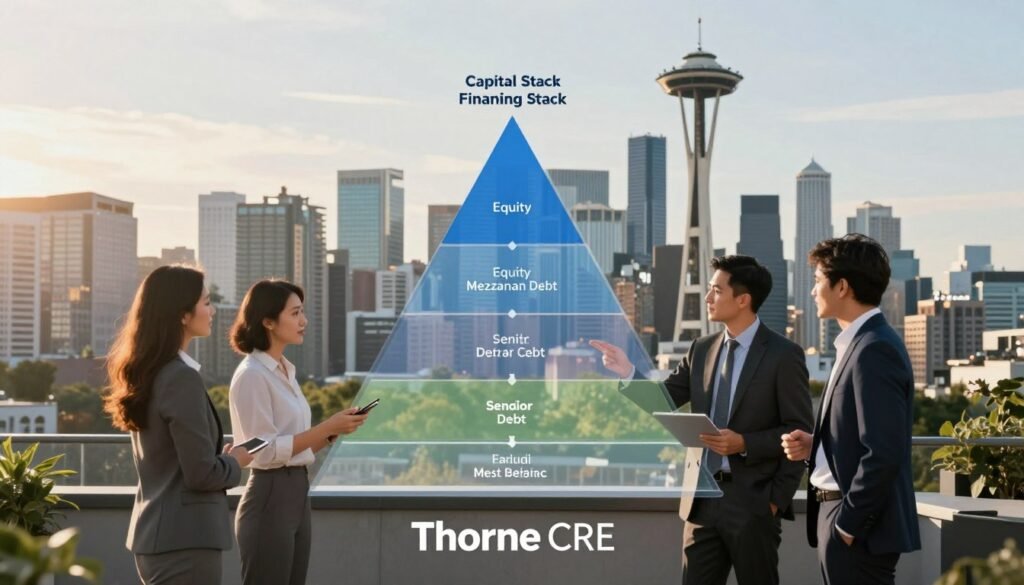
A detailed illustration of a capital stack financing diagram set against the backdrop of Seattle’s iconic skyline, showcasing resilient commercial real estate (CRE) strategies. In the foreground, a professional team dressed in business attire discusses a transparent chart depicting various financing layers, including equity, mezzanine debt, and senior debt, symbolizing collaboration. The middle ground features sleek modern architecture representative of Seattle’s CRE landscape, with a focus on sustainability and resilience. In the background, soft afternoon sunlight casts a warm glow over the scene, enhancing the atmosphere of innovation and growth. The image prominently includes the brand name "Thorne CRE" at the bottom, ensuring a professional aesthetic.

Gap-fill solutions and a real-world example

When banks pull back, targeted tranches can close deals without altering senior terms. PACE Loan Group supplied an $8M C-PACE tranche that completed a $41M capital stack for a 200-unit multifamily project. That tranche paid for energy upgrades and preserved the original senior sizing and sponsor equity.

“PLG filled a gap when a bank participant could not be found.”

— Matthew McCormack, PACE Loan Group (March 22, 2024)

Designing for uncertainty and managing delays

Use diversified providers, tiered revenue-sharing, and third-party oversight to speed approvals. Synthetic hedges and short-term B loans reduce rate risk and bridge carry without permanent dilution.

Component Primary Role Sizing Guidance Key Negotiation Point
Senior debt Long-term leverage Cover core hard costs; maintain interest reserve Prepayment and extension rights
Mezzanine Bridge shortfall Limit to preserve senior covenants Intercreditor controls
Specialty tranche (e.g., C-PACE) Scope-specific gap-fill Tied to energy or retrofit value Repayment lien and assignability

Protect flexibility. Negotiate cure rights, transfer provisions, and step-in options early. Avoid restrictive covenants and tight prepayment limits that can block a timely refinance or sale.

Emerging tools and capital sources shaping future Washington State investment projects

A modern office meeting room showcasing a dynamic presentation on C-PACE financing for energy upgrades. In the foreground, a diverse group of five professionals, dressed in smart business attire, engaged in a discussion, pointing at a large screen displaying graphs and images related to energy efficiency projects. In the middle, the conference table is adorned with green plants, laptops, and documents about Seattle and Washington State's real estate investment projects. The background features large windows with a view of Seattle's skyline, bathed in natural light that creates a bright, inspiring atmosphere. The overall mood is collaborative and forward-thinking, reflecting innovation and sustainability in commercial real estate investments. The brand name "Thorne CRE" is subtly integrated into the presentation materials.

New financing tools are changing how developers stack funding for energy-forward projects. C-PACE can sit in the mix as a tranche tied to eligible upgrades. That tranche increases proceeds and can improve a building’s operating profile through measurable savings.

C-PACE financing for energy measures

In one PLG-backed example, upgrades were projected to save $367,265 per year with a 21.8‑year payback. Repayment was a voluntary special charge paid directly to the lender, making the lien clear and bankable when documented.

Early coordination with senior lenders and equity holders is critical to resolve intercreditor terms and avoid last-minute friction.

Institutional and private capital’s expanding role

As federal support wanes, institutional funds and private companies provide bespoke terms, tighter reporting, and more oversight. That brings more complex governance but also deeper pockets for large projects.

Creative structures gaining traction

  • Tax credit sales — convert credits to upfront proceeds.
  • Project bonds — an alternative to construction loans for longer-tenor financing.
  • Offtake-style contracts — reduce revenue uncertainty via pre-sold services or energy flows.

Match tools to asset type and phase. Multifamily often benefits from C-PACE and tax credits; industrial sites favor bonds or offtake deals. Control diligence and info flow so committees can act fast and protect optionality.

Conclusion

A resilient financing plan protects project value when schedules slip and markets tighten.

Design for durability: lock long-term debt where possible, use targeted tranches to fill timing gaps, and then size equity to preserve returns and control. This order of operations reduces repricing risk and opportunity costs.

Capital efficiency is a leadership discipline that safeguards project life and enterprise value. Treat flexibility as a priced asset and negotiate terms that preserve refinance, recap, and sale options.

Expect lender demands to grow as deal cycles lengthen. Proactive reporting, third-party validation, and clear contingency plans will be standard practice for companies that want their stack to survive and thrive.

FAQ

What is a capital stack and why does it matter for Seattle and Washington State CRE investments?

A capital stack is the layered mix of financing used to fund a commercial real estate project, typically including senior debt, mezzanine loans, sponsor equity, and credit facilities. It matters because each layer carries different risk, return, and control features. For Seattle and nearby markets, a well-structured stack balances cost and flexibility to withstand rising rates and longer deployment timelines.

Why is the cost of capital rising and deal timelines extending in the region?

Higher interest rates, tighter bank underwriting, and macroeconomic uncertainty are pushing up borrowing costs. Regulatory shifts and supply-chain or permitting delays extend project schedules. Lenders now require more conservative cash-flow tests and larger reserves, which slows approvals and increases overall financing expense.

How do longer paths to notice-to-proceed affect lender underwriting and de-risking milestones?

Extended timelines raise lender concerns about completion risk, cost escalation, and changes in market rent. Underwriting trends toward higher contingency reserves, shorter-duration loans, milestone-based disbursements, and stricter covenants tied to construction and lease milestones. Borrowers must present robust mitigation plans to secure favorable terms.

What are the core components of a modern capital stack for resilient CRE projects?

A resilient stack typically includes senior debt for first-loss coverage, mezzanine or subordinate debt to fill leverage gaps, sponsor equity aligned with long-term returns, and credit facilities or short-term working capital. Combining these layers with clear intercreditor terms preserves flexibility and limits value-destroying triggers.

What gap-fill solutions work when traditional banks step back?

Alternatives include mezzanine lenders, institutional debt funds, private credit, tax-equity buyers, and structured tranches such as C-PACE for eligible projects. These sources can bridge shortfalls, as seen in projects where an $8M C-PACE tranche supported a larger $41M financing plan by improving cash flow and underwriting metrics.

How does C-PACE financing support project credit and loan proceeds?

C-PACE (Commercial Property Assessed Clean Energy) links repayments to the property tax bill and funds energy or resilience upgrades. Because savings can enhance net operating income, C-PACE can improve debt service coverage ratios and attract lenders. It also provides long-term, non-recourse financing that sits behind senior mortgage debt in many stacks.

What strategies help design for uncertainty in today’s market?

Build diversified capital sources, include tiered revenue-sharing or performance tranches, and establish third-party oversight such as independent engineers or escrowed contingency accounts. These measures allocate risk, keep sponsors motivated, and reassure lenders during disruptions.

How can developers manage construction and interconnection-style delays?

Use hedging tools like fixed-price contracts, cost escalation caps, and delay insurance. Short-term bridge loans or B-loans can cover time-sensitive needs without diluting sponsor equity. Clear milestone definitions and tranche-based draws reduce lender exposure to schedule slippage.

What covenant and prepayment terms should sponsors avoid to protect flexibility?

Avoid overly restrictive covenants that block asset transfers, force equity sweeps, or impose punitive prepayment penalties. Poor assignability terms and automatic acceleration triggers can destroy value. Negotiate carve-outs for refinancing, modest prepayment fees, and realistic cure periods.

How are institutional and private capital filling gaps as federal support declines?

Institutional investors and private credit funds are increasing allocations to direct lending and project finance. They offer patient capital, tailored structures, and appetite for niche risks, stepping in where bank appetite has receded. These sources often accept more flexible amortization and hold periods aligned with long-term cash flows.

What emerging instruments are shaping future Washington State projects?

Expect wider use of tax credit sales, project bonds, offtake-style revenue contracts, and blended structures that combine public incentives with private credit. These tools help monetize long-term value streams and lower sponsor equity requirements.

When should a developer consider layering mezzanine or subordinate debt?

Consider mezzanine when senior lenders limit leverage but the project still meets return targets. Mezzanine can preserve sponsor equity and bridge valuation gaps. Ensure intercreditor terms and interest buffers are negotiated to avoid downstream conflicts.

How can sponsors and lenders collaborate to accelerate approvals despite tougher markets?

Share transparent underwriting packages, independent third-party reports, and realistic contingency plans. Early alignment on milestones, draw schedules, and reporting reduces surprises. Sponsors who demonstrate strong governance, aligned incentives, and conservative stress tests gain trust faster.

Leave a Comment

Your email address will not be published. Required fields are marked *

Scroll to Top