

Surprising fact: more than 60% of mid-market commercial projects close with a last-minute change to financing, and that shift often decides who gets paid first.
This piece explains how a Utah capital stack is built for fast-moving commercial real estate. A capital stack is the layers of funding for a project and the order people get repaid.
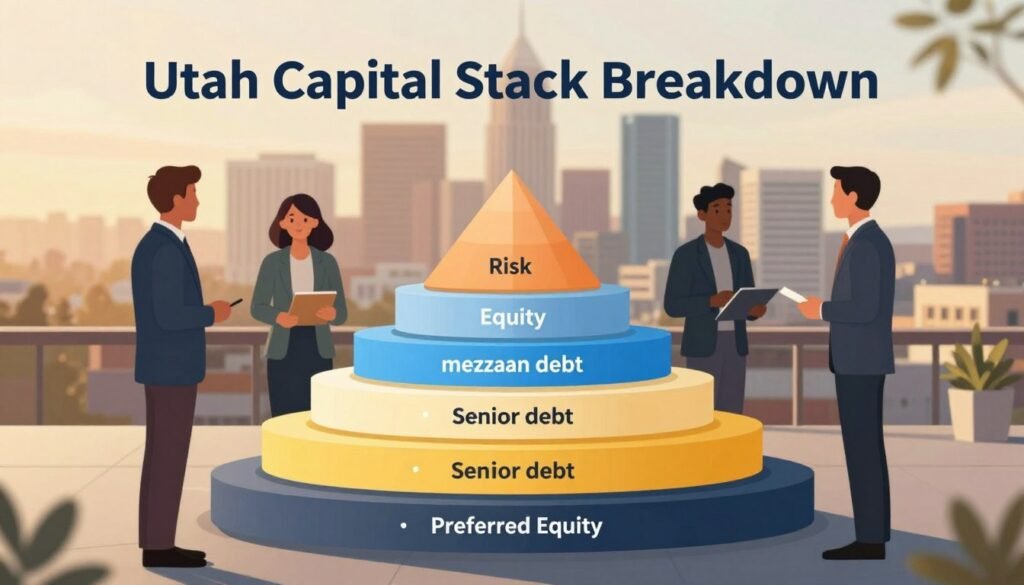
In plain terms, senior debt, mezzanine debt, preferred equity, and common equity each trade protection for potential returns. Higher returns usually mean lower priority and fewer protections.
Fast markets demand quick commitments, clean execution, and realistic refinance plans. Sponsors need a fundable structure; investors must judge priority, documentation, and downside controls before they invest.
This article will walk through market dynamics, each layer’s rights and risks, and a due diligence checklist to review before closing a deal.
Key Takeaways
- Learn what a capital stack is and why repayment priority matters.
- Understand the four common layers and how they share risk and returns.
- Recognize fast-market pressures that make structure decisions urgent.
- Private placements can be illiquid and include forward-looking risks.
- Good documentation and alignment help sponsors fund deals and protect investors.
Why capital stack planning matters in Utah’s fast-moving CRE environment
In fast-moving commercial real estate markets, planning the funding order can decide whether a deal succeeds or fails.
Capital stack planning is not a formality: it is the financial model that determines who gets paid first, how risk is shared, and whether a refinancing or sale can realistically repay the stack.
What repayment priority means for returns
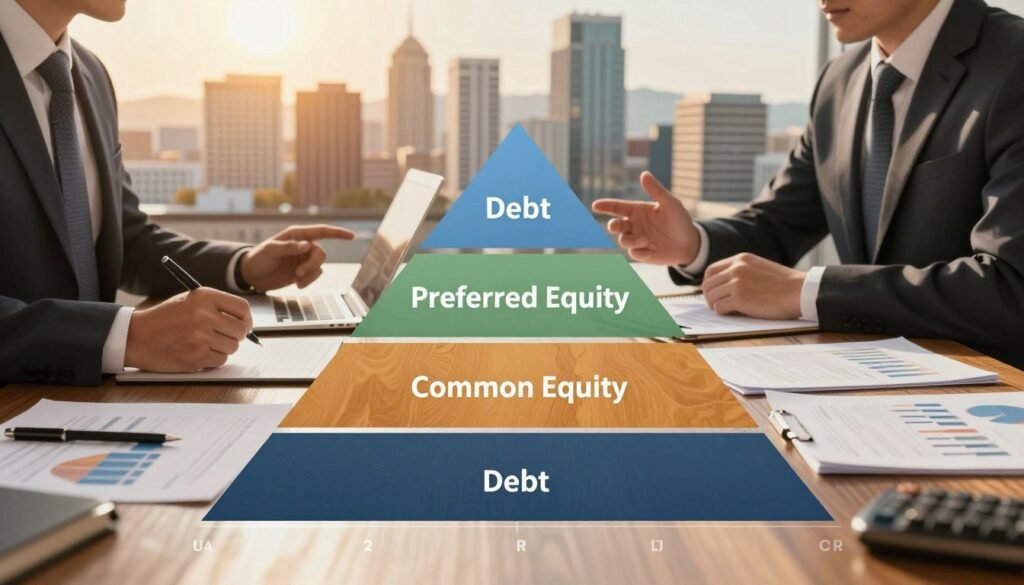
A simple waterfall explains it: interest and principal flow first to senior lenders, then to subordinated debt, then to preferred positions, and finally to common equity. Senior debt gets paid first and so usually carries lower risk and lower interest. Common equity is last and holds the upside — and the biggest downside.
Speed, competition, and refinancing timelines
When competition heats up, sponsors may accept tighter loan terms or pricier financing to win a site or keep a schedule. Short bridge loans change interest cost and covenants versus long-term loans. That affects the probability that the full stack repays on time.
Balancing lower risk vs higher returns
Debt targets defined payments and priority. Equity depends on stabilization, cash flow, and exit pricing. Investors should stress-test profit forecasts against lease-up and cap-rate shifts. Private placement offerings can be illiquid and carry forward-looking assumptions that are not guarantees.
“The right stack is the one the market will fund today and that survives rate moves, cost overruns, and slower absorption.”
For a deeper guide to structuring and documentation, see navigating the capital stack. Next: a layer-by-layer look at rights, protections, and typical returns.
Utah Capital Stack components and how each layer affects risk, rights, and returns
A clear view of each funding layer helps investors weigh protection against potential upside. Below we summarize how priority, rights, and typical sizing change the risk and return profile for real estate deals.
Senior debt: first-lien protection and sizing
Senior debt sits at the top of repayment priority. First-lien rights mean lenders get paid interest and principal before subordinated claims.
Typical sizing is roughly 50%–60% of total project cost. Lower risk and strong collateral usually translate into lower interest and capped returns.
Mezzanine debt and ownership-pledge protections
Mezzanine debt is subordinated to senior loans and often carries higher coupons to compensate for weaker security.
Sizing norms are commonly 25%–40%. Higher interest can indicate elevated risk rather than “free extra yield.”
Mezzanine lenders may rely on an ownership-pledge to take control if the sponsor defaults. Those remedies depend heavily on the intercreditor agreement negotiated with senior lenders.
| Layer | Priority | Typical Size | Return Type | Key Rights |
|---|---|---|---|---|
| Senior debt | Highest priority | 50%–60% | Fixed interest | First-lien, covenants |
| Mezzanine debt | Subordinated | 25%–40% | Higher interest, may include PIK | Ownership pledge, limited remedies per intercreditor |
| Preferred equity | After debt, before common | 5%–15% (varies) | Fixed-like, may accrue | Payment priority over common, cash-flow dependent |
| Common equity | Lowest priority | Residual | Variable, profit share | Upside participation, last-in-line |
Preferred and common equity: payouts and upside
Preferred equity often pays like a fixed instrument and sits ahead of common equity for distributions.
Payments typically depend on available cash and may accrue until the project stabilizes.
Common equity is paid last. It bears the highest risk but can deliver the largest gains through profit-sharing and promote structures. Share class terms change who gets distributions first and how profits split.
“Rights and enforceability often decide outcomes more than headline yields when markets slow.”
Practical synthesis: investors pick layers that match risk tolerance and time horizon. Sponsors must align every layer so the total capital stack can withstand cost overruns, slower absorption, and refinancing friction.
Due diligence for Utah CRE capital stacks: what investors and sponsors should verify before closing
Before signing papers, both sponsors and investors must run a focused checklist to confirm who gets paid and when.

Review offering documents and agreements
Confirm the waterfall in writing. Verify payout order, repayment triggers (sale, refinance, cash-flow sweeps), and any voting or consent rights that can shift control in a workout.
Spot sunk costs and structural red flags
Large upfront fees, layered financing charges, and heavy accruals raise the project break-even. These sunk costs can magnify downside when rents or exit pricing fall.
Scrutinize loan terms and enforceability
Read loan, pledge, and intercreditor agreements together. Check default interest, maturity, extension options, covenants, and remedies for enforcement gaps.
“Contract terms matter—courts may uphold interest provisions, so don’t assume terms can be unwound later.”
Private placement realities
Many offerings are limited to accredited buyers, are illiquid, and are not guaranteed. Forward-looking statements can differ materially from results.
- Checklist: waterfall language, repayment triggers, intercreditor terms, fee schedules, maturity and extension clauses, accreditation and offering delivery.
- If the rights package, leverage, and refinance plan do not align, restructure the capital or walk away.
Conclusion
Clear repayment order and enforceable rights are the practical backbone of any deal. In fast markets a capital stack must match funding sources to timing, risk, and exit plans so investors and sponsors know who gets paid and when.
Debt layers deliver defined payments and repayment priority. Equity offers upside but depends on execution, cash flow, and exit pricing.
Sponsors must execute with discipline: realistic refinance plans, conservative leverage, and clean documentation keep a project fundable. Investors should run focused due diligence on waterfall language, maturities, and remedies—not summaries.
Action plan: build a clear model, stress-test the project under slower lease-up and higher rates, and only move forward when the funding structure looks fair, fundable, and resilient across the entire stack.