
Debt and Equity Capital Stack Basics for South Dakota Commercial Properties

Mount Rushmore during daytime

Surprising fact: trust-company assets in South Dakota topped $800 billion by mid-2025, roughly five times the size recorded a decade earlier—an indicator of how local financial rules shape capital flows into real estate.

This guide explains the South Dakota Capital Stack in clear commercial terms: how a deal layers lower-risk debt up to higher-risk equity, and why that order decides who gets paid and when.

We set expectations up front. This is an informational, ultimate-guide walkthrough for U.S. readers evaluating commercial property investments, not legal or tax advice.

Practical stakes matter: capital structure affects underwriting, lender leverage limits, investor return targets, and downside protection when a property underperforms.

Core idea: priority typically pays from the top down while risk and upside rise lower in the stack. Later sections will cover senior debt, mezzanine and debt funds, preferred equity, and common equity and how they fit across asset types.

Key Takeaways

  • Capital is layered: lower-risk debt first, equity last.
  • Structure drives who gets paid, and when, during cash flow or sale events.
  • Local trust-friendly laws can influence capital formation and investor interest.
  • The same stack concept applies across multifamily, retail, office, and industrial assets.
  • After reading, you’ll better compare debt vs. equity tradeoffs and read term sheets with more confidence.

Capital Stack Fundamentals for Commercial Real Estate Debt and Equity

Understanding where each investor sits in the funding order clarifies who gets paid first and why.

What “position in the capital stack” means for who gets paid back first

“Position capital stack” describes the legal and economic order of claims on property cash flow and sale proceeds. Senior debt sits at the top and is typically paid back first from net operating income, refinancing, or a sale. Junior claims follow, and common equity receives residual gains only after higher-priority investors are made whole.

A detailed, professional illustration of a "Capital Stack" concept, visualized as a layered pyramid structure, with distinct sections representing different types of equity and debt. In the foreground, clearly defined layers labeled "Senior Debt", "Mezzanine Debt", "Preferred Equity", and "Common Equity" with varying colors and textures. The middle ground features a polished office environment, symbolizing commercial real estate, with modestly dressed business people discussing investment strategies around a conference table. In the background, a city skyline at sunset creates a warm, inviting atmosphere. Soft overhead lighting highlights the structure, providing a sophisticated mood. The title "Thorne CRE" subtly integrated into the base of the pyramid, enhancing the professionalism of the image.

How lenders and equity investors price risk, returns, and downside protection

Lenders underwrite debt by assessing interest rates, amortization, DSCR, LTV, recourse terms, and covenants. Those loan terms lower risk and justify lower pricing. In contrast, equity seeks higher returns to compensate for greater exposure.

For a stabilized property with steady leases, debt carries lower risk and therefore lower interest. For a redevelopment, equity faces higher risk and targets higher IRR and cash-on-cash returns.

  • Downside protection: lenders get collateral and covenants.
  • Preferred equity: gets defined returns and rights before common equity.
  • Common equity: accepts residual upside and loss-first exposure.

Sponsors balance debt vs. equity to manage dilution, control, and proceeds. A blended cost of capital can lower the weighted cost and improve liquidity, even if structure complexity rises. For practical structuring tips, see this strategic guide.

South Dakota Capital Stack Layers and How They Work Together

Layering finance on a commercial property creates clear rights and risks for each investor.

Senior debt basics

Senior debt is the first-priority claim. It is typically secured by the property, with detailed loan terms, covenants, and collateral rights that help lenders reduce exposure.

Common structures include fixed vs. floating interest, amortizing vs. interest-only periods, and cash-management controls or reserves that limit sponsor discretion.

Mezzanine debt and debt funds

Mezzanine debt sits below senior debt but above equity. It often uses a pledge of ownership interests rather than a second mortgage.

When banks are constrained, private debt funds or a fund will fill the gap. These lenders charge higher pricing and faster remedies for higher risk.

Preferred equity and common equity

Preferred equity is technically equity but can mimic mezzanine economics. It gives negotiable distribution priority without a second lien, offering payment flexibility and fewer enforcement remedies.

Common equity (sponsor equity plus outside equity investments) takes residual upside. Equity investors receive gains only after higher layers are paid, accepting the most volatility.

Typical cash flow waterfall

Operating cash first services senior debt interest and reserves. Next come preferred returns, any catch-up, and promotes to sponsors. On sale or refinance, the same priority applies: higher layers are paid back before common equity receives splits.
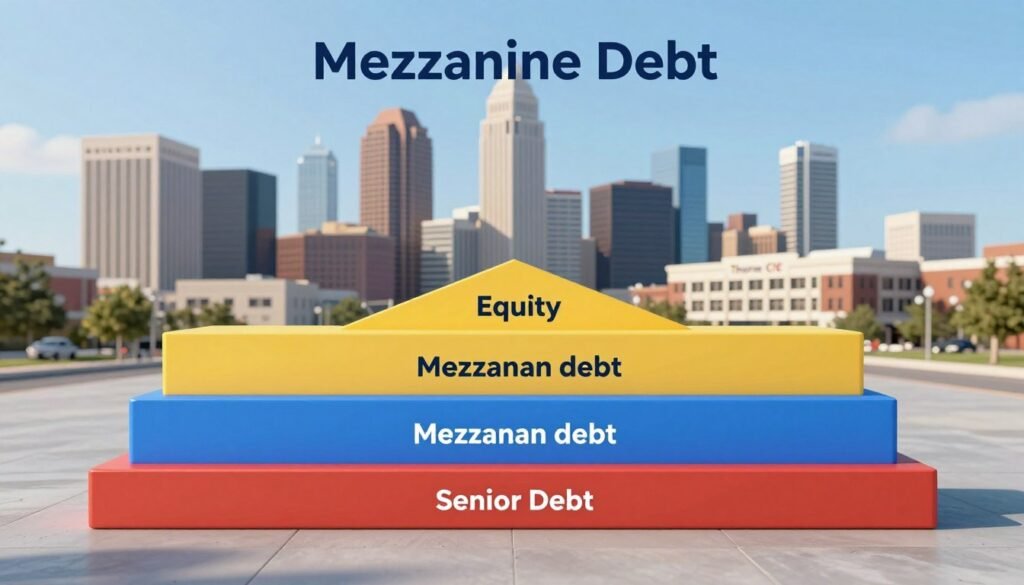
A detailed visualization of mezzanine debt in a commercial property context, showcasing a layered capital stack. In the foreground, a 3D representation of a financial structure with distinct layers labeled as equity, mezzanine debt, and senior debt, using vibrant colors for differentiation. The middle ground features a modern South Dakota city skyline, with commercial buildings symbolizing the property market. The background fades into a clear blue sky, providing an open, hopeful atmosphere. Soft, natural lighting casts gentle shadows, enhancing the depth of the layers. The image conveys professionalism and clarity, embodying the essence of financial collaboration. Include the brand name "Thorne CRE" subtly integrated into the design.

Structuring South Dakota Commercial Property Capital for Investors, Funds, and Sponsors

Every deal needs a capital map that ties investor priority to project milestones and cash flow timing.

Why it matters: sponsors and investor partners choose debt, preferred equity, or common equity based on the property plan—stabilized income favors higher leverage and traditional lending, value-add uses more equity to absorb renovation risk, and ground-up development needs longer equity runs and flexible distributions.

A dynamic urban landscape representing the concept of "property capital." In the foreground, a diverse group of professionals in business attire, including investors and sponsors, engage in discussion over blueprints and financial documents, showcasing collaboration. The middle ground features a modern commercial building with large glass windows, symbolizing investment opportunities in South Dakota. In the background, a clear blue sky and rolling hills reflect the region’s unique geography. The scene is illuminated by warm afternoon sunlight, creating a vibrant, optimistic atmosphere. Use a wide-angle perspective to capture the depth of the setting, emphasizing the importance of strategic capital structuring. Incorporate subtle branding elements for "Thorne CRE" within the materials on the table, ensuring they blend seamlessly into the professional context.

Local formation context and deal mechanics

State trust-law features and no state income tax have driven large trust formations and influence how some investors organize ownership and reporting. Public reporting showed trust-company assets above $800 billion by mid-2025, a sign of sustained growth in wealth planning.

Practically, that can affect entity choice, distribution mechanics, and confidentiality expectations—but tax and legal outcomes are fact-specific and require qualified advisers.

Risk, liquidity, and disclosure realities

Private real estate offerings are typically for an accredited investor, illiquid, and not FDIC-insured. They may lose value and include forward-looking statements that depend on assumptions.

Investors should insist on full offering documents, model downside scenarios across the full capital ordering, and understand what drives variance—leasing, rates, cap rates, and construction costs.

Sponsor checklist

  • Define target leverage and cash-flow coverage tests.
  • Choose lenders vs. mezzanine or preferred equity to match timelines.
  • Model refinance and sale proceeds by position in the capital ordering.
  • Document disclosure rigor and confirm jurisdictional availability early—platforms may restrict where they operate.

Conclusion

How claims are ordered determines cash flow outcomes in both normal and stressed scenarios. , the capital stack simply prioritizes who is paid first: layers of debt generally get earlier repayment and lower returns, while layers of equity accept more risk for upside.

Use position to judge term sheets and offering materials. Combine senior debt, mezzanine structures, and equity layers to match cash flow timing and sponsor goals. Local trust-law reputations and a favorable financial ecosystem can shape deal formation, but true outcomes still rest on underwriting, documents, and execution.

Next steps: build a simple capitalization model, map the waterfall, list key risks and mitigants, and confirm who gets paid first under multiple scenarios. Verify assumptions, read full documents, and seek qualified tax and legal advice before investing.


FAQ

What does “position in the capital stack” mean for who gets paid back first?

Position in the capital stack defines the payment priority among lenders and investors. Senior debt sits at the top and receives scheduled interest and principal before other claims. Mezzanine debt and preferred equity sit below senior debt and above common equity, so they absorb losses before common equity but after senior lenders. Common equity is last, taking the most risk and receiving residual upside only after all debt and preferred claims are settled.

How do lenders and equity investors price risk, returns, and downside protection?

Pricing reflects perceived risk and expected return. Senior lenders use lower interest rates and strict loan covenants because collateral and repayment priority lower their exposure. Mezzanine lenders and debt funds charge higher yields and may take equity warrants to compensate for greater risk. Preferred and common equity investors seek higher returns via dividends, preferred returns, or capital appreciation. Downside protection comes from covenants, collateral, subordination levels, and structural features like cash flow waterfalls and reserves.

What are the basics of senior debt — loan terms, interest, collateral, and repayment priority?

Senior loans typically include fixed or floating interest rates, amortization schedules, maturity dates, and loan-to-value limits. They are secured by the property as collateral and often require debt service coverage ratios and reporting. Because senior debt is first in line for repayment, it carries lower interest rates and lower expected loss severity compared with mezzanine or equity.

Where do mezzanine debt and debt funds fit, and why do they yield more?

Mezzanine debt fills the gap between senior debt and equity, offering lenders higher yields to compensate for subordination. It often takes the form of unsecured notes or secured by equity interests in the borrowing entity. Debt funds provide flexible capital for mezzanine or bridge lending, targeting higher returns and accepting greater risk, shorter terms, and looser covenants than traditional banks.

How does preferred equity differ from mezzanine debt and why do investors use it?

Preferred equity is an equity-like instrument that ranks above common equity but below debt. It typically pays a fixed preferred return and may have liquidation preference. Unlike mezzanine debt, preferred equity does not create a formal loan obligation, so it avoids certain borrower covenants and interest payments. Investors use it for higher returns than debt while retaining upside potential and negotiating governance rights.

What role does common equity play and how do equity investors receive upside?

Common equity represents ownership and claims on residual cash flow. Equity investors, often sponsors and outside partners, receive distributions after debt and preferred claims are satisfied. Upside comes from cash flow growth, asset appreciation, and sale or refinance profits. Sponsors may also earn promote structures that increase their share of profits after return hurdles are met.

How does a typical cash flow waterfall determine who gets paid in a real estate deal?

A cash flow waterfall sets the sequence for distributing operating cash and sale proceeds. It usually pays operating expenses and senior debt service first, then preferred returns or mezzanine obligations, and finally common equity distributions. Waterfalls can include pari passu buckets, return hurdles, and promote tiers that shift economics toward sponsors once investor IRR thresholds are reached.

How should investors evaluate risk, liquidity, and disclosure in private real estate offerings?

Investors should review offering memoranda, financial projections, track records, fees, and governance terms. Assess liquidity limitations, lock-up periods, and exit strategies. Evaluate sponsor experience, market fundamentals, stress-test assumptions, and aligned incentives. Accredited investors should insist on clear disclosure of past performance and explicit discussion of forward-looking risks.

What are the implications of trust-friendly laws and no state income tax for capital formation?

Trust-friendly legal frameworks and favorable tax rules can attract capital formation by enabling efficient estate planning, confidentiality, and tax planning for high-net-worth investors and sponsors. These features may influence structuring choices for funds and joint ventures, but they don’t change property-level underwriting or market risk, which remain primary value drivers.

Leave a Comment

Your email address will not be published. Required fields are marked *

Scroll to Top