


Surprising fact: nearly half of modern development gaps are closed by layering alternative financing instead of raising more sponsor equity.
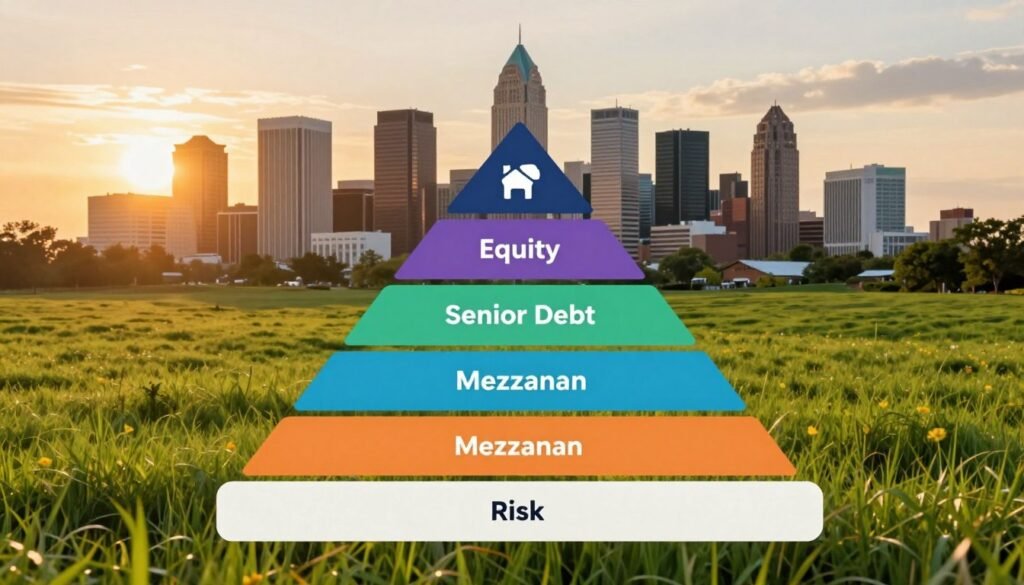
The term capital stack describes the full set of debt and equity funding a single project and why order matters for risk and repayment priority. Typical layers include common equity, preferred equity, mezzanine debt, and senior loans.
For sponsors and developers the goal is clear: balance financing cost, control, and execution risk in a market where underwriting and construction realities make deals more conditional. C-PACE often serves as a complementary layer alongside senior bank debt, USDA loans, and EB-5 capital to increase leverage and reduce equity needs, especially in hospitality projects.
This article takes a practical, how-to approach. You will learn which planning inputs drive terms, how to choose the right mix of capital and debt, and how to manage closing and post-close process. For deeper methodology, see our guide on navigating the capital stack.
Key Takeaways
- Understand the stack order to protect downside and allocate risk.
- Match financing mix to market and development constraints, not templates.
- Use C-PACE as a complementary layer to close leverage gaps.
- Plan inputs—cost, timing, and underwriting—drive financing terms.
- Execution focus: lender selection, documentation, and contingency planning.
Deal Planning Inputs That Shape Your Capital Stack in Omaha and Nebraska
Project type and timing steer which financing routes and loan covenants you’ll need. Define whether the work is ground-up development, construction, acquisition, or repositioning. That choice drives lender appetite, required guarantees, and the form of equity you seek.

Define the project and translate the business plan
Turn the business plan into lender-ready inputs: uses of funds, phasing, contingency layers, and takeout assumptions. Lenders expect clear assumptions on hard and soft costs, carry, and stabilization targets.
Underwrite cost, schedule, and interest-rate risk
Underwrite total cost and timeline with discipline. Small budget or schedule misses can force expensive debt and reorder priorities in the stack.
Match debt terms to your time horizon: choose fixed versus floating rates, test hedges, and size reserves to absorb rate moves during construction and lease-up.
Clarify control, investor returns, and flexibility
Distinguish common equity from preferred equity early—each affects cash flow priority and sponsor economics. Define control in practical terms: approvals, major actions, and reporting obligations.
Confirm lender requirements (DSCR, LTC/LTV, guarantees, third-party reports) before marketing the financing package. Build in prepayment and extension options so future refinancing or sale plans remain feasible.
Summary:Plan inputs—project type, underwriting rigor, investor expectations, and flexibility—determine which debt, loans, and equity come together to form a resilient financing package.
How to Build a Nebraska Capital Stack That Balances Cost, Control, and Risk
Begin any financing plan by sizing senior loans—these lenders set the practical leverage ceiling for a project.
Senior debt options and borrower requirements
Bank construction, bridge, and fixed-rate takeout loans are common first-lien choices. Lenders require sponsor experience, clear underwriting, DSCR/LTC metrics, recourse terms, and third-party reports.
Layer equity strategically
Common equity carries upside but dilutes sponsors. Preferred equity reduces dilution yet often adds current-pay returns and approval rights. Sponsors trade control for lower cash contributions.
Mezzanine and hybrid capital
Mezzanine debt lowers upfront equity needs but raises repayment priority complexity. Expect intercreditor agreements and higher interest than senior loans.
Using C-PACE and pairing with other sources
C-PACE can replace higher-cost equity and improve leverage when construction costs spike. In one hospitality example, C-PACE was 16% of capital and moved a deal past a sub-55% LTC constraint.
| Layer | Role | Typical impact |
|---|---|---|
| Senior loans | First lien underwriting | Sets max leverage, DSCR/LTC limits |
| Preferred equity | Reduces sponsor dilution | Adds approval rights, fixed returns |
| Mezzanine | Bridges equity gap | Higher cost, complex intercreditor terms |
| C-PACE / USDA / EB-5 | Complementary capital | Improves LTC; can push leverage to low-70% or ~80% with USDA |
Order matters: senior debt first, then equity selection, then mezzanine, and finally complementary sources like C-PACE, USDA, or EB-5. This sequence helps developers weigh cost, control, and risk at each point.
Executing the Financing Process: Applications, Timelines, and Capital Stack Management
A clear closing plan that ties capital tranches to construction milestones reduces surprises and cost. Treat execution as a sequence of linked tasks: the application, underwriting, third-party reports, legal documentation, and intercreditor coordination all add time and risk.

Align capital sources to milestones
Match each tranche of financing to when funds are actually needed on site. This lowers negative carry and keeps the equity requirement tight.
Example: release construction draws after permit sign-off, reserve operating capital for lease-up, and fund capitalized interest in tranches tied to draw schedules.
Coordinate USDA and prepayment structures
USDA timelines can lengthen closings. Negotiate prepayment terms up front so penalties align with USDA milestones and do not block a refinance at exit.
Where C-PACE is used, insist on tailored prepayment language. Restrictive penalties can hinder future sales or refinancing if left unchanged.
Maintain discipline at closing. Confirm lien priorities, intercreditor agreements, draw mechanics, reserve accounts, reporting cadence, and covenant responsibilities before funding starts.
Stress-test the financing against interest-rate moves, slower lease-up, and delayed refinance windows. This protects the future and helps borrowers adjust structure early.
| Execution Item | Why it matters | Action |
|---|---|---|
| Application completeness | Speeds underwriting | Deliver pro forma, cost breakdowns, and schedule |
| Third-party reports | Risk validation | Order early: appraisal, environmental, and market study |
| Intercreditor terms | Protects lien order | Negotiate priority and cure rights pre-close |
| Capitalized interest tranches | Reduces early cash pressure | Ask lenders to capitalize by phase, not all up front |
Developer checklist: ensure application readiness, prepare for lender Q&A, add timeline buffers, and assign clear roles for counsel, broker, and sponsor. That process focus turns financing into a controllable, repeatable part of development.
Conclusion
An effective closing plan turns financing choices into a repeatable execution playbook. Use the plan to match funds to milestones and avoid last-minute gaps that force costly fixes.
There is no one-size-fits-all capital stack; build each package to fit the project, its risk profile, and your timeline. Balance debt and equity so you minimize cost while keeping control and flexibility.
Think through tradeoffs: cheaper debt can limit future options, while more equity eases covenants but dilutes returns. Choose equity types and repayment terms that reflect your exit plan and refinance constraints.
Follow the layering sequence from senior loans to equity, then mezzanine and hybrid options, and consider C-PACE or USDA where they materially improve leverage. In practice, pairing C-PACE with USDA can move leverage from sub-55% LTC toward low-70% or up to 80% in qualifying cases when exit planning is clear.
Next step: convert this approach into a short checklist of inputs, timelines, and documents before you invite capital. That set-up sharpens negotiations and improves outcomes for housing and hospitality investment.