


Surprising fact: in early 2025, lenders returned to underwriting more than 30% more deals than a year earlier, signaling new liquidity across the commercial real estate space.
Debt funds vs banks describes two lender types competing for real estate business today. Banks often offer lower rates but tighter covenants and slower processes. Debt funds can move faster and offer structural flexibility, though sometimes at a higher cost of capital.
This guide previews the decision criteria owners and investors use now: cost of capital, certainty of execution, flexibility, covenants, and how each choice changes the capital stack on a live deal.
With cooling inflation and shifting interest expectations, transaction windows are reopening. Which lender wins depends on asset quality, sponsor profile, and the business plan for the asset—whether office, data, or other property types.
We introduce a practical comparison framework: underwriting priorities, speed, term dynamics, pricing and fees, and refinance and exit risk over time. This is educational content using recent data, not specific investment advice.
Key Takeaways
- Debt funds trade speed and flexibility for higher pricing; banks offer lower rates but tighter terms.
- Assess cost, certainty, and covenants to see which lender fits your deal and timeline.
- Market recovery in 2025 means more options; asset quality and sponsor track record matter most.
- Use a five-point framework: underwriting, speed, term, pricing, and exit risk.
- This guide educates U.S. owners, operators, and investors on acquisition, refinance, and recap strategies.
Where U.S. CRE Capital Markets Stand Now: Liquidity, Rates, and the Cycle Turn
In early 2025 the lending landscape began to loosen, and sponsors are seeing more practical financing paths.
After the rate-hiking era, underwriting has shifted. With rates stabilizing and volatility easing, lenders have narrowed bid-ask spreads and taken a less defensive stance.
Real leasing signals support that view: office availability has modestly declined over the last year, speculative industrial supply slowed, and multifamily vacancy is easing. These fundamentals make downside tails more manageable for lenders.
New loan origination rose more than 30% YoY in 1H 2025. Borrowers report more quotes, more lender types, and fewer dead ends on deal execution.
Property sales volume and pricing are stabilizing, and cap rates are acting as a market signal for refinance math—helping lenders judge whether an asset sits above or below replacement cost.
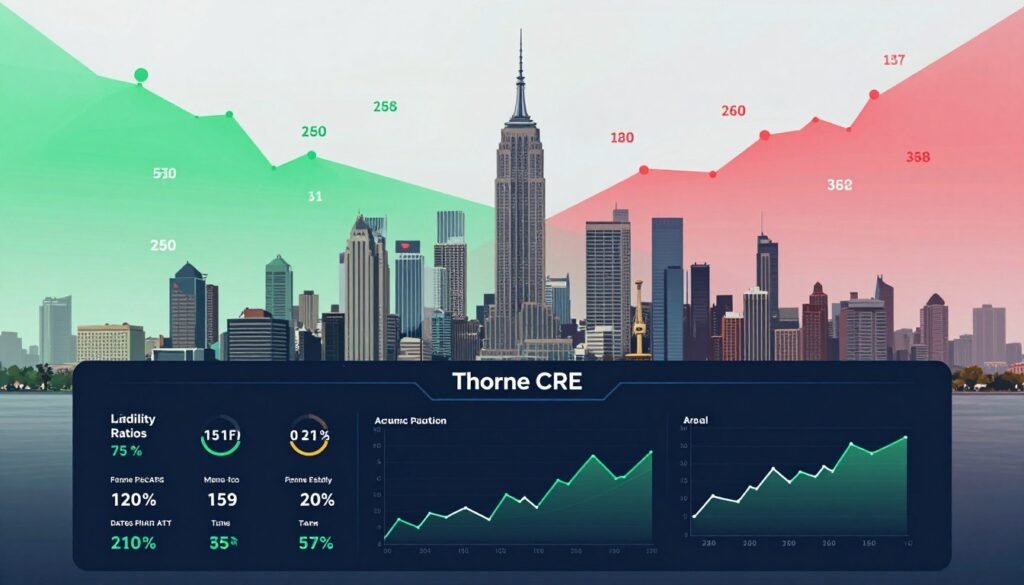
Fundraising and sector appetite
Fund closings totaled $86B YTD through August 2025, with Brookfield ($16B) and Carlyle ($9B) notable raises. Blackstone BREIT’s strong Q2 highlights improving investor tone and a bias toward drawdown funds.
Data centers and other digital infrastructure are attracting incremental capital, which widens credit sources and competition for select sectors.
What this means for borrowers: loan terms remain disciplined, but sponsors often can choose among banks, private credit, and securitized options depending on asset type and timeline.
How Bank Lending Works in Commercial Real Estate Today
Banks now favor lower-leverage, cash-flowing properties and proven sponsors when they underwrite new loans.
Modern credit box focuses on stabilized income, sponsor track record, and concentration limits. After the recent cycle, banks often require lower loan-to-value and stronger covenants for office or stressed sectors.

Underwriting and process
Underwriting reviews in-place cash flow, lease rollover, market rent assumptions, capex, and sponsor liquidity. Those inputs drive proceeds, pricing, and covenant levels.
Execution steps:
- Quick sizing up
- Deeper model review and lender-facing SWOT
- Internal deal committee approval and term sheet
- Due diligence and closing
Loan structure and risks
Key terms include term length, amortization, fixed vs floating rate, reserves, and cash management. Tight covenant packages matter when volatility rises.
| Feature | Bank Typical | Why it matters |
|---|---|---|
| Leverage | Lower LTV | Reduces refinancing risk |
| Rate type | Floating or fixed | Affects interest exposure |
| Extensions | Conditional options | Can create extension risk if covenants fail |
| Covenants | Stricter | Protects bank in downturns |
When banks win: they usually offer lower-cost debt when borrowers accept structure and when accounts or treasury services add value. For office and other challenged sectors, expect tighter leverage and more equity — otherwise non-bank lenders may be the practical path.
How Debt Funds and Private Credit Compete for Deals
Private credit has become a go-to source for sponsors needing speed, structure, and certainty on deals.
What private credit means: lenders include debt funds, mortgage REIT platforms, and private firms that underwrite real estate loans outside the bank system. They persist through the cycle because they move fast, price risk flexibly, and accept complex property stories that banks often avoid.

Speed and certainty
Single-counterparty execution reduces friction. A private lender can iterate quickly and close a deal on a tight timeline.
Securitized or syndicate routes often add steps and less flexibility once documents are active.
Pricing and structures
Fall 2025 data shows pricing trending lower; in select cases private debt is competitive with bank loans.
Funds offer senior, stretch senior, mezzanine, and preferred debt to tailor proceeds and sponsor needs.
Collaboration and proof points
Debt funds now underwrite alongside institutional life companies and syndicate risk for larger volume. YTD 2025 fundraising exceeds $20B for North American CRE debt; Blackstone closed an $8B vehicle, and major raises target digital infrastructure—Blue Owl and Principal led big data center funds.
Borrower checklist
- Call a debt fund first for tight timelines, transitional plans, or office refinancing gaps.
- Provide rent rolls, pro forma NOI, and a short remediation plan to speed quotes.
- Evaluate certainty of close versus spread; sometimes a small premium buys crucial time.
Choosing Between Debt Funds vs Banks by Sector, Deal Size, and Strategy
Which lender leads often comes down to sector appetite, execution speed, and deal scale. Use a simple decision map: banks win on stabilized, high-quality property with lower leverage and strong sponsor relationships. Private funds win on tight timelines, transitional plans, or complex underwriting cases.
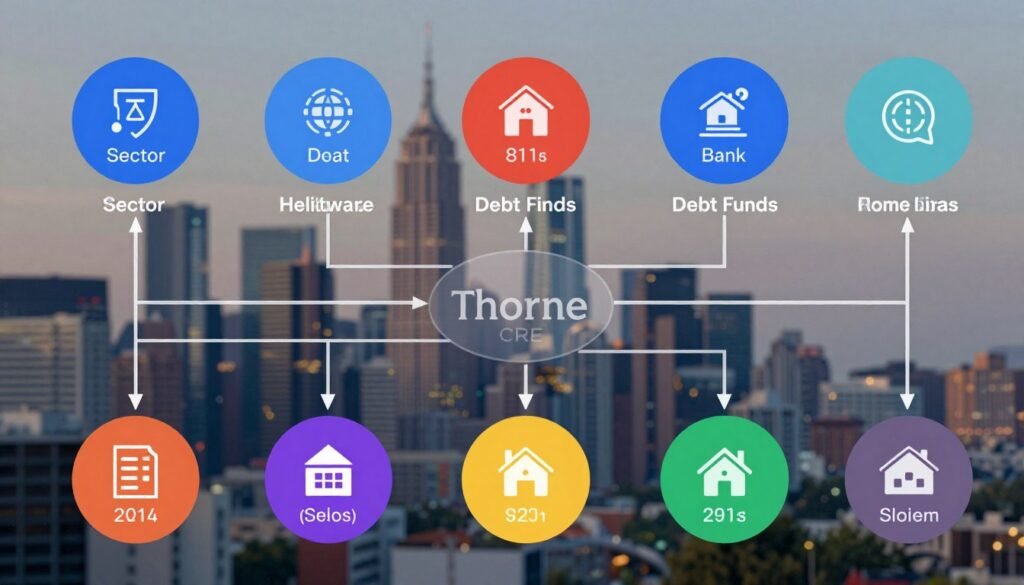
Where banks typically win
Multifamily and industrial draw the deepest lender bench. Among the largest funds closed YTD 2025, most target these sectors, which drives competitive pricing and volume for loans on stabilized assets.
Where private lenders lead
Data centers and digital infrastructure attract dedicated fundraising and specialized debt. Funds can underwrite scale and technical leases faster than traditional banks. Flexible debt also fills office refinancing gaps where leases and capex create uncertainty.
Deal size and public-market signals
Large transactions above $100M now have multiple paths — banks, life companies, CMBS, and private credit — so sponsors often run dual tracks to preserve pricing tension. Public REIT unsecured issuance (TTM $48B as of Q2 2025) also influences acquisition and refinance behavior.
- Strategy play: use mezz or preferred equity to bridge timing or to lower first-loss for senior lenders.
- Execution tip: prepare dual lender runs and a short remediation plan to improve certainty.
- Reference: review how market cycles change loan terms for timing and covenants here.
Conclusion
Lender competition has widened in 2025, giving borrowers more practical financing choices as liquidity and origination recover in the markets.
Both banks and private debt are active again. Choose banks when you need lower all-in cost and strong relationships. Pick private lenders when speed, bespoke structure, or higher certainty matter.
Decision checklist: required proceeds, acceptable covenants, target close date, extension/refinance plan, and how much spread you’ll pay for certainty. Match the loan profile to sponsor strength and asset cash flow.
Two-track approach: run a bank process for pricing while engaging private lenders for speed. Then assemble a lender-ready package—rent roll, trailing financials, capex and leasing narrative—to shorten timelines and improve outcomes across the estate.