

Nearly 30% of underused commercial buildings in some U.S. markets are prime candidates for conversion into homes. That scale has pushed buyers and developers to rethink how to fund acquisitions and rebuild for housing demand today.
This guide is a practical buyer’s roadmap to assemble capital for acquisition, pre-development, and construction. It explains why the right loan and business funding tools make or break a conversion, since many costs arrive before any rent flows.
We’ll clarify buying versus controlling a property, how banks assess the sponsor, the asset, and the plan, and preview options—from commercial real estate loans and SBA solutions to term loans and lines of credit. Use the decision lens of total cost of capital, speed to funding, and staged-draw flexibility as you read.
For a deeper dive on closing deals quickly, see our fast-track financing guide.
Key Takeaways
- Conversions need funding for deposits, compliance, and renovations before income begins.
- Lenders underwrite the borrower, collateral, and documented budgets—not just the idea.
- Choice of loan affects speed, cost, and staged draws for phased work.
- Options include commercial loans, SBA programs, term loans, lines of credit, and private lending.
- Decide by total cost of capital, timing, and flexibility for your project.
Why office-to-residential conversions are a financing-driven opportunity in the United States
Conversions become viable when capital timing and loan structure match the long runway of approvals, permits, and buildout. Developers need funding that covers deposits, interim costs, and long lead times without draining core operations.

How conversion financing differs from buying or leasing commercial space
Standard acquisitions or leases usually move into income immediately. Conversions often pause income while work, inspections, and entitlement proceed. That shifts underwriting: lenders want clear budgets, projections, tax returns, and property details.
“Time-driven costs — carrying, interest, and professional fees — make terms and draw mechanics as important as the rate.”
- Lender view: Entitlement, construction, and lease-up risk raise scrutiny and favor staged draws.
- Repayment: Sponsors may use company cashflow during construction and rental income after stabilization.
- Decision criteria: Use specialist lenders or partner with experienced operators if your team lacks conversion experience.
| Issue | Standard Lease/Buy | Conversion | Funding Implication |
|---|---|---|---|
| Income timing | Immediate | Delayed | Need staged capital |
| Underwriting focus | Credit & rent | Plans, budgets, entitlements | More documentation |
| Risk types | Market | Entitlement, construction, lease-up | Shorter draws, contingency reserves |
| Repayment source | Rent/mortgage | Company cash then stabilized income | Flexible terms preferred |
For guidance on loan terms that speed approvals and reduce cost, review this rate and closing guide.
Office Financing options for converting commercial property to residential use
Most adaptive reuse deals rely on layered capital rather than a single loan to close and build. Below is a compact menu of financing options commonly used in the United States and how sponsors pair products by phase.

Commercial real estate loans for acquisition and long-term ownership
Use: acquisition and long-term mortgage-like ownership.
Typical down payments run 10–30% with terms often from 5 to 25 years. A bank-style mortgage fits when the asset will be held after stabilization.
SBA loan solutions that support property purchases and improvements
SBA 504 suits owner-occupied real estate; SBA 7(a) can cover improvements. These solutions can offer longer repayment and attractive rates if you meet eligibility.
Business term loans for renovation phases and upfront costs
Term loans usually run 1–5 years. They bridge deposits, contractor retainers, and soft costs that a property loan won’t cover.
Business lines of credit for staged construction spending
A line allows flexible draws for demo, MEP, and interiors, so you pay interest only on used amounts and preserve cash timing.
Equipment and fit-out financing for appliances and building systems
Finance HVAC, access control, appliances, and building tech separately so the primary loan focuses on acquisition and core construction.
Practical note: some online lenders advertise fast approvals—Idea Financial, for example, lists same-day decisions up to $350,000 with a paperless application—verify current offers during the application.
| Product | Typical use | Term (years) | Key feature |
|---|---|---|---|
| Commercial real estate loan | Acquisition, long-term hold | 5–25 | Low long-term rates; asset-backed |
| SBA 504 / 7(a) | Real estate purchase, improvements | 10–25 | Long repayment; potential favorable rates |
| Business term loan | Renovations, deposits, soft costs | 1–5 | Fast bridge capital for short phases |
| Line of credit | Staged draws for construction | Revolving (short) | Interest on used funds; cash timing flexibility |
| Equipment financing | Appliances, HVAC, building tech | 1–7 | Keeps equipment off the main loan; targeted amortization |
Bottom line: lenders expect clear budgets, documented sources and uses, and a credible repayment plan. Strong credit and stable company financials improve approval odds and help secure better rates and terms.
What you can finance in a conversion project and how to budget the capital stack
Start by mapping every cost line so you know what capital to secure and when it will be needed.
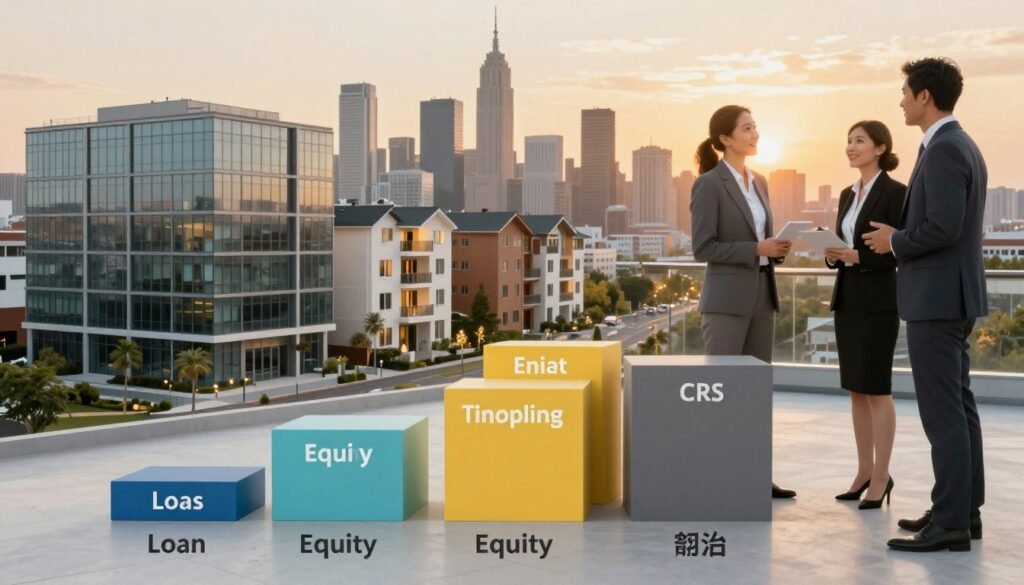
Sources and uses should list acquisition, hard construction, soft costs, contingency, and working capital. Lenders move faster when you provide contractor bids and a clear cost breakdown.
Typical uses of funds
- Down payment or security deposit and acquisition-related costs.
- Demolition, buildout, and leasehold improvements for residential fit-outs.
- Code compliance upgrades (life safety, accessibility) and utilities.
- Professional fees: legal, architecture, engineering, and permitting.
- Furniture, appliances, laundry, access control, and networking equipment.
Cash-flow planning during buildout
Permitting dead time, contractor mobilization, inspections, and overlapping bills create peaks.
Budget financing costs explicitly: interest carry, lender fees, insurance, taxes, and reserves so you avoid shortfalls.
“Banks and lenders assess whether the company can meet peak cash demands, not just total cost.”
| Item | Typical finance source | Why it matters |
|---|---|---|
| Acquisition / down payment | Commercial loan, SBA, or equity | Secures control; often first capital called |
| Hard construction | Construction loan or staged draws | Large periodic draws; needs tight schedules |
| Equipment & appliances | Equipment financing or separate term loan | Preserves main loan capacity; tailored amortization |
| Soft costs & professional fees | Business term loan or line of credit | Faster approvals; keeps cash for operations |
Practical checklist: contractor bids, third-party reports, pro forma, rent comps, and operating assumptions to support underwriting.
Key loan terms, rates, and lender requirements that shape approval and total cost
Lenders focus on a short list of facts when they price and approve a loan for a conversion project.

What underwriters evaluate
Collateral and property condition: most commercial loans use the property as security, so appraisals and enviro reviews matter.
Borrower credit profile: personal and company credit, tax returns, and existing debt shape available terms.
Documented cash flow: lenders want financial statements, pro forma budgets, and contractor bids to judge risk.
How terms and interest affect ROI
Shorter repayment years raise monthly costs during lease-up. Longer terms lower payment pressure but can add long‑run interest.
Interest structure—fixed, variable, or interest-only—changes carry cost during construction and early operations.
Bank requirements, prepayment, and speed
Banks commonly require appraisals, insurance, contractor vetting, and reserves. A mortgage-style loan can lower rates but limits flexibility.
“Some lenders advertise paperless, no‑impact applications and same‑day decisions — confirm whether the initial check is a soft pull.”
Application prep speeds approval: gather tax returns, entity docs, budgets, and a clear sources-and-uses. Choose a lender by how fast you must move and how you plan to grow business.
Conclusion
A strong capital plan pairs the right credit tools to each phase so cash stays protected during a conversion of an office property. Match draw timing to work milestones and keep contingency reserves to limit surprises.
Choose between a bank or alternative lender by weighing terms, total cost, and speed. Compare rates and how lenders structure a loan, draws, and prepayment options. Note fast options like Idea Financial, which advertises business lines and term loans with same‑day decisions up to $350,000 and a free application that won’t impact your score.
Use a clear buyer’s path: define acquisition strategy, build a sources‑and‑uses budget, pick primary financing, then add targeted solutions for equipment and short gaps.
Today, compile bids and financials, request indicative offers, and confirm credit checks and line flexibility before signing. Conversions reward experience and disciplined execution; the right capital plan helps your company stabilize operations and grow business over time.