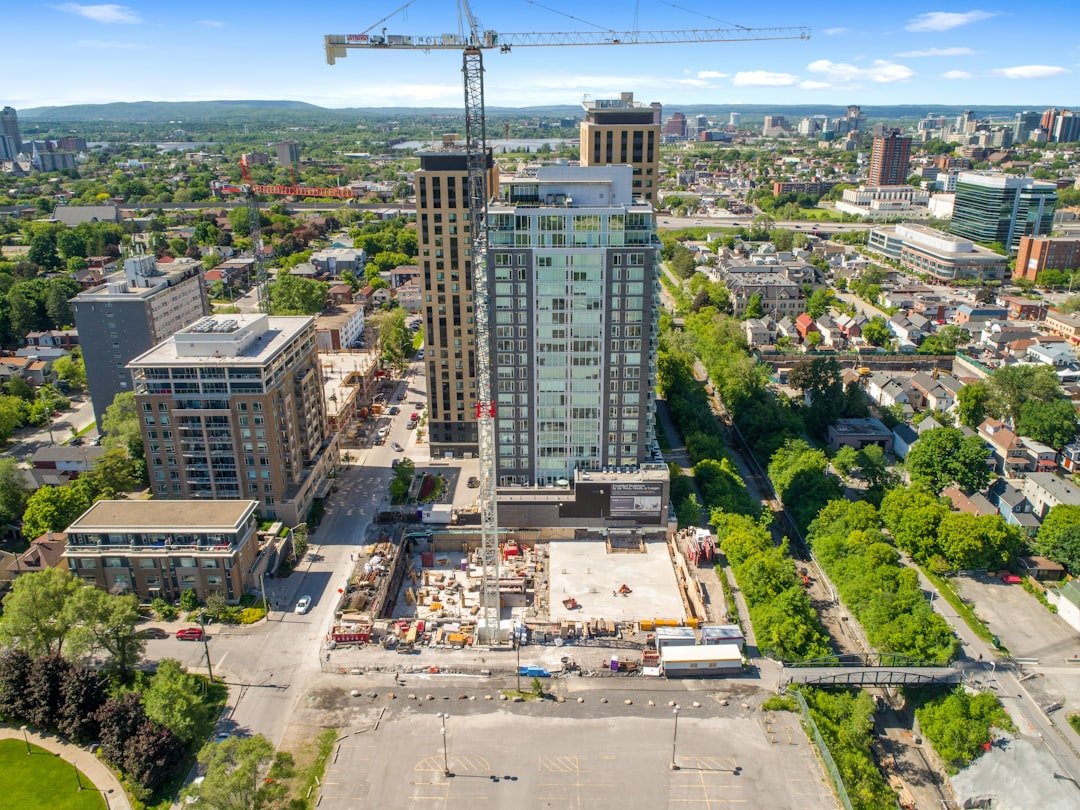

Surprising fact: the U.S. market for industrial outdoor storage tops roughly $200 billion, yet only $1.7 billion of institutional capital entered the space last year.
This guide shows how buyers and operators identify underused land, underwrite it as industrial outdoor storage, and finance value through stabilization and exit.
We explain why formerly overlooked yards are now institutionally traded assets. The core thesis ties land-constrained infill, zoning friction, and logistics-driven tenant demand to rising pricing and tighter underwriting.
What to expect: a clear path from market context to property definitions, site selection, acquisition tactics, diligence, financing, leasing, and future-proofing.
Readers will learn how performance is measured—income-focused returns, rent per acre per month, and yield spreads versus traditional real estate—and where execution risk often appears: entitlements, environmental issues, access, and drainage.
This piece targets investors, developers, owner-users exploring sale-leaseback, and operators building multi-site portfolios who seek practical, actionable insight.
Key Takeaways
- IOS represents a large, undercapitalized opportunity in the U.S. industrial market.
- Minimal improvements to underutilized land can unlock meaningful rent growth.
- Site selection and zoning friction drive underwriting and pricing.
- Performance is typically evaluated by rent per acre and yield spreads.
- Major risks: entitlements, environmental, access, and drainage issues.
- Audience: investors, developers, owner-users, and multi-site operators.
Why Industrial Outdoor Storage Is Surging in the U.S. Industrial Real Estate Market
Capital reclassification is reshaping how investors value low‑intensity land parcels. Large funds now underwrite these assets with portfolio-level metrics rather than single-site comps.
Institutional capital moved into the niche after aggregators proved a repeatable playbook: buy small lots, standardize leases, add site controls, and lift rents. That shift converted fragmented cash flow into scalable returns.
Supply dynamics tightened as infill land was claimed by warehouse builds and municipalities grew cautious about new entitlements. By-right sites now trade at premiums because approvals can take years and carry uncertainty.
Performance signals are strong: rent growth averaged nearly 30% since late 2019 and vacancy fell below 3% in mid‑2022. Still, freight slowdowns can pressure tenant revenue, forcing owners to choose steady renewals or chase large resets.
| Metric | Value | Implication |
|---|---|---|
| Market size | ~$200B | Large addressable opportunity for investors |
| Institutional capital (past year) | $1.7B | Early but growing allocation |
| Cap rate spread vs. traditional | 100–250 bps | Higher initial yields; compressible with competition |
Bottom line: macro tailwinds support growth, but site selection, diligence, and financing determine if headline trends become realized returns.
Industrial Outdoor Storage (IOS): Definitions, Property Types, and Common Uses
Plain-English definition: industrial outdoor storage refers to land-first properties where usable yard area drives value more than enclosed square footage. Tenants lease open space for staging, parking, and laydown rather than traditional warehousing.
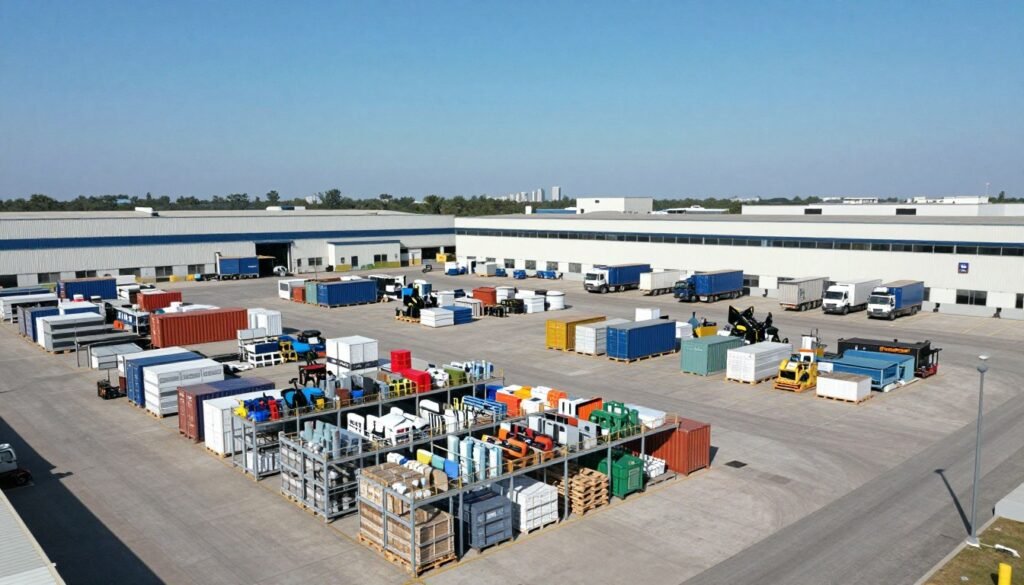
Site hallmarks: low building coverage and FAR (commonly under 20%), minimal vertical improvements, and a yard-centric layout where circulation and paved area matter most.
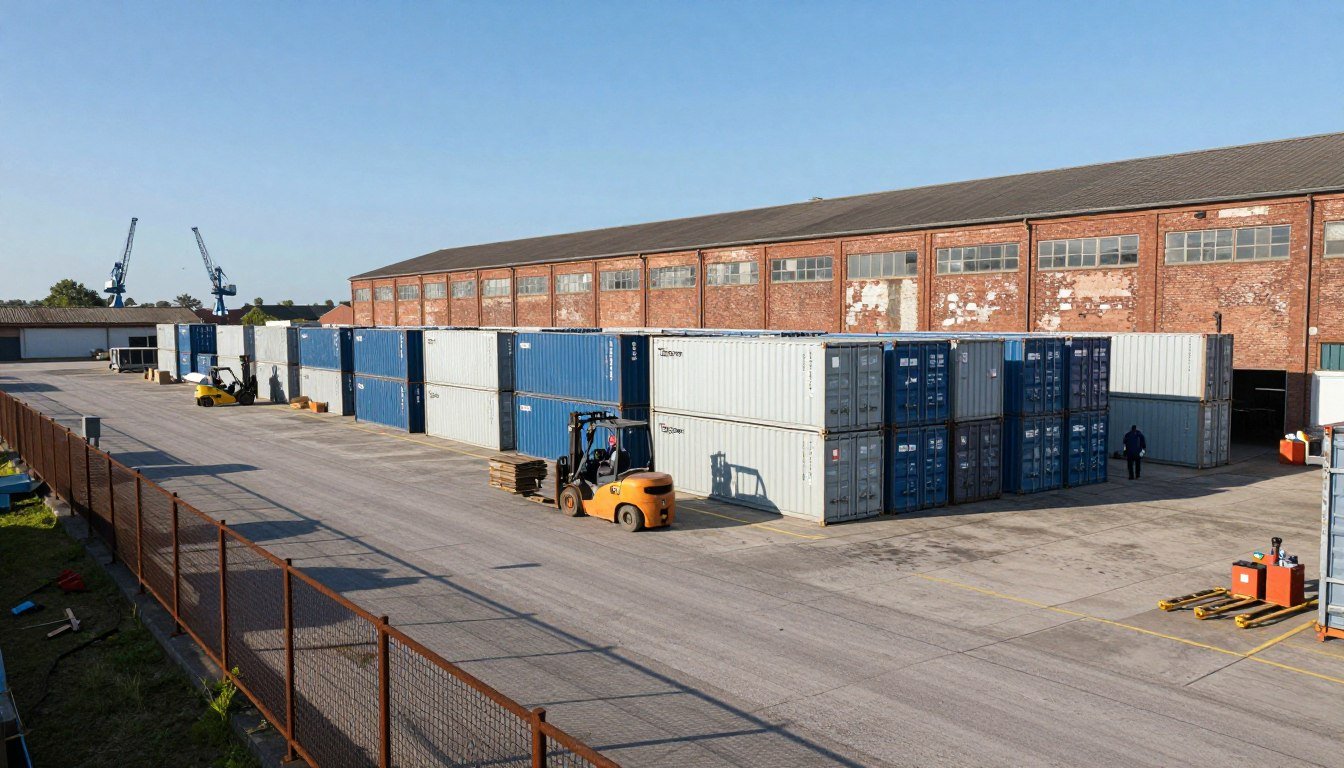
Common subtypes include truck terminals, contractor yards, drop lots, and container or fleet facilities. Each behaves differently: truck terminals focus on turnaround and parking; drop lots enable short-term trailer storage; contractor yards support heavy equipment and materials handling.
“Value in these properties comes from access and usable acres, not square feet.”
| Subtype | Primary Use | Underwriting Focus |
|---|---|---|
| Truck terminal | Parking, staging | Access, circulation, curb cuts |
| Container/fleet yard | Chassis, containers, vehicles | Surface strength, gate control |
| Contractor yard | Equipment, bulk materials | Laydown area, drainage |
Tenants typically store vehicles, heavy equipment, containers, and bulk materials that don’t need indoor protection. Even minimal sites usually require fencing, lighting, and a small office to cut loss and downtime.
Why conversion works: underused land near highways, ports, railyards, or dense metros can be repositioned into valuable yard space when access, zoning, and surface usability are present. This sets up how to evaluate underutilized land for conversion.
What Makes Underutilized Industrial Land a Strong Fit for Outdoor Storage
Small, well-located parcels often unlock outsized returns when repurposed for high‑demand yard uses.
Define the asset: underutilized land in an industrial zone typically shows low building coverage, excess yard, or obsolete improvements. These sites can be upgraded for circulation and usable space with modest work.
Infill parcels vs. mega-sites
Infill sites (0.5–3 acres) trade on immediate access and command premium rents. Mega-sites (50+ acres) shift the plan to regional hubs, scaled trailer parking, and standardized operations.
Location fundamentals
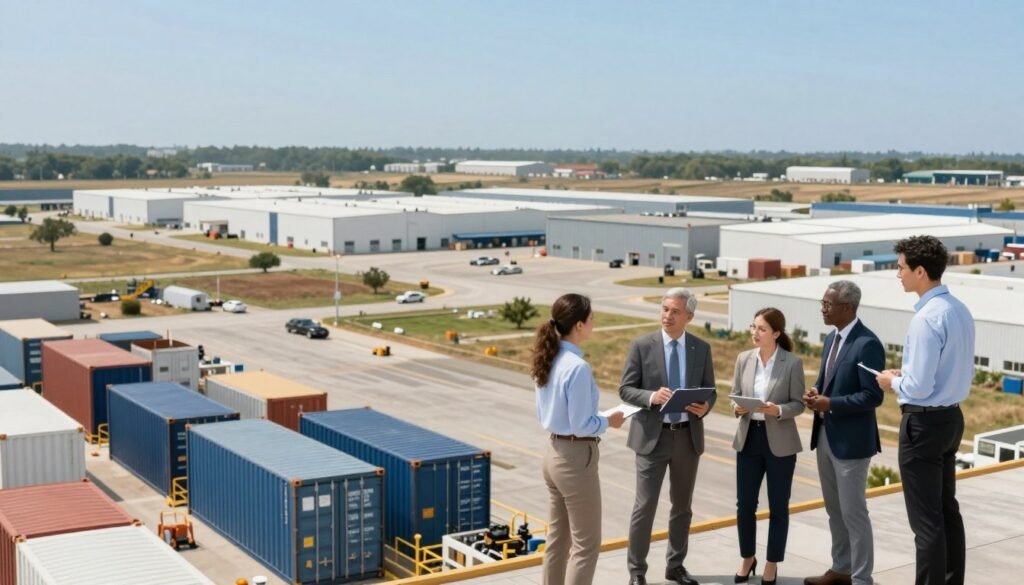
Buyers validate demand by checking highway links, port and airport proximity, railyards/intermodal adjacency, and last‑mile routes. Tenants value reduced transportation time because logistics costs are a major share of operations.
| Factor | Infill (0.5–3 ac) | Mega-site (50+ ac) |
|---|---|---|
| Main advantage | Quick access; premium rents | Scale; operational efficiency |
| Improvements | Fencing, paving, lighting | Large circulation, gate complexes |
| Typical tenant | Local carriers, contractors | Regional fleet operators |
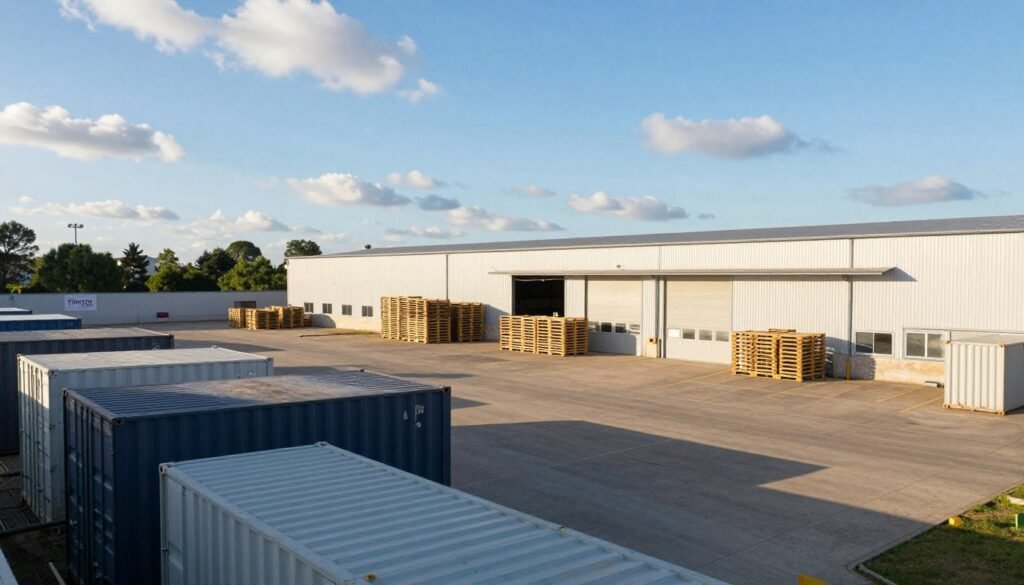
Supply filters: scarce by‑right zoning and municipal resistance limit new sites, boosting value for existing parcels. Simple upgrades—fencing, drainage, and paving—often unlock faster returns than full development.
“Speed and sourcing beat broad marketing when acquiring the right land profile.”
Acquisition Strategy: How to Find and Secure IOS Sites Before Competitors Do
A focused sourcing engine turns fragmented ownership into a steady pipeline of high‑probability acquisitions. In a market where many owners are mom‑and‑pop operators, the edge goes to buyers who combine outreach, zoning discipline, and reliable execution.
Off‑market sourcing in a fragmented ownership landscape
Build repeatable channels: deepen broker relationships, run direct‑to‑owner campaigns, capture tenant requests, and map corridors where yard use already exists quietly. That pipeline turns small deal sizes into consistent opportunity.
Evaluating by‑right zoning versus entitlement risk
Prioritize sites with by‑right uses to cut timeline risk. Price entitlement targets with contingencies and longer closing windows. This zoning‑first screen protects capital and sharpens underwriting.
Pricing realities, cap rate spreads, and aggregation
Smaller acquisitions historically limited competition from large investors, creating room for nimble buyers. Expect cap rate spreads versus traditional industrial of roughly 100–250 bps; use that gap cautiously when forecasting yield expectations.
When portfolio building creates an exit premium
Standardize leases and operations across properties, then package them for larger capital seeking scale. Alterra and other aggregators have shown how aggregation converts fragmented assets into institutional offerings.
For how market cycles affect lending and terms, see market cycles and loan terms.
Due Diligence and Underwriting for Outdoor Storage Properties
Practical checks—surveys, title, and truck turning tests—drive value in yard plays. Underwriting focuses on usable acres, access, and surface strength more than enclosed square footage.
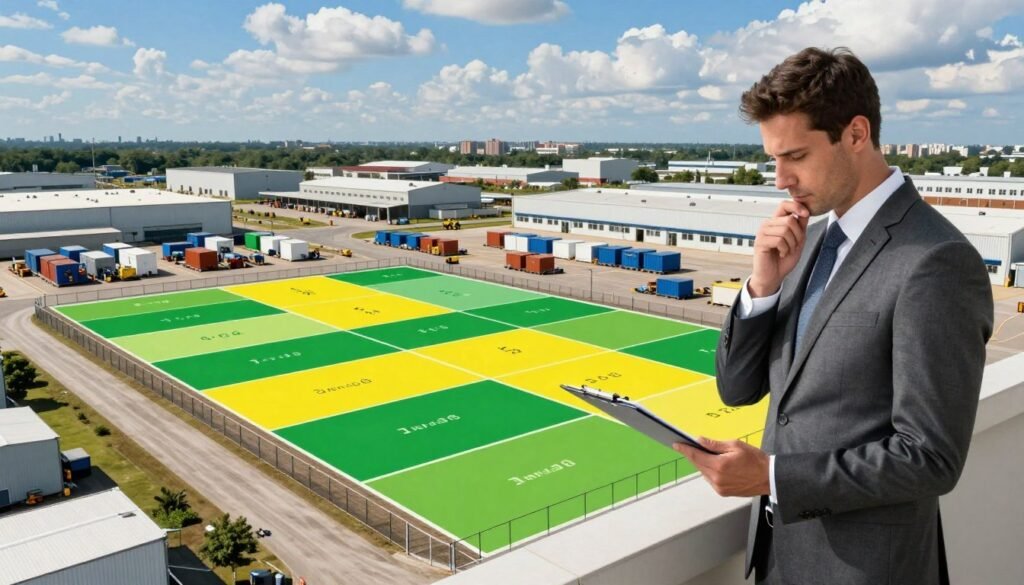
Land and environmental diligence
Core stack: ALTA/survey, title and easements, ingress/egress verification, and confirm rent-bearing area equals usable area.
Environmental reviews must target past uses, on-site materials, and spill risk. Scope Phase I/II to match prior operations.
Site functionality checks
- Turning radii, gate placement, queueing and trailer stacking.
- Internal circulation and load-bearing pavement for heavy equipment.
- Access paths that reduce downtime and protect tenant retention.
Infrastructure, rent metrics, and lease review
Plan capex for fencing, lighting for security, paving repairs, drainage, and small building utilities. Estimate construction and management costs up front.
Underwrite using rent per acre per month, then convert to effective rental rate and yield. Build comps from brokers, operators, and nearby land constraints.
Review leases for triple-net pass-throughs, surface maintenance, insurance, and 3%–4% annual escalators to protect NOI and minimize renewal risk.
Financing Underutilized Industrial Land for IOS Development and Stabilization
Lenders and equity partners treat yard-driven cash flow differently than building-centric returns, so financing must be bespoke.
Acquisition loans vs. construction and bridge financing
Acquisition loans favor existing, income-producing yards with steady tenants. Lenders underwrite on rent per acre and tenancy durability.
Construction or bridge debt covers fencing, paving, lighting, drainage, and small office buildouts during lease-up. These loans carry higher costs and shorter terms.
Capital stack and partner options
Sources include local banks, debt funds, private credit, and institutional JV partners. Debt funds and private credit price entitlement risk higher but move faster.
| Source | Typical use | Pricing / strength |
|---|---|---|
| Local bank | Acquisition of stabilized yards | Lower spread; conservative LTV |
| Private credit | Bridge and capex | Faster execution; higher costs |
| Institutional JV | Portfolio recapitalization | Lower blended cost of capital |
Recapitalizations, sale-leasebacks, and bidding dynamics
Aggregators often roll stabilized assets into larger vehicles to lower blended capital costs and fund growth. That creates an opportunity for scale.
Sale-leasebacks let owner-users free equity for expansion while retaining operations under a long-term lease.
Lower cost of capital lets bidders pay more and still meet return hurdles. That shift tightens competition for by-right sites.
“Structure reserves and conservative rent assumptions to protect returns when market rents shift.”
Leasing, Tenant Mix, and Asset Management Best Practices
A disciplined leasing strategy turns yard demand into predictable, institution-grade cash flow.
Tenant demand centers on four use-cases: logistics and transportation operators needing parking and staging; e-commerce last‑mile hubs; building materials suppliers requiring laydown; and equipment rental firms needing secure yards.
Mix matters: single-tenant sites simplify operations, but multi-tenant yards widen demand and reduce vacancy risk when you add demising and controlled access.
Leasing fundamentals
Use triple-net leases of 5–7 years with 3%–4% escalators and tight termination clauses. Require clear NNN language and guarantees where feasible to raise institutional quality.
Rent and renewal strategy
Weigh a 10%–15% renewal increase against vacancy downtime. Start talks early and consider tying rent bumps to modest capex commitments to keep tenants and protect NOI.
Operational playbook
- Maintain security: lighting, fence integrity, gate control, and cameras.
- Keep clear circulation: signage, striping, and documented stacking rules.
- Schedule routine maintenance: paving, drainage checks, and dust control.
Reputation and responsiveness are competitive advantages. Tenants compare service levels across owners, so timely repairs and transparent rules improve retention and support long‑term growth.
For financing timelines tied to lease-up and capex, review fast-close options in our guide to fast financing.
Future-Proofing IOS Sites: Amenities, Electrification, and Modern Yard Expectations
Power readiness and on-site services are becoming as important as location and usable acres. As fleets electrify and national carriers tighten service goals, owners must plan utility and amenity upgrades at acquisition.
EV fleet charging readiness and utility upgrades
Run conduit during initial construction and size pads for future transformers to avoid costly rework. Coordinate with the local utility early—lead times for service upgrades can be months to years.
Phase upgrades to match tenant ramp-up: basic metering and space first, higher-capacity feeders later. This reduces stranded costs while preserving scalability.
Scaling up: repair facilities, wash bays, and driver amenities
Mega-sites that act as regional hubs often add truck repair bays, wash stations, and inspection pads. These features cut outsourced downtime and broaden tenant appeal.
Driver lounges, showers, and dispatch offices improve retention and make a yard a repeatable node in a carrier’s route plan.
“Smart modernization widens the tenant pool, reduces downtime, and supports stronger renewal economics.”
- Decide by demand: add amenities when local tenants justify premiums and longer leases.
- Permitting & sequencing: keep parts of the yard operational during phased paving and drainage work to protect income.
- Returns: well-timed upgrades raise rents, lower vacancy, and hedge against softer freight cycles.
Conclusion
Rising freight needs and scarce approvals make underused lots far more valuable than before. The market now treats these yard-first assets as institutional real estate when fundamentals hold: zoning certainty, location, and functional yard design.
Buyers who source creatively, complete targeted diligence, and increase usable space through focused improvements unlock higher rents and stronger returns.
Underwriting should prioritize rent per acre per month, access and circulation, infrastructure quality, and lease terms that protect NOI through cycles.
Cost of capital and partner choice shape bids, scale speed, and holding flexibility. Asset managers must balance rent growth against renewal risk as demand and freight trends shift.
Practical next steps: build a repeatable site screen, track zoning changes, cultivate owner and tenant relationships, and treat these properties as a specialized class within real estate.