
Surprising fact: the U.S. market for Industrial Outdoor Storage is roughly $200 billion, and institutional capital raised surpassed $1.7 billion last year.
This scale is shifting how lenders view collateral and risk. Over the past five years, this niche in real estate has become more institutionalized as investors and lenders chase yield tied to logistics and contractor demand.
The outdoor component and location often determine value more than building area. That reality changes underwriting priorities: land use, access, and improvement plans drive loan decisions.
Expect this guide to preview underwriting fundamentals (FAR, location, improvements), market context, and the performance metrics lenders track. It also explains why tighter supply and zoning friction make this sector appealing now.
For readers who need financing playbooks and fast execution tips, see our note on accelerating closings with practical lender strategies at fast-track commercial financing.
Key Takeaways
- Market scale matters: large market size and rising capital draw lender interest.
- Location beats building: yards and access often set value.
- Underwriting shifts: lenders focus on FAR, improvements, and tenant credit.
- Institutional capital is growing: aggregation and data lift liquidity and confidence.
- Audience relevance: lenders, debt advisors, sponsors, and operators should watch supply, zoning, and demand signals.
- Practical focus: well-prepared deal packages speed approvals and improve terms.
What Industrial Outdoor Storage Is and Why It Matters in U.S. Logistics
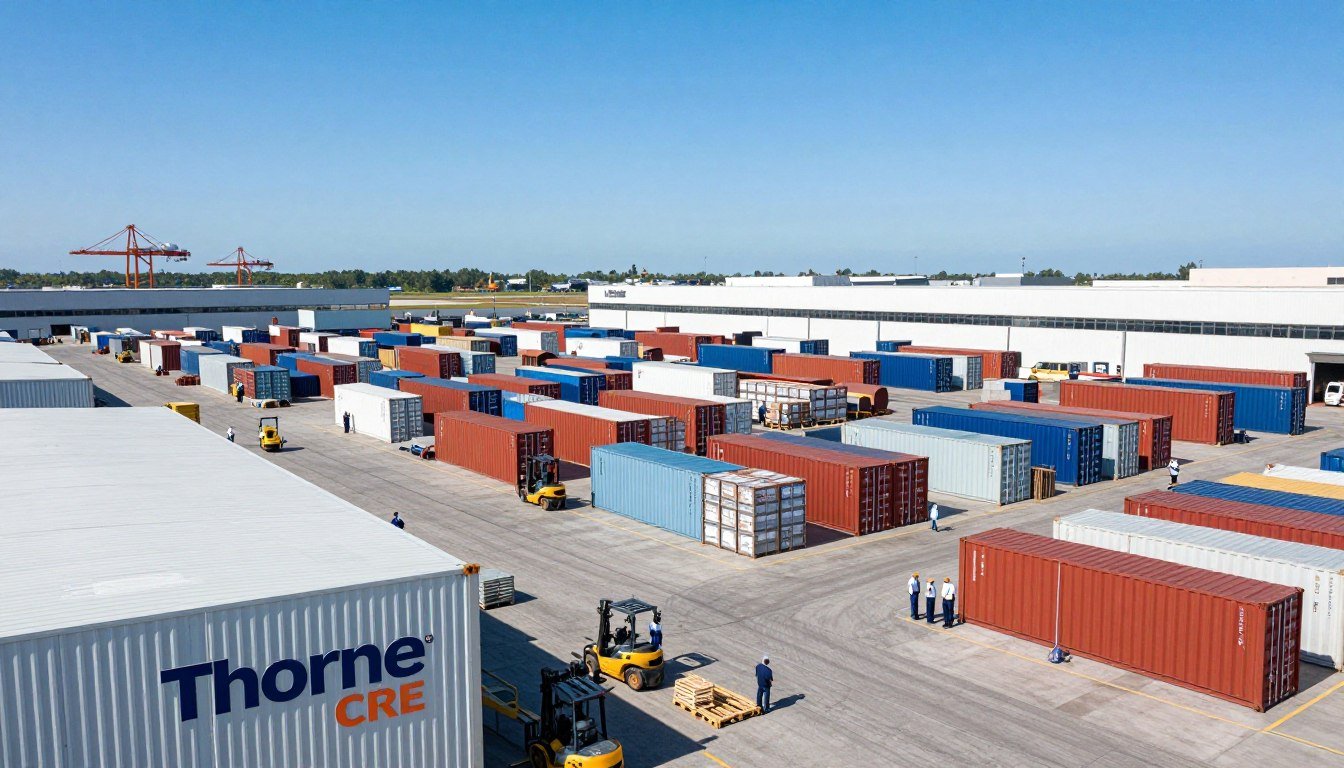
D many businesses rely on yard-based sites for staging, short-term parking, and material laydown. Industrial outdoor storage fills the gap when buildings are unnecessary or too costly.
How goods move: inbound containers or materials arrive, then yard staging enables cross-dock or last-mile transfer, and finally outbound routes complete delivery. This flow lowers handling costs and speeds turn times.
Retailers and logistics operators use outdoor storage for trailer parking, chassis holding, and overflow inventory. Contractors use laydown yard space for materials and equipment during projects. Transportation operators place terminals and drop lots near dense routes to cut deadhead miles.
“Lenders increasingly view land improvements and access as core collateral, not just building square footage.”
| Facility Type | Typical Use | Implications |
|---|---|---|
| Truck terminal | Fleet dispatch & parking | High access, strong circulation, secure fencing |
| Storage yard | Equipment & inventory laydown | Durable surfacing, lighting, perimeter control |
| Drop lot / container yard | Trailer drops & chassis storage | Fast ingress/egress, staging lanes, surveillance |
Key point: value often ties to location and site improvements rather than leasable building area, which changes how rent is quoted and how lenders assess collateral in this market.
Property Characteristics Lenders Underwrite
In this asset class, land utility and circulation often set value ahead of roofed area. Lenders convert physical features into underwritable metrics: collateral durability, tenant stickiness, and ease of re-tenanting.
Low building coverage and FAR benchmarks
Low FAR under 20% defines many yards. That benchmark shifts value to usable land, vehicle circulation, and permitted outdoor uses rather than building square feet.
Location checklist lenders prioritize
Lenders favor proximity to highways, ports, airports, railyards, and intermodal nodes. These adjacencies drive utilization, rent resilience, and borrower cash flow.
Site size, improvements, and circulation
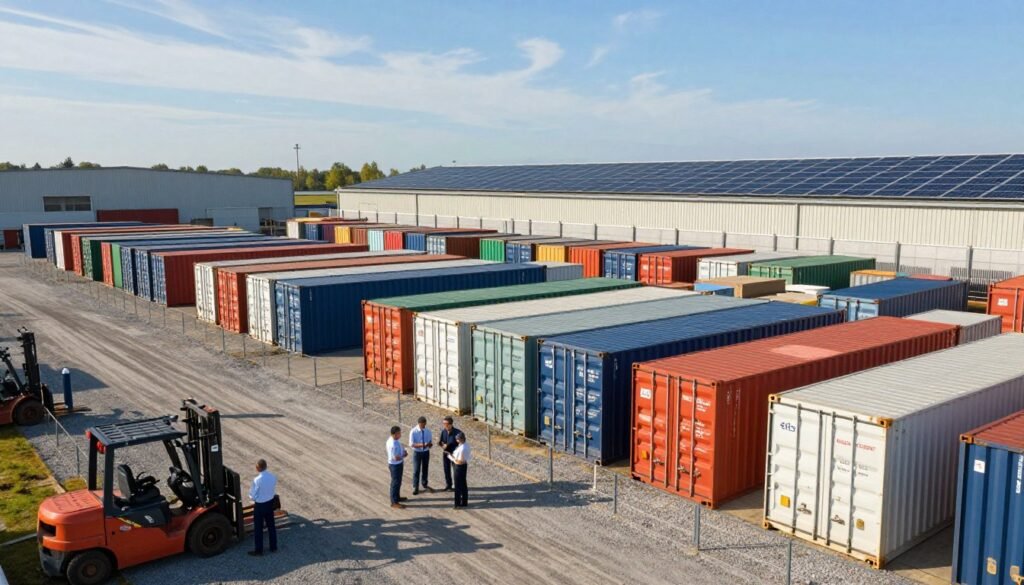
Sites range from 0.5–3 acre infill parcels to 50+ acre mega-sites. Infill trades on scarcity and last-mile access; mega-sites trade on scale and hub optionality.
Typical improvements—lighting, fencing for security, durable surfacing, basic office/maintenance space—matter to underwriters. They test surfacing for heavy equipment, stormwater readiness, gate counts, and turning radii.
“Allowed-by-right zoning and clean entitlements shorten diligence and protect functional rent stories.”
Bottom line: lenders validate zoning early and score sites on circulation, surfacing, and operational resilience when underwriting storage properties in this market.
Market Size, Institutionalization, and Why Capital Is Flowing Into IOS
What began as local, owner-operated yards has become an investable asset class. The U.S. market is now estimated at roughly $200B in aggregate value, and over $1.7B of institutional capital was raised last year.
From fragmented holdings to scaled platforms
Timeline: small owner-users → aggregator roll-ups → institutional joint ventures and recaps. Names leading the charge include Industrial Outdoor Ventures, Alterra Group, Transport Properties, Zenith, and Triten IOS. GFH Partners’ $300M fund with Transport Properties shows how recapitalizations scale reporting and compliance.
Why investors move in: going-in yields often beat traditional industrial, scarce sites support rent upside, and demand outstrips supply in many markets.
| Driver | Effect on lending | Operator action |
|---|---|---|
| Portfolio scale | Reduces single-asset risk | Centralized management |
| Standardized reporting | Faster loan execution | Real-time comps |
| Upgraded collateral | Higher LTV comfort | Surfacing & security capex |
“Lenders favor sponsors who show repeatable capex standards and disciplined leasing across sites.”
Aggregation makes loans more predictable. Larger portfolios improve exit options, support liquidity, and let lenders underwrite on portfolio cash flow instead of single-asset risk. That shift explains why capital and institutional investors now view this sector as a viable real estate opportunity.
Demand Drivers Pushing Industrial Outdoor Storage Higher
Shippers now pay a premium for sites that cut miles and speed turns. That shift is a core force behind rising demand for industrial outdoor storage.
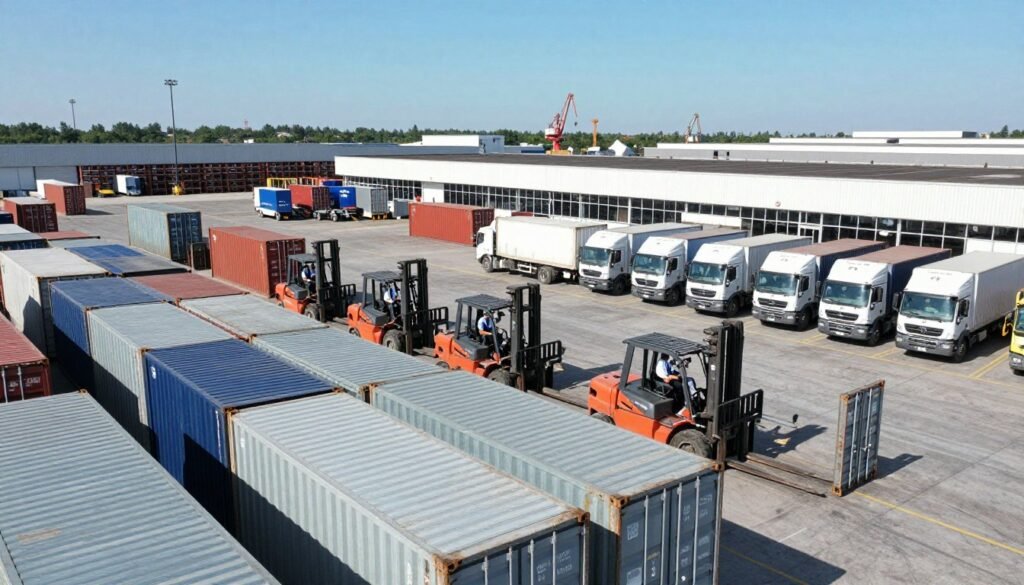
Last-mile pressure from e-commerce creates steady need for nearby yards. These sites support trailer staging, van transfers, and peak overflow close to customers.
E-commerce and last-mile needs
Faster delivery windows increase operational turns. Logistics operators accept higher rent per acre to save on transportation costs and driver time.
Onshoring and inventory resilience
Manufacturers and retailers hold more buffer stock. Flexible outdoor space lets them stage materials and equipment without the cost of indoor facilities.
Transportation cost math
Transportation drives roughly 45%–70% of logistics spend while facility rent sits near 3%–6%. Small cuts in miles can offset rent increases, so well-located yards command demand.
“When transport costs rise, proximity to demand centers becomes a direct revenue lever for tenants.”
| Driver | Why it matters | Example tenants |
|---|---|---|
| Last-mile delivery | Reduces deadhead and speeds turns | Amazon, UPS, FedEx |
| Materials & equipment staging | Supports contractors and builders | ABC Supply, Herc Rentals, Sunbelt |
| Inventory resilience | Buffers supply shocks, extends tenure | Walmart, Home Depot, XPO |
Underwriting signal: diverse tenant demand and relocation friction translate to higher rents per acre and longer lease terms. For context on how cycles affect loan terms, see market cycles and loan terms.
Supply Constraints: Zoning, Entitlements, and Shrinking Site Availability
Available sites for yard and lot uses are vanishing as zoning hurdles and warehouse conversions reshape markets.
Core scarcity thesis: supply is structurally constrained because entitlements are hard to obtain and existing parcels are redeveloped into higher-value warehouses. That dynamic tightens market choice and lifts rent per acre.
Why municipalities push back
Communities often cite truck traffic, noise, light spill, and aesthetics during hearings. Local officials also worry about perceived low tax yield versus infrastructure impacts.
Redevelopment removing yard stock
Infill lots are frequently rezoned for warehouse construction. Each conversion permanently reduces sites available for outdoor use and increases demand on remaining facilities.
Underwriting hinge: allowed-by-right zoning
If a yard use is not permitted by right, execution risk rises materially. Lenders expect diligence on zoning, conditional permits, grandfathered rights, and compliance history.
“Allowed-by-right status can make or break a loan—entitlement risk creates timing, legal, and political uncertainty.”
| Issue | What lenders check | Mitigation |
|---|---|---|
| Zoning designation | Permitted uses; conditional use needs | Secure letters from planning; confirm by-right status |
| Redevelopment pressure | Conversion risk and lost supply | Portfolio diversification; hold premiums |
| Community impacts | Traffic, noise, lighting complaints | Screening, traffic plans, low-glare lighting |
Practical note: scarcity supports pricing and can improve loan sizing, but lenders apply haircuts when entitlement or nonconforming-use risk exists. Strong community plans and operational controls reduce execution risk and preserve value.
Lease Structures and Tenant Dynamics That Make IOS Lender-Friendly
Lease clarity and tenant credit are central to lender comfort for yard and lot properties. Single-tenant, triple-net leases give banks clear NOI and shift routine expense risk to the occupant.
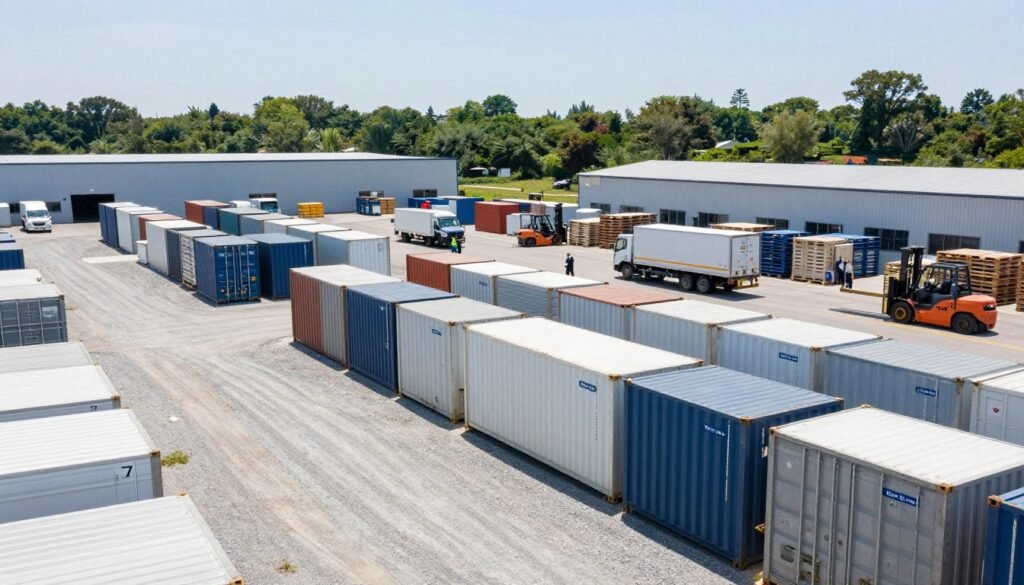
Why triple-net, single-tenant deals matter
When a tenant pays taxes, insurance, and CAM, lenders see fewer surprise costs. That transparency improves underwriting and supports higher loan sizes.
How per-acre rents signal value
Rents are quoted per acre per month, not per square foot. This shows the yard is the revenue engine, and underwriters build comps and rent rolls around acre-based economics.
Typical lease terms and credit enhancements
Institutional leases often run 5–7 years with 3%–4% annual escalators. Lenders prefer parent guarantees, letters of credit, or security deposits when tenant strength is uncertain.
“Minimal termination rights and strong enforcement provisions make cash flow more bankable.”
| Lease Feature | Typical Expectation | Underwriting Impact |
|---|---|---|
| Term length | 5–7 years | Stabilizes NOI for loan term |
| Escalators | 3%–4% annually | Predictable rent growth |
| Expense allocation | Triple-net | Reduces landlord operating risk |
| Credit support | Parent guarantee / LOC | Improves debt coverage |
Diligence focus: lenders read permitted uses, environmental clauses, repair standards for surfacing, and hazardous-material limits closely. Strong zoning and site-specific improvements increase tenant stickiness and lower vacancy risk.
Performance Signals Lenders Watch: Rents, Vacancy, and the Inflection Point
Market momentum since 2019 pushed rents higher, but a clear inflection point is forcing lenders to rethink assumptions. Credit teams now parse a short dashboard of operating metrics rather than rely on long-term trend lines.
Headline metrics: rents rose nearly 30% on average since end‑2019 and vacancy fell below 3% by mid‑2022 (Hamilton Lane). In many metros rents more than doubled, supporting stronger debt sizing and sponsor returns.
What underwriters track
- Rent growth and per‑acre comps
- Vacancy and downtime assumptions
- Renewal spreads versus re‑tenanting resets
- TI/capex needs for surfacing and gates
- Tenant credit migration and sector exposure
Renew vs. re‑tenant calculus
Owners often choose a modest renewal (10–15% bump) to keep cash flow stable. Underwriting that assumes a full market reset (30%+) must add downtime, leasing costs, and higher reserves.
Freight slowdown and tenant pushback
As freight and truck volumes softened, some tenants resisted steep increases—especially in trucking‑heavy submarkets and among building supply users. That trend raises rollover risk and shortens lender confidence in sustained rent growth.
“Lenders are now more conservative: lower market rent assumptions, longer vacancy periods, and higher reserves for surfacing and capex.”
| Performance Signal | Recent Level / Trend | Underwriting Adjustment |
|---|---|---|
| Rent growth | ~+30% avg since 2019; >100% in some markets | Use conservative comps; cap resets at lower percentile |
| Vacancy | Model longer downtime for re‑tenanting | |
| Renewal spread | Typical 10–15% vs target 30%+ reset | Stress test both scenarios; require stronger sponsor plan |
| Tenant mix | Trucking and materials users show pushback | Require credit support or higher reserves |
How sponsors should present performance: provide clean per‑acre comps, documented demand depth, and a clear renewal vs re‑tenant plan. Show reserves for surfacing and contingency plans for trucking downturns to shorten lender review and preserve capital access.
How Lenders Evaluate Risk in IOS Real Estate and Operations
Underwriting focuses on features that prevent loss, ensure operations continue, and support a clear exit. Lenders look at collateral protection, operational continuity, environmental exposure, and exit liquidity when sizing loans for yard-based assets.
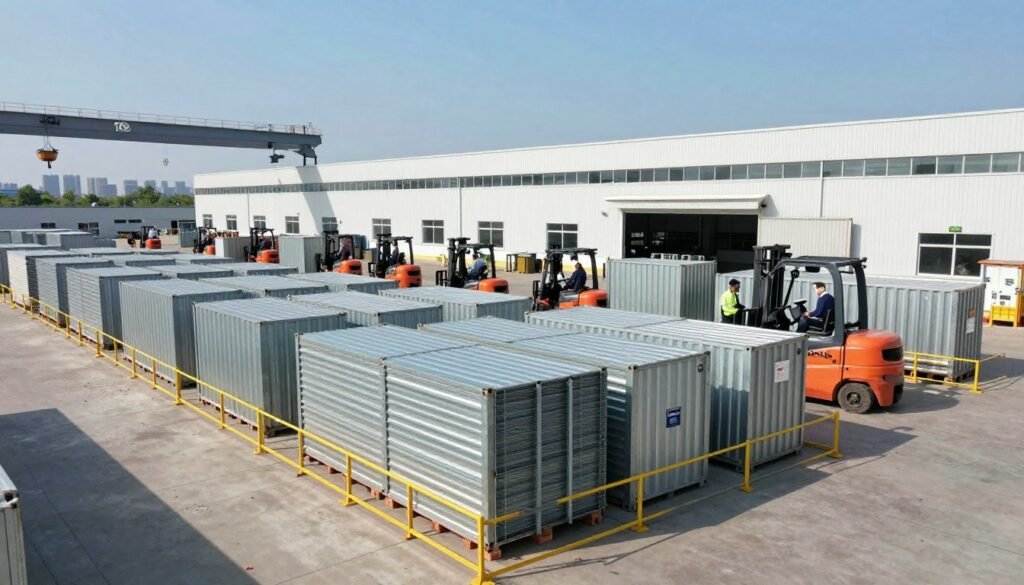
Security and perimeter durability
Security is underwriting‑critical. Lenders inspect fencing type, gate controls, camera coverage, and lighting design to protect high‑value equipment and trailers.
Durable perimeter systems reduce theft risk and lower insurance costs. That improves debt coverage and lender comfort.
Environmental and heavy‑use risks
Surfacing wear, potholes, dust control, and stormwater runoff can erode collateral value and raise maintenance costs.
Underwriters require historical use reviews, spill controls, and stormwater permits to limit contamination exposure.
Liquidity, portfolio scale, and data opacity
Single properties sell slower; portfolio aggregation broadens buyer pools and eases refinance risk for capital providers.
Finally, data opacity in this market favors seasoned operators. Lenders prefer sponsors with real‑time comps, standardized reporting, and proactive management plans.
“Operators who standardize inspections and document capex reduce informational asymmetry and win better terms.”
Development and “Future-Proofing” Trends Reshaping IOS Sites
A new wave of 50+ acre developments is redefining how yards serve regional freight and tenant networks. These mega-site models act as regional hubs, combining scale, staging lanes, and heavy-use design so tenants can operate at higher throughput.
Mega-site hub models and underwriting effects
Scale changes expectations: larger sites require greater construction and upfront capex but deliver strategic value to transportation networks.
For lenders, hubs mean bigger initial scopes but deeper tenant commitment and longer lease terms. That support can justify stronger loan sizing when sponsors show integrated development and asset management solutions.
On-site maintenance and driver amenities
Truck repair shops, driver lounges, showers, and dispatch offices are now common features. These facilities reduce downtime and boost tenant retention.
Operators who add maintenance bays and secure staging see longer tenancy and lower churn. Lenders view this as reduced vacancy risk and steadier cash flow.
Electrification readiness and infrastructure planning
Future-proof design includes conduit runs, upgraded power capacity, and EV charger corridors for vans and small fleets.
Planning conduit during construction is far cheaper than retrofits. Sites that present clear electrification roadmaps win national tenants and lender confidence.
“Developers who deliver tailored site solutions and scalable facilities lower operational friction and command higher rents per acre.”
| Trend | Developer action | Lender / tenant impact |
|---|---|---|
| Mega-site hub | 50+ acre planning, staging lanes | Stronger strategic tenants; higher loan confidence |
| Maintenance facilities | On-site repair bays, tool/equipment rooms | Lower downtime; improved retention |
| Driver amenities | Lounges, restrooms, dispatch offices | Better tenant satisfaction; longer leases |
| Electrification readiness | Conduit, upgraded service panels, charger pads | Future-proofed demand; easier re-tenanting |
Bottom line: modern development and construction that bundles facilities, security, and power infrastructure creates durable value. Owners who offer turnkey site solutions earn higher per-acre rents and improve the bankability of these assets in today’s market.
Conclusion
Lenders are reallocating attention to yard-centric real estate as scale, better data, and scarce sites change underwriting assumptions.
The U.S. market shows strong demand drivers—e-commerce, onshoring, and logistics efficiency—while shrinking supply lifts per-acre value and draws investment capital.
Underwriting essentials remain clear: low FAR, node-adjacent locations, durable surfacing and fencing, and allowed-by-right zoning as a gating item.
Deals that follow triple-net leasing, per-acre rent transparency, security-first design, and disciplined sponsor management win lender confidence. Still, freight slowdowns can pressure renewals, so realistic tenant-credit checks matter.
Next steps: validate site fundamentals, confirm entitlements, benchmark per-acre rents, and align future-proof capex to tenant needs to unlock this growing real estate opportunity.