
Surprising fact: nearly 60% of physician practice purchases pair real estate debt with specialized lending tools, making property choice as critical as clinical strategy.
Owner-occupied buildings mean the provider uses the property for patient care and practice operations. That use changes underwriting, compliance, and risk compared with a generic small-business buy.
This guide helps U.S. healthcare owners—physicians, dentists, veterinarians, and others—compare SBA-backed loans and conventional commercial debt. You will see the common loan types and practical options to weigh.
Expect to evaluate SBA 7(a), SBA 504, SBA Express, and standard bank loans based on occupancy rules, collateral, credit profile, and use of proceeds. I also outline a decision framework for eligibility, leverage, term structure, and long-term flexibility to align the building purchase with growth needs like equipment and working capital.
Key Takeaways
- Owner-occupancy affects loan choice, underwriting, and compliance needs.
- Compare SBA programs and conventional debt by occupancy, collateral, and credit.
- Know the common types of loans you will evaluate and what each covers.
- Underwriting today varies with lender product and borrower risk profile.
- Use a clear decision framework for eligibility, down payment, and prepayment flexibility.
- Plan building purchase alongside equipment and cash-flow tools for practice growth.
Owner-Occupied Medical Buildings and What Lenders Mean by “Owner Occupied”
Whether you occupy most of a building shapes loan options and underwriting outcomes.

Practical definition: lenders require the borrower or guarantor to use the space for their practice. For SBA eligibility the building must be at least 51% owner occupied. That threshold affects program access, down payment expectations, and allowable uses of proceeds.
How occupancy is measured and documented
Underwriting looks at rentable square footage and planned buildout. Lenders request floor plans, tenant schedules, and executed leases for multi-suite properties.
They will verify occupancy at closing and may require covenants that preserve the owner-occupied percentage for a set period.
Deal strategy and underwriting checkpoints
The owner-occupied test guides property selection, space planning, and whether you can lease excess space while keeping eligibility.
- Access, parking, and ADA compliance
- Tenant stability and permitted uses
- Revenue profile from the healthcare industry, considered alongside the real estate
Property risks and early diligence
Environmental reports, zoning, and flood-zone status can change terms or add conditions.
Planning note: if the site lies in a designated flood zone, flood insurance is required—budget for it early rather than at closing.
| Underwriting Item | What Lenders Check | Practical Impact |
|---|---|---|
| Occupancy % | Rentable sq ft, leases, buildout plans | Determines SBA program eligibility and leverage |
| Property Condition | Phase I environmental, ADA, access | May require repairs or escrow; affects pricing |
| Risk Factors | Flood zone, tenant mix, zoning | Added insurance, covenants, or higher rates |
Next step: once owner-occupancy is documented, evaluate SBA and conventional commercial real estate loan structures to match term length, down payment, and operational needs.
Medical Office Financing Options for Buying or Expanding a Practice Location
Choosing the right capital mix for a practice purchase shapes both cash needs and long-term flexibility.

SBA programs are common for owner-users. SBA 7(a) is flexible for purchase and renovation. SBA 504 pairs a long-term first mortgage with a below-market second for fixed assets. SBA Express moves faster but has lower max limits and stricter documentation.
SBA leverage and borrower steps
SBA loans can finance up to 90% of the project in some cases, which preserves cash for equipment and staff. Approval through SBA 7(a), 504, or Express means you will provide standardized eligibility documents, detailed financials, and lender-submitted SBA packages.
When conventional commercial real estate loans fit best
Traditional bank loans suit borrowers with strong cash flow or large down payments. Banks may offer simpler covenants or different collateral structures. Choose conventional loans if you want a specific amortization, different covenant profiles, or quicker rate negotiation.
Structuring the debt stack and pricing drivers
Align each tranche to the use of proceeds: purchase, buildout, tenant improvements, and soft costs should match loan terms. Use longer-term real estate loans for the building and shorter-term credit for equipment or working capital.
- Match term to asset life — avoid short-term debt on long-lived property.
- Consider collateral layering — first liens for purchase, mezzanine for extra cash.
- Compare prepayment and rate features — they vary by product and credit.
Interest rates and final terms depend on creditworthiness, loan size, and collateral. Compare products carefully and consult a capital advisor or the capital stack guide to align debt with practice growth goals.
How to Qualify and Prepare a Strong Loan Application in Today’s Credit Environment
A strong application turns raw financials into a confident repayment plan lenders can underwrite. That means showing stable collections, a clear payer mix, and realistic projections that cover the proposed property payment.

What lenders evaluate now
Lenders weigh credit profile, cash-flow durability, existing debt, and the marketability of collateral. Typical score ranges and cash metrics guide the available term, loan amount, and rate.
Underwriters also look for consistent collections and a defensible narrative about patient mix and revenue trends. Show how recurring receipts will service the real estate debt.
Documentation checklist
- Business plan with use-of-proceeds and repayment model.
- Recent financial statements and three years of tax returns.
- Personal and business credit histories and score explanations.
- Evidence of payer mix, patient volume, and key contracts.
Approval realities and structuring choices
Credit approval is rarely binary. Lenders may approve with different structures: shorter term, higher down payment, or limited prepayment options based on credit and collateral.
Highlight prior borrowing experience and explain any outstanding obligations. Present existing debt as managed and intentional to avoid appearing opportunistic.
| What Lenders Check | Practical Prep | Impact |
|---|---|---|
| Credit / score | Obtain reports, explain anomalies | Affects rate, term, and product eligibility |
| Cash flow | Provide aging, payer mix, projections | Determines loan size and repayment terms |
| Collateral | Appraisals, market comps | Drives LTV and product choice |
Practical tip: confirm current underwriting rules early and keep your package complete. That reduces surprises, tightens timelines, and improves the benefits you can secure for your practice.
Beyond the Building: Equipment, Working Capital, and Cash-Flow Tools That Support Growth
Buying the property is only step one; parallel cash tools fund equipment, staffing, and timing gaps.
Equipment versus leasing matters for practice cash flow. Equipment loans are typically secured by the asset and end with ownership. That can add long-term value when the device has a long useful life.
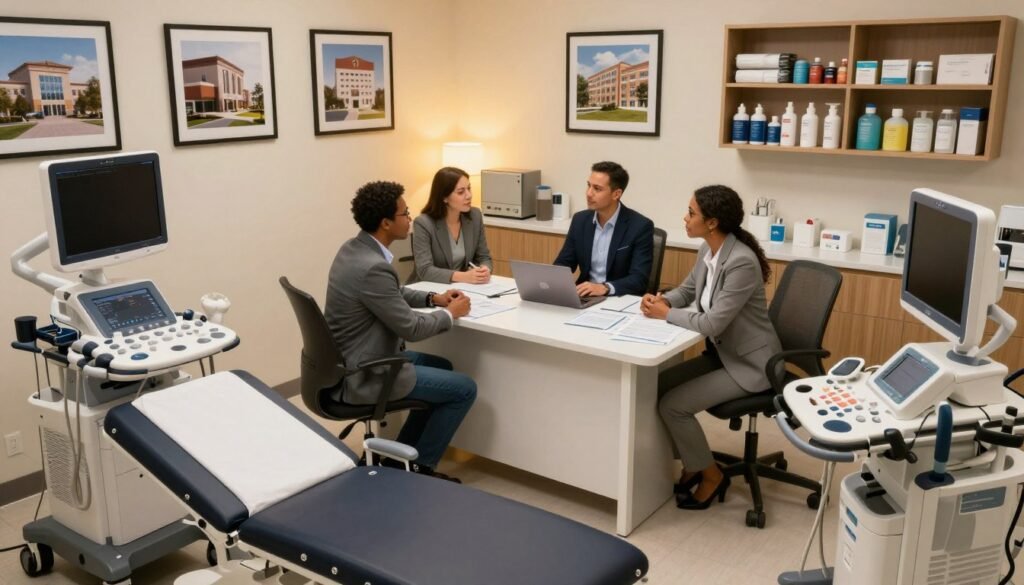
Leasing can make sense for fast-depreciating technology or subscription-style products. Leasing lowers near-term outlay but may cost more in total interest and rates.
Lines of credit for operations
A business line of credit covers seasonality, reimbursement timing gaps, and short-term payroll needs. Use revolving credit for working capital, not for long-lived assets tied to the mortgage.
- Align equipment term to useful life to protect cash flow.
- Keep a reserve so monthly obligations stay manageable.
- Avoid overlapping maturities that force refinancing under stress.
Buyer checklist: equipment draw timing, installation overlap with the new office, working-capital buffer, and how each component affects total borrowing capacity.
Final note: pricing and product features depend on credit and structure, so compare rates, covenants, and collateral before committing.
Conclusion
Bottom line, wrap your purchase plan around occupancy, credit strength, and a debt structure that keeps cash for growth.
Confirm the owner-occupied requirement early (SBA commonly requires at least 51%) and weigh SBA versus conventional loans based on down payment, timeline, and flexibility.
Key buyer takeaway: SBA options can finance up to 90% in eligible cases, which helps preserve funds for equipment, staff, and working capital.
Improve your credit presentation, complete property diligence (including flood-zone insurance if needed), choose a target structure, and submit a full package to shorten underwriting. Treat terms and prepayment features as strategic—they shape refinancing risk and future expansion.
Align the real estate decision with long-term clinical and business goals so your practice and doctors can grow with stability. For tips on rate strategy and negotiation, see the best possible rate guide.