

Surprising fact: In the past year, transaction volume in Anchorage-area properties shifted by over 20%, changing lender appetite by submarket.
This guide shows buyers how to compare financing options, evaluate lenders, and reduce closing surprises in a shifting market.
We translate commercial terms into practical steps: sizing a loan, estimating rates and points, understanding fees, and preparing documents. Use the benchmarks here as a decision framework, then confirm specifics with lenders and advisors before committing.
The right funding depends on hold strategy, cash flow, and business goals — whether owner-occupied growth or investment stabilization. This article previews recent Anchorage activity signals, loan types, property categories, lender selection, LTV norms, interest rates, underwriting checklists, and how to get quotes and close.
Key Takeaways
- Compare lenders by terms, appetite, and local submarket trends.
- Estimate loan sizing and rates early to shape negotiations.
- Prepare documentation to avoid last-minute closing delays.
- Match financing options to hold strategy and cash flow goals.
- Use provided benchmarks, then validate terms with advisors.
Today’s Alaska commercial lending landscape and what recent activity signals for buyers
Recent deal flow in Anchorage reveals which asset types lenders actively back and which they avoid. That matters because real-world closings show actual appetite, not marketing copy.
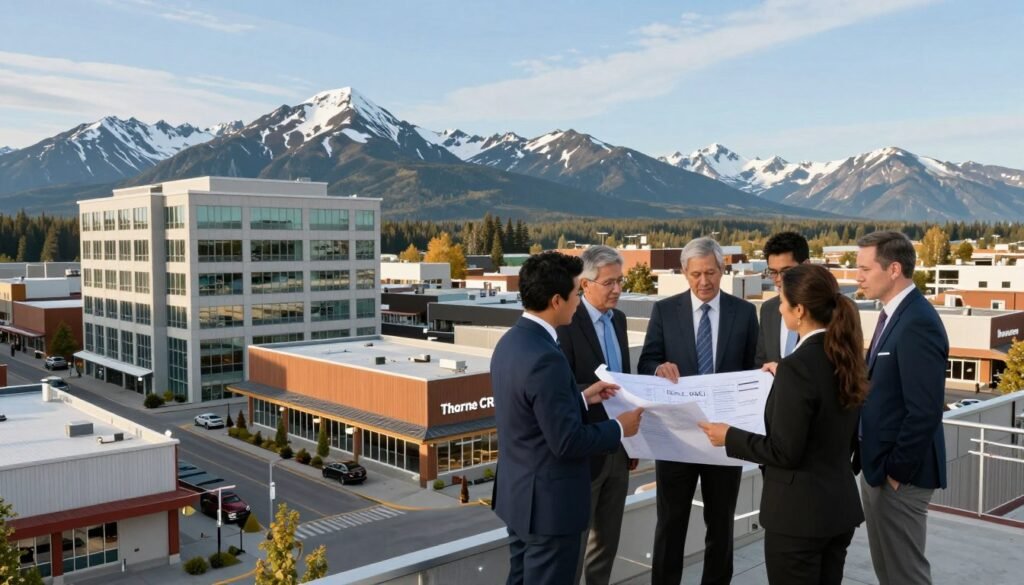
Anchorage deal flow snapshot (past 90 days)
There were 210 transactions closed in the last 90 days with an average loan amount near $1.3M. The largest single amount recorded was $118.5M for a mobile homes loan.
What property-type volume tells buyers
Activity spread across condos, triplexes, apartments, industrial, office, retail, storage, parking, and SFRs shows differing lender risk tolerance.
High residential-adjacent volume (87 condos, 17 triplexes) signals demand from credit unions and local lenders for smaller-unit deals. Credit unions were most active and typical LTVs ran about 65%.
Pricing cues: many loans priced around Treasury + 235–300 bps and origination fees averaged ~0.5%. Compare offers using the same index and spread so rates and all-in costs are truly comparable.
Pro tip: prepare a polished underwriting package and review shopping tactics in our fast-track financing tips before requesting quotes.
Alaska Commercial Real Estate Financing options to consider before you shop lenders
Choosing the right funding path shapes cash flow, covenants, and exit flexibility more than a single rate quote does.
Start with goals: decide whether you need long-term amortization, short-term construction support, or flexible working capital.

Conventional bank loans
Traditional bank loans suit a purchase, renovation, or refinance when property cash flow and credit meet standard underwriting. These loans often offer fixed or variable rates and fully amortizing programs up to 25 years.
SBA-style owner-occupied programs
SBA-style products can provide longer amortization and higher leverage for owner-occupied buildings when eligibility and occupancy rules are met. They start at modest amounts and can make a mortgage more affordable over decades.
Construction loans
Construction loans typically include interest-only payments during the draw period. That feature preserves operating cash while projects complete, but it requires tight budgets and draw discipline.
Term loans and business lines
Term loans supply lump-sum capital for business growth beyond the property, commonly with terms up to seven years and scheduled installments.
Business lines of credit offer revolving working capital—often up to $500,000—with a multi-year draw period followed by repayment. Use lines for tenant improvements, seasonal needs, or short-term gaps.
“Structure — amortization, maturity, recourse, and covenants — often matters as much as the headline rate.”
Buyer’s guide: match the product to your hold period, risk tolerance, and stabilization timeline before rate-shopping. For a deeper checklist and practical steps, see our strategic approaches.
Common Alaska commercial property categories and how they influence financing terms
Lenders price risk differently across property types; knowing those nuances improves negotiations. Underwriting focuses on cash-flow durability, vacancy risk, re-tenanting time, and resale liquidity in local submarkets.
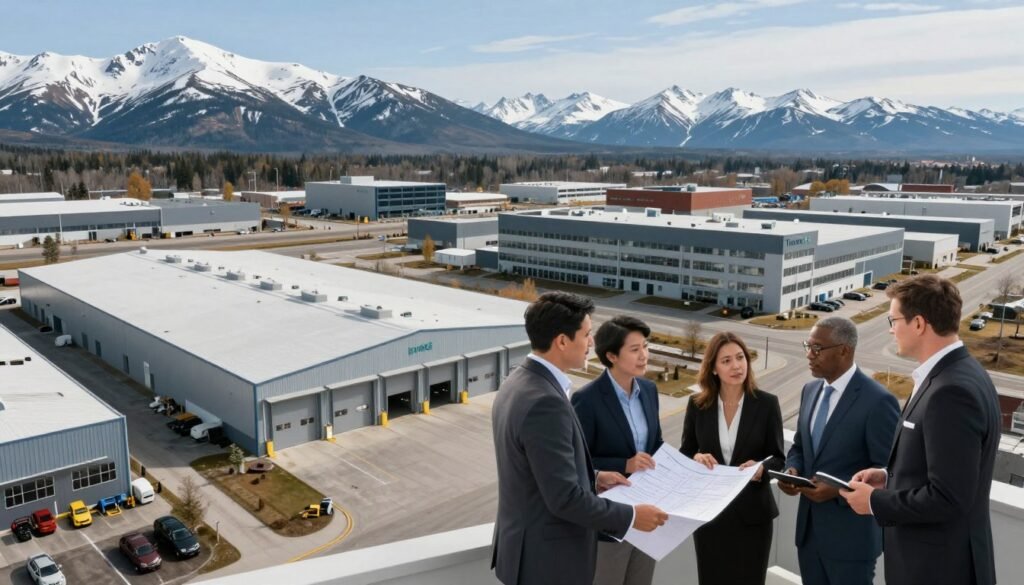
Multifamily and residential-adjacent assets
Condos, triplexes, apartments, and SFRs often see more lender activity. Recent Anchorage data showed strong volume in condos and triplexes, which boosts liquidity.
Unit count, HOA exposure, and rent-roll quality directly affect amortization, DSCR requirements, and recourse. Clean leases and stable occupancy win better terms.
Industrial, storage, and specialized sites
Industrial properties and specialized-use sites trigger extra diligence: environmental reviews, tenant-credit checks, and reserve requirements.
Storage underwriting stresses stabilization and conservative income assumptions. Lenders prize historical occupancy and low expense ratios.
Retail, office, parking, and mixed-use
Lease structure (NNN vs gross), tenant rollover risk, and local demand shape loan sizing and covenants for retail and office assets.
Practical tip: present clean operating statements, realistic pro formas, and a short narrative that explains why the property will perform through seasonality.
Who lends in Alaska and how to choose between banks, credit unions, and brokers
Not all lenders underwrite the same way. Start by matching your asset and borrower profile to the likely funding channel. That saves time and improves execution certainty.

Credit unions and community banks — the active local players
Credit unions and community banks led originations in Anchorage over the past 90 days. They commonly offer ~65% LTV and price around Treasury + 235–300 bps.
Practical edge: local decisioning and ~0.5% origination fees speed approvals for typical commercial properties.
National banks and branch-based programs
National banks provide standardized programs and broader product menus. They can be stricter on documentation, geographic limits, and down payment rules.
Expect traditional lenders to ask for 25%–50% down on many loan types and to emphasize policy consistency over local nuance.
When to use a commercial loan broker
Brokers help when credit, collateral, or down payment limits block traditional desks. ACLB, for example, places deals across the USA and Canada for borrowers who don’t fit standard boxes.
Use a broker for complex profiles, short timelines, or non-standard collateral to broaden your options and preserve deal momentum.
- Start with lender fit: asset type + borrower strength.
- Then compare terms, rate/fees, and execution certainty.
- Ask each lender how they treat collateral shortfalls, guarantees, and reserves to avoid late-stage retrades.
| Channel | Typical LTV | Pricing & Fees | Best use |
|---|---|---|---|
| Credit Unions / Community Banks | ~65% | Treasury +235–300 bps; ~0.5% origination | Local deals, faster decisions, owner-occupied or stabilized assets |
| National Banks | 50–75% (varies) | Competitive spreads; stricter documentation | Large, standardized commercial real estate programs |
| Commercial Loan Brokers (e.g., ACLB) | Varies by program | Broker fees + lender fees; wider product access | Low credit, limited down payment, unusual collateral |
| Private Lenders / Investors | 30–70% (case-by-case) | Higher rates, flexible terms | Bridge needs, short-term or high-risk deals |
How much you can borrow and what to expect on down payment and LTV in Alaska
Before you shop rates, know how lenders translate value and cash flow into a maximum loan amount. Lenders use two core tests: the value-based LTV cap and the cash-flow (DSCR) test. The lower of those two limits sets the available amount.
Typical LTV benchmarks
Credit unions and community banks commonly use a conservative 65% LTV for many property types. That means a $1.3M appraisal often supports about a $845k loan in local practice.
When higher leverage is possible
Some programs — owner-occupied or government-backed — can push leverage toward 80–90% depending on eligibility and guarantees. Those options are narrower and require stronger documentation.
Down payment reality check and right-sizing
Traditional banks frequently ask for 25%–50% down and collateral to cover shortfalls. Model several scenarios (base, conservative, downside) and include repair budgets and working cash.
Note: liquidity and post-closing reserves matter. A borrower can “qualify” on paper but still lose lender confidence without credible cash buffers.
- Core math: lenders cap proceeds by LTV and DSCR; income shortfalls reduce the loan.
- Use the $1.3M local average to sanity-check your purchase targets and loan size.
- Ask lenders about specific financing options early so you can tailor your request.
Interest rates, fees, and points: building an apples-to-apples cost comparison
Lender quotes are apples and oranges until you convert index + spread into an all-in effective rate. Start by asking each lender to show the index (for example, Treasury) plus basis points and whether the rate is fixed, floating, or fixed-then-floating.
How pricing is commonly quoted
Use the Treasury + spread benchmark to judge competitiveness. In recent Anchorage practice many credit unions and community banks ranged near Treasury + 235–300 bps. Confirm whether that quote includes any origination or assumption credits.
Fees, points, and origination
Origination fees often run about 0.5% at local credit unions. Add third-party costs: appraisal, environmental, and legal. When lenders charge points to buy down the rate, calculate breakeven based on your expected hold period.
Fixed vs variable, amortization and balloon risk
Match fixed or variable structure to your hold period and risk tolerance. Fully amortizing options up to 25 years lower monthly payments versus short amortization with a balloon. Run an apples-to-apples worksheet: same loan size, same amortization, same maturity, same fees, and the same prepayment assumptions to pick the best overall cost.
Qualification checklist: credit, cash, collateral, and entity setup that lenders underwrite
Before you request quotes, run a short application audit. Lenders look for a concise set of signals that predict repayment and value.
What lenders actually score
Credit history tops the list. Late payments, high card utilization, and recent inquiries raise flags. Many brokers warn that low scores or thin histories can lead to declines.
Cash and reserve expectations
Show reliable cash to cover debt service, repairs, and vacancy cycles. Lenders expect operating reserves that prove the business can survive short downturns.
Collateral, guarantees, and ownership
Underwriting compares loan size to collateral value. Traditional banks often want collateral to match or exceed the request and 25%–50% down.
When property income is marginal, expect personal guarantees or extra asset pledges. Clean formation documents for LLCs and operating entities reduce friction and speed approval.
Pro tip: If credit or collateral is weak, use a broker channel to widen options and preserve deal momentum.
- Borrower credit profile and payment history.
- Global cash flow and reserve evidence.
- Property performance, appraisal, and rent-roll.
- Collateral coverage and guarantee structure.
- Clean entity docs and ownership traceability.
Pre-application self-audit: pull your credit reports, tally liquid cash, assemble entity paperwork, and estimate down payment. Fix small credit errors, shore reserves, and tidy formation records before shopping rates to avoid wasted cycles.
How to get quotes and move from term sheet to closing with fewer surprises
Start your rate shopping with a tight, standardized quote request so offers are truly comparable. That approach reduces guesswork and helps you select the best loan option for each property.
What to include in a quote package
- Deal summary: property address, type, purchase price, requested loan, and planned improvements.
- Requested quote details: proposed rate with index/spread, fixed vs. floating, amortization, maturity, and interest rates structure.
- Disclosure of recourse, required DSCR/LTV, origination fee (~0.5% typical at local credit unions), points, prepayment terms, and reserve needs.
- Borrower snapshot: credit highlights, entity docs, and recent financials or rent roll.
Documentation timeline and closing management
Map a realistic period for package delivery: 1–2 weeks for initial quotes, 2–4 weeks for underwriting, and longer for construction loans with draw schedules.
During closing, order appraisal, environmental screen, survey/title, and insurance early. Confirm assumptions (NOI, vacancy, repair scope) and ask lenders what triggers a re-trade.
“Keep a lender-comparison table so rates, fees, and covenants are evaluated side-by-side.”
Conclusion
A practical decision path begins with reading local deal signals, choosing the right financing options, then selecting lenders by fit and execution certainty — not just the lowest rate.
Use Anchorage deal volume and average amount benchmarks to set realistic underwriting expectations for each property type. Convert index + spread into apples-to-apples comparisons that include interest rates, fees, points, amortization, and balloon or refinance risk.
Prepare early: tidy credit, document cash reserves, and sort entity papers so quotes turn into clean term sheets. Assemble a standard quote package, solicit options from banks, credit unions, and brokers, and validate assumptions before signing.
Result: a more confident, better-structured commercial real estate loans decision with fewer late-stage surprises for your properties.