
Commercial Real Estate Financing: Strategic Approaches for Today’s Market in Maryland

parked vehicles beside buildings

Did you know that flexible loan structures can cut time-to-close by weeks for mid‑size projects on the Eastern Shore? That speed often makes the difference between winning a site and watching it slip away.

This page is a service-focused guide for businesses and investors weighing purchase, refinance, development, and portfolio choices. It explains how to match capital plans to occupancy patterns, construction timetables, and cash flow realities.

Queenstown Bank of Maryland, SECU, and MainStreet Bank position lending as support for growth—offering flexible terms, competitive rates, and hands-on market guidance. The right approach is not one-size-fits-all; experienced lenders help pair the proper loan type with property and repayment timing.

Expect practical guidance on owner-occupied versus investment paths, underwriting benchmarks, and how rate, structure, and documentation choices shape certainty to close. This article focuses on local, relationship-based banking that understands submarket differences across the state.

Key Takeaways

  • Align capital structure with tenant needs, timing, and cash flow.
  • Local lender relationships can speed approvals and clarify risk.
  • Competitive rates come from solid cash flow, collateral, and docs.
  • Owner-occupied and investor paths require different underwriting steps.
  • Preparation and the right loan type improve certainty to close.

Maryland Commercial Real Estate Financing Solutions Built Around Your Business Goals

Tailored financing options help businesses align capital with growth, occupancy, and cash-flow goals. Banks on the Eastern Shore and across the region offer purchase, refinance, and development paths that match operational timing to funding milestones.

A modern commercial real estate office space in Maryland, featuring sleek glass skyscrapers and attractive brick buildings amidst well-maintained green landscaping. In the foreground, a diverse group of business professionals in formal attire, including men and women, engage in a discussion outside. The middle ground showcases a busy street with pedestrians and vehicles, highlighting the vibrant urban atmosphere. The background contains a clear blue sky with fluffy clouds, casting soft, natural lighting over the scene. The image should convey a sense of professionalism, opportunity, and collaboration, emphasizing an inviting and strategic environment for commercial financing solutions. The perspective is slightly elevated, resembling a wide-angle view to capture the bustling essence of Maryland's commercial landscape.

Purchase vs. refinance vs. investment each affect underwriting and structure. A purchase loan focuses on acquisition and closing speed. A refinance targets cash‑flow, debt consolidation, or repositioning after improvements. Investment loans emphasize projected income and stabilization timelines.

  • Buy vs. lease: Owning can build equity, stabilize occupancy costs, and support future expansion.
  • Development and land: Lenders expect staged approvals—site purchase, entitlements, vertical construction, then stabilization—with milestone reporting.
  • Owner-occupied vs. investor: Underwriting differs when repayment depends on business cash flow versus rental income performance.

Local lenders—SECU, Queenstown Bank of Maryland, and MainStreet Bank—combine in‑market officers with credit teams to guide sizing, leverage, and documentation. These relationships can speed appraisals, clarify valuation expectations for facilities and property, and improve certainty to close.

Next up: loan sizing, leverage, underwriting standards, and documentation that determine quoted rates and terms.

Loan Structures, Terms, and Requirements for Maryland Commercial Real Estate Loans

Start by understanding how loan size, LTV, and repayment source drive pricing and approval odds.

Size and leverage benchmarks: SECU offers loans from $250,000 up to $5,000,000. Lenders set leverage based on collateral and borrower strength, so stronger credit and more equity usually mean better terms.

A modern office environment showcasing a diverse group of professionals in business attire collaborating over a detailed loan structure diagram on a large screen. In the foreground, a well-dressed woman points to key financial elements, while a man takes notes. The middle ground features a sleek conference table with laptops, financial documents, and a notepad. The background displays a city skyline through large windows, with natural light flooding the room, creating an optimistic and focused atmosphere. The perspective is from a slight angle, capturing both the engaged team and the expansive view, with a warm color palette emphasizing professionalism and strategy.

Loan-to-value and occupancy rules

Owner-occupied deals can reach up to 80% LTV in certain cases, while investment properties commonly cap near 75% LTV. Underwriting drives final limits and pricing.

Owner-occupied qualification requires owners to occupy at least 51% of the property. That occupancy threshold changes how lenders view risk and debt coverage.

Underwriting, rates, and documentation

Primary repayment must be supported by ongoing business cash flow. Lenders review tax returns, financial statements, entity documents, rent rolls, and purchase contracts.

Rates pair with structure: competitive rates and interest-only options are available when credit and cash flow support them. SECU orders appraisals and offers expedited appraisal paths and a 90-day rate lock.

Feature Typical Range When Used Why It Matters
Loan Size $250,000 – $5,000,000 Acquisitions, refinances, small developments Sets documentation and approval workflow
Loan-to-Value OOCRE up to 80% / IRE up to 75% Depends on occupancy and borrower strength Impacts down payment and pricing
Repayment Source Cash-flow based Owner-operators and income properties Determines debt coverage and covenants
Timing Tools 90-day rate lock, expedited appraisal Tight closings or competitive bids Reduces execution risk and price movement

Compliance note: Some restrictions apply. Borrowers should consult a tax adviser about interest deductibility and related charges.

To learn tactics for securing better pricing on your next real estate loan, see how to secure the best possible rate.

Commercial Property Types and Specialized Lending Programs We Support in Maryland

Lenders assess property types differently, so picking the right category shapes underwriting, valuation, and marketability.
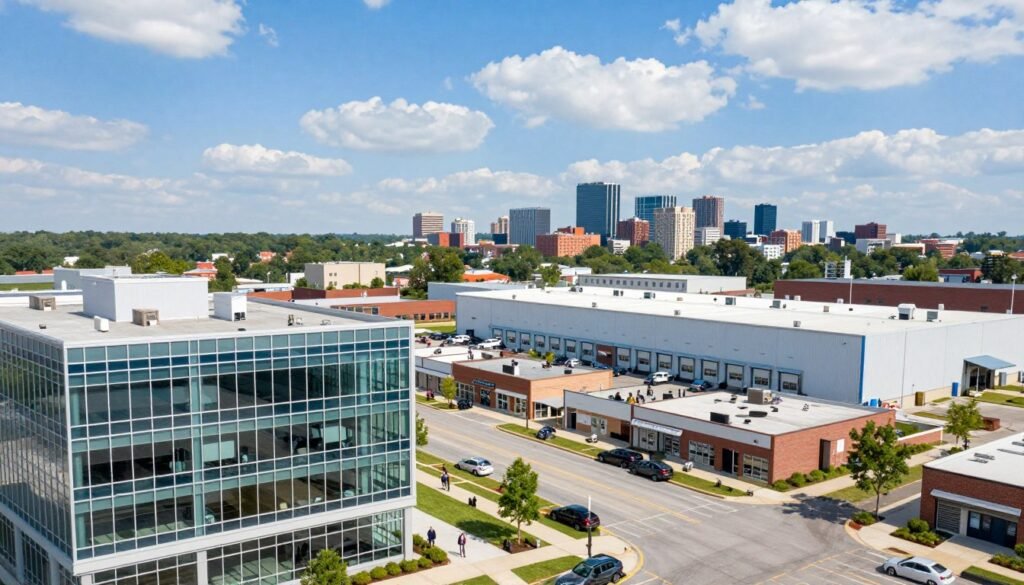
A vibrant, detailed depiction of various commercial property types in Maryland, showcasing a modern office building, a retail space, and an industrial warehouse. In the foreground, an impressive glass office building with professional individuals in business attire discussing financing options. The middle ground features a bustling retail area with shops and small businesses and a large industrial warehouse with loading docks. The background includes a scenic view of Maryland's skyline under a bright blue sky with scattered clouds. The lighting is bright and natural, evoking a sense of opportunity and growth. Capture the essence of commercial real estate, illustrating diversity and vitality in the market.

Core commercial categories include office buildings, retail shops, shopping centers, warehouses, and storage facilities. Underwriting focuses on tenant stability, lease length, and location-driven demand.

Multifamily and residential-adjacent assets—apartments, condominiums, and mixed-use buildings—are judged by unit mix, occupancy history, and market rents. Lenders review operating statements and stabilization plans closely.

Community and specialty facilities such as churches, hotels, and medical facilities carry unique operating models. These require tailored credit review and repayment analysis that reflect seasonal and contract-driven income.

Industry-focused solutions include commercial mortgage options for medical professionals and physicians. SECU and other lenders offer programs that consider practice cash flow, expansion timing, and professional credit profiles.

Present a clear use-of-proceeds narrative, stabilization timeline, and income breakdown to improve approval odds. Selecting the right property and program is essential; aligning structure, rate strategy, and documentation readiness completes the financing plan.

Conclusion

Success often follows when borrowers align property goals with lending terms and local market insight. Match your plan to the right loan type, prepare clear docs, and model cash flow that supports repayment.

Decision pathways—purchase, refinance, development, or investment—drive underwriting and leverage expectations. Owner‑occupied deals differ from investor-backed projects in how lenders weight income and coverage.

Work with experienced local teams like Queenstown Bank of Maryland, SECU, or MainStreet Bank to explore options. Ask about 90‑day rate locks and expedited appraisals to improve timing and certainty.

Next step: clarify your needs—target amount, timeline, occupancy, and repayment plan—then contact a commercial lending team to review terms and eligibility. Programs vary; consult tax and legal advisers on implications.


FAQ

What loan sizes and leverage are available for commercial property purchases?

Loan programs generally start at $250,000 and can reach $5,000,000 or more depending on the lender. Leverage varies by scenario: some owner-occupied deals may support up to 80% loan-to-value, while investment properties typically receive underwriting-driven LTV determinations based on income and market value. Lenders also consider debt service coverage, borrower credit, and property type when sizing loans.

How do lenders evaluate owner-occupied versus investment properties?

For owner-occupied properties, lenders expect at least 51% occupancy by the borrowing business and typically focus on the company’s cash flow and business credit. Investment properties are underwritten primarily on property income, rent rolls, and market comparables. Each path affects interest rates, amortization, and required reserves.

What documentation is commonly required for an application?

Typical documentation includes business and personal tax returns, profit-and-loss statements, balance sheets, rent rolls for leased assets, property leases, and a lender-ordered appraisal. Lenders may also request environmental reports, property surveys, and evidence of insurance. Preparing complete files speeds approval.

Can I get interest-only payments or flexible amortization schedules?

Many lenders offer flexible features such as interest-only periods, varied amortization terms, and fixed or floating rate options. Availability depends on the borrower profile, property type, and loan program. These features help align debt service with cash-flow needs and growth plans.

How are rates and fees determined for commercial loans?

Rates reflect market conditions, borrower creditworthiness, loan size, property type, and loan-to-value. Fees can include origination charges, appraisal and title costs, and underwriting fees. Comparing multiple lenders and securing rate-lock options can reduce exposure to rate movement during processing.

What underwriting approach do lenders use for cash-flow-based loans?

Cash-flow underwriting ties repayment ability to the business’s operations. Underwriters analyze historical and projected revenues, operating expenses, and net operating income. They use these figures to calculate debt service coverage ratios and determine sustainable loan amounts and terms.

Are loans available for land acquisition and development projects?

Yes. Specialized programs cover land purchases, site development, and new construction of commercial facilities. These loans often require construction draws, detailed budgets, and closer oversight during the build phase. Lenders may expect higher equity or guarantees for development risk.

What property types qualify for financing under typical programs?

Eligible properties commonly include office buildings, retail shops and shopping centers, warehouses, storage facilities, multifamily buildings, condominiums, mixed-use assets, community centers, hotels, and medical facilities. Certain programs target industry-specific borrowers such as physicians or medical practices.

How long does the approval and closing process usually take?

Timelines vary: a well-documented loan can close in several weeks, while complex transactions or construction loans may take 60–90 days or longer. Tools such as expedited appraisal pathways and rate lock options help provide timing certainty and accelerate closings.

What role do appraisals and inspections play in loan approval?

Appraisals establish market value and support loan-to-value calculations. Inspections and environmental assessments identify physical or regulatory risks. Lenders use these reports to confirm collateral quality and to set conditions for funding or required remediation.

Can small businesses and local borrowers access competitive lending solutions?

Yes. Regional banks and community lenders often provide tailored solutions and local market expertise, including options for owner-occupiers and small investors. These lenders can offer flexible underwriting, relationship-based pricing, and guidance on local regulations and incentives.

What credit and collateral requirements should borrowers expect?

Lenders review personal and business credit histories, liquidity, and experience managing property or business operations. Collateral is typically the financed property; additional guarantees or personal recourse may be required for certain loans or higher-risk projects.

Are there options for refinancing existing commercial mortgages?

Yes. Refinance programs can lower payments, change amortization schedules, or free equity for business needs. Refinances are evaluated on current property value, cash flow, outstanding debt, and the borrower’s goals. Early payoff penalties and prepayment terms should be reviewed.

How can I prepare to get the best possible terms?

Improve financial documentation, maintain clear rent rolls and leases, reduce outstanding liabilities, and present a credible business plan or pro forma. Working with experienced brokers or local lenders who understand the market can secure competitive rates and tailored loan structures.

Leave a Comment

Your email address will not be published. Required fields are marked *

Scroll to Top