
Which SBA Lenders Finance the Purchase of Business Premises?
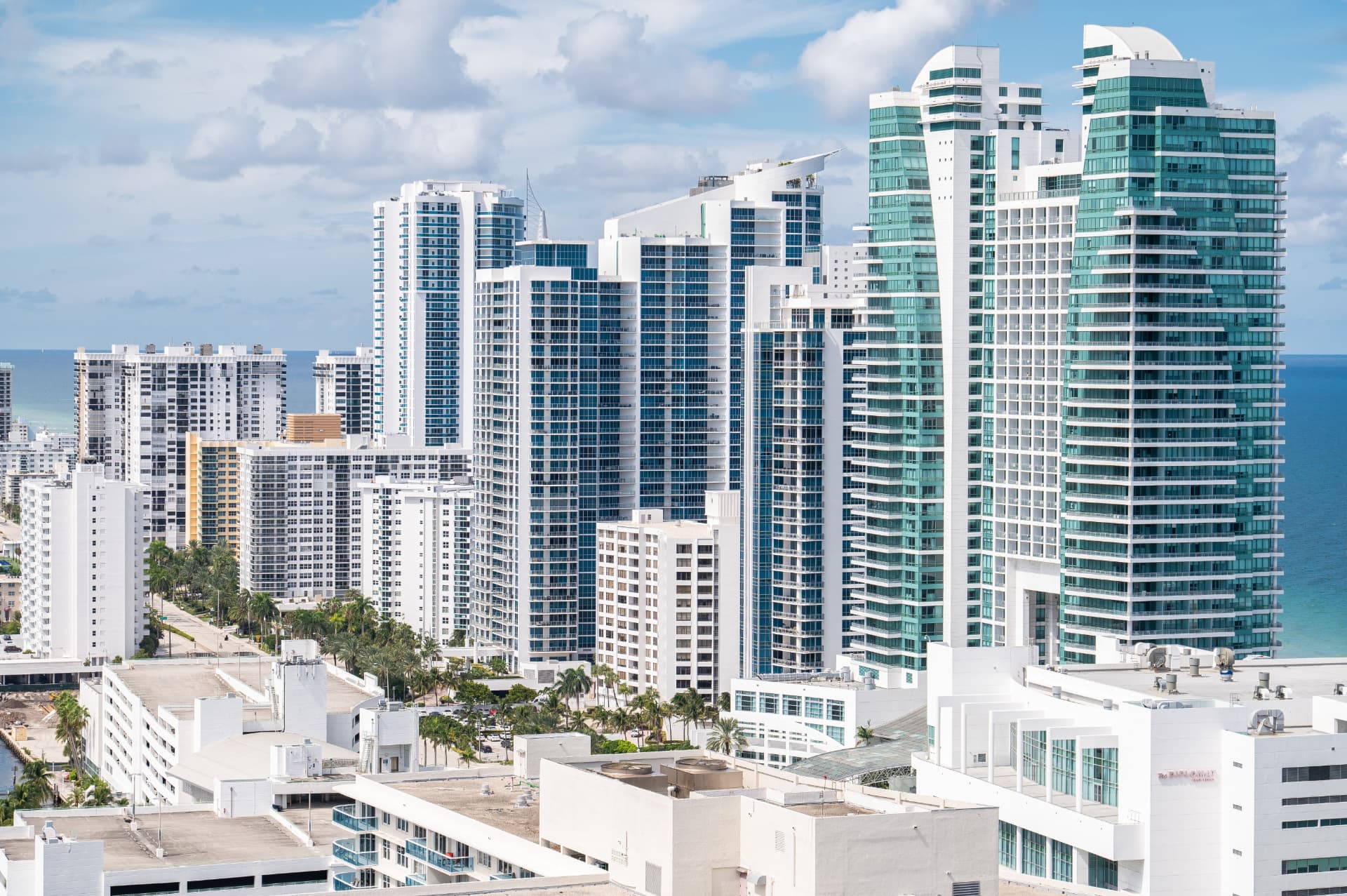
SBA 504 and 7(a) lenders that finance the purchase of business premises include Certified Development Companies (CDCs) like TMC Financing, Florida First Capital, FBDC, and CDC Small Business Finance, working with 1st-lien bank partners including Live Oak Bank, Celtic Bank, Bank of America, JPMorgan Chase, and First Citizens Bank. These preferred SBA lenders finance up to 90% of commercial owner-occupied real estate purchases for qualified small and mid-sized operating businesses nationwide.
Key Takeaways for Buyers and CRE Brokers
- Two-Tier Lender Structure: SBA 504 financing pairs a 50% 1st-lien mortgage from a commercial bank with a 40% 2nd-lien debenture from an SBA-certified CDC.
- Low Down Payment: Qualified businesses purchase commercial premises with as little as 10% equity, preserving working capital for operational growth.
- Leading CDCs: TMC Financing, Florida First Capital, Florida Business Development Corporation (FBDC), and CDC Small Business Finance lead nationwide in processing volume.
- Top 1st-Lien Bank Partners: Live Oak Bank, Celtic Bank, Bank of America, JPMorgan Chase, and First Citizens Bank provide competitive senior commercial mortgages.
- Broker Referral Fees: Real estate brokers can earn 0.50% to 1.00% in referral fees from 1st-lien bank partners using SBA Form 159 compliant structures.
Which SBA Lenders Finance the Purchase of Business Premises?
When business owners evaluate which SBA lenders finance the purchase of business premises, the framework relies on a collaborative two-part ecosystem: Certified Development Companies (CDCs) and 1st-Lien Bank Partners. Under the SBA 504 program, these entities partner to fund up to 90% of total project costs for owner-occupied commercial properties. Understanding whether your business is financially prepared is essential; review 5 signs your business is ready for a commercial mortgage before submitting an application.
We collaborate closely with both non-profit CDCs and national banking institutions to structure financing that safeguards liquidity while locking in long-term fixed rates. Below is a comprehensive breakdown of the leading SBA lenders actively financing commercial business premises today.
Top Certified Development Companies (CDCs)
Certified Development Companies are non-profit organizations certified by the SBA Certified Development Companies network to underwrite, issue, and service 2nd-lien debentures. Selecting the right CDC directly impacts underwriting speed and execution certainty.
1. TMC Financing
TMC Financing operates across California, Nevada, and Arizona, consistently ranking among the top CDCs nationwide by annual debenture volume. TMC specializes in owner-occupied industrial buildings, flex offices, retail centers, and special-use commercial assets. In recent fiscal reporting, TMC issued over $400 million in SBA 504 debentures, supporting commercial property transactions exceeding $1 billion. They offer dedicated broker desks and pre-qualifications within 24 to 48 hours.
2. Florida First Capital Finance Corporation (FFCFC)
Serving Florida, Georgia, and Alabama, FFCFC is an Accredited Lenders Program (ALP) CDC. This designation provides internal underwriting authority and expedited SBA processing. FFCFC frequently executes over $200 million in annual debentures across medical office buildings, manufacturing facilities, and professional service properties, averaging $1.1 million per debenture.
3. Florida Business Development Corporation (FBDC)
FBDC operates throughout Florida, Georgia, and South Carolina. FBDC maintains field business development officers who perform preliminary credit, occupancy verification, and debt service coverage analyses directly alongside real estate brokers and buyers prior to formal underwriting submission.
4. CDC Small Business Finance / Momentus Capital
Operating primarily in California, Arizona, and Nevada, CDC Small Business Finance is one of the highest-volume SBA 504 debenture issuers in program history. They offer specialized underwriting tracks for healthcare premises, dental clinics, and ground-up commercial construction projects.
5. Empire State Certified Development Corporation
Empire State CDC focuses on the New York metropolitan market, financing urban office spaces, multi-story industrial properties, outer-borough commercial facilities, and adaptive-reuse projects with complex title or leasehold considerations.
Top 1st-Lien Bank Partners for SBA Business Premises Financing
The 1st-lien lender provides senior debt covering at least 50% of total project costs. Borrowers can choose between national money-center banks, specialized regional lenders, or digital SBA preferred lenders. Depending on borrower preferences, understanding non-recourse vs. recourse commercial loans can help structure senior debt obligations effectively.
1. Live Oak Bank
Live Oak Bank is a leading national digital SBA lender featuring Preferred Lenders Program (PLP) status. They offer dedicated vertical lending teams across veterinary practices, healthcare, self-storage, and commercial services. Live Oak provides integrated construction-to-permanent loans and fast senior lien approvals nationwide.
2. Celtic Bank
Celtic Bank specializes in small to mid-market commercial property transactions with nationwide coverage. They demonstrate a high appetite for special-use commercial premises, including car washes, gas stations, hotels, and light manufacturing facilities, offering single-close construction-to-permanent debt options.
3. Bank of America
Bank of America provides broad institutional senior financing for traditional office buildings, light industrial facilities, and retail locations. They offer 10- to 15-year conventional fixed-rate options on the senior lien, alongside rate discounts for existing commercial banking clients.
4. JPMorgan Chase Commercial Banking
JPMorgan Chase focuses on established operating businesses purchasing regional headquarters, light industrial facilities, and flex spaces in major metropolitan markets. They deliver competitive fee structures and integrated treasury services for expanding commercial property buyers.
5. First Citizens Bank
First Citizens Bank operates an active nationwide SBA division targeting middle-market owner-occupied real estate and manufacturing site expansions. Their specialized underwriting teams evaluate complex operational cash flows alongside property collateral values.
Comparison Matrix: Top SBA 504 Lenders & Partners
| Lender / CDC Name | Entity Type | Geographic Footprint | Target Property Types | Key Operational Advantages |
|---|---|---|---|---|
| TMC Financing | Certified Development Co. | CA, NV, AZ | Industrial, Flex-Office, Retail, Hotel | 24-48h pre-approvals, dedicated broker desk, high debenture volume. |
| Florida First Capital | Certified Development Co. | FL, GA, AL | Medical Office, Manufacturing, Flex | ALP delegated processing authority, rapid closing execution. |
| Florida Business Development Corp. | Certified Development Co. | FL, GA, SC | Retail, Professional Office, Industrial | Local field BDO presence, ground-up construction expertise. |
| CDC Small Business Finance | Certified Development Co. | CA, NV, AZ | Medical, Professional Services, Industrial | Specialized medical tracks, integrated community support. |
| Live Oak Bank | 1st-Lien Partner Bank | Nationwide | Special-Use, Self-Storage, Healthcare | Industry verticals, PLP status, seamless construction funding. |
| Celtic Bank | 1st-Lien Partner Bank | Nationwide | Special-Purpose, Auto, Hotels | High risk tolerance for special-use real estate and adaptive reuse. |
| Bank of America | 1st-Lien Partner Bank | Nationwide | Traditional Office, Warehouse, Logistics | Institutional pricing, long-term conventional 1st-lien fixed terms. |
Eligibility Criteria & Decision Framework
To qualify for SBA 504 financing for business premises, operating companies must satisfy specific criteria set by the U.S. Small Business Administration 504 Loan Program:
- Owner-Occupancy Rule: The business must occupy at least 51% of an existing commercial building. For ground-up construction, the business must occupy at least 60% initially and 80% within 10 years. For properties with additional tenant space, check our detailed guide on how to finance a multi-tenant commercial building.
- Business Eligibility: Must operate as a for-profit entity, have a tangible net worth under $15 million, and average net income after taxes under $5 million over the preceding two fiscal years.
- Debt Service Coverage Ratio (DSCR): Lenders typically require a minimum historical or projected DSCR of 1.15x to 1.25x on global cash flow.
Down Payment Structure & Exception Rules
While standard multi-use commercial acquisitions require only a 10% borrower down payment, specific property and business conditions alter the capital stack requirements:
| Transaction Scenario | 1st-Lien Bank | 2nd-Lien CDC Debenture | Borrower Equity (Down Payment) |
|---|---|---|---|
| Standard Multi-Use Property (Existing Business) | 50% | 40% | 10% |
| Special-Purpose Property (e.g., Hotel, Car Wash) | 50% | 35% | 15% |
| Startup Business (< 2 Years Operations) | 50% | 35% | 15% |
| Startup Business AND Special-Purpose Property | 50% | 30% | 20% |
Worked Financial Example: Purchasing a $5,000,000 Business Premises
To illustrate how these lenders finance a property purchase, consider a manufacturing company acquiring a $5,000,000 industrial facility:
- Total Purchase Price: $5,000,000
- 1st-Lien Bank Loan (50%): $2,500,000 (provided by Bank Partner at competitive commercial rates)
- 2nd-Lien SBA Debenture (40%): $2,000,000 (provided by CDC, fixed for 25 years)
- Borrower Down Payment (10%): $500,000
Compared to a conventional commercial mortgage requiring a 25% to 30% down payment ($1,250,000 to $1,500,000), the SBA 504 structure saves the business $750,000 to $1,000,000 in upfront cash, keeping vital working capital inside the business.
Broker Referral Fees on SBA Premises Financing
Commercial real estate brokers can earn referral commissions when introducing buyers to 1st-lien bank partners. Referral fees range from 0.50% to 1.00% of the senior mortgage amount. For example, a 1.00% referral fee on a $2,500,000 senior mortgage yields $25,000 in additional broker revenue. All fee payments must comply with SBA Form 159 disclosure requirements.
How to Initiate Your Premises Purchase
- Confirm Occupancy & Eligibility: Verify that your business meets the 51% occupancy requirement and standard SBA size limits.
- Select Your CDC and Bank Team: Engage an experienced CDC (e.g., TMC Financing, FFCFC, FBDC) alongside a PLP bank partner to handle parallel underwriting tracks.
- Issue LOI and Pre-Approve: Submit business financials, tax returns, and property details to secure senior loan approval and CDC debenture authorization.
- Complete Closing: Finalize title, environmental checks (Phase I/RSRA), and execute simultaneous closing within 45 to 60 days.