
Surprising fact: the Federal Reserve cut interest rates by 50 basis points in September — the first cut in more than five years — and that shift already changes how lenders size risk on adaptive reuse deals.
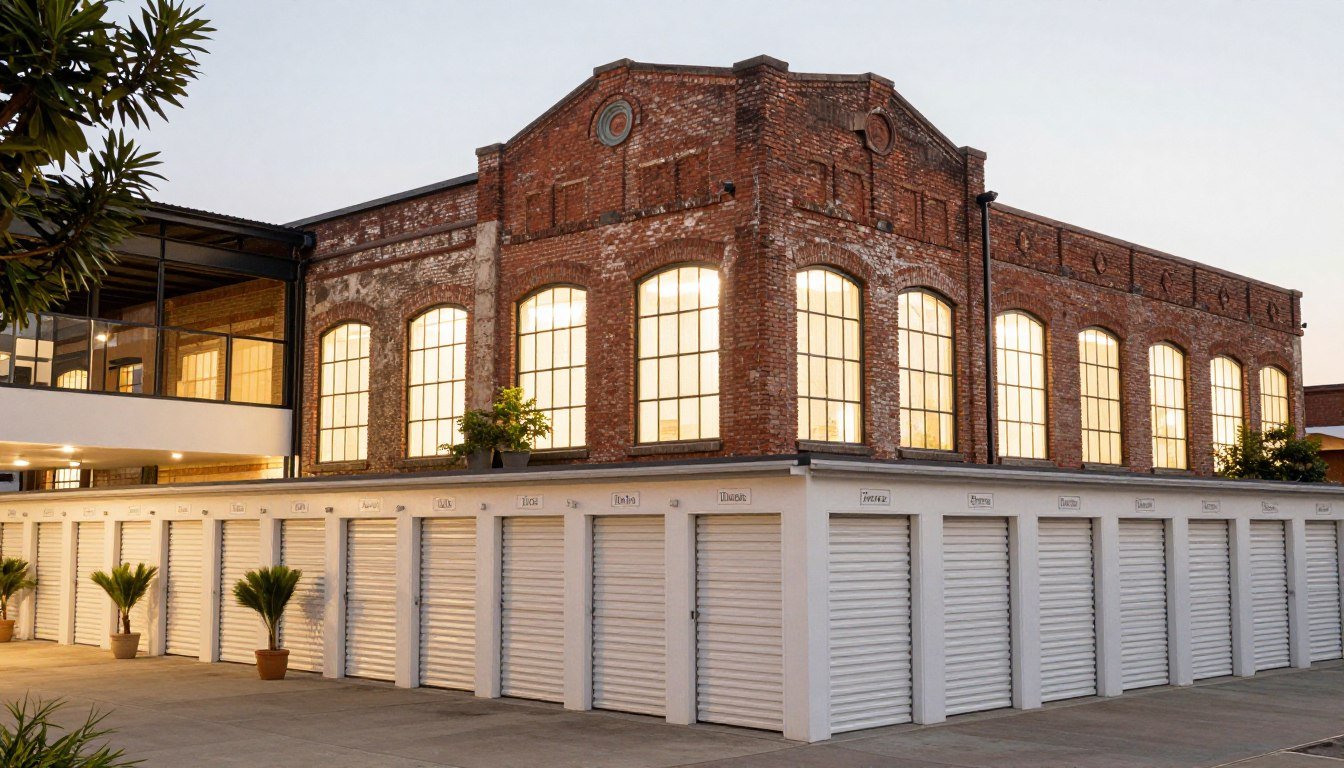
This introduction defines what building conversion means in the storage industry and why it often beats ground-up builds. Adaptive reuse turns underused warehouses, retail boxes, or light industrial sites into income-producing space with lower entitlement risk and faster delivery.
Readers will learn how lenders and the market underwrite reuse risk, how to structure financing across acquisition, build-out, and refinance, and how to compare loan terms for a conversion business plan.
Expect a practical guide: we preview the capital stack — debt, equity, and reserves — and explain how lease-up timing influences which lenders will pursue the property and at what leverage.
Given recent rate moves, borrowers should get multiple quotes, model conservative cash flow, and protect refinancing options rather than assuming rates will fall further.
Key Takeaways
- Adaptive reuse can lower timeline and entitlement risk versus ground-up construction.
- Capital stacks combine debt, equity, and reserves; timing affects lender appetite and leverage.
- Model conservative cash flow and gather multiple loan quotes now.
- Key evaluation metrics include DSCR, LTV, recourse terms, and exit planning.
- The guide covers banks, SBA, bridge construction loans, and longer-term takeouts like CMBS.
What Makes a Building-Conversion Deal Financeable in Today’s Market
A conversion wins lender approval when the sponsor shows a clear path from purchase to positive cash flow. Underwriters now demand market evidence, realistic timelines, and a credible permanent takeout plan. Short, verifiable milestones matter more than concept-level promises.
How lenders view adaptive reuse in commercial real estate
Lenders parse prior use, zoning, environmental risk, and fire/life-safety upgrades. They decide if the scope creates construction risk that shifts a loan from a simple acquisition note to a construction facility.
Stabilization, lease-up, and why cash flow timing drives the capital stack
Bridge and construction lenders require projections tied to local rent comps and absorption. They know conversion projects usually show negative flow during build-out and early stabilization.
- What lenders need: clear acquisition basis, contractor bids, and third-party reports.
- Borrower credit: liquidity, net worth, experience managing facilities, and guarantees when required.
- Capital planning: reserves for interest carry, lease-up expenses, and operating shortfalls until breakeven DSCR.

| Phase | Typical cash flow | Common lender type | Key deliverable |
|---|---|---|---|
| Pre-acquisition | Minimal outlay | Banks / Credit unions | Clear purchase basis, title |
| Build-out | Negative flow (carry) | Bridge / Construction lenders | Contractor bids, permits |
| Lease-up | Ramp to positive cash flow | Permanent lenders / CMBS | Market rents, absorption proof |
Stress-test assumptions by checking achievable rents, nearby supply, and realistic absorption. If timelines slip, add contingency capital to avoid a refinancing shortfall.
Bottom line: present verifiable data, clear use of funds, and a timeline that convinces lenders your permanent takeout is feasible. Proper preparation changes underwriting from speculative to financeable.
Self-Storage Financing: Choosing the Right Capital Stack for a Conversion
How you layer acquisition, build-out, and takeout funding shapes execution risk and long-term returns.
Three stages matter: acquisition to buy the building, build-out to convert it, and a takeout to refinance into longer-term debt once stabilized.
Single loan vs separate facilities. A combined facility with construction draws speeds closing and reduces paperwork. Separate loans can limit covenant exposure but add refinancing risk at stabilization. Choose based on timeline, lender appetite, and sponsor liquidity.

Practical capital stack
Senior loan capacity ties to in-place or projected NOI. Sponsor equity fills the gap. Add dedicated reserves for contingencies, interest carry, and lease-up shortfalls to protect repayment and DSCR during ramp.
When costs shift and exits
Pre-negotiate contingency lines and retained change-order allowances. If overruns occur, access to additional private funds or a bridge facility avoids forced recapitalization.
| Stage | Typical lender | Rate / term | Key feature |
|---|---|---|---|
| Acquisition | Banks / credit unions | 4–6% / short-term | Fast close, lower fees |
| Build-out | Bridge / construction | 7–10% / floating | Interest carry, draws, reserves |
| Takeout | CMBS / life company | Fixed competitive long-term | Lower long-term cost, stricter covenants |
Timing the market is risky. After the Fed cut, some wait for lower rates. Delays can raise purchase prices, invite competition, or shrink refi windows. Model deals at current rates and stress scenarios.
For rate choices, weigh fixed vs floating and use a bridge-to-perm only if you have a credible permanent financing plan. For practical tips on securing favorable terms, see how to secure the best CRE loan.
Financing Options for Converting Existing Buildings Into Self-Storage
Different loan products suit acquisition, build-out, stabilization, and long-term holds; pick the right tool for each phase.
Traditional banks and credit unions offer flexible covenants, 3–10 year terms, and 20–25 year amortizations. They win with local market knowledge and negotiated structures but may decline heavy conversion scopes or complex construction.

CMBS, life companies, and SBA programs
CMBS loans are nonrecourse, fixed-rate takeouts for stabilized facilities. Typical terms are 5 or 10 years, up to ~75% LTV, and strict prepayment rules.
SBA 7(a) supports high leverage and working capital needs up to $5M. SBA 504 pairs a bank first lien with CDC second lien for owner-occupied acquisition and renovation; CDC funding can trail closing.
“Match lender type to project timing: use bridge capital for repositioning, and permanent debt for long-term holds.”
Bridge, construction, and short-term credit
Bridge loans and construction notes fund repositioning and heavy conversion work. Expect 7–10% rates, IO structures, reserves, and short terms (often three years).
Lines of credit and merchant cash advances fill operational gaps during lease-up. Use them sparingly to avoid eroding NOI needed for permanent financing.
| Product | Best stage | Typical terms |
|---|---|---|
| Banks / Credit Unions | Acquisition / short-term hold | 3–10yr term, 20–25yr amort, negotiable |
| CMBS / Life Co. | Stabilized / long-term hold | 5–10yr term, 30yr amort, nonrecourse |
| SBA 7(a) / 504 | Acquisition + renovation | High leverage, bank + CDC structure (504) |
| Bridge / Construction | Repositioning / build-out | 3yr term, 7–10% rates, IO, reserves |
Loan Terms, Rates, and Repayment Structures to Compare Side by Side
A clear matrix of rates, amortization, and fees turns opaque loan offers into actionable choices.
Start by sizing leverage. Bridge lenders often underwrite to project costs and may reach ~80% of total project costs. Life companies typically sit around 60–65% LTV, while CMBS often goes up to ~75% for stabilized assets.
Next, weigh fixed versus floating interest strategies. Fixed rates (common with CMBS and life insurers) stabilize cash flow and help DSCR planning. Floating rates can speed closings for transitional deals but add rate risk during lease-up.
Buydowns and rate locks matter. A CMBS buydown might trim 0.15–0.25% for a fee near 1%. Life-company loans often allow rate locks at application, which protects a conversion when schedules slip.
LTV and repayment mechanics by lender type
| Provider | Typical LTV / Leverage | Rates & structure | Key fees / prepay |
|---|---|---|---|
| CMBS | Up to ~75% LTV | Fixed rate, 30yr amort, 5/10yr term | Strict prepayment; buydown ~0.25% (5yr) / ~0.15% (10yr); closing ~$25k–$30k |
| Life company | ~60%–65% LTV | Fixed; rate lock often at application | Lower closing friction; flexible prepay |
| Bridge | Up to ~80% of project cost | 7%–10% rates; IO common | 1% origination +1% exit; extension ~1%/yr |
| SBA 7(a) / sba 504 | SBA 7(a) high leverage; sba 504 pairs bank + CDC | 7(a): prime +0–3%; 504: fixed CDC second lien up to 25yr | 7(a) prepay 5-3-1%; 504 longer penalty window; CDC funds may trail close |
| Banks | Conservative LTV tied to DSCR | 3–10yr terms; 20–25yr amort | Lower transaction costs; more flexible prepay; recourse common |
What repayment terms mean for DSCR and exit planning
Interest-only periods reduce early debt service and protect liquidity during lease-up. But longer amortization on permanent debt improves long-term cash flow. Model both scenarios to see how repayment choices affect DSCR at stabilization.
All-in cost includes rate, origination, guarantee fees, legal and third-party reports, and exit charges. Match your exit plan to prepayment rules: strict CMBS penalties demand you plan to hold or refinance before selling.
How to Qualify and Get Approved Faster With Better Terms
Approve faster by showing lenders conservative projections, a tight budget, and a credible exit plan.

Credit, collateral, and DSCR expectations
Lenders favor borrowers with strong personal and business credit, clear liquidity, and a proven track record in commercial real estate. Strong net worth and operational experience reduce lender concern and may lower required guarantees.
Collateral is underwritten both “as‑is” and “as‑complete.” Light build-out risks get higher LTVs than heavy construction that requires MEP or structural work. Show appraisals that reflect post-conversion value when possible.
Demonstrate DSCR readiness with conservative cash flow. Build interest reserves and operating shortfall funds to cover negative flow during lease-up.
Documentation lenders expect
- Detailed budget, contractor bids, and realistic timeline.
- Pro formas tied to market comps and third‑party rent studies.
- Clear sources & uses with draw schedule matched to work milestones.
Stress-testing and process tips
Stress rents, concessions, ramp speed, new supply, and expense inflation. Show the lender that your model holds with slower absorption for 12–24 months.
| Focus | What to show | Why it helps |
|---|---|---|
| Credit & liquidity | Personal FICO, bank statements, proof of equity | Reduces recourse and improves pricing |
| Construction scope | Plans: life‑safety, MEP, unit mix | Clarifies work risk and draw timing |
| Cash flow stress | Alternate pro formas (‑20% rent) | Protects refinance path and DSCR |
Practical tip: pre-underwrite with your bank, order reports early, and lock equity partners before closing. Better preparation shortens time to close and strengthens access to long-term funding.
Conclusion
Final takeaway: close your conversion plan by proving the model survives slower absorption, higher rates, and modest cost overruns.
Confirm the deal is financeable, choose a capital stack that fits your conversion timeline, then select loan products that match your risk tolerance and exit plan. Prioritize structure and downside protection—reserves, interest-only where helpful, and conservative underwriting—over chasing marginally lower rates.
Compare loans on leverage, pricing, fees, prepayment, term, and recourse. Get multiple lender quotes across banks, SBA channels (including sba 504 / 504 loans when appropriate), bridge providers, and permanent takeouts.
Practical next step: assemble your underwriting package, validate demand and competition, and align your financing options to a realistic timeline so the property reaches stabilization without a liquidity crisis.