
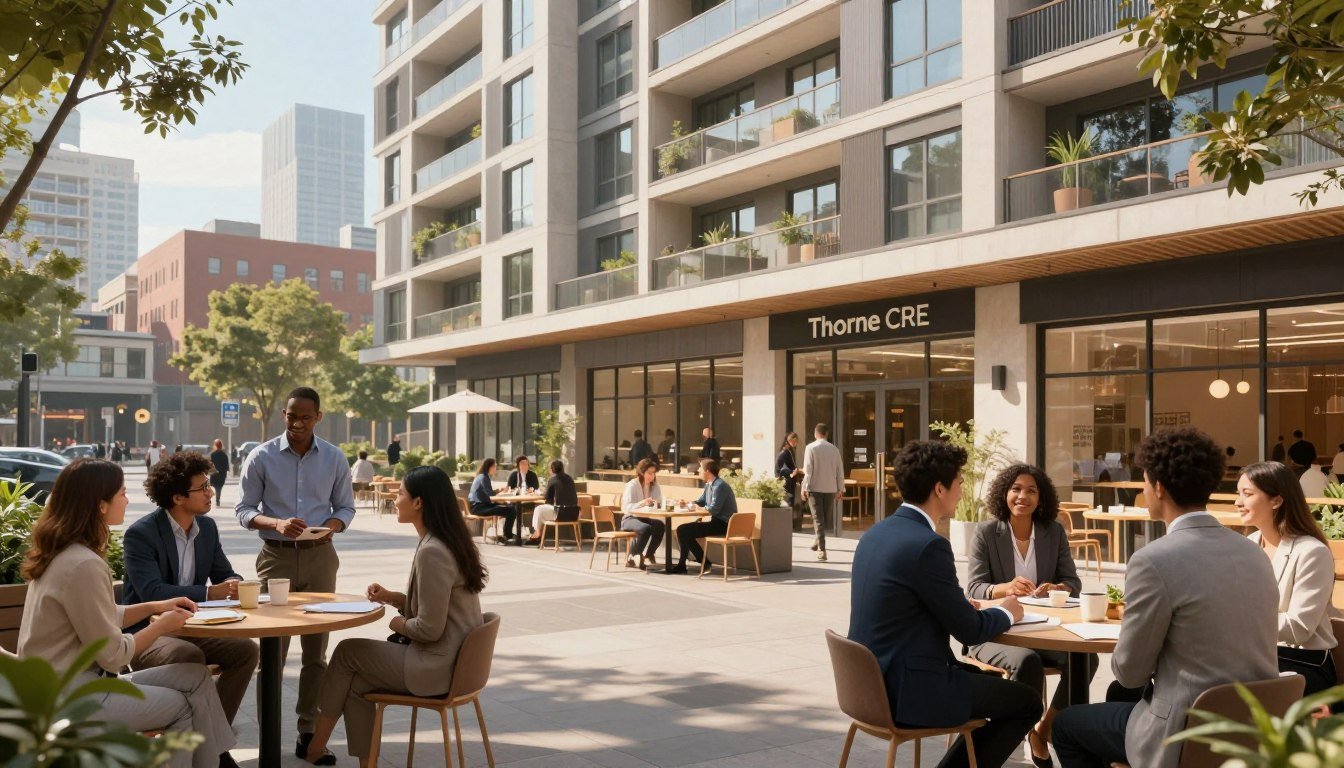
Did you know live-work spaces are becoming more popular? This is because more entrepreneurs and artists want places that boost creativity and productivity. This trend is changing the commercial real estate world, offering both chances and hurdles for developers and investors.
Financing live-work and non-traditional mixed-use projects needs new approaches that differ from usual financing models. These projects face complex zoning rules, special designs, and various income sources. It’s key to grasp the details of Mixed-Use Financing.
As the market keeps changing, it’s vital to understand how to finance live-work units and other non-traditional mixed-use ideas. By looking into creative financing options and using insights from commercial real estate, developers can find new chances and spur growth in this fast-changing field.
Key Takeaways
- Live-work spaces are in high demand, driven by entrepreneurs and artists.
- Financing these projects requires innovative strategies beyond traditional models.
- Understanding Mixed-Use Financing is crucial for navigating complex regulations and revenue streams.
- Creative financing solutions can unlock new opportunities in the market.
- Developers must stay informed to drive growth in this rapidly evolving sector.
The Evolution of Live-Work Spaces in Modern Development
Live-work spaces have changed how we view work, living, and community. In the past, mixed-use developments were common. But they have changed a lot over time.
From Historical Mixed-Use to Contemporary Applications
Older mixed-use properties had homes and shops together, helping local communities. Now, live-work units are more advanced. They include creative mixed-use features for today’s lifestyles and work.
These modern spaces are flexible. They can be used for many things, like making art or starting tech companies.
Why Developers Are Embracing Non-Traditional Concepts
Developers like non-traditional assets because they offer new chances for creativity and standing out. By using creative mixed-use ideas, they make lively, changing places. These places draw different people, helping projects succeed.
The move to new live-work spaces comes from what people want and new tech. These changes are changing how we live and work.
Understanding Mixed-Use Financing Fundamentals
Financing mixed-use projects is complex. They combine different types of revenue and assets. This makes valuation and financing harder than for single-use properties.
To get financing for a mixed-use project, developers need to know what lenders look for. They must understand the financial metrics used to evaluate these properties.
Key Financial Metrics for Hybrid Properties
Lenders use several key financial metrics to check if a mixed-use project works. These include:
- Cash flow: The total income minus operating expenses.
- Capitalization rate: The ratio of net operating income to the property’s value.
- Loan-to-value ratio: The percentage of the property’s value that is financed.
| Financial Metric | Description | Importance in Mixed-Use Financing |
|---|---|---|
| Cash Flow | Total income minus operating expenses | High |
| Capitalization Rate | Ratio of NOI to property value | Medium |
| Loan-to-Value Ratio | Percentage of property value financed | High |
How Mixed-Use Differs from Single-Use Financing
Mixed-use financing is different from single-use financing. It’s harder to value multiple revenue streams and asset types. Lenders must look at how different uses affect the property’s performance.
Key challenges include figuring out the stability of various income streams. They also need to find the right capitalization rate for mixed-use properties.
Knowing these basics is key for developers to get financing for their mixed-use projects.
Types of Live-Work and Non-Traditional Mixed-Use Projects
Mixed-use projects have grown to include new ideas like live-work units and creative spaces. These changes are reshaping urban planning and community building.
Artist Lofts and Creative Workspaces
Artist lofts and creative workspaces are perfect for artists and creatives. They offer space to live and work. These places have big windows, high ceilings, and open layouts, great for studios and workshops.
Some key features of artist lofts include:
- Flexible floor plans that can accommodate both living and working areas
- High ceilings and large windows that provide ample natural light
- Proximity to cultural and artistic communities
Retail-Residential Hybrids
Retail-residential hybrids mix commercial and residential spaces. They create lively and dynamic communities. These projects have retail on the street level and homes above, adding energy and activity.
The benefits of retail-residential hybrids include:
- Increased foot traffic and exposure for retail tenants
- A more diverse and vibrant community
- Potential for increased property values
Maker Spaces and Production Facilities
Maker spaces and production facilities are for entrepreneurs and small manufacturers. They offer shared equipment and resources, encouraging teamwork and new ideas.
Knowing about live-work and non-traditional mixed-use projects helps developers and investors. It guides them through the complex world of modern real estate.
The Financial Complexity of Non-Traditional Assets
Handling non-traditional assets requires a detailed approach. This is because these assets often have unique properties and can generate various income streams. Mixed-use developments are a prime example, with different parts of the property serving different purposes.
Valuation Challenges for Hybrid Properties
Valuing hybrid properties is tricky because of their mixed use. Traditional valuation methods might not work well. This is because they rely on data from similar properties, which may not exist for new or unique projects.
- Income approach: This method looks at the potential income from different uses of the property.
- Sales comparison approach: This involves analyzing sales of similar mixed-use properties.
- Cost approach: This method evaluates the cost of reproducing or replacing the property.
Cash Flow Considerations in Mixed-Use Developments
Managing cash flow is key in mixed-use developments. Different income streams can have varying levels of stability and predictability.
Key considerations include:
- Diversifying income streams to reduce risk.
- Choosing the right lease structures and tenant mix for stable cash flow.
- Keeping operating expenses in check across different property uses.
Assessing Lender Appetite for Creative Mixed-Use Concepts
For developers, knowing what lenders want is key to getting funding for new mixed-use ideas. How much risk lenders are willing to take affects if a project can go ahead.
What Makes Lenders Hesitant About Non-Traditional Projects
Lenders are careful with new mixed-use ideas because they’re different and might be risky. They worry about not knowing the project well, if it will make money, and if it will last long.
Looking at how traditional and new projects compare can show why lenders might choose one over the other.
| Project Characteristics | Traditional Projects | Non-Traditional Projects |
|---|---|---|
| Business Model | Established, well-understood | Innovative, potentially untested |
| Cash Flow | Predictable, stable | Variable, potentially volatile |
| Long-term Viability | Proven track record | Uncertain, dependent on market trends |
How to Position Your Project to Appeal to Conservative Lenders
To win over cautious lenders, developers need a solid plan. This should include financial forecasts and a clear plan for when the project ends. Showing what makes the project special and understanding the market can also help.
By knowing what lenders want and tackling their worries early, developers can better their chances of getting funding for their projects.
Conventional Commercial Loan Options for Mixed-Use Properties
Conventional commercial loans are key for funding mixed-use properties. They offer various products to meet different project needs. These loans are vital for developers of complex mixed-use projects.
Commercial Mortgage Products
Commercial mortgage products are essential for mixed-use financing. They give developers the funds needed for property acquisition, construction, or renovation. These products can be customized to fit a project’s specific needs, including loan amount, interest rate, and repayment terms.
- Fixed-Rate Loans: These loans offer stable monthly payments, making them perfect for developers who value financial stability.
- Floating-Rate Loans: These loans provide flexibility, with interest rates that adjust based on market conditions.
Portfolio Lending Opportunities
Portfolio lending considers a borrower’s overall financial situation and portfolio performance. It’s beneficial for developers with multiple projects.
Loan-to-Value Considerations
Loan-to-value (LTV) ratios are key in determining financing amounts. Lenders set maximum LTV ratios. Developers must ensure their projects meet these requirements.
Debt Service Coverage Requirements
Debt service coverage ratio (DSCR) is crucial. It measures a property’s income against loan payments. Lenders require a minimum DSCR to ensure loan security.
Understanding these conventional commercial loan options helps developers navigate mixed-use financing. It allows them to secure the necessary funding for their projects.
SBA Financing Programs for Live-Work Developments
The Small Business Administration (SBA) has financing programs for live-work units. These help developers fund mixed-use properties. These properties have both residential and commercial spaces.
SBA 504 Loan Program Benefits
The SBA 504 Loan Program supports economic growth. It offers long-term, fixed-rate loans for big assets like real estate and equipment. For live-work projects, it has several advantages:
- Low Down Payment: You only need to put down 10% of the loan amount.
- Long-Term Financing: Loans are for 10 or 20 years, making payments easier.
- Fixed Interest Rates: Rates stay the same, protecting you from market changes.
SBA 7(a) Loan Applications for Mixed-Use Projects
The SBA 7(a) loan program is great for live-work developments. It covers many business needs, like buying real estate or financing construction. To get an SBA 7(a) loan, you need a detailed business plan and financial projections. You also need to show your project’s success.
Government-Backed Mixed-Use Financing Solutions
Government-backed financing offers a solid way to fund complex mixed-use projects. It gives developers the money they need to start their projects. These loans often have better terms than regular loans.
These loans are attractive because they help reduce risk for lenders. This makes it easier for developers to get the funds they need. Mixed-use projects are often hard to finance because of their complexity.
FHA 223(f) and 221(d)(4) Loan Options
The Federal Housing Administration (FHA) has several loan programs for mixed-use financing. The FHA 223(f) and 221(d)(4) loans are made for multifamily and mixed-use properties.
- FHA 223(f) loans help refinance existing properties, offering a steady funding source.
- FHA 221(d)(4) loans support new construction or big renovations, with long-term financing and good terms.
HUD-Insured Financing for Mixed-Use Projects
The Department of Housing and Urban Development (HUD) offers insured financing for mixed-use projects. HUD-insured loans have low-interest rates and long repayment periods.
One big plus of HUD-insured loans is they can fund many project types. This includes projects with residential, commercial, and industrial parts.
USDA Rural Development Programs
For projects in rural areas, the USDA has financing options. These programs aim to boost rural economies by supporting various projects, including mixed-use developments.
| Program | Description | Eligibility |
|---|---|---|
| FHA 223(f) | Refinancing existing properties | Existing multifamily and mixed-use properties |
| FHA 221(d)(4) | New construction or substantial rehabilitation | New or substantially rehabilitated multifamily and mixed-use properties |
| HUD-Insured Financing | Long-term financing with favorable terms | Mixed-use projects, including residential, commercial, and industrial components |
| USDA Rural Development | Financing for rural development projects | Mixed-use projects in rural areas |
In conclusion, government-backed financing is a strong tool for developers of mixed-use projects. By using FHA, HUD, and USDA programs, developers can get the funds they need to make their projects real.
Alternative Financing Strategies for Creative Concepts
As the real estate world changes, developers are exploring new ways to fund their projects. Traditional funding methods don’t always meet the needs of these unique projects.
Private Equity and Joint Venture Partnerships are gaining popularity. These partnerships help developers share risks and rewards with investors. This way, they get the money needed for complex projects.
Private Equity and Joint Venture Partnerships
Private equity firms see the potential in mixed-use projects for big returns. Joint ventures can be set up in different ways, like sharing equity or profits. This makes them appealing to developers looking for funding.
“The rise of private equity in real estate has opened new avenues for developers to secure funding for complex projects.” –
Crowdfunding and Community-Based Investment Models
Crowdfunding platforms are helping fund smaller mixed-use projects. They let many investors chip in to a project. This way, developers can get money from a community of supporters.
Crowdfunding does more than just fund projects. It also helps market them. Community-based investment models, on the other hand, build local support for developments.
Real Estate Investment Trusts (REITs) for Mixed-Use
REITs are another funding option. They let developers raise money from many investors. By turning their assets into securities, developers can get a lot of funding for their projects.
REITs are a reliable funding source, great for big mixed-use projects. They also offer liquidity to investors, making them a flexible financing tool.
In summary, new financing strategies are changing how creative mixed-use projects get funded. By using private equity, crowdfunding, and REITs, developers can get the money they need to make their projects happen.
Tax Incentives and Development Programs
The mixed-use development sector gets a big boost from tax incentives and development programs. These help developers financially and encourage the growth of lively, mixed-use communities.
Opportunity Zone Benefits for Mixed-Use Investors
Opportunity Zones give big tax perks to investors in mixed-use projects. By investing in these zones, developers can delay capital gains taxes. They might even wipe out taxes on future gains if they hold the investment long enough. This makes a project much more financially appealing.
Historic Tax Credits and Adaptive Reuse Incentives
Historic Tax Credits are a big plus for mixed-use developments, like turning old buildings into new ones. These credits can cover a lot of the project’s costs, drawing in investors. An expert says, “Historic tax credits have been key in keeping our architectural past alive while boosting the economy.“
New Markets Tax Credits for Qualifying Projects
New Markets Tax Credits (NMTCs) aim to bring investment to low-income areas. Mixed-use projects that qualify can get these credits, cutting down their tax bill.
“NMTCs have been a game-changer for many mixed-use developments, enabling projects that might not have been possible before.”
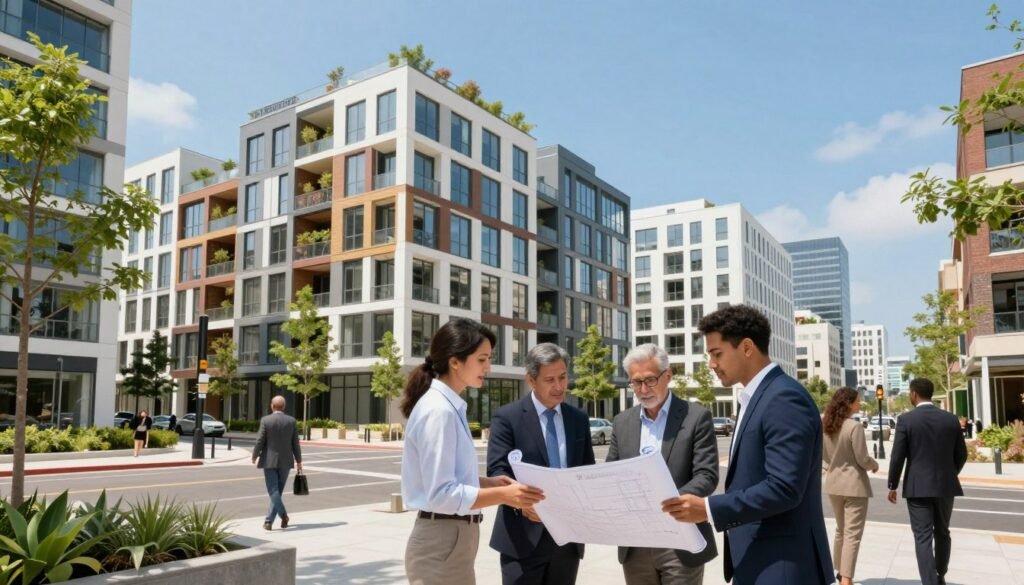
By using these tax incentives and development programs, mixed-use developers can make projects that are both sustainable and profitable. It’s crucial for developers to look into these options to get the most out of their investments.
Navigating Zoning and Regulatory Hurdles
Zoning and regulatory hurdles can greatly affect mixed-use projects. It’s key to know how to tackle these challenges. Mixed-use developments face unique zoning issues because they mix residential, commercial, and sometimes industrial uses.
Working with Local Municipalities on Mixed-Use Approvals
It’s vital to work with local municipalities early on. Building a positive relationship with local authorities helps get approvals faster. Developers must show how their project fits into the municipality’s plans.
Securing Variances and Special Use Permits
Variances or special use permits are often needed for mixed-use projects. This involves showing how the project will help the community and reduce any negative effects.
Impact of Building Codes on Financing Options
Building codes can greatly impact the cost and feasibility of mixed-use projects. Following these codes is mandatory and can affect financing. Lenders see projects that meet or exceed codes as safer investments.
As David Geltner, a top real estate finance expert, said, “The regulatory environment can make or break a mixed-use development project.” This highlights the need to understand and overcome zoning and regulatory hurdles.
Building a Compelling Mixed-Use Financing Package
Getting financing for mixed-use projects needs a detailed package. This package must show the project’s worth. It includes several important parts that show the project can succeed.
Market Analysis and Feasibility Studies
A deep market analysis is key to know the demand for the project’s parts. Feasibility studies check if the project can make money. They look at construction costs, market trends, and how much money it can make.
Financial Projections That Impress Lenders
Lenders want to see that the project will make enough money to pay off the loan. Detailed financial projections are vital. They include expected income, costs, and cash flow. These should be based on real data and market trends.
Revenue Modeling for Mixed-Use Properties
Revenue modeling for mixed-use projects estimates income from different areas. Accurate revenue modeling shows how the project will do financially. It helps spot any risks.
Expense Allocation Strategies
Good expense allocation is key for mixed-use projects’ financial health. It involves dividing costs like property taxes, insurance, and upkeep.
With a solid financing package, developers can better their chances of getting funding. This package should have a deep market analysis, detailed financial plans, and strong revenue modeling.
Case Studies: Successful Non-Traditional Mixed-Use Financing
Mixed-use projects are getting a new look thanks to creative financing. Recent examples show how this works in cities, suburbs, and rural areas.
Urban Adaptive Reuse Projects
Old industrial sites are now vibrant mixed-use spaces. For example, an old factory turned into a live-work loft complex in a big city shows it can work. These projects use a mix of funding, like historic tax credits and private equity.
Suburban Live-Work Communities
Suburbs are getting live-work communities for remote workers and entrepreneurs. A suburban project combines office spaces, retail, and residential units. It uses government-backed financing options and incentives for community development.
Rural Creative Mixed-Use Developments
Rural areas are also seeing new mixed-use projects. These are hubs for local artisans and small businesses. They use private investment, grants, and community fundraising. A rural arts center with studios, galleries, and living spaces is an example. It’s supported by New Markets Tax Credits and local government efforts.
These examples show different ways to fund non-traditional mixed-use projects. Key points include:
- The importance of mixed financing sources
- The role of government incentives and tax credits
- The potential for community engagement and fundraising
Looking at these successful projects, developers and investors can learn a lot. They can see how to finance non-traditional mixed-use projects.
Risk Mitigation Strategies for Developers and Investors
To make mixed-use projects work, developers and investors need to manage risks well. These projects have many income sources, complex rules, and different people involved. This makes it hard to handle risks.
Pre-Leasing Requirements and Tenant Mix Considerations
Getting pre-leasing deals from reliable tenants is a smart move. It brings in steady money and makes the project more appealing to lenders and investors. It’s also important to have a mix of tenants. This way, if one tenant has trouble, others can help keep the project going.
| Tenant Type | Risk Level | Potential Return |
|---|---|---|
| Anchor Retail | Low | High |
| Office Space | Medium | Medium |
| Residential | Low | Medium |
Phased Development Approaches
Starting a project in phases can also help manage risks. It lets developers see how the market reacts and adjust their plans. This way, they can avoid building too much and save money on big upfront costs.
“Phased development allows for flexibility and adaptation to changing market conditions, reducing the risk of over-development.”
Insurance and Legal Protections
Having good insurance and strong legal protections is key. This includes property and liability insurance, and lease agreements that clearly define risks. These steps help protect against unexpected problems.
By using these strategies, developers and investors can make their mixed-use projects stronger. This increases their chances of success.
The Future of Mixed-Use Financing in America
The future of mixed-use financing in the United States is set for big changes. These changes come from creative space development and shifts after the pandemic. It’s key to know the new trends shaping the real estate world.
Emerging Trends in Creative Space Development
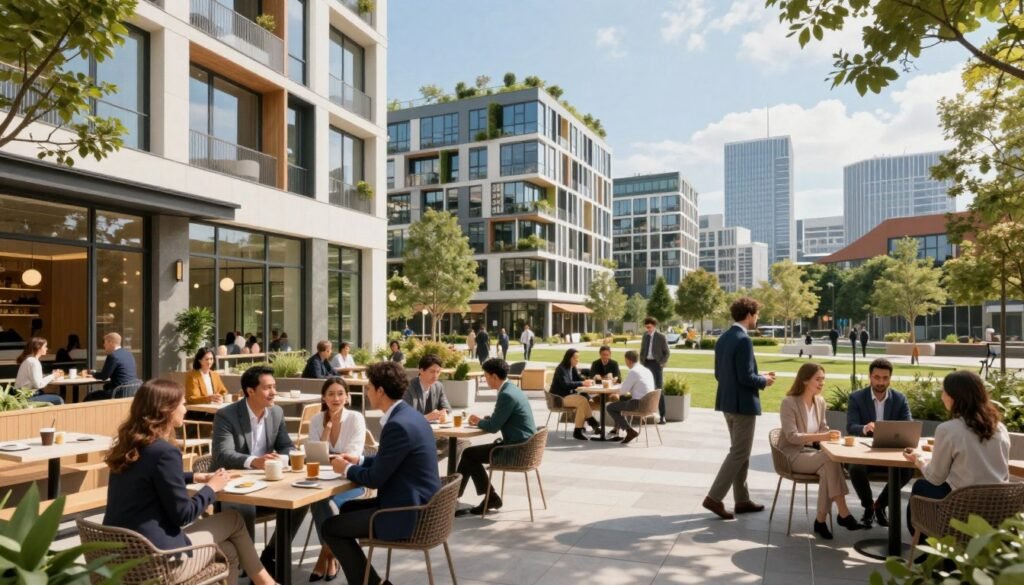
Creative space development is growing fast. It focuses on new and flexible ways to use space. Developers aim to build lively, mixed-use areas with homes, workspaces, and fun spots.
How Technology is Changing Mixed-Use Financing
Technology is a big player in mixed-use financing’s future. Online tools and crowdfunding help developers find money and investors join projects. This makes it easier for everyone, boosting growth.
| Trend | Impact on Mixed-Use Financing |
|---|---|
| Increased use of technology | Improved accessibility and efficiency in securing funding |
| Rise of creative space development | Growing demand for innovative and flexible uses of space |
| Post-pandemic shifts | Changes in consumer behavior and preferences |
Post-Pandemic Shifts in Live-Work Financing
The COVID-19 pandemic changed how people live and work. Developers are now making safe, green, and connected places. They’re adapting to meet these new needs.
Conclusion: Bringing Your Mixed-Use Vision to Life
Financing live-work and non-traditional mixed-use projects is complex. We’ve looked at how live-work spaces have changed, the money side of mixed-use properties, and the different ways to get funding.
For mixed-use projects to succeed, you need creativity and smart money management. Knowing about Mixed-Use Financing helps. Using tax breaks, government help, and other funding options can make your dream real.
Live-work units are a great chance to make lively spaces that mix homes and businesses. With the right financing and help from lenders, developers can make their projects shine.
As cities and suburbs grow, Mixed-Use Financing is key. Staying up-to-date and flexible, developers can make vibrant, mixed-use areas.