
Surprising fact: projects that add specialized medical equipment can raise initial build-out costs by more than 40% compared with a standard site, shifting cash needs and project timelines dramatically.
What this guide calls “office financing” covers funds for build-outs, technology, furniture, specialized equipment, and near-term operating needs tied to a location project. It helps buyers choose the right product for the job.
Medical locations usually face stronger regulatory review and need highly specialized equipment. Traditional workspaces often focus on layout, collaboration areas, and hybrid-work upgrades.
Choosing the right funding structure can protect cash flow, reduce risk, and align repayment with the useful life of improvements and equipment. We preview common options: a bank loan, a business line of credit, tenant improvement allowance, and a lease line of credit, and explain which fits each timeline.
This guide uses decision criteria you can apply today: speed to funding, what costs qualify (hard vs soft), underwriting needs, and total cost over time. It is written for U.S. practice managers, medical group administrators, site managers, and owners planning a new location, remodel, or expansion.
Key Takeaways
- Medical projects often need more capital for regulated, specialized equipment.
- Traditional projects prioritize collaboration and hybrid upgrades.
- Match the product to cash-flow needs to lower risk and costs.
- Compare bank loans, credit lines, tenant allowances, and lease credit by speed and coverage.
- Assess hard vs soft costs and underwriting before choosing a solution.
- Compressed timelines today make flexible funding more valuable.
How medical and traditional offices differ in financing needs
When a build requires specialist clinical tools and compliance steps, budgets and schedules shift quickly.
“Clinical projects often layer in calibrated devices and mandatory upgrades that change scope midstream.”
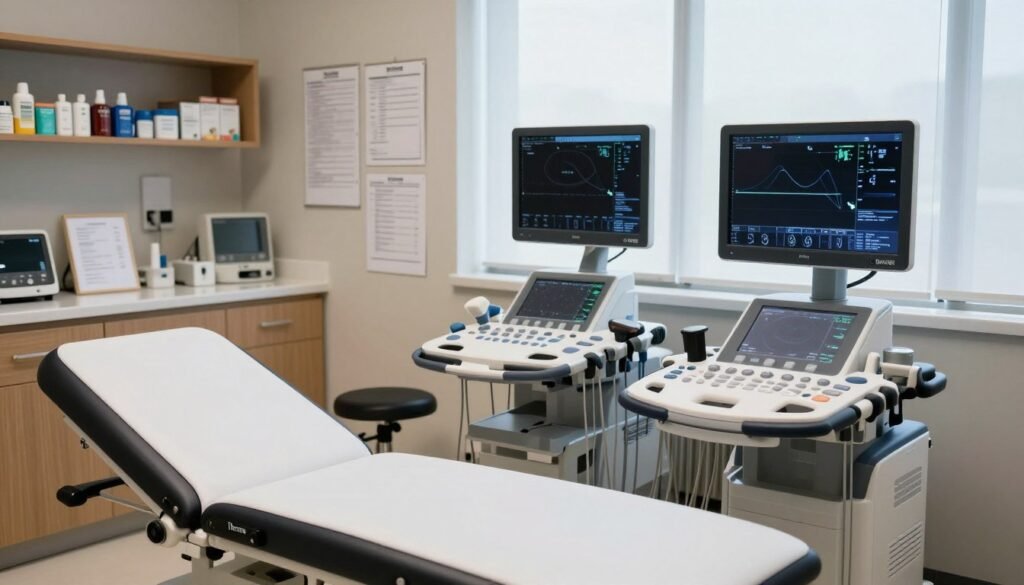
Medical projects feature high-cost clinical equipment, strict installation rules, calibration and ongoing maintenance. Compliance upgrades — ventilation, shielding, or accessibility work — can add unexpected expenses and extend timelines.
These requirements push buyers to seek predictable payments that cover both equipment and construction without draining operating capital.
Traditional build-outs focus on layouts that boost productivity: collaboration rooms, furniture refreshes, and IT/AV for hybrid work. Gartner’s post‑2020 recovery shows rising demand for print services, software, and technology refreshes that create incremental capital needs even without full remodels.
- Downtime risk differs: clinical room closures hit revenue; workplace renovations affect staff productivity.
- Lenders vary: a bank may fund tangible assets, while software-heavy projects often need alternative solutions.
Evaluate options by matching the product to the cash conversion cycle — choose a loan or line that preserves capital for payroll and inventory while covering project needs.
Office Financing options to compare for medical and traditional offices
Project budgets shift quickly when build-outs must cover both construction and specialized tools.
Bank loan or business line of credit for equipment and build-outs
Use a bank loan for a one-time, defined purchase. It works well when you have a strong bank relationship and clear scope.
A business line of credit fits phased buys and uncertain timing, but a line can limit cash available for payroll or inventory.
Tenant improvement allowance when leasing a space
Landlords may offer a TI allowance as embedded funding. It often covers construction but may exclude furniture, AV, or software.
Negotiate per-square-foot amounts and clear allowable cost categories to avoid surprise gaps.
Lease line of credit to cover hard costs and soft costs in one plan
A lease line can fund architectural fees, wiring, A/V, carpeting, furniture, and equipment in one stream.
Payments may be tax-deductible, fixed over 5–8 years, and keep debt off the balance sheet in some cases.
“Many banks will not loan against soft costs such as construction services or software.”
Term loans vs revolving credit lines for working capital timing
Term loans fix amortization and suit predictable budgets. Revolving lines let you draw as invoices arrive.
Same-day approval options (up to $350,000) exist for fast needs—useful when contractors demand deposits.

| Option | Best fit | Typical coverage |
|---|---|---|
| Bank loan | One-time equipment/build-out | Hard costs, limited soft-cost coverage |
| Business line of credit | Phased purchases, uncertain timing | Flexible draws, can crowd working capital |
| Tenant improvement allowance | Leased spaces | Construction-focused, often excludes furniture |
| Lease line of credit | Comprehensive projects | Hard + soft costs, fixed repayment, possible tax benefits |
- Medical projects often need broader cost coverage; consider a lease line for full scope.
- Traditional builds may use TI plus a small line for IT and furniture.
- Speed-to-funding matters today—fast approvals help meet tight lead times.
How to choose the right solution based on budget, timing, and project scope
Start by listing every cost and then map each expense to the funding that will actually cover it.
Inventory categories: construction, electrical, wiring/cabling, A/V, software, furniture, permits, design fees, and vendor services. Match each item to whether a bank loan, lease line, TI allowance, or business line will accept it.
Protect working capital: keep build-out funding separate from cash used for payroll and supplies. Using a revolving line for a remodel can reduce capacity for day-to-day needs and emergency repairs.
Prioritize speed when deposits or delivery dates create hard deadlines. Some providers offer same-day approval up to $350,000 to meet tight contractor or equipment lead times.
Underwriting, cost over time, and tax signals
Expect lenders to review business performance, bank relationships, and any covenants that limit new liabilities. A lease line can sometimes avoid covenant restrictions and offer off-balance-sheet treatment.
Compare fixed payments versus variable draw costs. Spreading a build-out over 5–8 years aligns expense recognition with the useful life of the improvements and equipment.
Talk to your CPA about tax treatment: lease payments are often deductible, while purchased assets follow depreciation rules that can create “phantom income.”

| Decision factor | Best fit | What it covers |
|---|---|---|
| Speed | Same-day approvals | Deposits, urgent equipment |
| Scope volatility | Business line | Phased draws, flexible timing |
| Full project coverage | Lease line | Architect, wiring, A/V, furniture |
| One-time buy | Bank loan | Hard equipment, limited soft costs |
Fit checklist
- Opening a new location: choose full-scope coverage that preserves capital.
- Marketing or safety equipment: short-term loan or lease with quick funding.
- Inventory needs: separate working capital from build-out credit to avoid cash shortfalls.
Conclusion
Match your capital plan to project drivers and you’ll avoid costly delays and cash shortfalls.
Medical and traditional projects can both be funded well, but the right path hinges on whether spending is equipment‑heavy, compliance‑driven, or focused on workplace experience.
Bank products work for eligible hard assets; tenant improvement allowances reduce out‑of‑pocket build costs; lease approaches cover a broader mix of soft and hard costs.
Map costs, protect operating cash, confirm funding speed, and set repayment to match the useful life of improvements and equipment.
Before you commit, validate which invoices qualify, ask about covenants or limits, and confirm the timeline fits critical delivery dates.
Ready to move forward? Request quotes and compare offers so your business secures the funds in time to keep the project on schedule and bring the office and equipment online without strain on cash.