

The demand for affordable housing is rising fast. Mobile home parks are now a top choice for investors.
Canadians are looking for flexible housing options. This need for financing solutions is growing. But, getting a loan for a mobile home park is tough because of lender rules.
Lenders look at these investments in special ways. It’s key for investors to know what’s needed. With the right help, investors can tackle the complex process. They can also make the most of the growing need for affordable homes.
Key Takeaways
- Mobile home parks are becoming a popular investment opportunity due to the demand for affordable housing.
- Lenders have unique criteria for evaluating mobile home park investments.
- Understanding these criteria is crucial for securing financing.
- Specialized financing solutions are necessary for mobile home park investments.
- Investors must navigate complex lender requirements to capitalize on the growing demand.
The Growing Appeal of Mobile Home Park Investments
The mobile home park investment sector is booming. It offers high returns and is in high demand. This is because manufactured housing is affordable and flexible, appealing to both investors and homebuyers.
Current Market Trends in the Mobile Home Industry
The mobile home industry is changing fast. Over 280 manufactured homes are listed in Alberta, starting at just $15,700. This is 60% cheaper than traditional homes in the province. The need for affordable housing is driving this trend, with lot rents staying attractive to investors.
Return on Investment Potential for Park Owners
Mobile home park owners can see a strong return on investment. This is thanks to stable lot rents and the chance to increase occupancy rates. The table below shows the main factors that help with this return.
| Factor | Description | Impact on ROI |
|---|---|---|
| Lot Rents | Stable and increasing rental income | High |
| Occupancy Rates | Potential for increasing occupancy | High |
| Affordability | 60% more affordable than traditional housing | Medium |
By knowing these market trends and investment potential, investors can make smart choices in mobile home parks.
Mobile Home Park Financing: Options and Opportunities
Financing mobile home parks comes with its own set of challenges and chances. These parks are special because they own the land and rent out homes. This mix needs its own rules for loans.
How MHP Financing Differs from Traditional Real Estate Loans
Mobile home park loans are not like regular real estate loans. They have their own risks and benefits. Lenders look at the park’s location, how full it is, and the homes’ condition when they decide on a loan.
Key differences include:
- The income from lot rents instead of mortgage payments
- The chance to increase value with improvements
- The complexity of managing many tenants and homes
Key Financial Metrics That Drive Lending Decisions
Lenders use certain financial numbers to check if a mobile home park is a good investment. They look at the debt service coverage ratio (DSCR), loan-to-value (LTV) ratio, and the park’s financial health.
Important financial metrics include:
- Occupancy rates and their effect on cash flow
- Lot rent amounts and the chance for rent hikes
- Operating costs and the chance to save money
Knowing these financial numbers and how they affect loans can help investors get funding for their mobile home park investments.
Types of Loan Programs Available for Park Acquisitions
There are many loan options for buying mobile home parks. The right loan depends on the park’s size, location, and your finances.
Conventional Bank and Credit Union Loans
Conventional loans come from banks and credit unions. They are a popular choice for buying mobile home parks. These loans need a big down payment and strict credit checks.
Key features of conventional loans include:
- Competitive interest rates
- Varied loan terms
- Strict credit and income requirements
Government-Backed Programs (Fannie Mae, Freddie Mac, SBA)
Government-backed loans are for those who can’t get conventional loans. They have easier credit rules and lower down payments.
Fannie Mae and Freddie Mac have special loans for mobile home parks. They offer good terms for eligible buyers. The Small Business Administration (SBA) also has loans for buying mobile home parks.
| Program | Key Benefits | Typical Loan Terms |
|---|---|---|
| Fannie Mae | Competitive rates, flexible underwriting | Up to 80% LTV, 10-15 year terms |
| Freddie Mac | Favorable terms for qualified borrowers | Up to 80% LTV, 10-15 year terms |
| SBA Loans | Lower down payments, longer repayment terms | Up to 90% LTV, 10-25 year terms |
Private Equity and Hard Money Options
Private equity and hard money loans are for quick financing or complex financial situations. They have higher interest rates and fees.
Key considerations for private equity and hard money loans include:
- Higher interest rates and fees
- Shorter loan terms
- Flexibility in underwriting
In conclusion, there are many loan options for buying mobile home parks. Each has its own benefits and drawbacks. Borrowers should think carefully about their options to find the best one for their financial situation and goals.
Property Evaluation Criteria That Impact Financing
Lenders look closely at several criteria when financing mobile home parks. These criteria help them understand the investment’s risk. They also affect the loan terms.
Age and Condition Assessment Standards
The age and condition of a mobile home park matter a lot. Lenders check the park’s overall state, including the homes’ age and the infrastructure. Older or poorly maintained parks might get less favorable loan terms.
Location Factors and Market Analysis Requirements
Location is key in evaluating a mobile home park’s financing. Lenders look at the park’s location against local market trends and demographics. A park in a growing area with high demand is seen as more attractive.
Park Classification and Its Effect on Loan Terms
Mobile home parks are classified based on their features and target audience. This classification affects loan terms. Parks with better amenities or higher-income residents might get better financing options.
| Evaluation Criteria | Impact on Financing | Example |
|---|---|---|
| Age and Condition | Older or poorly maintained parks may face higher interest rates or stricter loan terms. | A 30-year-old park with outdated infrastructure may be considered higher risk. |
| Location | Parks in growing areas with strong demand may secure better loan terms. | A park in a rapidly growing suburb may be eligible for more favorable financing. |
| Park Classification | Higher-classified parks may qualify for better loan terms due to their desirability. | A luxury mobile home park with premium amenities may secure more favorable financing. |
Understanding Lot Rent Dynamics and Revenue Stability
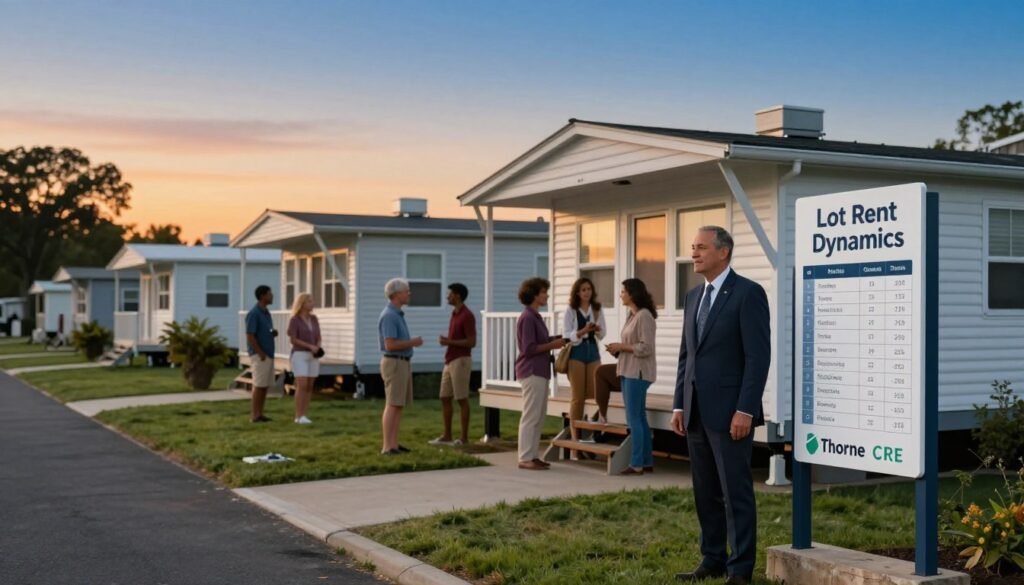
Lot rents are key to a mobile home park’s income. They affect how stable the park’s money flow is. Lenders look at these factors to judge a park’s financial health.
How Lenders Evaluate Rent Rolls and Collection History
Lenders check a park’s revenue by looking at rent rolls and collection history. They examine if rent payments are steady, how full the park is, and any past payment problems.
- Review of historical rent rolls to identify trends
- Analysis of current occupancy rates and their impact on revenue
- Evaluation of the park’s collection history to gauge tenant payment reliability
Strategies for Demonstrating Revenue Growth Potential
To get good financing, park owners need to show they can grow their income. They can do this by:
- Setting rent increases that match the market
- Adding better amenities to attract more tenants and keep vacancies low
- Working more efficiently to cut costs
The Impact of Below-Market Rents on Financing
Low rents can hurt a mobile home park’s financing chances. Lenders see parks with low rents as riskier. This is because they might face rent disputes or have trouble growing their income.
Key considerations include:
- The chance to adjust rents to match the market
- The effect of rent hikes on keeping tenants and keeping the park full
Infrastructure Requirements That Make or Break Financing Deals
The state of infrastructure in mobile home parks is crucial for lenders. It determines if a park is viable and profitable. Infrastructure is key in evaluating financing applications.
Water and Sewer Systems: Public vs. Private Considerations
Lenders look closely at water and sewer systems. Mobile home parks can have public or private systems. Private systems need extra checks to ensure they meet standards.
Parks with public systems are often preferred. They have less risk for maintenance and upgrades. But, private systems can also get financing if they have a good maintenance plan and enough money for upgrades.
Roads, Electrical Systems, and Common Area Evaluations
Roads, electrical systems, and common areas are also checked. Good roads and electrical systems are important for the park’s appeal and function. Common areas, like community centers, improve residents’ quality of life and can affect occupancy.
Environmental Compliance and Its Impact on Lending
Environmental compliance is also key. Lenders look at risks like wetlands, flood zones, and contaminated soil. Following environmental laws is not just legal; it also affects lending decisions.
To show infrastructure’s role in financing, here’s a table:
| Infrastructure Component | Lender Considerations | Impact on Financing |
|---|---|---|
| Water and Sewer Systems | Public vs. private, condition, and maintenance | Significant impact on loan terms and approval |
| Roads and Electrical Systems | Condition, age, and maintenance plans | Influences park appeal and occupancy rates |
| Environmental Compliance | Risk assessment for environmental hazards | Critical for loan approval and terms |
Tom Smith, a seasoned industry expert, said, “The infrastructure of a mobile home park is its backbone. Without a solid foundation, the entire investment can be at risk.”
“Infrastructure is the lifeblood of any mobile home park. It’s what makes or breaks the deal for lenders.”
In conclusion, infrastructure is crucial in mobile home park financing. Lenders examine various components to assess risk and potential return. Understanding these requirements helps owners and investors secure the needed capital.
Tenant Stability as a Critical Lending Criterion
Lenders look closely at the stability of the tenant base when financing mobile home parks. This helps them understand the risk of lending to park owners.
Occupancy Rates and Vacancy Trend Analysis
Lenders check occupancy rates to see if the park’s income is steady. A high rate means more money coming in, making the park more appealing. But, a high vacancy rate can mean trouble. They also look at vacancy trend analysis to see if the park’s occupancy is getting better or worse.
Tenant Demographics and Payment Histories
Tenant demographics give clues about the residents’ lives, like age and income. Lenders use this to guess if rent will be paid on time. They also check payment histories to see if tenants have paid rent before. This helps predict if they will pay in the future.
Tenant-Owned vs. Park-Owned Home Ratio Considerations
The mix of tenant-owned to park-owned homes matters a lot. Parks with more tenant-owned homes are seen as more stable. This can lead to better loan terms for those parks.
The Mobile Home Park Loan Qualification Process
Getting a loan for a mobile home park is a detailed process. It looks at the property and the borrower’s money situation.
Required Documentation and Financial Statements
The first step is to submit required documentation and financial info. Borrowers need to share tax returns, balance sheets, and income statements. Lenders also check personal financial statements and credit reports to see if the borrower can pay back the loan.
Lenders also want to know about the mobile home park. They look at rent rolls, how full the park is, and operating costs. This helps them understand if the park can make money and its financial health.
Due Diligence Timeline Expectations
The due diligence for mobile home park loans takes time. It goes through several steps. Lenders have a set time for each step.
Pre-Approval Phase Requirements
In the pre-approval phase, lenders check the borrower’s financials and credit. This is key to see if the borrower can get a loan.
Underwriting Process Specifics
The underwriting process is a deep dive into the property’s value and the borrower’s credit. Underwriters look at appraisals, environmental checks, and more. They make sure the loan is safe.
Knowing the loan process and what’s needed helps borrowers get ready for financing a mobile home park.
Capital Requirements for Mobile Home Park Acquisition
Knowing what you need to buy a mobile home park is key for investors. Buying a mobile home park is a big deal. It means you have to think about a lot of money matters.
Lenders look at a few main things when they decide if they’ll lend you money. One big thing is how much you can put down.
Standard Down Payment Expectations by Lender Type
Every lender has its own idea of how much you should put down. Conventional lenders usually want 20% to 30% of the price. But, government-backed loans might ask for just 10% to 15%. Private and hard money lenders might want even more, up to 40%, because their loans are riskier.
Reserve Requirements and Liquidity Considerations
Lenders also check if you have enough money set aside. Reserves are for unexpected costs. They want to see you can cover a few months of expenses. This shows you can handle the property, even when things get tough.
Borrower Net Worth and Experience Requirements
Your net worth and experience in mobile home parks matter a lot. Lenders like to see you’ve done this before. They want to know you can handle the loan. Having a lot of money shows you’re stable and can handle losses.
In short, knowing what you need to buy a mobile home park is very important. By understanding down payments, reserves, and what lenders look for in borrowers, you can make a smart move. This helps you through the complex process of buying a mobile home park.
Interest Rates and Term Structures for MHP Loans
The world of financing for mobile home parks is complex. Many things affect interest rates and loan terms. It’s key for investors to grasp these to get the best financing.
Factors That Influence Your Rate and Terms
Several important factors shape the interest rates and terms for mobile home park loans. These include:
- Loan-to-Value (LTV) Ratio: A lower LTV ratio can lead to better interest rates.
- Debt Service Coverage Ratio (DSCR): A higher DSCR means less risk for lenders, often leading to better terms.
- Property Condition and Location: The age, condition, and location of the park greatly influence financing options.
- Borrower’s Creditworthiness: A good credit score can help get more competitive rates.
Fixed vs. Variable Rate Considerations
Mobile home park loans can have fixed or variable interest rates. Fixed rates offer stability and predictability. Variable rates might start lower but could increase over time. Investors need to consider their financial situation and market conditions when choosing.
Prepayment Penalties and Balloon Payment Structures
Some loans for mobile home parks come with prepayment penalties or balloon payments. Prepayment penalties are fees for paying off the loan early. Balloon payments require a large payment at the end. It’s crucial to understand these to avoid unexpected costs and plan well.
By carefully considering these factors and structures, investors can make smart choices when financing their mobile home park investments.
Navigating Environmental Due Diligence Requirements
For mobile home park investors and lenders, understanding the environmental landscape is key. This is crucial to spot potential hazards that could affect the property’s value or lead to costly liabilities.
Environmental due diligence involves a detailed review of the property’s environmental condition. It looks for contaminants, wetlands, or other sensitive ecosystems. This helps determine the risk level and guides mitigation strategies.
Phase I and Phase II Environmental Assessment Processes
The process starts with a Phase I Environmental Assessment. It’s a non-invasive review of the property’s history and condition. This includes a site visit, historical records review, and interviews with owners or occupants.
If concerns are found in Phase I, a Phase II Environmental Assessment follows. This involves invasive sampling, like soil and groundwater testing, to check for contamination.
| Assessment Phase | Description | Key Activities |
|---|---|---|
| Phase I | Non-invasive review of property history and condition | Site visit, historical record review, interviews |
| Phase II | Invasive sampling to determine contamination presence and extent | Soil and groundwater testing, sampling |
Common Environmental Issues in Mobile Home Parks
Mobile home parks face environmental issues like soil contamination and groundwater pollution. Wetlands or endangered species habitats can also be a problem. These issues often stem from historical industrial activities, improper waste disposal, or hazardous materials use.
A study by the Environmental Protection Agency (EPA) found that
“Many mobile home parks are located near industrial sites or areas with a history of environmental contamination, posing significant risks to residents and the environment.”
Remediation Strategies That Satisfy Lender Concerns
When environmental issues are found, remediation strategies can be developed. These strategies might include soil remediation, groundwater treatment, or engineering controls to prevent exposure.
Lenders want borrowers to have a remediation plan that meets standards and is approved by authorities. The success of these strategies can greatly impact the property’s value and financing ability.
Refinancing Strategies for Existing Park Owners
Refinancing can change the game for mobile home park owners. It offers a chance for better loan terms and more money for growth or upgrades. This strategy lets owners review their loans and make changes for savings and more cash flow.
Timing Considerations for Optimal Refinancing
When to refinance is key and affects the benefits. Owners should refinance when interest rates fall or when the park’s value goes up. “The key to successful refinancing is timing,” experts say. “It’s about grabbing the chance when the market is right.”
Knowing the market and the park’s finances is vital for the best refinance time. Look at interest rate changes, occupancy, and revenue growth.
Leveraging Improved Park Performance for Better Terms
Refinancing lets owners use better park performance for better loans. If the park’s value has gone up, refinancing can get you better rates or more money.
To get better terms, owners need to show strong financials, higher occupancy, and park upgrades. This shows lenders the park is safer and more profitable, making the loan more appealing.
Cash-Out Refinancing for Expansion or Improvements
Cash-out refinancing is great for tapping into a park’s equity. It can fund expansions, big upgrades, or other business chances.
When thinking about cash-out refinancing, think about the return on investment. Make sure the money boosts the park’s value or income. Always weigh the pros and cons and consider other options.
Creative Financing Solutions When Traditional Options Fail
Creative financing is key when regular loans don’t work for mobile home parks. It lets investors find new ways to make deals happen. This is true even when usual financing paths are blocked.
Seller Financing Arrangements and Negotiation Strategies
Seller financing is a smart move where the seller helps with the loan. It’s good for both sides because it offers flexible terms. Negotiation is crucial here, as buyers must convince sellers to lend.
To get a good deal, buyers should offer a big down payment and a fair interest rate. The agreement must clearly state how and when the loan will be paid back, including any penalties for early repayment.
Partnership and Syndication Structures
Creating partnerships or syndications is another creative way to finance. By combining funds with other investors, you can tackle bigger projects. Partnership structures can differ, with some partners actively managing and others just investing.
It’s important to clearly outline roles, duties, and how profits will be split. Getting legal advice is wise to ensure everyone’s interests are protected.
Master Lease Options and Assumption Strategies
A master lease option lets a tenant or investor lease with the aim of buying later. It’s great for mobile home parks as it brings in steady income while working towards ownership. Assumption strategies mean taking over existing leases or loans, which can be good if the terms are right.
| Financing Strategy | Key Benefits | Potential Risks |
|---|---|---|
| Seller Financing | Flexible terms, potential for lower down payment | Higher interest rates, seller’s reluctance |
| Partnership/Syndication | Access to more capital, shared risk | Potential for conflict, shared profits |
| Master Lease Options | Steady income, path to ownership | Long-term commitment, potential for lease termination |
Exploring these creative financing options helps investors succeed even when traditional loans fail. It turns potential deals into real wins.
Technology and Systems That Strengthen Your Financing Application
Mobile home park owners can boost their financing chances with the right tech and systems. Using modern tools shows they manage their parks well and are financially stable. This makes their loan application more appealing to lenders.
Property Management Software That Impresses Lenders
Using top-notch property management software is key. It helps manage everything smoothly and keeps financial data clear. AppFolio or Yardi can handle rent, expenses, and park records. This shows a well-run property, making the application stronger.
Documentation Systems That Streamline the Approval Process
Good documentation systems speed up loan approvals. Digital records and cloud storage make it easy to share documents. This shows a park owner is organized and transparent.
Financial Reporting Best Practices for Park Owners
Accurate financial reports are crucial for getting loans. Park owners should do regular audits, track expenses, and collect rent on time. Lenders look at these key metrics:
| Financial Metric | Description | Importance to Lenders |
|---|---|---|
| Debt Service Coverage Ratio (DSCR) | Measures the park’s ability to cover loan payments | High |
| Occupancy Rate | Percentage of occupied lots | High |
| Average Lot Rent | Average rent per lot | Medium |
| Operating Expenses | Total expenses for maintaining the park | Medium |
By focusing on these areas and presenting a well-organized application, mobile home park owners can increase their funding chances.
Common Pitfalls in Mobile Home Park Financing to Avoid
To get financing for a mobile home park, knowing common mistakes is key. Mobile home park financing has several pitfalls. With the right planning and research, you can avoid them.
Underestimating Capital Expenditure Requirements
One big mistake is underestimating the costs for upkeep and improvements. Lenders don’t like parks with old infrastructure. Knowing the park’s condition and needed expenses is crucial.
Do thorough inspections and get experts to check the park’s systems. This helps spot problems early and plan better.
Misrepresenting Occupancy and Income Figures
Misstating occupancy and income is another common error. Lenders check these figures closely. If they find mistakes, they might deny your loan or even recall it. Make sure your financial records are correct and open.
Keep detailed financial records and be ready to show historical data. This honesty will help lenders trust you more.
Neglecting Legal and Zoning Compliance Issues
Ignoring legal and zoning rules can also harm your financing. Lenders need to see that the park follows all laws. Breaking these can lead to big fines or even closing the park.
Know all local zoning laws and regulations and make sure the park follows them. Keep up with changes to avoid problems.

By knowing these common pitfalls and avoiding them, you can make your financing application stronger. This will help you get the funds you need for your mobile home park.
Conclusion: Securing the Best Financing for Your Mobile Home Park Investment
Getting financing for a mobile home park is complex. It needs a deep understanding of the special criteria and steps involved. Different things affect mobile home park financing, like property value, rent, infrastructure, and tenant stability.
To get the best financing, investors must tackle these challenges. They need to show they know the property’s worth, its earning potential, and how it works. By choosing the right financing and making a strong proposal, investors can boost their returns and succeed in the long run.
It’s key for investors to know how mobile home park financing works. By understanding what lenders look for, investors can improve their chances of getting financing. This helps them reach their investment goals.