

Nearly 60% of commercial real estate investors see mixed-use properties as key to their success. They like the mix of income and the lower risk of empty spaces.
But getting financing for these properties is tough. It’s hard to figure out the income from both commercial and residential parts. Knowing how to underwrite these assets well is key for quick loan approval and good investment.
By understanding mixed-use underwriting, investors and lenders can handle the financing better. This leads to more successful and profitable deals.
Key Takeaways
- Understanding mixed-use underwriting is crucial for fast loan approval.
- Mixed-use properties offer diversified income streams and reduced vacancy risk.
- Effective underwriting can lead to more efficient and profitable transactions.
- Complexity in evaluating income streams is a major challenge.
- Investors and lenders must navigate the financing process carefully.
Understanding Mixed-Use Assets in Today’s Market
Mixed-use assets are changing cityscapes by blending homes and businesses. They offer a “live-work-play” lifestyle that’s becoming more popular. These properties are more than a trend; they’re a big change in urban planning.
Definition and Classification of Mixed-Use Properties
Mixed-use properties have different uses like homes, businesses, and fun spaces. How they’re classified depends on what they offer and how much of each. For example, a place might have 60% homes and 40% businesses, or a mix of offices, shops, and homes.
Key characteristics of mixed-use properties include:
- Diverse land use
- Integrated design
- Enhanced livability
- Economic benefits through diversified income streams
Current Trends in Mixed-Use Development
Nowadays, there’s a big push for mixed-use urban projects. People want lively, walkable communities. These projects mix homes, shops, and fun spots, making cities more exciting.
Some notable trends include:
- Increased focus on sustainability and green building practices
- Integration of technology to enhance living and working experiences
- Adaptive reuse of existing buildings to create unique mixed-use spaces
The Unique Challenges of Mixed-Use Financing
Lenders face big challenges when they deal with mixed-use assets. These properties mix different uses like homes, shops, and factories. This makes it hard for lenders to figure out their financial health.
Complexity of Multiple Income Streams
Mixed-use properties have many income sources. Lenders need to check if these incomes are steady and reliable. They look at rental income from homes, commercial leases, and even income from factories. This requires lenders to use advanced financial tools to understand the property’s risks.
- Analyzing lease agreements for commercial and industrial tenants
- Evaluating rental income from residential units
- Assessing the impact of potential vacancies on overall cash flow
Balancing Different Property Uses
Another big challenge is managing the different parts of a mixed-use property. Each part has its own needs, market trends, and risks. For example, the retail part might be more affected by economic changes than the residential part. Lenders must weigh these factors when deciding on a loan.
- Understanding market trends for each property type
- Assessing the operational efficiency of different property uses
- Evaluating the impact of zoning and land-use regulations
By grasping these challenges, lenders can make smarter choices in mixed-use financing. This helps them make better loans.
Types of Mixed-Use Properties Lenders Consider
Mixed-use properties vary widely, and lenders look at different types when deciding on loans. These properties are complex and varied. They require a deep understanding of their configurations and value to a loan portfolio.
Retail/Residential Combinations
Retail and residential spaces together are common in mixed-use properties. They offer the benefit of living and shopping in one spot. This makes them appealing to both tenants and residents.
Lenders like these properties because they have multiple income sources. This can help reduce risk.
Office/Retail Developments
Office and retail spaces are another common mix. These projects have offices upstairs and shops downstairs. They create lively urban areas.
Lenders see potential in these properties. They can earn steady income from office leases and retail sales.
Live/Work Spaces
Live/work spaces combine living and work areas, like artist studios or small offices. They meet the modern worker’s need for flexibility and convenience. Lenders value these spaces, mainly in urban areas with a high demand for creative and tech workspaces.
The variety in mixed-use properties lets lenders offer tailored financing. Knowing the specifics of each property type is key for effective underwriting.
| Property Type | Description | Lender Considerations |
|---|---|---|
| Retail/Residential | Combines retail and living spaces | Diversified income, tenant mix |
| Office/Retail | Features office and retail spaces | Lease stability, foot traffic |
| Live/Work | Accommodates living and working areas | Market demand, zoning compliance |
Essential Documentation for Mixed-Use Underwriting
Lenders need detailed financial records and lease info to evaluate mixed-use assets. This info is key to understanding the property’s income, expenses, and financial health. A full documentation package helps lenders see the risks and potential returns, making the process smoother.
Financial Statements and Tax Returns
Financial statements, like balance sheets and income statements, show the property’s financial health. Tax returns give more insight into income and expenses. This lets lenders check if the financial statements are correct. They can spot trends and issues that might affect the property’s future.
For example, lenders might look at the property’s historical cash flow to see if it can handle the loan. A financial expert says, “Looking closely at financial statements and tax returns is key to knowing a mixed-use property’s real financial state.”
Rent Rolls and Lease Agreements
Rent rolls and lease agreements are vital. They show the lease terms and income from the property. Rent rolls list current leases, rent, lease length, and tenant info. Lease agreements outline the lease terms and conditions. By studying these, lenders can see if the property’s income is stable and spot risks.
A top expert notes, “The quality of rent rolls and lease agreements is crucial for mixed-use underwriting.” Analyzing these documents helps lenders make smart choices about the property’s growth potential and loan repayment ability.
Property Valuation Strategies for Mixed-Use Assets
Valuing mixed-use properties is complex. It involves income-based methods and comparing to similar properties. Getting the value right is key for lenders to trust the property’s income potential.
Income Approach Methods
Income methods are key for mixed-use assets. They look at how well the property makes money. This includes capitalization rates and cash flow analysis.
Capitalization Rate Considerations
The capitalization rate is vital. It shows how much income the property makes compared to its value. For mixed-use properties, finding the right rate is complex. It depends on the different income sources and risks.
Discounted Cash Flow Analysis
Discounted cash flow (DCF) analysis digs deeper into the property’s future earnings. It forecasts income over time and discounts it to today’s value. This method considers the time value of money and the unique aspects of mixed-use assets.
Comparative Market Analysis Techniques
Comparative market analysis (CMA) compares the property to similar ones. It helps set a fair value by looking at recent sales. Adjustments are made for size, location, and use.
Using income methods and CMA together gives a clear picture of a mixed-use asset’s value. This helps reduce risk factors for lenders and investors.
In Mixed-Use Financing, accurate valuation is crucial. It helps decide on loan amounts and terms that match the property’s financial performance.
NOI Allocation: The Foundation of Mixed-Use Underwriting
Understanding NOI allocation is key to mixed-use underwriting success. Mixed-use properties have different income sources, making financial evaluation complex. Accurate NOI allocation helps lenders see each part of the property’s financial health.
Underwriters must break down income by property use and use the right expense methods. This ensures the analysis shows each part’s true performance.
Segmenting Income by Property Use
Income needs to be split based on the property’s use, like residential, commercial, or industrial. This is crucial for knowing which parts make the most money and where expenses go.
In a mixed-use property with retail and residential, income from each should be tracked separately. This lets underwriters look at each part’s performance on its own.
Expense Attribution Methods
Assigning expenses to the right property use is just as important. There are direct assignment and proportional allocation methods to do this.
Direct Expense Assignment
Direct assignment means putting specific expenses directly with the segment that gets them. For example, maintenance for residential units goes straight to the residential segment.
Proportional Allocation Techniques
Proportional allocation spreads expenses based on a metric like square footage or revenue. Utility bills, for example, are split based on the area each segment occupies.
| Expense Type | Direct Assignment | Proportional Allocation |
|---|---|---|
| Maintenance | Yes | No |
| Utilities | No | Yes |
| Property Taxes | No | Yes |
By accurately segmenting income and expenses, underwriters get a clear view of a mixed-use property’s finances. This detailed look is vital for smart lending decisions.
Debt Service Coverage Ratio Considerations
Lenders use the Debt Service Coverage Ratio (DSCR) to check if a property is creditworthy. The DSCR shows if a property makes enough money to pay its debts. A high DSCR means less risk for lenders, which is key for loan approval.
DSCR Thresholds for Different Property Types
Different properties have different DSCR needs. For example, a mixed-use property with stable retail and homes is seen as safer than one with mostly office space. Lenders usually want a DSCR of 1.2 to 1.5 for these properties. But, this can change based on the lender and the property.
Blended DSCR Calculations
Lenders mix DSCRs for properties with different uses. They calculate a weighted average DSCR based on each part’s income. This helps them see the property’s overall creditworthiness, including both stable and variable income.
Key considerations for borrowers: Knowing the lender’s DSCR needs is crucial. It helps you make a stronger loan application. You should give detailed financial info and show you understand the property’s income potential.
Loan-to-Value Ratios for Mixed-Use Properties
The Loan-to-Value (LTV) ratio is key in Mixed-Use Financing. It affects the risk and loan terms for these complex properties.
LTV ratios for mixed-use properties differ a lot. They depend on the property’s mix, location, and market conditions. Knowing these differences is crucial for lenders and borrowers to deal with mixed-use property financing.
LTV Variations by Property Composition
The mix of a mixed-use property affects its LTV ratio. For example, a property with more residential units is seen as less risky. This is because residential income is more stable than retail or office income.
Key factors influencing LTV variations include:
- The mix of different property types (residential, commercial, retail)
- The creditworthiness of tenants
- Lease terms and conditions
Strategies to Improve LTV Position
To better the LTV position of a mixed-use property, several strategies can be used. These include boosting the property’s income, cutting down on expenses, and making the property more appealing.
Effective strategies include:
- Renegotiating leases for better terms
- Improving property amenities to attract better tenants
- Using efficient property management practices
By using these strategies, borrowers can improve their LTV ratio. This makes their mixed-use property more appealing to lenders. It also increases their chances of getting good loan terms.
Key Risk Factors Lenders Evaluate
Lenders look closely at several key risk factors when financing mixed-use properties. These factors help decide if a loan is a good idea for properties that have different uses like homes, businesses, and factories.
Because mixed-use properties are complex, lenders need to do a deep risk assessment. They look at many things that could affect how much money the property makes and its value.
Tenant Concentration Risk
Tenant concentration risk happens when most of a property’s income comes from just one or a few tenants. This is a big deal in mixed-use properties. Losing a key tenant can really hurt the property’s cash flow.
Market Volatility by Property Type
Each part of a mixed-use property reacts differently to changes in the market. For example, retail spaces might be more affected by economic downturns than homes. Lenders have to figure out how market changes will hit each part of the property.
Property Management Assessment
Good property management is key for mixed-use developments to succeed. Lenders check if the management team knows what they’re doing. Their skills are crucial for the property’s success and how risky it is.
| Risk Factor | Description | Impact on Mixed-Use Properties |
|---|---|---|
| Tenant Concentration Risk | Risk associated with dependence on a few major tenants | High impact on cash flow if key tenants leave |
| Market Volatility | Variability in market conditions affecting different property types | Diverse impact depending on the mix of property types |
| Property Management | Competence and experience of the management team | Critical for navigating complexities and ensuring property performance |
Understanding Lender Criteria for Mixed-Use Assets
It’s key to know what lenders look for when financing mixed-use properties. They check many things because these properties are special. This helps lenders understand the risks and benefits.
Commercial banks, agency lenders, and private lenders all have their own ways of checking properties. Each has its own rules and how they see risk.
Commercial Bank Requirements
Commercial banks want to see a property’s financial health. They look at income statements and cash flow forecasts. They also check the debt service coverage ratio (DSCR) and loan-to-value (LTV) ratio.
Agency Lender Guidelines
Agency lenders, like Fannie Mae and Freddie Mac, have their own rules for mixed-use properties. They check the property type, how full it is, and its cash flow. If a property meets their standards, they might offer better deals.
Private Lender Considerations
Private lenders care about how much money a property can make. They look at more than just money, like where the property is and if it can be improved.
| Lender Type | Key Requirements | Risk Assessment |
|---|---|---|
| Commercial Banks | Strong DSCR, reasonable LTV | Financial performance, cash flow |
| Agency Lenders | Property type, occupancy rates | Cash flow, property value |
| Private Lenders | Return on investment, location | Potential for redevelopment |
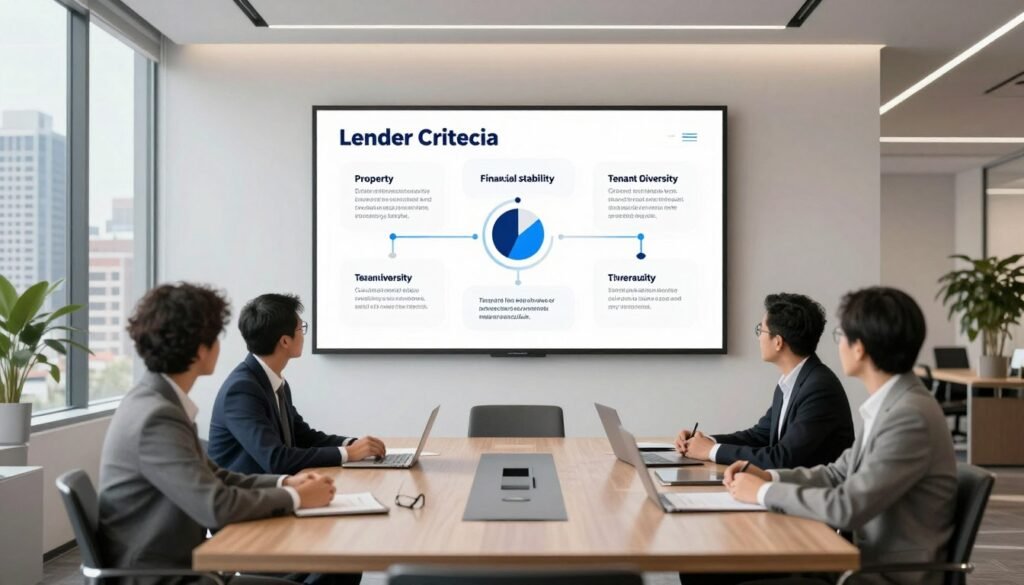
Knowing what lenders look for helps borrowers find the right financing for mixed-use projects. It makes the process easier and more successful.
The State of Mixed-Use Financing in Today’s Market
The world of mixed-use financing is changing fast. It’s key for investors and developers to keep up. This change is important for everyone involved.
Interest rates play a big role in mixed-use financing. Interest rates affect how much it costs to borrow money. Right now, rates are moving up and down because of the economy and money policies.
Current Interest Rate Environment
Interest rates are slowly going up. This is to fight inflation and make the economy stable. This change means:
- It costs more to borrow money for mixed-use projects
- Lenders are being more careful, needing solid financial plans
- There might be fewer new projects because of higher costs
Because lenders are getting more careful, borrowers need to have strong financial plans. They also need to show they understand the risks and benefits of their projects.
Emerging Financing Products
New financing options are coming out because of the market’s changes. These include:
- Special financing from cities for projects that help cities grow
- Options for green projects that are good for the environment
- Mezzanine financing for extra money to improve projects
A financial expert said, “New financing options are key for mixed-use projects to grow. They give the money needed for new ideas.”
These new products offer different ways to fund projects. They also push for new ideas in mixed-use development. This is because they are made for specific project needs.
Regulatory Considerations in Mixed-Use Financing
Mixed-use financing is complex and requires a deep understanding of regulations. These projects face many rules that can affect their success. Knowing these rules is key to making these projects work.
Zoning and Land Use Compliance
Zoning and land use rules are very important for mixed-use projects. Zoning regulations tell us how a property can be used. They cover what activities are allowed, how dense the development can be, and the need for parking and open spaces. Following these rules is crucial to avoid delays or even stopping the project.
For example, a project that mixes homes and businesses must follow rules for both. This ensures the project meets all necessary standards.
Environmental Assessment Requirements
Environmental assessments are also a big deal for mixed-use projects. These assessments look for environmental hazards like pollution or being close to protected areas. They are needed by law and are important for the project’s success and safety.
By following all the rules, including zoning and environmental assessments, mixed-use projects can be successful. This helps reduce risks and ensures the project goes well.
Preparing a Compelling Loan Package
Getting a loan for a mixed-use property starts with a solid loan package. A good package shows the borrower’s trustworthiness and explains why the project will work. It helps lenders understand the project’s chances of success.
Executive Summary Best Practices
An effective executive summary should quickly cover the loan request’s main points. This includes property details, financial plans, and what the borrower needs. It’s key to clearly show the project’s strengths and know the market well.
Experts say a well-written executive summary can greatly sway a lender’s first thoughts and choices.
“The executive summary is your chance to tell the story of your project, highlighting its unique value proposition and potential for return on investment.”
Financial Narrative Development
A detailed financial narrative explains the property’s money matters. This includes income statements, expense reports, and cash flow forecasts. It should clearly show the property’s financial health and why the loan is needed.
It’s important to include past financial data, current market info, and growth plans. This gives lenders a full view of the investment’s potential.
Property Performance Projections
Showing how well the property will do is key to the loan’s success. This means forecasting how full it will be and how rents will grow.
Occupancy Rate Forecasting
Forecasting occupancy rates means looking at market trends and past data. A good forecast takes into account local economy and competitors.
Rental Growth Assumptions
Rental growth assumptions come from market analysis and past rent trends. It’s important to give a solid reason for these assumptions to win lenders’ trust.
Accelerating the Approval Process for Mixed-Use Loans
To speed up the mixed-use loan approval, you need to prepare well before applying. Knowing how mixed-use financing works can help you get approved faster.
Pre-Application Preparation Strategies
Getting ready before you apply is key. You’ll need to collect all financial documents like income statements and tax returns. Also, get a detailed appraisal of your property’s value.
A good loan proposal is also important. It should have a business plan that shows how your property can make money. This plan should also highlight what makes your property stand out.
| Pre-Application Preparation Strategies | Benefits |
|---|---|
| Gathering financial documents | Demonstrates creditworthiness |
| Comprehensive property appraisal | Highlights property value |
| Well-structured loan proposal | Outlines project viability |
Addressing Potential Objections Proactively
Lenders might worry about the complexity of mixed-use properties. They might think about conflicting uses or managing different income streams. You can ease these worries by sharing how you plan to manage the property.
By tackling these concerns early, you show lenders you can handle the property well. This can make the approval process faster.
Key Strategies for Addressing Potential Objections:
- Provide detailed property management information
- Outline strategies for mitigating potential risks
- Demonstrate a clear understanding of the property’s complexities
Common Underwriting Pitfalls to Avoid
The underwriting process for mixed-use assets is complex. It involves several pitfalls that lenders must steer clear of. Mixed-use properties have different income streams and uses. This makes the underwriting process more challenging than for single-use properties.
Unrealistic Income Projections
One major pitfall is making unrealistic income projections. Lenders need to analyze historical data and market trends. This helps them estimate future income accurately.
Overestimating potential income can lead to overvaluation. It also increases the risk of default.
| Income Component | Historical Data | Projected Growth |
|---|---|---|
| Residential Rent | $100,000 | 3% |
| Commercial Rent | $50,000 | 2% |
| Parking/Other | $10,000 | 1% |
Inadequate Expense Analysis
Another critical pitfall is inadequate expense analysis. Lenders must carefully review operating expenses. This includes maintenance, taxes, and insurance.
Underestimating expenses can cause cash flow problems. It also increases the risk of loan default.

By avoiding these common underwriting pitfalls, lenders can better manage risk. This ensures the long-term viability of their mixed-use property investments.
Conclusion: Mastering the Art of Mixed-Use Asset Underwriting
Learning to underwrite mixed-use assets is key for successful financing and investment. It helps lenders understand the risks and chances of these unique properties. This knowledge is vital for making smart financial decisions.
Good mixed-use underwriting means looking at everything. This includes different income sources, property uses, and market trends. Lenders need to check the property’s financial health closely. They should look at net operating income, debt service coverage, and loan-to-value ratios.
By following the tips in this article, lenders can make their underwriting better. This can lower the risk of loan defaults and speed up approvals. Whether you’re new or experienced in mixed-use financing, keeping up with best practices is crucial.
The need for mixed-use properties is growing. So, the role of underwriting in this area will also grow. By getting better at underwriting mixed-use assets, lenders can offer valuable financing. This helps developers and investors achieve their goals.