
Private Utilities and Park Infrastructure: Impact on Financing

a row of mobile homes sitting next to each other

Nearly 40% of underwriting decisions hinge on unseen systems — not curb appeal. That one stat shows why pad-site rent and land ownership matter when buyers assess manufactured housing assets.

The core idea is simple: water, sewer, electric and roads drive lending outcomes more than paint or landscaping. Lenders weigh capacity, code compliance, and replacement plans when they price a loan and set interest and reserve rules.

This guide focuses on buyer-side commercial issues. It explains how municipal hookups often ease approval, and how private systems can still secure financing if documentation proves capacity and compliance.

Expect practical due diligence: which reports to order, what documents to collect, and how to turn findings into a lender-ready narrative that supports better rates and sensible leverage.

Key Takeaways

  • Infrastructure matters most: hidden systems often decide approval and terms.
  • Municipal hookups simplify underwriting; private systems require proof of capacity.
  • Condition of utilities affects interest, rates, and required reserves.
  • Buyers should gather third-party reports and clear replacement plans.
  • This is a commercial buyer’s guide focused on approval probability and long-term risk.

Why utilities and infrastructure drive loan approval and pricing in manufactured housing communities

Lenders treat site utilities as the backbone of underwriting for manufactured housing communities.

In the U.S. market, investors and lenders often underwrite manufactured housing as a resilient affordable housing segment. Demand tied to housing affordability gives this asset class steady cash flow potential.

But underwriting looks past HUD-code home quality. Lenders focus on site systems — water, sewer, electrical, and roads — because those systems affect habitability and collections.

How lenders view the asset and the risk

  • Durability of income: municipal hookups usually signal fewer service interruptions and easier billing, which supports a stronger loan profile.
  • Private systems: trigger testing, reserve planning, and reporting requirements to prove capacity and compliance.
  • Risk lens: compliance exposure, uncertain repair timing, and large replacement capex can reduce perceived value and raise interest and covenants.
Factor Municipal Private Underwriting Impact
Service continuity Third-party utility Owner-operated systems Municipal reduces perceived risk; private increases reserves
Compliance Permits managed externally Owner must document testing Private requires more inspections and reporting
Cost shock Lower unexpected capex Potential large replacement costs Higher interest and tighter covenants when private
Lender response Standard escrows, market terms Increased escrows, recourse, or price premium Affects loan size, interest, and structure

Underwriting ties directly to pricing. When system risk rises, lenders demand more conservative loan terms, higher interest, and larger escrows. Solid operations that limit emergency repairs help stabilize NOI and improve lending outcomes.

Infrastructure due diligence that protects your underwriting and your cash flow

A concise, step-by-step due diligence plan protects cash flow and strengthens any loan request. Start by mapping which systems are municipal and which are privately held. Private utilities need more proof and clearer documentation before underwriters will offer favorable terms.
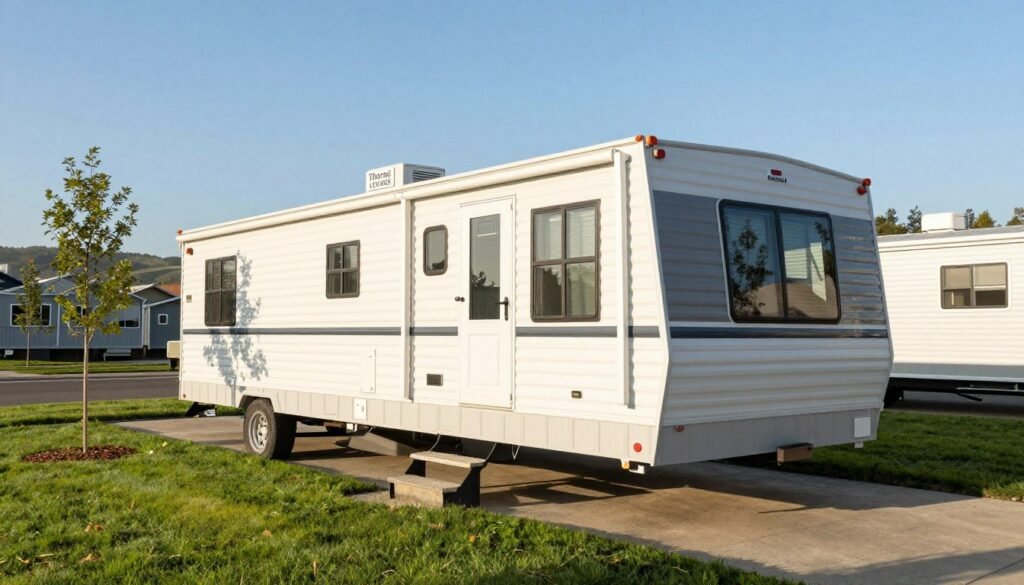
A mobile home prominently featured in a well-maintained residential park, showcasing its unique structure and design. In the foreground, the sleek, modern mobile home is accessible with steps leading up to a welcoming entrance. The middle ground includes manicured lawns and small trees, enhancing the community feel, while utility connections can be subtly integrated. The background consists of a clear blue sky and distant hills, indicating a tranquil suburban environment. The scene is lit with warm, natural daylight for a welcoming and positive atmosphere. Capture the image from a slightly elevated angle to showcase the home's details, ensuring no human figures are present. Include the branding "Thorne CRE" subtly within the scene's design elements, while keeping the image focused on the mobile home and its infrastructure.

Private water systems and wells

Validate well capacity against pad counts, review historical lab tests, and confirm operator credentials. Lenders want a documented replacement-reserve plan they can underwrite. Any violations or gaps reduce available loan proceeds and raise interest.

Private sewer and septic

Confirm permitted flows, inspect lift stations, and locate drainfields. Unclear permits or aging components lower lender comfort and often trigger escrows, holdbacks, or tighter loan terms.

Electrical, gas lines, and pad readiness

Check pedestals, meter setups, and service responsibility. Sites that handle both single-wide and double-wide units support higher rentability and a stronger loan narrative.

Roads, drainage, and shared amenities

Road and stormwater repair are silent capex; deferred work can cut proceeds. Lenders credit amenities selectively—operational improvements that boost retention help, recreational features usually do not.

Document checklist

  • Utility bills & submeter policy
  • Well/septic permits and inspection reports
  • Maintenance logs, capital plan, and insurance loss runs
  • Any compliance correspondence affecting credit or approval

Clear diligence reduces surprises post-close, yields more accurate repair budgets, and strengthens your position when negotiating a home park loan or seller credits.

Mobile Home Park Financing options that fit parks with private utilities

Choosing the right loan path depends on borrower strength, asset condition, and leftover cash for reserves.

A serene mobile home park scene showcasing private utility infrastructure, with well-maintained homes arranged in a harmonious layout. In the foreground, a professional-looking couple in business attire is discussing financing options, holding documents and a laptop, symbolizing collaboration on park financing. In the middle ground, neatly arranged utility poles and connections are visible, emphasizing the private utilities aspect, while vibrant greenery and trees encircle the area, creating a peaceful atmosphere. The background features a clear blue sky with soft, diffused sunlight illuminating the park, conveying optimism and future growth. The image should reflect a sense of professionalism and community. Include the brand name "Thorne CRE" subtly integrated into the park's sign. Ideal for a business publication.

Traditional bank and commercial mortgage loans

Smaller loans under $1M suit local banks and commercial mortgage lenders. They favor simple utility profiles and strong borrower credit. Terms are often ~5 years and may be recourse.

CMBS (conduit) for larger deals

Conduit deals typically start at $1,000,000. CMBS can deliver 10-year, low fixed rate, non-recourse structures. Defeasance risk matters if you plan an early refinance after utility upgrades.

Fannie Mae and Freddie Mac programs

These offer stable fixed rate options and long terms. They require experience, liquidity, and ~85% occupancy. Private systems increase the need for third-party reports and reserves.

Seller and creative structures

Seller financing, master lease with option, and wrap-around notes provide paths when credit or site condition limit conventional loans. Use repair escrows, phased improvements, or price adjustments to align risk and interest.

Bottom line: match the debt product to credit, cash, and the timetable to bring utilities into compliant condition.

Rates, LTV, and terms: how private systems influence interest rates and leverage

Infrastructure condition drives the practical spread between advertised rates and the rate a borrower actually pays.

A conceptual representation of "interest rates" in the context of finance, focusing on the impact of private utilities on park infrastructure. In the foreground, a sleek, modern office desk, with financial documents and charts displaying fluctuating interest rates and loan-to-value ratios. In the middle ground, a clear glass wall reveals a skyline with private utilities and lush park landscapes. The background features a vibrant cityscape at twilight, with luminous buildings reflecting the financial growth. Soft, ambient lighting casts warm shadows, creating a professional and contemplative atmosphere. The camera angle is slightly tilted downward, enhancing the depth of the scene. Include the brand name "Thorne CRE" subtly in one corner of the desk, ensuring no distractions from the main focus.

Market snapshot

Current fixed-rate examples (Feb 9, 2026): 5-year fixed 5.58%, 7-year fixed 5.63%, 10-year fixed 5.70%.

Nationwide programs for deals $1.5M+ can offer up to 80% LTV with amortizations to 30 years. These headline rates assume standard municipal utilities and clear records.

Why private systems widen the spread

Private utilities increase perceived execution risk. Lenders add escrows, require replacement reserves, and often price that risk into a higher final rate.

Result: headline rates become less meaningful until inspections and plans reduce uncertainty.

What lenders want

  • Recent third-party inspections and clean testing history.
  • Permits, documented maintenance, and a credible capex schedule.
  • Evidence the operator can manage systems and limit surprise repairs.

“Present utility capex as scheduled improvements, not unknown liabilities.”

Variable Favorable Private-system impact
Interest / rate Low headline rate Spread increases due to escrows
LTV Up to 80% Lenders reduce LTV when systems are undocumented
Structure Non-recourse (CMBS) May shift to recourse or carveouts with unknown utilities

Credit quality and liquidity matter. Strong sponsors get better terms because lenders trust both the real estate and the operator.

Action items: order inspections early, bundle permits and capex schedules into the loan package, and be clear about exit timing—defeasance and prepayment limits can affect refinance plans after upgrades.

How to structure the deal and your capital stack around infrastructure realities

Match your debt plan to the infrastructure facts, then layer contingency reserves. Start by splitting acquisition debt from improvement cash so underwriters can size a loan against current income while seeing a funded repair plan alongside it.

A professional gathering of diverse businesspeople in a modern urban park, discussing community infrastructure loans. In the foreground, a group of four individuals in professional attire engaged in conversation, with a laptop open on a park table displaying financial graphs. In the middle ground, a well-maintained park with green spaces, benches, and a small playground, symbolizing public utility financing. The background features a skyline of contemporary office buildings, representing urban development. The scene is illuminated by warm, natural light with soft shadows, creating an optimistic atmosphere. The camera angle is slightly elevated, providing a comprehensive view of the conversation, infrastructure, and cityscape. In the corner, a subtle logo for "Thorne CRE" is integrated into the scene.

Budgeting for repairs, reserves, and working capital

Build three buckets: immediate health-and-safety repairs, near-term compliance upgrades, and long-term replacement reserves.

Tips:

  • Use acquisition financing for purchase price and initial escrows.
  • Fund a repair escrow or seller credit for documented short-term fixes.
  • Keep a replacement reserve line on the balance sheet to protect DSCR and lower perceived risk.

Occupancy and operations

Stable collections steady the DSCR lenders model. Many federal and GSE programs expect about 85% occupancy for eligibility; hit that threshold to widen options and improve interest outcomes.

Well-run utilities reduce disruptions and support resident retention, which in turn smooths cash and keeps loan metrics favorable.

When to use a business line of credit

Use a business line for equipment, turn costs, marketing, and small deferred maintenance. It preserves acquisition capital and avoids overloading the acquisition loan.

A line is not a substitute for acquisition debt or major capital projects. For large system replacements, layer a scoped improvement loan or escrow into the capital stack.

“Structure conservative assumptions so your debt service remains covered if timelines slip.”

Sponsor liquidity: keep cash post-close for six to twelve months of operations, anticipated escrows, and unexpected repairs. That discipline helps lower total interest cost over the hold and improves lender confidence.

For practical guidance on lowering your target rate and documentation tactics, review this short primer on securing the best possible rate on your next CRE loan.

Conclusion

Mobile Home Park Financing is attainable when buyers treat unseen systems as the deal’s foundation.

Private utilities don’t block a loan, but they raise the burden of proof. Confirm capacity, show permits, and present a funded capex schedule so lenders can underwrite without guessing.

Match the debt product to the facts: local banks or commercial mortgage lenders suit smaller deals; CMBS or larger conduit loans work for bigger, cleaner assets; Fannie Mae and Freddie Mac fit if you meet program thresholds like ~85% occupancy.

Decision checklist: verify sponsor credit and liquidity, validate utilities, model conservative NOI, and pick fixed rate terms only when the exit timeline fits prepayment rules.

In today’s housing market, buyers who prioritize infrastructure can finance, improve, and stabilize mobile home park investments with fewer surprises.

FAQ

How do private utilities and on-site infrastructure affect loan approval and pricing?

Lenders assess the condition, ownership, and compliance of on-site systems because these elements drive maintenance costs and long-term liability. Private water, sewer, and road systems increase perceived borrower risk if capacity, permits, or replacement reserves are inadequate. When systems are well-documented and maintained, underwriters may offer competitive interest and leverage; poor documentation or deferred maintenance typically raises rates, reduces loan-to-value, or triggers required escrows.

Why do lenders treat manufactured housing communities as affordable housing investments?

These communities provide lower-cost living options with consistent rental cash flow, which aligns with many institutional and agency investors’ objectives. Stability of demand, limited supply in some markets, and resilient occupancy support underwriting. Lenders still price deals based on operational track record, unit quality, and infrastructure risk—so strong operations and compliant systems often receive better terms.

What specific risks increase when utilities are private rather than municipal?

Private systems can introduce capacity limitations, permitting exposure, and concentrated replacement costs. The owner typically bears repair and regulatory responsibility; a major failure can disrupt income and force large capital outlays. Lenders worry about failure risk, insufficient reserves, and unclear ownership or easement documentation, all of which can affect debt service coverage and collateral value.

What infrastructure due diligence protects underwriting and cash flow?

A thorough due diligence package includes system capacity studies, recent test results, maintenance records, permits, and a clear reserve schedule. Hiring qualified engineers and environmental consultants verifies condition and compliance. Updated site plans, utility easements, and service agreements help underwriters model reliable income and estimate capital needs.

What should buyers check for with private water systems and wells?

Confirm permitted capacity, recent water-quality testing, treatment systems, and maintenance logs. Verify well yields versus peak demand and identify replacement timelines. Lenders require evidence of compliance with local health codes and realistic reserve amounts to cover system upgrades or replacement.

How do private sewer systems and septic fields affect lender comfort?

Lenders focus on permitted flow rates, history of backups or failures, and repair timelines. Septic systems near capacity or with short remaining service life typically reduce loan proceeds or require escrowed replacement funds. Documented service contracts and recent inspections improve lender confidence.

What should be verified about electrical, gas distribution, and pad readiness?

Verify panel capacities, meter configurations, and whether pads are sized and stubbed for single- and double-wide units. Identify any deferred upgrades needed for modern loads. Clear labeling, utility agreements, and recent electrical inspections help support reliable occupancy and reduce lender concerns.

How do roads, drainage, and stormwater issues affect financing terms?

Deferred road or drainage maintenance can materially harm access, increase repair costs, and violate local codes. Lenders may require capital reserves or escrowed repair budgets, and serious issues can lower LTV or increase interest. Engineer reports and costed remediation plans mitigate these impacts.

Which common-area improvements will lenders typically credit in underwriting?

Lenders may credit improvements that clearly support revenue—such as updated laundry facilities or upgraded on-site management offices—if costs are documented and ownership is clear. Amenities with limited or uncertain revenue impact generally receive little to no credit unless tied to demonstrated rent premiums or occupancy gains.

What documents should a buyer collect before applying for a park loan?

Essential documents include recent rent rolls, operating statements, utility and maintenance records, environmental reports, engineering inspections, permits, easement agreements, and a capital expenditure history. Clear title and survey information complete the package lenders expect.

What financing options fit properties with private utility systems?

Options include traditional bank and commercial mortgages for smaller, well-qualified deals; conduit/CMBS loans for larger portfolios seeking fixed long terms; agency programs through Fannie Mae and Freddie Mac for stabilized assets meeting program criteria; and seller financing or creative structures for parks needing significant repairs or with tight borrower credit.

When is CMBS a good choice, and what are its trade-offs?

CMBS suits deals above typical agency or bank thresholds that want long, fixed-rate debt. It offers predictable amortization but comes with strict loan covenants, potential defeasance upon prepayment, and extensive due diligence. Infrastructure concerns can complicate CMBS placement without detailed remediation plans.

How do Fannie Mae and Freddie Mac programs help with stability and rates?

Agency programs provide competitive fixed-rate terms and long amortizations for qualifying assets, promoting predictable debt service. They require rigorous documentation, occupancy minimums, and standards for infrastructure condition. Meeting those standards usually yields better pricing and higher leverage.

When should seller financing or master-lease structures be considered?

Seller financing helps bridge gaps when credit or infrastructure issues prevent conventional lending. Master lease with option or wrap-around structures can facilitate operational improvements before permanent financing. These approaches offer flexibility but often carry higher rates and require clear exit strategies.

How do private systems influence interest rates, LTV, and loan terms?

Greater infrastructure risk typically increases interest rates, reduces allowable LTV, and shortens amortization or term length. Lenders may add escrows, special servicing requirements, or recourse carve-outs tied to system failures. Demonstrable reserves and remediation plans can restore more favorable pricing.

What documentation helps support higher leverage and better fixed-rate terms?

Recent engineering reports, proof of permits and code compliance, replacement reserve schedules, maintenance contracts, and stable historical operations are key. Clear plans and committed funding for necessary upgrades convince underwriters to extend higher leverage and lower fixed rates.

How does recourse vs. non-recourse status change with infrastructure risk?

Lenders are likelier to require recourse or carve-outs when significant infrastructure liabilities exist. Non-recourse financing is more common when systems are municipal, well-maintained, and fully documented. Addressing known risks through escrowed funds or contractor commitments can reduce recourse exposure.

How should investors budget for repairs, reserves, and working capital while keeping DSCR strong?

Build realistic reserve schedules into underwriting and set aside working capital for seasonal variability and emergency repairs. Model conservative occupancy and rent assumptions to protect DSCR. Lenders expect clear capital plans that allocate funds for both short-term fixes and long-term replacements.

Why does occupancy level matter, and when is 85% a key threshold?

Occupancy drives cash flow and debt coverage. Many lenders use an 85% occupancy floor in underwriting as a conservative stress test; below that, they may demand higher interest or lower proceeds. Demonstrating historical stability above this level supports stronger terms.

When should a business line of credit be used instead of acquisition financing?

Use a business line of credit for short-term working capital, equipment purchases, or small infrastructure projects that improve operations. Acquisition financing should cover purchase price and major capital items. Keeping short-term needs separate preserves the primary loan’s covenant structure and amortization profile.

Leave a Comment

Your email address will not be published. Required fields are marked *

Scroll to Top