

The industrial sale-leaseback market is growing fast. Companies are looking for new financing ways to use their money better. A recent report shows that more businesses are using sale-leaseback to improve their industrial real estate holdings.
This strategy lets companies use their property’s value while still using it. It’s a smart move for businesses dealing with industrial real estate challenges. As the market changes, knowing about industrial sale-leaseback is key for investors and businesses.
Key Takeaways
- Sale-leaseback transactions are becoming increasingly popular in industrial real estate.
- This financing strategy allows companies to unlock property value while continuing to occupy the space.
- Understanding industrial sale-leaseback opportunities is crucial for investors and businesses.
- The market is driven by companies seeking alternative financing options.
- Sale-leaseback arrangements offer a unique solution for optimizing industrial real estate portfolios.
Understanding the Sale-Leaseback Model in Industrial Real Estate
The sale-leaseback model is a big deal in industrial real estate. It lets companies get cash from their properties. They sell their buildings to investors and then lease them back. This way, they can keep working from the same spot.
Definition and Core Mechanics of Sale-Leasebacks
A sale-leaseback is when a company sells its buildings to an investor. At the same time, it signs a long-term lease to use the property. This lets the company unlock the value of its real estate and keep working there.
This deal is great for companies wanting to optimize their balance sheets and cut debt. Selling their buildings gives them cash for business growth or other needs.
Historical Development of the Sale-Leaseback Strategy
The sale-leaseback idea started in the early 1900s. But it really took off in the late 1900s as a way for big companies to manage money. It was first used by retailers and manufacturers. Now, it’s a common strategy in many industries, including industrial real estate.
Over the years, sale-leasebacks have become more flexible. Lease terms and sale agreements have gotten better. This meets the needs of both the sellers and buyers. The model’s history shows it’s a smart way for companies to handle their real estate.
The Current Landscape of Industrial & Warehouse Financing
The industrial real estate sector is seeing big changes in financing trends. Sale-leaseback transactions are becoming more popular. Businesses are looking for financing solutions that are flexible and efficient.
Market Trends Driving Sale-Leaseback Popularity
The rise of e-commerce and the need for better operational efficiency are key factors. Corporate users are choosing sale-leasebacks to free up capital. They can keep control over their properties.
Experts say, “The sale-leaseback strategy lets companies use real estate capital for other things. It helps them focus on their main business.” The demand for industrial and warehouse spaces is also growing, thanks to e-commerce.
Comparison with Traditional Financing Methods
Sale-leasebacks have many benefits over traditional financing. They help manage cash flow and improve balance sheets. Unlike traditional financing, which involves debt, sale-leasebacks are cleaner and more flexible.
- Improved liquidity through sale-leaseback transactions
- Reduced debt obligations compared to traditional financing
- Enhanced operational flexibility for corporate users
By using sale-leasebacks, corporate users can make their finances more streamlined. This helps them prepare for future growth and success.
State of the U.S. Industrial Real Estate Market in 2023
The U.S. industrial real estate market is changing a lot in 2023. This change is because of the need for better logistics and the growth of online shopping.
Regional Market Performance and Hotspots
The U.S. industrial real estate market is different in each region. Places like Los Angeles, New York/New Jersey, and Chicago are very popular. They have good locations and strong logistics setups.
Regional Demand Hotspots:
- Los Angeles: High demand due to its major port facilities.
- New York/New Jersey: Strategic location for East Coast distribution.
- Chicago: Central U.S. location ideal for logistics and distribution.
| Region | Demand Level | Key Drivers |
|---|---|---|
| Los Angeles | High | Port facilities, logistics infrastructure |
| New York/New Jersey | High | Strategic East Coast distribution |
| Chicago | High | Central U.S. location, logistics and distribution |
Supply Chain Restructuring Impact on Industrial Demand
Supply chain changes are affecting industrial real estate demand a lot. Companies want to improve their logistics and distribution. This means they need modern, well-located industrial spaces.
The move towards nearshoring and stronger supply chains is boosting demand. Properties with top-notch logistics and close to big transportation hubs are in high demand.
Key Benefits for Corporate Users and Property Sellers
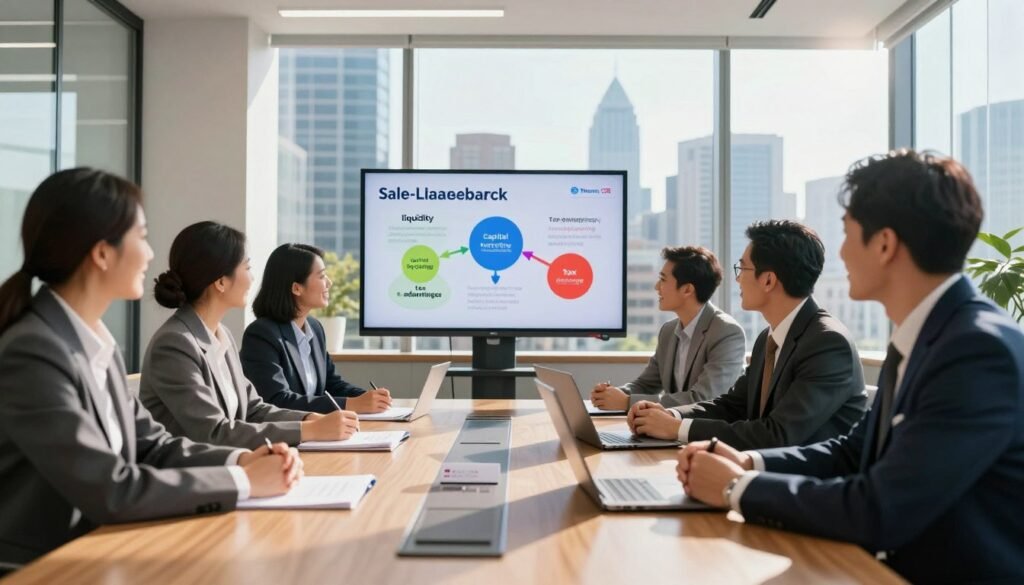
The sale-leaseback model lets businesses free up capital while keeping control. It’s great for companies wanting to use their assets better and have more cash on hand.
Unlocking Capital While Maintaining Operational Control
One big plus for companies is getting money from real estate. By selling and then leasing back, they get funds to invest in their business or pay off debt. This way, they keep control over their space, keeping operations running smoothly.
Balance Sheet Optimization and Debt Reduction
Sale-leasebacks make a company’s balance sheet stronger by turning assets into cash. This cash can help pay off debts, making the company’s finances look better. Balance sheet optimization through sale-leasebacks can also attract more investors.
Focusing on Core Business Operations
With sale-leasebacks, companies don’t have to worry about property upkeep or taxes. This lets them focus on their core business operations, making them more efficient and competitive.
In summary, sale-leasebacks bring many benefits to businesses. They help free up capital, improve the balance sheet, and let companies focus on what they do best. This strategy is becoming more popular as businesses look to boost their financial health and efficiency.
Advantages for Investors and Buyers in Industrial Properties
The sale-leaseback model offers investors a steady income through long-term leases. This makes it a great choice in the industrial real estate market.
Investors gain a lot from sale-leaseback deals because of the predictable cash flow. A big plus is the stability from triple-net leases. In these, the tenant handles property taxes, insurance, and upkeep, along with the rent.
Stable Long-Term Income Through Triple-Net Leases
Triple-net leases are very attractive to investors. They reduce the landlord’s costs and worries, offering a steady stream of income. These leases last from 10 to 20 years, ensuring investors’ financial stability for a long time.
With triple-net leases, investors can manage their portfolios better. They can make smarter choices about where to invest next.
Portfolio Diversification and Inflation Hedging
Sale-leasebacks let investors diversify their portfolios with industrial properties. This can lower risk and boost potential earnings. Industrial real estate often moves differently than other investments.
Many sale-leaseback deals include rent increases tied to inflation. This protects investors’ returns from inflation. As prices go up, so does the rent, keeping the value of investors’ earnings steady.
By adding industrial properties to their portfolios through sale-leaseback deals, investors can create a more balanced strategy. This strategy is less affected by market ups and downs.
Ideal Industrial Property Types for Sale-Leasebacks
Sale-leasebacks work well for many industrial properties. This is key in today’s fast-changing industrial real estate market. Different facilities can all gain from these deals.
Manufacturing Facilities and Production Plants
Manufacturing places and production plants are great for sale-leasebacks. They hold a lot of value and are key for companies’ work. Sale-leasebacks help manufacturers use real estate money for business growth or to get bigger.
Distribution Centers and Logistics Hubs
Distribution centers and logistics hubs also do well with sale-leasebacks. With more online shopping, these spots are in high demand. Companies can use sale-leasebacks to get money for improving their logistics and supply chains.
Cold Storage and Specialized Industrial Facilities
Cold storage and other special industrial spots also gain from sale-leasebacks. They need special setups and are used for a long time. Sale-leasebacks let owners make money from their property while keeping their operations running smoothly.
| Property Type | Key Characteristics | Benefits of Sale-Leaseback |
|---|---|---|
| Manufacturing Facilities | High-value properties, critical for operations | Unlocks capital for business expansion or investment |
| Distribution Centers | Increasing demand due to e-commerce growth | Frees up capital for logistics enhancements |
| Cold Storage Facilities | Specialized infrastructure, long-term usage | Monetizes real estate while maintaining operations |
In conclusion, many industrial property types can benefit from sale-leasebacks. Each has its own special qualities that make them good for these deals. Knowing about these properties and their benefits helps companies make smart choices. They can use sale-leasebacks to improve their business and finances.
Financial Analysis of Sale-Leaseback Transactions
Sale-leaseback deals have many financial aspects that are key. It’s important for both sides to do a deep financial check. This ensures the deal is good and will make money.
Cap Rate Considerations for Industrial Properties
The capitalization rate, or cap rate, is a key number for checking industrial property returns. It shows the net income to the property’s value. A higher cap rate means more return, but it might also mean more risk.
When looking at cap rates for industrial deals, think about the property’s location, market, and tenant’s credit. The property’s age, condition, and renovation or redevelopment chances also matter a lot. These things can change the cap rate and how good the investment looks.
Cost of Capital Comparisons
Knowing the cost of capital is crucial for both sides in a sale-leaseback deal. For the seller/lessee, it’s about comparing the sale-leaseback financing with other options. For the buyer/lessor, it’s about seeing if the investment returns are worth the cost.
Sale-leaseback deals might have a better cost of capital than usual financing, if the company’s credit is strong. But, the total cost, including lease payments and exit fees, needs careful thought.
ROI Calculations for Both Parties
Return on Investment (ROI) is key for judging a sale-leaseback deal’s success. For the seller/lessee, ROI is about using the freed-up capital well. For the buyer/lessor, it’s about the lease income.
An in-depth ROI check should look at all cash flows, like sale money, lease payments, and property value at the end. This helps both sides see the deal’s financial side and make smart choices.
Structuring Effective Long-Term Leases for Corporate Users
For corporate users, long-term leases are key. They need to understand lease terms well. These leases offer stability and predictability, helping businesses run smoothly.

Essential Lease Terms and Conditions
A good long-term lease starts with clear terms and conditions. Corporate users must focus on lease duration, termination options, and renewal rights. A solid lease agreement outlines who does what, avoiding conflicts.
- Clear definitions of lease commencement and expiration dates
- Options for lease renewal or termination
- Provisions for rent adjustments and escalation
Rent Escalation and Renewal Options
Rent escalation is key in long-term leases. It keeps rent in line with the market. Common methods include fixed percentage increases, CPI adjustments, or market rate resets. Renewal options give flexibility, letting users extend leases under set terms.
- Fixed percentage rent increases
- CPI-based rent adjustments
- Market rate resets during renewal periods
Maintenance and Operational Responsibilities
It’s important to clearly define who does what in maintenance and operations. This avoids disputes and keeps the property in good shape. Usually, the lessee takes care of daily upkeep, while the lessor handles big repairs.
| Responsibility | Lessor | Lessee |
|---|---|---|
| Maintenance | Major structural repairs | Day-to-day upkeep |
| Operational Costs | Property taxes, insurance | Utilities, janitorial services |
By structuring long-term leases well, corporate users can balance flexibility and financial stability. This supports their main business goals.
Tax Implications and Advantages of Industrial Sale-Leasebacks
It’s important to know the tax effects of industrial sale-leasebacks. These deals can change how you plan your finances. They can affect your decisions a lot.
Tax Treatment for Sellers and Lessees
The taxes for sellers and lessees in sale-leasebacks can be big. Selling a property can lead to capital gains or losses. These are taxed. But, the deal might offer tax breaks, like depreciation recapture.
Key tax considerations for sellers and lessees include:
- Capital gains tax on the sale of the property
- Potential depreciation recapture
- Lease payments as operating expenses
The table below summarizes the tax implications for sellers and lessees:
| Tax Aspect | Description | Tax Impact |
|---|---|---|
| Capital Gains | Gain on sale of property | Taxable as capital gains |
| Depreciation Recapture | Depreciation claimed on property | Subject to recapture upon sale |
| Lease Payments | Operating expenses for lessee | Deductible as operating expenses |
Tax Benefits for Investors and Buyers
Investors and buyers get tax perks from industrial sale-leasebacks. Buying a property this way can lead to depreciation and interest deductions. These are big tax benefits.
Key tax benefits for investors and buyers include:
- Depreciation deductions on the property
- Interest deductions on financing
- Potential for long-term capital gains treatment
Knowing these tax benefits helps both sides make better choices. They can get the most out of industrial sale-leaseback deals.
Risk Assessment and Mitigation Strategies
Both sides in industrial sale-leaseback deals must assess and manage risks. A detailed risk check helps spot potential problems. It also helps come up with ways to fix them, making the deal work out well.
Tenant Credit Quality Evaluation
Checking the tenant’s credit is key in risk assessment. This means looking at their financial health, credit history, and business stability. A tenant with good credit lowers the risk of them not paying, making more money for the investor. Credit rating agencies and looking at financial statements help with this.
Market and Location Risk Factors
Market and location risks are big in sale-leaseback deals. Things like market demand, supply chain dynamics, and regulatory changes can change property value and rent. Places with strong economies and growth are safer. It’s important to do deep market research to grasp these risks.
Contractual Protections for Both Parties
Having strong contracts is crucial in sale-leaseback deals. It protects both the seller-lessee and the buyer-lessor. This includes setting up lease terms that work for everyone, like rent increases and renewal options. Triple-net leases are often used, where the tenant pays most costs, lowering the investor’s risk.
By tackling these risks, both sides can make sale-leaseback deals that last and are good for everyone.
Legal and Regulatory Considerations in Sale-Leaseback Agreements
The laws around sale-leaseback deals are complex and need to be understood well. These deals involve legal details that must be carefully written and followed by state rules.
Experts say, “A well-made sale-leaseback deal is key to avoiding risks and making the deal work for everyone.” This shows how important it is to know the legal parts.
Essential Contract Elements and Potential Pitfalls
Important parts of sale-leaseback deals include clear lease terms, rent increase rules, and who does maintenance. Problems can happen if these parts are not clear, causing disagreements.
- Clear definitions of lease terms and conditions
- Rent escalation clauses and renewal options
- Maintenance and operational responsibilities
For example, a bad rent increase rule can cause fights between the lessor and lessee. This could lead to expensive lawsuits.
Regulatory Compliance Requirements by State
Rules for sale-leaseback deals change a lot by state, so knowing local laws is key. Some states have special rules for lease lengths and ending them.
Key considerations include:
- State-specific laws governing lease agreements
- Local regulations regarding property use and zoning
- Compliance with federal laws, such as the Americans with Disabilities Act (ADA)
A legal expert notes, “Knowing and following state rules is vital for sale-leaseback deals to succeed.” This shows the need for detailed legal checks.
Case Studies: Successful Industrial Sale-Leaseback Transactions
Sale-leaseback deals in the industrial sector are becoming more popular. They help companies get capital while keeping control. Many businesses have used this strategy to see big benefits.
Manufacturing Sector Examples and Outcomes
In manufacturing, sale-leaseback deals help balance sheets. For example, a top car maker sold its factory and leased it back. This move freed up money for the business.
The deal also let the company keep making cars without stopping. It improved their cash flow and allowed for new investments.
- Key Benefits: Improved liquidity, continued operational control, and balance sheet optimization.
- Outcome: The company could invest in new tech and grow its production.
Logistics and Distribution Success Stories
The logistics and distribution sector has also seen great success. A big logistics company sold its centers and leased them back. This deal gave them the money to upgrade their network.
- Enhanced logistics capabilities
- Improved service delivery
- Strategic financial management
By using sale-leaseback deals, logistics and distribution companies can meet their financial and operational goals better.
Emerging Trends Shaping the Future of Industrial Sale-Leasebacks
New trends are changing the industrial sale-leaseback sector. They bring both opportunities and challenges. It’s key to know what’s coming in this market.
Impact of E-commerce Growth on Warehouse Demand
E-commerce growth is driving demand for warehouses and distribution centers. Online shopping is growing, making efficient storage and logistics crucial. This trend will keep growing, with e-commerce companies needing big, strategic locations.
- Increased demand for last-mile delivery facilities
- Greater emphasis on warehouse automation and technology
- Rise of multi-channel retail strategies
ESG Considerations in Modern Industrial Properties
Environmental, Social, and Governance (ESG) matters are now key in industrial real estate. Investors and tenants want properties that meet their needs and ESG goals. This means sustainable building practices, energy efficiency, and socially responsible locations.
“The integration of ESG considerations into investment decisions is becoming a key factor in the industrial real estate market, driving demand for properties that are both efficient and sustainable.”
Technology Integration in Industrial Facilities
Technology is changing how industrial facilities work. From automation and robotics to data analytics, it boosts efficiency and cuts costs. As tech advances, we’ll see more new solutions in the industrial sector.
Some key technologies in industrial facilities include:
- Warehouse management systems
- Automated storage and retrieval systems
- Advanced security and surveillance systems
Conclusion: Maximizing Value in Industrial Sale-Leaseback Opportunities
Understanding the complexities of industrial sale-leaseback transactions can unlock great value. This model helps companies improve their balance sheets and focus on their main business. Investors get stable income from triple-net leases.
To maximize value, it’s crucial to grasp the details. This includes financial analysis, tax implications, risk assessment, and contractual protections. As the industrial real estate market grows, knowing how to handle sale-leaseback agreements becomes even more important.
In summary, sale-leaseback deals are very beneficial when done right. By using the insights and strategies from this guide, all parties can increase the value of their deals and reach their financial targets.