
Nearly 70% of small retail strip centers struggle to get financing because of strict lender rules. It’s important to know what lenders want in these local retail hubs for successful financing.
Lenders check if small retail projects can work. They look at the quality of tenants, the location, and the market. For local tenants, making steady cash is key.
Getting retail property financing can be tough. But knowing what lenders want can help a lot.
Key Takeaways
- Understanding lender criteria is crucial for securing financing for small retail strip centers.
- Lenders assess tenant quality, location, and market conditions when evaluating retail projects.
- Local tenants’ ability to generate cash flow is a key consideration for lenders.
- Being aware of lender preferences can improve financing approval chances.
- Retail property financing can be complex, but knowledge of lender criteria helps.
The Fundamentals of Small Retail Strip Center Investments
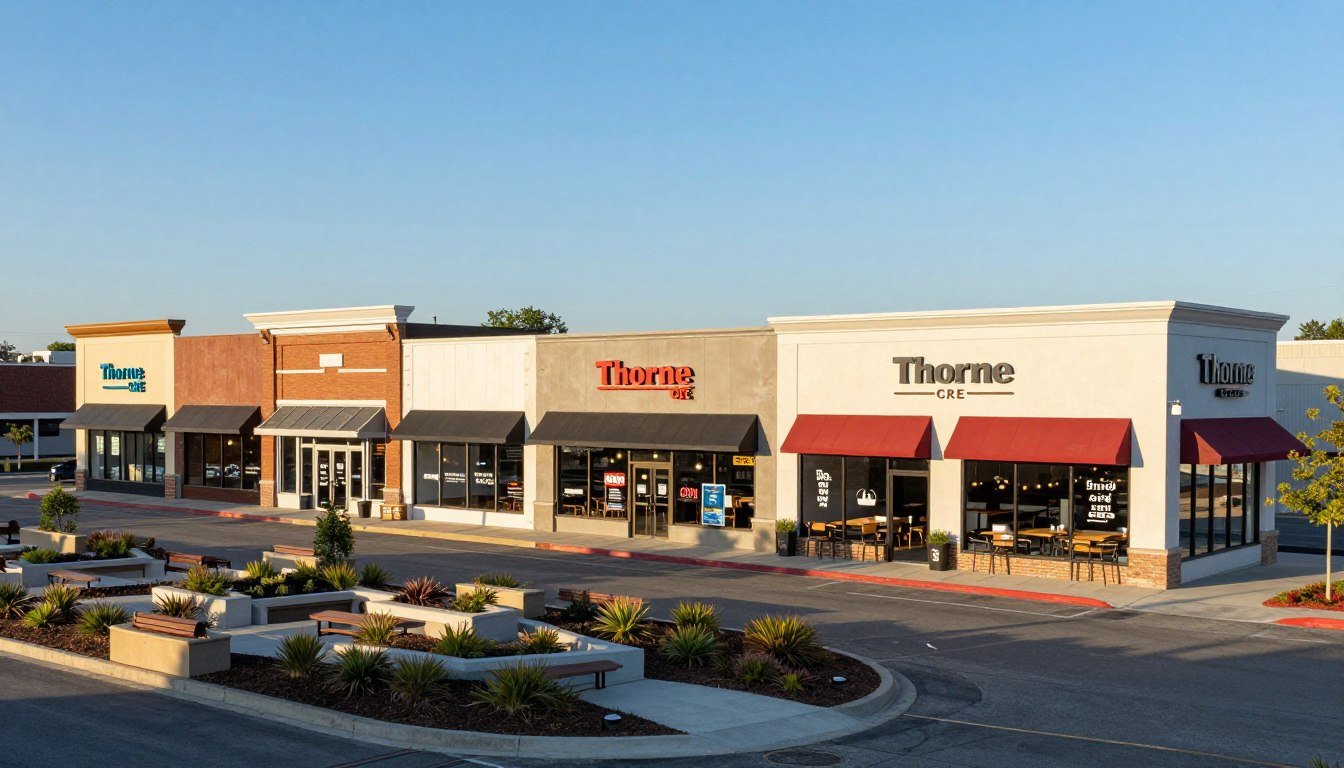
Small retail strip centers are a special part of commercial real estate. They catch the eye of investors and lenders. These places, with stores lined up, are key for local shopping.
Defining Small Retail Strip Centers in Today’s Market
These centers have sizes from 5,000 to 50,000 square feet. They often have stores like convenience shops, restaurants, or services. Their spots in busy areas make them popular for both tenants and investors.
Why These Properties Attract Specific Lender Attention
Lenders like small retail strip centers for their steady income. Good tenants make these properties even more appealing.
Risk-Reward Profile for Investors and Lenders
The risk and reward of these centers depend on several things. These include how full they are, the quality of tenants, and where they are. A well-run center with many tenants can bring good returns.
| Factor | Low Risk | High Risk |
|---|---|---|
| Occupancy Rate | 90%+ | Below 80% |
| Tenant Quality | Creditworthy tenants | Local, non-credit tenants |
| Location | High traffic, visible | Low traffic, less visible |
It’s key for investors and lenders to get these points. This helps them understand the world of small retail strip center investments.
Key Financial Metrics That Drive Lending Decisions
Lenders look closely at certain financial metrics when deciding on loans for small retail strip centers. These metrics help understand the property’s financial health and its ability to make enough money to pay off the loan.
Net Operating Income (NOI) Requirements
Lenders focus a lot on the Net Operating Income (NOI). NOI is found by subtracting operating costs from the property’s total income. They want to see a stable or growing NOI. This shows the property can make enough money.
A strong NOI can also lead to better loan terms.
Debt Service Coverage Ratio (DSCR) Expectations
The Debt Service Coverage Ratio (DSCR) is another key metric. It shows if the property can cover its debt payments. A DSCR of 1.25 or higher is usually what lenders look for. This ratio ensures the property can pay its debts.
Loan-to-Value (LTV) Considerations for Strip Centers
Lenders also check the Loan-to-Value (LTV) ratio. The LTV ratio is the loan amount divided by the property’s value. A lower LTV ratio means less risk for the lender, as the borrower has more equity. For retail strip centers, lenders often want LTV ratios under 75%.
Cap Rate Influence on Valuation
The capitalization rate, or cap rate, is important for property value. It’s found by dividing the NOI by the property’s value. Lenders use it to guess the return on investment. A lower cap rate might mean a more valuable property but could also mean lower returns.
A higher cap rate might show higher risk but could also mean higher returns.
Knowing these financial metrics is key for property owners looking for financing for their retail strip centers. By keeping a strong NOI, achieving a good DSCR, managing LTV ratios, and understanding cap rate effects, owners can make their properties more appealing to lenders.
Tenant Quality and Mix: The Heart of Retail Property Financing
Securing financing for retail properties depends a lot on the quality and variety of tenants. Lenders look closely at the tenant profile to gauge the risk. A good mix of tenants not only makes the property more appealing but also boosts its financing chances.
Credit Tenant vs. Local Tenant Evaluation
When evaluating tenants, lenders differentiate between credit tenants and local tenants. Credit tenants, like big national or international brands, are seen as safer due to their solid financial standing. In contrast, local tenants, while good for the community, might be riskier because of their less stable finances. Lenders often look for a mix that includes credit tenants to lower the risk.
Ideal Tenant Mix for Maximum Financing Potential
Finding the right tenant mix is key to getting the best financing. It’s about balancing national brands, local businesses, and service tenants. A diverse mix not only spreads out the risk but also draws in more customers. Lenders see properties with a balanced tenant mix as safer and more likely to get financed.
How Tenant Diversity Reduces Lender Risk Perception
Diversity in tenants helps lower the risk lenders see. With a variety of tenants, a property is less dependent on one tenant’s financial health. This diversity leads to more stable income, making the property more appealing to lenders. Plus, a diverse tenant base can handle market changes better, reducing default risk.
Supporting Local Tenants with Strong Financials
While credit tenants are often preferred, local tenants with strong finances can also be good. These tenants provide steady income and help the local economy. Lenders might see local tenants with solid finances as attractive, as long as they have a history of paying rent on time and staying in business.
Lease Structure Analysis: What Makes Lenders Comfortable
Lease structures play a big role in lenders’ decisions for small retail strip centers. A good lease structure can lower risks and make the property more attractive to lenders.
Optimal Lease Terms and Structures
Lenders like leases with clear, long-term terms for stable income. Optimal lease terms are usually 3 to 5 years for local tenants and up to 10 years or more for credit tenants. They prefer leases with predictable rent increases and few rent-free periods.

Managing Rollover Risk in Small Retail Centers
Rollover risk is the chance of vacancy or lower income when leases expire. Lenders look at the chance of lease renewals and how vacancies affect cash flow. To lower rollover risk, having a diverse tenant mix and long-term leases with good tenants is key.
Triple Net vs. Modified Gross Lease Preferences
Lenders often like triple net leases because they make tenants pay for property expenses. This lowers the landlord’s risks. Modified gross leases might offer more stable income but can expose landlords to cost changes. The choice between these lease types can greatly affect lender confidence.
| Lease Type | Lender Preference | Risk Profile |
|---|---|---|
| Triple Net Lease | High | Low |
| Modified Gross Lease | Moderate | Moderate |
It’s important for property owners to understand these lease structures and their effects. By improving lease terms and managing rollover risk, owners can make their property more appealing to lenders.
Occupancy Thresholds: Minimum Requirements for Financing
Understanding occupancy thresholds is key for property owners looking for financing. Lenders have strict rules about the minimum occupancy rates for retail strip centers. These rules help decide if a property can get financing.
Standard Occupancy Expectations by Lender Type
Different lenders have different expectations for occupancy rates. Traditional banks usually want rates above 85%. But, alternative lenders might accept rates as low as 70%.
| Lender Type | Minimum Occupancy Threshold |
|---|---|
| Traditional Banks | 85% |
| Alternative Lenders | 70% |
| CMBS Lenders | 80% |
Strategies for Properties Below Occupancy Thresholds
For properties below the required thresholds, there are ways to improve financing chances. These include aggressive marketing to get new tenants, offering lease incentives to current tenants, and changing the property to attract different tenants.
“The key to securing financing for underoccupied retail properties lies in demonstrating a clear plan for improving occupancy rates and, concurrently, the property’s income stream.”
Historical Occupancy Data and Tenant Retention Importance
Lenders really look at historical occupancy data and tenant retention rates. A property with stable or rising occupancy is seen as better than one with falling rates.
By focusing on these areas, property owners can increase their chances of getting financing on good terms.
Location and Market Analysis in Lending Decisions
Lenders focus a lot on location and market analysis when looking at small retail strip centers. The success of these properties depends a lot on where they are and the market around them.
Primary vs. Secondary Market Considerations
Lenders see primary and secondary markets differently. Primary markets are usually better because of high foot traffic, strong demographics, and good economic growth. Secondary markets might be riskier because of lower demand and less good economic conditions.
“The location of a retail property is paramount,” experts say. “It can make or break the investment potential.” This shows how important location analysis is in lending decisions.
Demographic Indicators Lenders Evaluate
Lenders look at many demographic factors to see if a small retail strip center is good. They check population growth, income, age, and jobs. Good demographics make a property more attractive to lenders.
Traffic Patterns and Accessibility Factors
The visibility and how easy it is to get to a retail strip center are key. Lenders look at how much traffic there is, parking, and how close it is to highways and public transport. Easy access can make a property more appealing.
Neighborhood Dynamics and Growth Potential
It’s important to understand the neighborhood around a small retail strip center. Lenders want to see areas that are growing, with new developments and a stable or growing population. A good neighborhood helps a retail property last long.
In short, a detailed location and market analysis is crucial for lending decisions on small retail strip centers. By looking at these factors, lenders can make better decisions about risks and returns.
Property Condition and Age: Impact on Financing Terms
The state and age of a retail strip center greatly affect lender decisions. Properties in good shape and built recently are seen as safer. This can lead to better loan terms.
Property Condition Assessment Requirements
Lenders need a detailed check of the property’s condition. They look for any issues that might affect its value or ability to make money. This includes checking the roof, HVAC, and electrical systems.
Deferred Maintenance Concerns for Aging Strip Centers
Old strip centers with neglected maintenance are risky for lenders. Neglect can cause expensive repairs. This can hurt the property’s cash flow and the borrower’s loan repayment ability.
Capital Expenditure Reserves Expectations
Lenders want borrowers to have a plan for future maintenance costs. This shows the borrower can handle the property well and avoid risks.
Effective property management and regular maintenance are key. They help keep the property in good shape and get better loan terms. Knowing what lenders want and fixing property issues early can help borrowers get good loans.
Management Experience: Why It Matters to Lenders
Management experience is key for lenders when it comes to small retail strip center financing. They see it as crucial for keeping properties occupied, collecting rent, and repaying loans.
Track Record Requirements for Borrowers
Lenders look at a borrower’s track record in managing properties. Those with a proven track record are more likely to get loans. First-time borrowers might need to show other experience or get more guarantees.

Property Management Evaluation Criteria
Lenders check many aspects of property management. They look at how well the property is managed, including tenant relations and maintenance. A well-managed property is seen as less risky, which can lead to better loan terms.
Financial Strength and Liquidity Considerations
Lenders also check a borrower’s financial strength and liquidity. A borrower with strong finances can handle unexpected costs better. This makes the loan less risky for lenders.
Showing good management experience, a solid track record, and strong finances can help borrowers get better financing for their small retail strip center.
Documentation Package: Preparing for Lender Scrutiny
Getting financing for retail properties starts with a detailed documentation package. Lenders need a full set of documents to check if the investment is safe and viable.
Essential Financial Documents for Small Retail Properties
A good financial package has current and past financial statements, rent rolls, and lease agreements. These show the property’s ability to make money and its financial health.
- Current and historical financial statements
- Rent rolls and lease agreements
- Operating expense reports
- Capital expenditure records
Property Performance History Requirements
Lenders look at a property’s past performance to predict its future. They check occupancy rates, rental income trends, and operating costs.
| Performance Metric | Importance to Lenders | Example |
|---|---|---|
| Occupancy Rate | High | 95% or higher |
| Rental Income Growth | Medium | Annual increase of 3-5% |
| Operating Expense Ratio | Medium | Below 40% |
Market Analysis and Competitive Positioning
A deep market analysis is key to understanding the competitive scene. It covers demographic studies, market trends, and competitor analysis.
With a well-prepared documentation package, property owners show they are serious and credible. This makes it easier to get financing from lenders.
Retail Property Financing Options for Strip Centers
Getting financing for retail strip centers means looking at different options. Each has its own benefits and downsides. The right choice can make a big difference in the success of your investment.
It’s important to know what’s out there. You can choose from bank loans, CMBS, SBA loans, or private lending. Each has its own advantages and challenges.
Traditional Bank Loans vs. CMBS
Bank loans are straightforward. They’re based on the property’s value and your credit. CMBS, on the other hand, pool many mortgages together. This can attract more investors and offer better terms.
“CMBS are becoming more popular for retail properties,” experts say. “They offer good interest rates and longer terms than bank loans.”
SBA Loan Programs for Small Retail Properties
The Small Business Administration (SBA) has loan programs for small retail properties. These loans are great for small business owners. They have lower down payments and longer repayment times.
Private Lending and Hard Money Alternatives
Private lending and hard money loans are for those who can’t get traditional financing. They’re short-term and have high interest rates. But, they’re useful for quick cash or special property types.
Terms and Conditions Comparison
| Financing Option | Interest Rate | Loan Term | Down Payment |
|---|---|---|---|
| Traditional Bank Loan | 4-6% | 5-20 years | 30-40% |
| CMBS | 3.5-5.5% | 10-25 years | 25-35% |
| SBA Loan | 5-8% | 10-25 years | 10-20% |
| Private/Hard Money | 8-12% | 1-5 years | 30-50% |
Each option has its own terms and conditions. The right choice depends on your financial situation and goals.
In conclusion, there are many financing options for retail strip centers. Knowing the pros and cons of each helps make the best choice for your investment.
Navigating Current Market Challenges in Retail Financing
The retail financing world is facing many challenges. These include the growth of e-commerce, changes after the pandemic, and changing interest rates. Lenders are being very careful, looking closely at strip centers to see if they can handle these issues.
E-commerce Impact on Lender Perception of Strip Centers
E-commerce has changed the retail world a lot. Lenders now see strip centers differently. They like centers with a good mix of tenants, like grocery stores or service businesses. These are less likely to be hurt by online shopping.
Lenders want to see if retail properties can change with consumer habits. They prefer centers that offer unique shopping experiences.
| Factor | Lender Perception | Impact on Financing |
|---|---|---|
| E-commerce Growth | Increased Caution | Tighter Loan Terms |
| Tenant Mix Quality | More Favorable | Better Loan Options |
| Experiential Retail | Positive Outlook | Enhanced Financing Opportunities |
Post-Pandemic Retail Landscape Considerations
The pandemic has changed how people shop, moving more to online and changing where they go. Lenders are looking at strip centers to see if they can adjust to these changes.
Strip centers in busy areas with a variety of tenants are seen as stronger. This makes them more appealing to lenders.
Interest Rate Environment Effects on Deal Structures
The current interest rates are key in shaping deals for financing strip centers. Changes in interest rates can greatly affect borrowing costs. This can make or break a project.
Lenders are changing their plans to deal with rate changes. They often use interest rate hedging mechanisms to reduce risk.
Understanding these challenges is key to getting good financing terms. By adapting to e-commerce, post-pandemic changes, and rate changes, property owners can better handle the complex financing world.
Risk Mitigation Strategies to Improve Financing Terms
To get better loan terms, property owners need to focus on risk mitigation strategies. By lowering the risk, lenders are more likely to offer good loan conditions. This section looks at how to reduce risk in small retail strip centers.
Lease Extension and Renewal Tactics to Reduce Rollover Risk
Managing rollover risk is key. This includes securing long-term leases with reliable tenants. By doing this, owners can lower the chance of empty spaces.
Offering discounts or improvements can encourage tenants to stay. This not only lowers rollover risk but also keeps income steady. This makes the property more appealing to lenders.
Property Improvement Planning for Better Terms
Investing in property improvements is another smart move. Upgrades like new facades or better parking can boost value and attract better tenants.
A good improvement plan should meet market and tenant needs. For example, adding green features or improving the shopping experience can make a center more appealing. This reduces vacancy risk and improves loan chances.
Borrower Strength Enhancement Approaches
Showing borrower strength is crucial for better loan terms. This means having a good track record, a strong debt coverage ratio, and solid finances.
Borrowers can improve their standing by providing detailed financial info. This includes business plans and cash flow forecasts. A strong financial profile builds lender confidence, leading to better loan terms.
Future Trends in Small Retail Strip Center Financing
Small retail strip centers are on the verge of a financing revolution. This change is driven by new lender preferences and technology. As the retail world changes, lenders are updating their strategies to meet these new needs.
Several key trends will shape the future of financing for small retail strip centers. Lenders are now more advanced in evaluating these properties. They look at more than just numbers to see if a property can succeed in the long run.
Shifting Lender Preferences
Lenders now focus on properties with diverse tenants, solid management, and flexible business plans. This change helps them manage risks in a fast-changing market.
The table below shows some of the main lender preferences for small retail strip centers:
| Lender Preference | Description | Impact on Financing |
|---|---|---|
| Strong Tenant Mix | Diverse range of tenants, including creditworthy anchors | Increased financing options and better terms |
| Robust Management | Experienced property management with a proven track record | Enhanced lender confidence and lower risk perception |
| Adaptable Business Models | Properties with flexible lease structures and potential for mixed-use conversion | Greater financing flexibility and potential for revaluation |
Adaptation to Mixed-Use Conversion Opportunities
The trend towards mixed-use conversions is growing. Lenders are more open to financing properties with residential, office, or other non-retail uses. This change is driven by the chance for higher property values and more rental income.
Technology Integration and Its Impact on Valuations
Technology in retail properties is becoming a big factor in valuations. Lenders now consider tech upgrades, like smart buildings and e-commerce, when they value properties.
As the retail world keeps changing, small retail strip centers must adapt to stay relevant. By understanding and meeting new lender preferences, property owners and managers can thrive in this fast-changing market.
Conclusion: Positioning Your Retail Property for Financing Success
Getting financing for small retail strip centers needs a deep understanding of what lenders look for. Focus on financial metrics, tenant quality, lease types, and property condition. This way, owners can make their properties more attractive to lenders.
Success in retail property financing means keeping occupancy rates high and managing risks well. It also means showing a strong track record in managing properties. Lenders look at location, market trends, and the investment’s risk and reward.
To get better financing terms, owners should work on lowering lender risk. This includes having a diverse tenant mix, good lease management, and keeping properties in top shape. By knowing these key points and keeping up with small retail financing trends, owners can get better deals.
In the end, a well-prepared property owner can handle the complex world of retail property financing. They can succeed in the competitive market of small retail strip center investments.