
Strategic partnerships in commercial financing are structured relationships between borrowers, intermediaries, and capital providers designed to expedite funding and optimize capital structures. When you work with established financing partners, you gain direct access to tailored debt programs, accelerated underwriting queues, and a nationwide network of active balance-sheet lenders. In this comprehensive guide, explore how Thorne CRE leverages strategic alliances to deliver customized debt solutions aligned with your long-term business goals. Navigating institutional debt markets requires precise timing, and collaborative financing partnerships provide the decisive competitive edge commercial property sponsors need to execute transactions smoothly and efficiently across shifting market cycles.
Accelerating Funding Through Partnerships

Strategic alliances serve as a force multiplier in commercial real estate capital markets. These institutional relationships significantly accelerate transaction velocity, delivering the liquidity sponsors need to capture lucrative real estate opportunities. Understanding why strategic partnerships can transform commercial financing is crucial for developers and property investors navigating shifting interest-rate environments and selective balance sheets. Rather than approaching lenders cold, sponsors with established capital partners benefit from established credit relationships, standard institutional presentation, and immediate credibility with credit committees.
Speeding Up the Funding Process
Securing institutional debt quickly requires bypassing administrative bottlenecks. Strategic financing partnerships achieve this by connecting commercial sponsors directly with active lenders who prioritize transaction momentum. The process begins with a standardized, institutional-grade credit submission, which eliminates underwriting revisions and reduces standard review timelines. As a result, qualified borrowers often receive firm term sheets in 3 to 5 business days rather than waiting 2 to 3 weeks for initial interest.
Trusted partner channels also grant sponsors prioritized underwriting placement. Because lending institutions recognize the rigorous pre-qualification and financial modeling performed by experienced intermediaries, incoming loan requests advance to credit committees faster. For time-sensitive commercial acquisitions, closing velocity is paramount. Extended delays risk forfeited earnest money deposits, strained seller relationships, and lost portfolio earnings. Strategic alliances keep your acquisition schedule moving forward without friction, often compressing standard 60- to 75-day bank underwriting cycles down to 35 to 45 calendar days for transitional and private facilities.
Expanding Financing Options
Broad access to diverse capital structures is an essential advantage of financing alliances. Through professional industry networks, real estate sponsors gain exposure to specialized debt vehicles that extend beyond conventional balance-sheet lending. Whether your portfolio requires traditional permanent mortgages, complex construction loans, or short-term transitional bridge financing, a strategic intermediary eliminates the limitations of working with a single lender.
This breadth of options prevents sponsors from forcing deals into unsuitable loan programs. Instead, borrowers can secure customized capital tailored to each property’s operational profile. For commercial assets undergoing physical repositioning or lease-up, specialized commercial acquisition financing provides the operational breathing room necessary to execute value-add business plans efficiently. Direct exposure to nationwide debt providers guarantees an optimal financial match for any asset type across standard loan sizes from $2,000,000 to upwards of $50,000,000.
Reducing Risk with Strategic Alliances
Forming strategic alliances also mitigates execution risk throughout the commercial financing cycle. Advisory networks continuously evaluate capital providers, identifying dependable lenders while weeding out institutions with unpredictable closing track records. This proactive vetting shields commercial borrowers from re-trading or unexpected last-minute terms during due diligence.
Additionally, strategic alliances integrate comprehensive risk-management practices early in the transaction. Intermediaries stress-test property operating cash flows, model debt covenants under various scenarios, and cross-reference underwriting benchmarks against regulatory frameworks established by the Federal Reserve. Pinpointing potential appraisal hurdles or coverage constraints before formal underwriting protects sponsors from costly deal fallout, allowing teams to focus on managing their commercial real estate assets.
Customized Financing Solutions
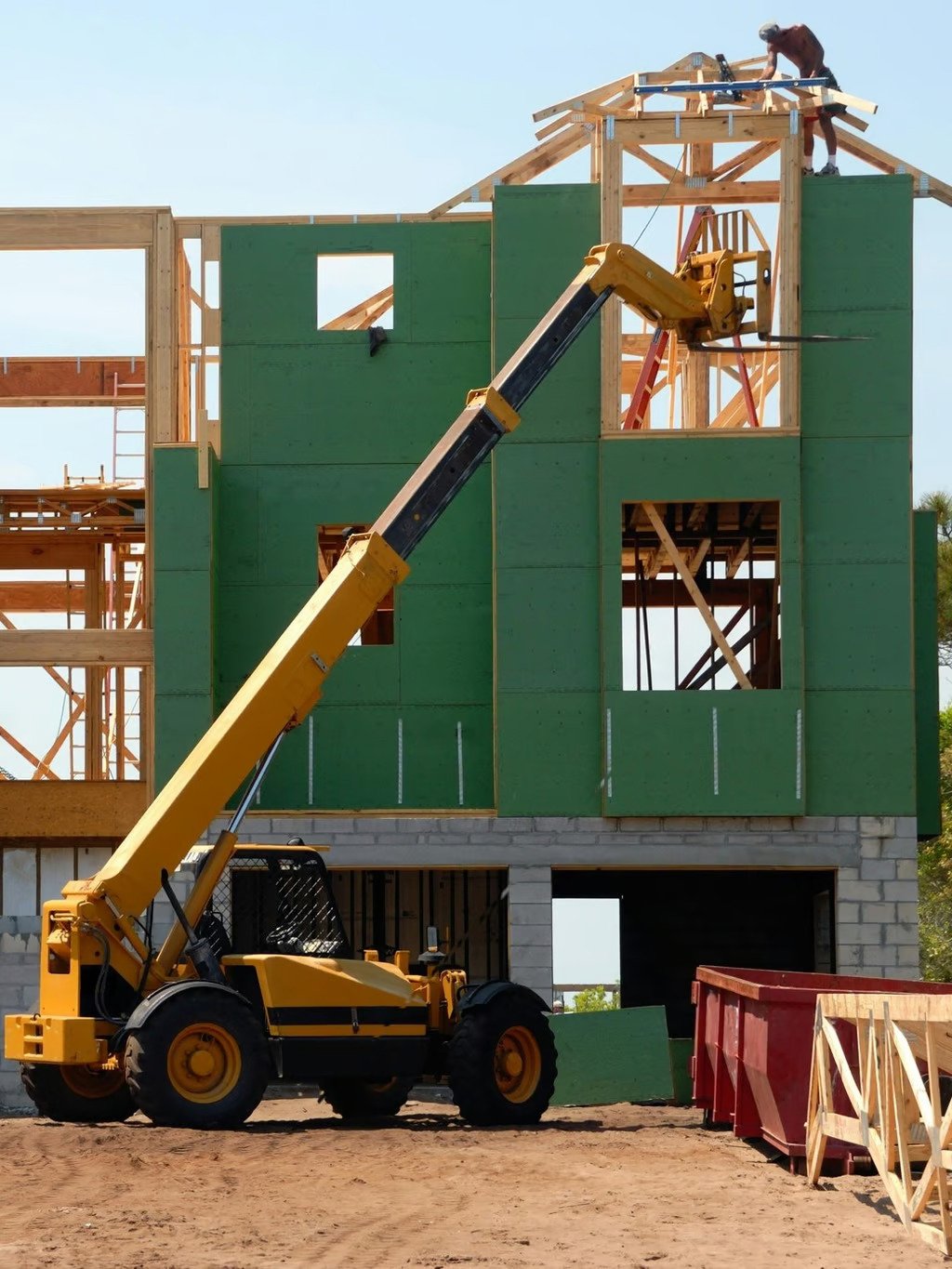
Tailored financing arrangements are critical for preserving cash flow and maximizing investment returns. Generic loan products rarely accommodate complex commercial business plans, making tailored debt structuring an operational necessity across diverse asset types and stabilization strategies.
Tailored Loan Options for Growth
Every commercial property maintains distinct operating mechanics, lease structures, and cash-flow rhythms. Customized loan structures align financing directly with these property traits, matching debt obligations to projected revenues. By engaging experienced acquisition brokers who act as strategic partners in complex transactions, sponsors can negotiate customized covenant packages, flexible amortization schedules, and interest reserves that safeguard working capital during stabilization.
For instance, income-producing assets often benefit from debt-service coverage ratio (DSCR) underwriting. Unlike conventional loans requiring exhaustive personal tax verifications, DSCR loans evaluate property cash flows directly. Aligning repayment terms with net operating income provides superior flexibility, creating capital structures that support sustained portfolio growth through evolving economic cycles. Core permanent facilities typically require minimum DSCR levels of 1.20x to 1.35x, with senior loan-to-value (LTV) ratios commonly landing between 60% and 75%.
Flexible Funding for Real Estate Investments
Commercial real estate investments require speed and adaptability. Flexible financing facilities, such as interim construction facilities and bridge loans, offer the liquidity needed to execute capital improvements or capitalize on distressed property pricing. Working with seasoned commercial real estate acquisition loan brokers ensures your capital stack aligns with your specific investment lifecycle.
Securing an asset under an expedited contract requires immediate liquidity. Standard commercial lending channels frequently take sixty days or more to underwrite, leaving opportunities vulnerable to competing buyers. Adaptable bridge capital resolves this timing bottleneck, giving sponsors the purchasing power to close swiftly and refinance into long-term permanent debt once property performance stabilizes. Bridge facilities typically offer loan-to-cost (LTC) terms between 65% and 80%, carrying terms of 12 to 36 months with floating rates commonly benchmarked to 30-day SOFR plus a margin of 350 to 550 basis points.
Expert Guidance for Financing Success
Expert advisory support simplifies complicated commercial financing into an organized process. Knowledgeable capital advisors assess lender term sheets, unpack complex legal covenants, and structure institutional packages that protect borrower interests. Collaborating with intermediaries who maintain a clear commercial mortgage broker fee structure gives sponsors total visibility into transaction costs prior to committing financial resources.
Experienced consultants understand nuances across property sectors and maintain direct lines to chief credit officers. By managing lender negotiations, coordinating third-party reports, and resolving title or underwriting hurdles, your advisory partner removes friction from the funding process, giving you confidence at every stage of the capital-raising journey.
Commercial Financing Facility Benchmarks
The following table illustrates typical market ranges across core commercial debt structures available through established capital networks:
| Financing Structure | Typical Loan Size | Target LTV / LTC | Minimum DSCR | Pricing Index / Spread | Typical Closing Window |
|---|---|---|---|---|---|
| Permanent Senior Debt (Bank / Life Co) | $3,000,000 – $50,000,000+ | 55% – 70% LTV | 1.20x – 1.35x | Treasuries / SOFR + 175 to 275 bps | 45 to 60 calendar days |
| Transitional Bridge Loan | $2,000,000 – $35,000,000 | 65% – 80% LTC | 1.00x – 1.15x (or Debt Yield > 8.5%) | 30-Day SOFR + 350 to 550 bps | 25 to 40 calendar days |
| Mezzanine Debt / Subordinate Tranche | $1,000,000 – $15,000,000 | Up to 80% – 85% Total Leverage | 1.05x – 1.10x Combined | Fixed coupon 10.0% – 13.5% (or blended PIK) | 35 to 50 calendar days (concurrent) |
Hypothetical Capital Stack Calculation
To understand how strategic financing partnerships optimize capitalization, evaluate this explicitly hypothetical acquisition scenario for an industrial flex property. This model illustrates how layered financing reduces upfront equity requirements while remaining comfortably within standard debt coverage guidelines:
- Hypothetical Purchase Price: $4,500,000
- Underwritten In-Place Net Operating Income (NOI): $315,000
- Senior Debt Facility (65% LTV): $2,925,000
- Senior Loan Terms: 6.50% interest rate, 30-year amortization schedule
- Annual Senior Debt Service: $221,980 ($18,498 monthly principal and interest)
- Senior DSCR Calculation: $315,000 NOI / $221,980 Debt Service = 1.42x DSCR (comfortably exceeds the 1.25x minimum requirement)
- Mezzanine Capital Tranche (15% Capitalization): $675,000 at 10.50% interest-only ($70,875 annual payment)
- Total Debt Service (Senior + Mezzanine): $221,980 + $70,875 = $292,855
- Combined Total DSCR: $315,000 / $292,855 = 1.08x
- Sponsor Equity Requirement (20% Capitalization): $900,000
Without a strategic intermediary, the borrower might only secure a standard 55% senior advance of $2,475,000, requiring $2,025,000 in upfront sponsor equity. By securing an aligned $675,000 mezzanine tranche alongside senior debt of $2,925,000, the required equity contribution falls from $2,025,000 to $900,000. This structure preserves $1,125,000 in liquid capital for planned property improvements and contingency reserves.
Illustrative Transaction Planning Timeframes
Establishing realistic timelines prevents unexpected delays during the commercial borrowing lifecycle. Institutional financings follow predictable operational phases across an average 45- to 60-day path from initial inquiry to final disbursement:
- Preliminary Underwriting Window (10 to 14 Business Days): An illustrative planning timeframe during which advisory teams review rent rolls, assess sponsor balance sheets, model debt service coverage, and obtain preliminary term sheets. Preliminary soft quotes are typically delivered in days 3 through 5, followed by signed letters of intent (LOI) by day 10.
- Third-Party Due Diligence Phase (Weeks 3 to 5): Ordering and completion of the full MAI real estate appraisal, Phase I Environmental Site Assessment (ESA), Property Condition Assessment (PCA), and zoning compliance certification. This phase typically spans 15 to 25 business days.
- Formal Underwriting and Closing (45 to 60 Calendar Days): An illustrative closing timeline encompassing third-party property appraisals, Phase I environmental assessments, structural engineering reviews, title underwriting, committee approval, and loan documentation. Legal counsel drafts loan documents, clears survey exceptions, establishes escrow reserves, and coordinates final loan funding in weeks 6 through 8.
Commercial Financing Readiness Checklist
Organizing comprehensive due diligence materials prior to loan submission accelerates institutional lender approvals:
- Certified Rent Roll: Current tenant roster detailing square footage, lease expiration dates, base rent, reimbursements (CAM/taxes), renewal options, and tenant payment history.
- Trailing 24-Month Operating Statements: Historical property income, itemized operating expenses, year-to-date budget comparisons, and verified balance sheets.
- Sponsor Financial Portfolio: Complete personal financial statement (PFS) dated within 90 days, liquidity verification showing unencumbered cash/marketable securities, and a comprehensive real estate owned (REO) schedule detailing existing debt balances and maturities.
- Capital Improvement Budget: Detailed accounting of completed capital expenditures and projected renovation costs with contractor bids and timeline estimates.
- Executed Purchase Agreement: Fully signed contract detailing earnest money deposits and closing conditions.
- Entity Documentation: Certificate of good standing, operating agreements, and organizational charts identifying all beneficial owners holding 20% or greater equity.
Thorne CRE: Your Trusted Partner

Selecting an experienced capital advisory partner transforms your financing outcomes. Thorne CRE provides commercial borrowers with unmatched market knowledge, established industry relationships, and reliable nationwide access to capital.
Nationwide Lender Network Benefits
Thorne CRE’s extensive lender network eliminates geographic constraints. Our established partnerships connect real estate sponsors to life companies, regional balance-sheet banks, private debt funds, and agency lenders nationwide. This diverse reach ensures every commercial property is matched with lenders offering competitive appetite for that specific asset type.
Furthermore, a national lending network creates competitive bidding for your loan request. When multiple institutions compete to provide debt, sponsors gain significant leverage to negotiate lower interest margins, reduced origination fees, flexible loan prepayment privileges, and favorable non-recourse terms.
Expert Support from Consultation to Funding
Comprehensive hands-on support defines Thorne CRE’s advisory philosophy. Our team works alongside you from initial capital analysis through final loan closing, assembling submission packages that highlight asset strengths while proactively resolving prospective credit issues.
Actionable Steps for Borrowers
- Audit Current Debt: Review loan maturity schedules, interest rates, and prepayment restrictions across all active property holdings.
- Compile Underwriting Documentation: Assemble rent rolls, historical financial statements, and sponsor balance sheets using our readiness checklist.
- Define Deal Objectives: Determine target leverage thresholds, acceptable interest rate structures, and desired loan horizons before approaching lenders.
- Engage Professional Advisors: Partner with knowledgeable commercial financing intermediaries to access nationwide lenders and secure competitive terms.