
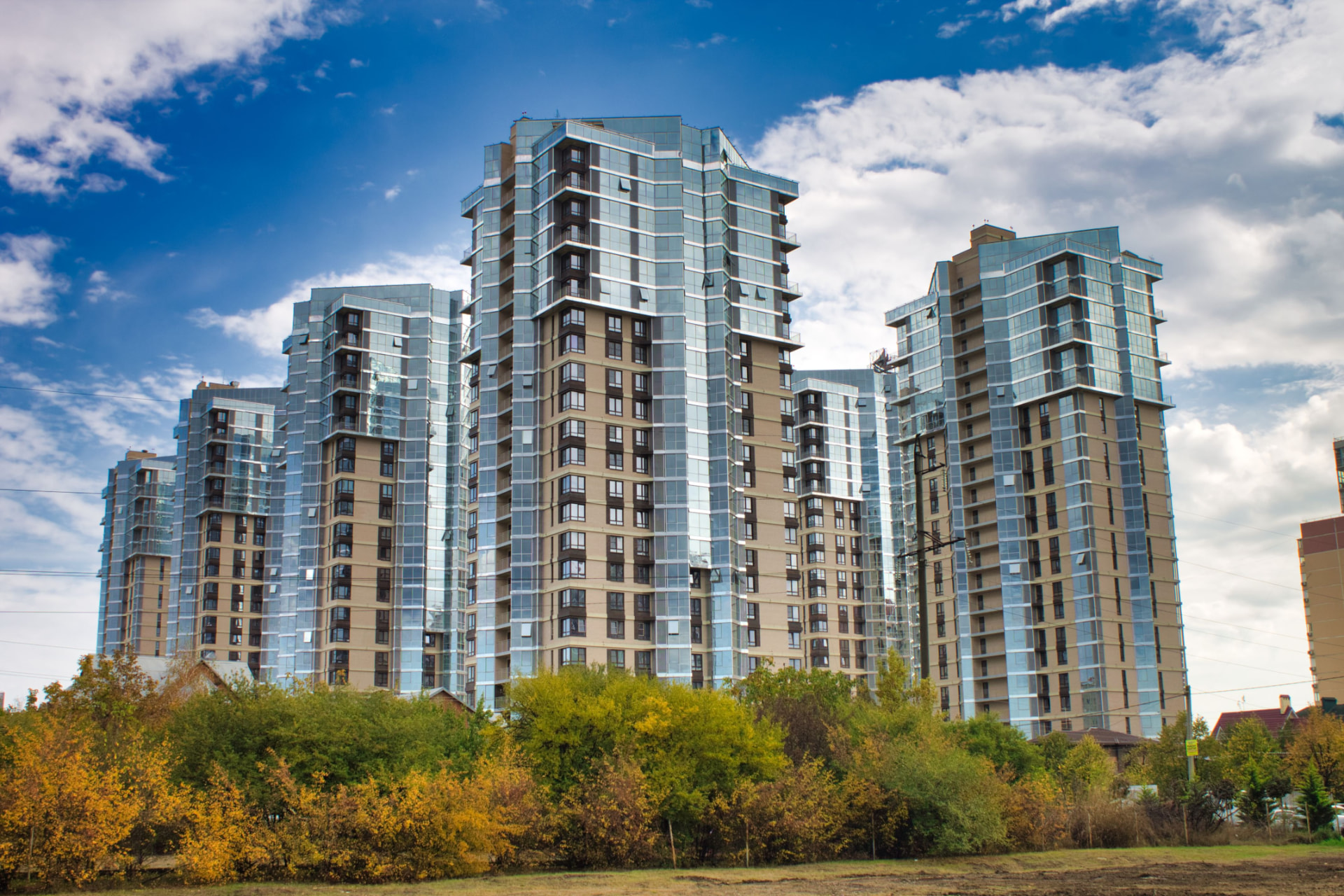
A construction loan is short-term financing used to fund the hard and soft costs of ground-up development or major property renovations. Capital is disbursed incrementally via milestone draws rather than a lump sum, requiring refinancing upon project completion.
Key Takeaways
- Incremental Disbursements: Funds are released in tranches (draws) as construction milestones are verified by third-party inspectors.
- Interest-Only Structure: Borrowers pay interest solely on the disbursed balance, commonly financed through a capitalized interest reserve.
- Underwriting Standards: Approval requires 65%–75% Loan-to-Cost (LTC), strong sponsor liquidity (10%–15%), and a net worth equal to or exceeding the loan amount.
- Exit Strategy Required: Because maturities range from 18 to 36 months, borrowers must exit via permanent debt refinancing, a mini-perm loan, or asset sale upon stabilization.
What Is a Commercial Construction Loan?
A commercial construction loan is a specialized debt instrument designed to fund vertical construction, site improvements, and soft costs for ground-up builds or heavy adaptive reuse. It behaves very differently from standard commercial debt. When you close on an existing building, your lender wires the loan proceeds in a single lump sum. Construction debt does not work that way. Instead, capital trickles out gradually through progress draws tied directly to completed site milestones.
Why the difference? Pure risk management. In an acquisition or standard refinance, an underwriter assesses an existing structure with operating history, paying tenants, and physical collateral they can touch today. With a construction facility, that physical collateral simply does not exist on day one. Dirt and blueprints take its place. The lender underwrites the future completed value against your total project budget, inspecting work continuously until the local municipality hands you a Certificate of Occupancy.
Construction loan proceeds fund two primary categories of capital expenditures:
- Hard Costs: Direct physical improvements to the real estate, including earthwork, grading, utility installation, concrete foundations, structural steel, framing, mechanical/electrical/plumbing (MEP) systems, interior buildouts, and general contractor supervisory fees.
- Soft Costs: Indirect development expenditures necessary to execute the project, including architectural fees, structural and civil engineering, zoning and legal counsel, environmental testing, building permit fees, municipal impact fees, construction-period insurance, and capitalized loan interest reserves.
Capital availability and initial closing conditions depend heavily on project-level entitlements and contractual structures. Lenders require all land-use approvals, site plan approvals, and permits to be in place prior to initial disbursement. In addition, balance-sheet lenders and debt funds mandate that developers secure an executed Guaranteed Maximum Price (GMP) contract or a fixed-price construction agreement with a qualified general contractor possessing documented bonding capacity and balance-sheet liquidity equal to the total vertical contract sum. If your development program requires early-stage capitalization before full site approvals are finalized, review our comprehensive framework for ground-up construction and development financing to evaluate where your capital stack should sit.
Construction Loan vs. Permanent Mortgage vs. Bridge Loan: How Do They Compare?
While a permanent commercial mortgage provides long-term, amortizing financing for stabilized, income-producing properties, a construction loan provides interest-only, unamortized capital during non-cash-flowing building phases, and a bridge loan offers transitional capital to reposition or lease up existing real estate. Each instrument carries distinct pricing mechanics, disbursement schedules, and collateral covenants tailored to the asset’s operational maturity.
Underwriting terms, draw structures, and operational covenants diverge sharply across these three categories:
| Parameter | Commercial Construction Loan | Transitional Bridge Loan | Permanent Mortgage |
|---|---|---|---|
| Facility Term | 18 to 36 months (with one to two 6-month extension options) | 12 to 36 months (with structured extension benchmarks) | 5, 7, 10, or 30 years |
| Disbursement Structure | Progressive monthly advances based on independent inspectorial verification | Lump sum at closing, plus future funding facility for tenant improvements/leasing commissions | Single lump-sum funding at loan closing |
| Amortization & Debt Service | Interest-only, applied exclusively to drawn debt; serviced via capitalized reserve | Interest-only on drawn balance; cash-serviced or interest-reserve supported | Amortizing over 25 to 30 years (or initial structured interest-only period) |
| Primary Underwriting Metrics | Loan-to-Cost (LTC), As-Completed Loan-to-Value (LTV), Exit Debt Yield | As-Is Debt Yield, As-Stabilized Debt Yield, Loan-to-Cost | Debt Service Coverage Ratio (DSCR), Debt Yield, Loan-to-Value (LTV) |
| Recourse Profile | Full recourse common with regional commercial banks; non-recourse available via debt funds with completion guarantees | Predominantly non-recourse with standard non-recourse carve-outs (“bad-boy” guaranties) | Typically non-recourse, secured strictly by real property cash flows and standard carve-outs |
Where your deal sits in the development lifecycle dictates which capital source fits best. Regional banks generally offer the lowest nominal interest margins, often pricing between 250 and 350 basis points over the 30-day Secured Overnight Financing Rate (SOFR). The trade-off? They almost universally demand full personal recourse from any principal holding 20% or more of the equity. Private debt funds and institutional lenders take a different approach. They price wider (450 to 650 basis points over SOFR), but they offer non-recourse structures backed by a standard completion guaranty from a well-capitalized sponsor.
Bridge debt is unsuited for ground-up development because bridge underwriters assume the existence of an standing structure that already generates at least partial cash flow, or requires strictly cosmetic, interior tenant improvement work. For a broader analysis of rate structures across alternative lending sources, see our guide on commercial construction loan terms or explore transitional options via our overview of commercial real estate bridge loans.
How Does a Construction Loan Draw Schedule and Interest Reserve Work?
Construction loan funds sit with the lender and release in tranches called draws as independent inspectors sign off on completed work. You only pay interest on the money you actually draw down, not the full loan commitment. Better yet, you do not write a monthly check out of pocket; that interest gets paid by a capitalized interest reserve built into your soft costs.
Managing draws requires sharp coordination between your team, your general contractor, your architect, and the lender’s inspecting engineer. Every month, the contractor prepares an application for payment (almost always AIA Document G702 along with the G703 Continuation Sheet). This package breaks down the budget line by line, showing percentage of completion, materials currently stored on-site, and net funds requested for that billing cycle.
To see how interest reserves, progressive draws, and equity timing interact, let us walk through a representative industrial build:
Representative Deal Parameters:
Total Development Cost (TDC): $10,000,000
Underwritten Debt Sizing: 65% Loan-to-Cost (LTC)
Total Senior Debt Commitment: $6,500,000
Required Sponsor Equity: $3,500,000 (35% of TDC)
Facility Term: 24 months (18-month construction period + 6-month initial lease-up buffer)
Interest Rate: 8.25% floating (SOFR index + 3.00% spread)
Hard Cost Construction Contingency: $500,000 (5.0% of TDC)
Step-by-Step Capital Deployment Mechanics
- First-Dollar Equity Requirement: In traditional construction finance, lenders require the sponsor to inject their full equity contribution ($3,500,000) before the senior debt facility disburses its first dollar. The sponsor’s equity funds early soft costs, civil design, municipal permitting, and initial earthwork.
- Linear Debt Draw Schedule: Once sponsor equity is depleted, the $6,500,000 loan commitment begins funding monthly draws over the remaining 18 months of vertical construction. Because debt proceeds disburse gradually from an initial $0 drawn balance up to the maximum facility size, the average drawn loan balance during the active 18-month construction period approximates 50% of the total loan commitment ($3,250,000).
- Capitalized Interest Reserve Calculation: The interest reserve is sized based on this midpoint convention, adjusted for anticipated lease-up timing:
Construction Phase Interest: $3,250,000 (average drawn balance) × 8.25% (annual interest rate) × 1.5 years (18 months) = $402,187
Post-Construction Stabilization Phase: $6,500,000 (fully drawn balance) × 8.25% × 0.5 years (6 months) = $268,125
Total Capitalized Interest Reserve: $402,187 + $268,125 = $670,312
You never hold that $670,312 in your operating account. The lender keeps it on their ledger under soft costs. Each month, as the lender advances funds to pay the contractor for vertical build milestones, the lender simultaneously draws down from the interest reserve line item to service the outstanding monthly interest payment due on the drawn facility balance.
Lenders also withhold retainage, usually 10%, on every contractor invoice. Say your GC submits a bill for $400,000 in mechanical work. The lender disburses $360,000 to title escrow and keeps $40,000 in retainage. That balance sits untouched until the job finishes, the city grants a permanent Certificate of Occupancy, and every subcontractor signs an unconditional final lien waiver. For detailed operational processes on managing progress payments and inspection sign-offs, reference our walkthrough of the commercial construction loan draw schedule.
What Are the Primary Underwriting Requirements for Borrowers?
Qualifying for a commercial construction loan requires proving both the project’s feasibility and your personal balance sheet strength. Expect a lender to require a guarantor net worth equal to at least 100% of the loan amount, plus post-closing unencumbered liquidity covering 10% to 15% of the total facility. Lenders underwrite the asset and the guarantor in equal measure.
Because an unbuilt property generates zero cash flow, underwriters enforce tight parameters to shield against supply delays, cost overruns, and shifting market conditions:
- Loan-to-Cost (LTC): Maximum 65% to 75%. This dictates the debt sizing relative to verified total project costs (land value, hard costs, soft costs, contingency, and financing fees). Regional commercial banks typically cap facilities at 65% to 70% LTC, while opportunistic private credit debt funds will underwrite up to 75% LTC.
- As-Completed Loan-to-Value (LTV): Maximum 60% to 65%. Independent appraisal reports must confirm that the loan facility does not exceed roughly two-thirds of the property’s estimated market value upon completion and stabilization.
- Exit Debt Yield: Minimum 9.0% to 10.5%. Calculated as the projected stabilized Net Operating Income (NOI) divided by the total construction loan amount. If a $6,500,000 loan is requested, an underwriter requiring a 9.5% exit debt yield mandates a certified Year 1 stabilized NOI of at least $617,500.
- Stabilized Debt Service Coverage Ratio (DSCR): Minimum 1.25x to 1.35x. The underwriter models the prospective take-out permanent mortgage rate upon completion. The projected stabilized net income must cover that hypothetical amortizing debt service by at least 125%.
Track record carries equal weight. Balance-sheet lenders want proof that you have delivered similar work before, typically expecting two to three ground-up completions in the same asset class over the past five to seven years. A first-time developer pitching a $15,000,000 multifamily build will struggle to secure balance-sheet terms without bringing an experienced partner or co-GP into the deal.
To evaluate sponsor readiness, we apply a strict internal checklist before distributing loan packages to balance-sheet capital partners:
The Sponsor Qualification Audit Checklist
- Financial Strength Verification: Detailed, current Personal Financial Statement (PFS) confirming that the guarantor group holds a aggregate net worth ≥ 100% of total loan exposure and verifiable, unencumbered post-closing cash/marketable securities ≥ 10% to 15% of the requested loan facility. Review our complete guidelines on sponsor liquidity and net worth requirements.
- Guaranteed Maximum Price (GMP) Contract: Fully executed contract between the developer and a licensed general contractor, containing clear milestones, liquidated damages provisions for unexcused delays, and a minimum 5% to 10% contingency allocation.
- Third-Party Feasibility and Appraisal: An independent, comprehensive appraisal that includes both an “As-Is” site valuation and an “As-Completed/As-Stabilized” market analysis affirming market absorption rates and rental rate assumptions.
- Environmental and Geotechnical Clearances: A clean Phase I Environmental Site Assessment (ESA) completed within the last 180 days, alongside an exhaustive geotechnical soils study confirming site suitability for the intended structural engineering plans.
- Entitlement Documentation: Evidence of final, unappealable zoning approval, site plan sign-offs, civil utility capacity letters (water, sewer, electric, stormwater), and a clear path to building permit issuance.
How Do Developers Exit a Construction Loan?
Developers exit a commercial construction loan by either refinancing into a long-term permanent mortgage once the property achieves operational stabilization, recapitalizing through an interim mini-perm or bridge facility if lease-up requires additional runway, or selling the newly completed asset. Because construction debt is short-term, establishing a viable, well-underwritten exit mechanism is an absolute prerequisite to loan closing.
The standard execution path for a merchant builder or long-term holder transitions through distinct operational phases:
- Attaining Substantial Completion: The general contractor finishes physical vertical construction, municipal inspectors sign off on code compliance, and the local building department issues a final Certificate of Occupancy (CO). At this stage, retainage funds are released, and the construction phase terminates.
- Tenant Absorption and Lease-Up: The property commences operational leasing. For multifamily properties, this involves executing residential leases until reaching stabilized physical occupancy—typically defined as 90% physical occupancy sustained for 90 consecutive days. For commercial or industrial assets, this involves tenants taking physical occupancy and commencing rent payments under long-term leases.
- Take-Out Debt Placement: With a verified operational history demonstrating that actual collections satisfy the underwritten Debt Service Coverage Ratio (e.g., 1.25x or higher), the developer closes an amortizing permanent loan. This permanent financing—sourced from life insurance companies, agency programs (Fannie Mae or Freddie Mac for multifamily), or commercial banks—repays the outstanding balance of the construction debt facility in full.
Lease-up does not always go to plan. If slow absorption or rate spikes prevent you from hitting 90% physical occupancy before the note matures (often at month 24 or 36), you must lean on contractual extension options or source interim bridge debt.
Most commercial construction debt agreements include one or two 6-month extension options. However, these extensions are never automatic. To exercise an extension, loan covenants routinely mandate that the borrower meet specific conditions precedent:
- The physical construction must be fully complete, evidenced by an unconditional Certificate of Occupancy.
- The loan must be completely free of monetary and non-monetary defaults.
- The borrower must purchase an extended or replacement interest rate cap agreement to protect against rate volatility over the extension term.
- The asset must meet an intermediate financial covenant, such as achieving an annualized 7.5% debt yield or a 1.05x break-even debt service coverage ratio based on existing in-place leases.
- Payment of an extension fee, traditionally ranging from 0.25% to 0.50% of the aggregate committed loan balance.
When extensions run out or fall short, sponsors turn to a mini-perm loan. These short-term facilities (typically 2 to 3 years) step in right as construction finishes. They pay off the construction lender and give you the runway you need to fill vacancies without facing default rates or maturity default notices. Learn more about post-construction financing strategies in our guide to mini-perm financing structures.
Every development strategy requires an optimized, reliable capital framework tailored to its specific execution timeline, cost profile, and risk thresholds. If your team is modeling a ground-up development, heavy renovation, or adaptive reuse project, Thorne CRE structures construction financing facilities across balance-sheet bank, debt fund, and institutional capital sources. Request a construction financing term sheet to evaluate competitive pricing, proceeds targets, and covenant structures for your capital stack.
Frequently Asked Questions
How does a construction loan work?
A construction loan functions as a line of credit disbursed in phases rather than a lump sum. The sponsor contributes upfront equity to fund initial site work, after which the lender reimburses verified construction milestones via draw requests following third-party site inspections. The borrower pays interest only on the funds drawn to date.
What is the difference between a mortgage and a construction loan?
A standard mortgage is issued as a lump sum secured by an existing, cash-flowing structure with long-term amortization (typically 20 to 30 years). In contrast, a construction loan is a short-term, interest-only facility (typically 18 to 36 months) that funds progressive construction costs based on future completed collateral value.
What are the requirements for a commercial construction loan?
Lenders evaluate both the project and the sponsor. Project requirements include approved permits, a Guaranteed Maximum Price (GMP) contract, detailed architectural plans, and an independent feasibility study. Sponsor requirements generally mandate a net worth equal to 100% of the loan amount, 10% to 15% post-closing liquidity, and verified development experience in the asset class.
Can a construction loan convert into a permanent mortgage?
Yes, through a construction-to-permanent loan structure (often called a single-close loan) or via an integrated mini-perm option. Once vertical construction completes and the property reaches stabilized occupancy—typically 90% occupancy for 90 consecutive days meeting minimum DSCR benchmarks—the loan converts into long-term amortizing permanent debt without a separate closing.
References
Sources reviewed while researching construction loan definition, taken from the US search results on 2026-10-27.
- Understanding Construction Loans: Definition, Process, and Key … — investopedia.com
### Key Takeaways
– Construction loans finance commercial or residential building projects and are typically short-term with higher interest rates than traditional mortgages.
– After construction, the [loan](https://www.investopedia.com/the-best-construction-loan-lenders-11751697) can often be converted into a permanen - What is a construction loan? | Consumer Financial Protection … — consumerfinance.gov
# What is a construction loan?
A construction loan is usually a short-term loan that provides funds to cover the cost of building or rehabilitating a home.The money borrowed through a construction loan is typically provided in a series of advances as the construction progresses.
- What Is a Construction Loan and How Does It Work in Texas? — firststate.bank
# What Is a Construction Loan?
## What Is a Construction Loan and How Does It Work in Texas?
### **What Is a Construction Loan?**
A construction loan is a short-term, specialized loan used to cover the cost of building a new residential or commercial property. Instead of receiving a lump sum like a traditional mortgage - What Are Construction Loans? | Dunmor — dunmor.com
Construction loans are short-term loans that cover the cost of building a new property. The borrower receives funds in disbursements as the construction project … - What Is a Construction Loan and How Do They Work? — encompasscu.org
# What Is a Construction Loan and How Do They Work?
Unlike buying a pre-existing home, where you’d typically secure a mortgage to cover the cost, [constructing a new homeExternal WebsiteExternal Website](https://encompasscu.org/blog/what-is-a-construction-loan-and-how-do-they-work#) requires a different financial produ - How Construction Loans Work – American National Bank — anbfc.bank
A construction loan is a loan taken by an individual to finance the construction of a home and other associated costs, such as the land, labor, materials, and … - Construction Loans: A Real Estate Agent’s Guide — nar.realtor
# Construction Loans: A Real Estate Agent’s Guide
## How Do Construction Loans Work?
A construction loan is a short-term loan that provides borrowers with the funds to construct a home. Construction loans are disbursed in a series of installments to cover costs as construction progresses.## Types of Construction Loan
- What Are Construction Loans And How Do They Work? | Bankrate — bankrate.com
## Key takeaways
– Construction loans are short-term loans that you can use to build a home.## What are construction loans?
Construction loans fund the building of a residential home — also called a stick-built house — from the land purchase to the finished structure. - Construction Loan – FindLaw Dictionary of Legal Terms — dictionary.findlaw.com
a short-term, to finance the cost of building a new home. The lender pays the builder based on milestones accomplished during the building process. For example, … - What is a Construction Loan? – HFS Federal Credit Union — hfsfcu.org
# What are Construction Loans & How Do They Work?
Construction Loans are a type of loan that allows you to finance the development and construction of a building or home. This is the type of loan you’d need if you want to purchase property or land and build.## What is a Construction Loan?
A [Construction Loan](https:
SERP features this page targets
| Feature | Likelihood | How this page wins it |
|---|---|---|
| Definition Box | 95% | A concise introductory definition paragraph directly beneath the H1 establishing loan mechanics, draw schedules, and short-term structure. |
| AI Overview | 85% | A clear conceptual breakdown covering purpose, typical interest structures, and conversion to permanent debt. |
| People Also Ask | 90% | An FAQ section utilizing H2 and H3 schema tags covering draw schedules, qualification requirements, and mini-perm transitions. |
| Loan Comparison Table | 65% | A structured comparison table contrasting construction loans with permanent debt across terms, amortization, interest, and disbursement methods. |