
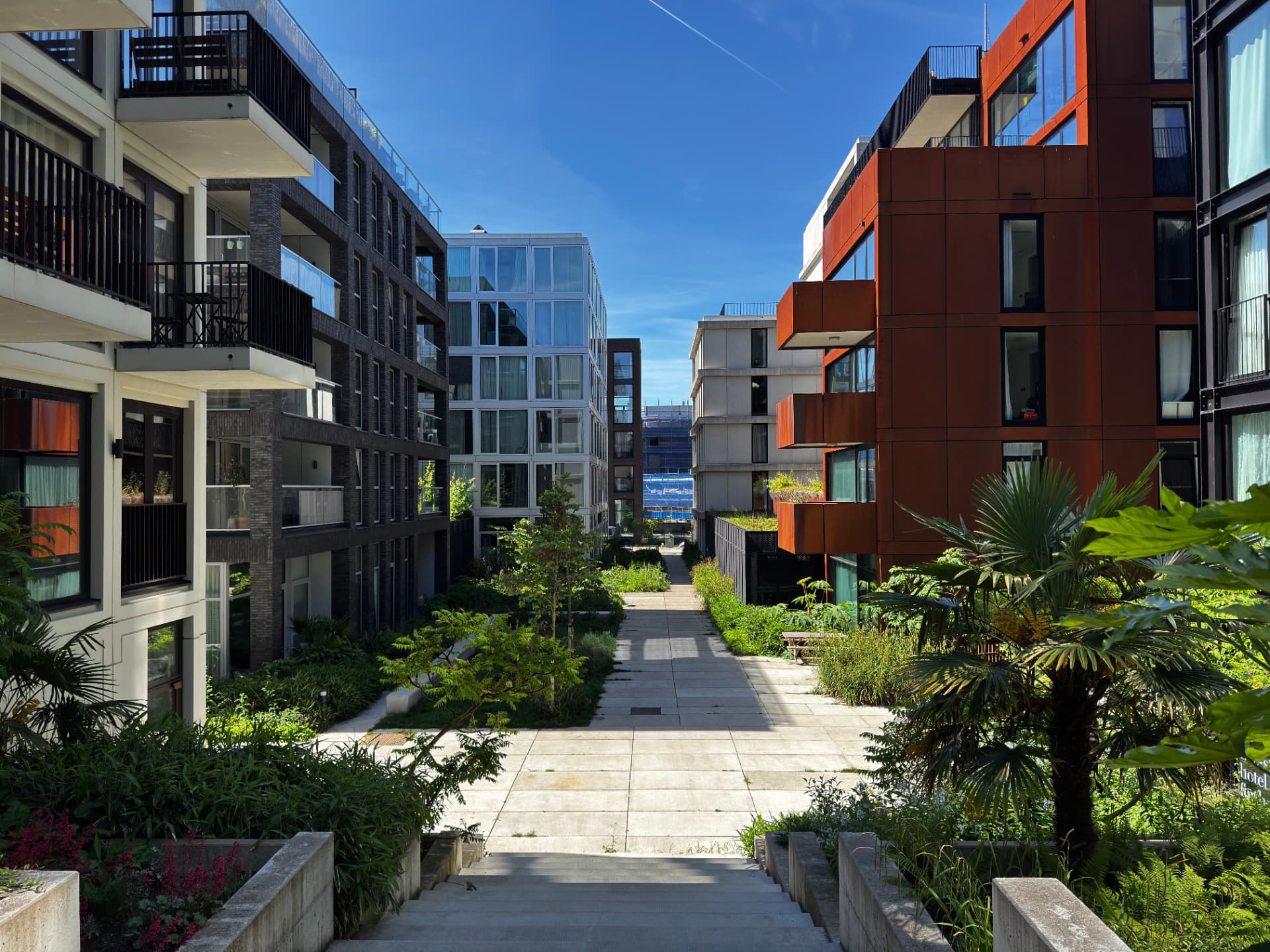
We help structure commercial construction loans in Louisiana for all sorts of projects: multifamily, industrial, retail, and office developments. We’ve got options like interest-only draw periods, SBA 504 ground-up financing, and even construction-to-permanent loans that seamlessly transition, all specifically built for what the local market needs.
Key Takeaways: Louisiana Commercial Construction Financing
- Flexible Debt Structures: You’ll find options like typical construction-to-permanent loans, SBA 504 packages for new builds, and interest-only draw facilities.
- Capital Requirements: Regular conventional loans cap out around 70% to 75% of your total project cost (LTC), but SBA 504 programs can get you up to 85% to 90% LTC if it’s for real estate your business will occupy.
- Louisiana Environmental & Elevation Factors: When we underwrite, we really dig into things like Base Flood Elevation (BFE), FEMA flood zone maps, the need for mandatory windstorm and flood insurance, and those ASTM E1527-21 Phase I ESAs.
- Interest Reserve Integration: We build in an interest reserve to cover floating-rate debt service. That way, you’re not draining your cash flow during that 12-to-18-month construction period.
Navigating Commercial Construction Financing in Louisiana Markets
Developing commercial real estate across Louisiana means truly understanding the local economic drivers, the specific demands of site preparation, and the unique physical landscape. Think about the logistics and industrial hubs along I-10 and I-12, running from Lake Charles all the way through Baton Rouge, Lafayette, and the Northshore. Then you’ve got urban infill projects happening in New Orleans. Building anything new from the ground up in these places absolutely requires a perfect match between a sponsor’s equity and the debt structure. We encourage you to review our Louisiana commercial real estate financing options; we’ve got programs designed specifically for these regions.
When you’re building commercial properties in South Louisiana from scratch, you’ll encounter some specific environmental and geographical challenges. These directly impact how capital gets allocated. The soil conditions, often alluvial silt and river delta basins, typically demand significant sub-surface engineering. This could mean pre-cast concrete pilings, periods of soil surcharge, and engineered structural fill before you can even begin vertical construction. These physical requirements can increase both your soft and hard cost budgets. That means you need loan structures that can handle these longer site-preparation phases. Also, local municipal permitting timelines, parish-level zoning overlays, and regional labor dynamics all mean that your construction capital absolutely must have built-in flexibility.
Our job as capital advisors is to connect commercial real estate sponsors with the right capital providers. When we’re looking at projects in Louisiana, local commercial banks, regional financial institutions, and national capital pools don’t just look at the project’s financials. They also consider the developer’s track record within these very specific local markets. Putting together the right commercial construction loan means finding that sweet spot between getting the highest possible advance rates and keeping debt service manageable during both the build-out and stabilization phases.
Key Structuring Parameters: LTC, LTV, and Interest Reserves
Lenders weigh the risks of new commercial construction using two main metrics: Loan-to-Cost (LTC) and Loan-to-Value (LTV). Both measure financial exposure, but LTC is usually the main cap during the actual construction phase.
- Loan-to-Cost (LTC): For standard commercial construction loans in Louisiana, the maximum financeable amount usually sits between 70% and 75% of the total project costs. “Total project cost” includes everything: land acquisition (or its equity value), hard construction costs, soft costs (like architectural, engineering, legal, and permitting fees), and your contingency reserves.
- Loan-to-Value (LTV): Once your project is finished and stabilized, lenders will look at its appraised market value. Standard underwriting typically limits the loan size to 75% to 80% of that projected “as-completed” or “as-stabilized” market value. This makes sure there’s enough equity cushion once the property is fully up and running.
Since a new commercial real estate project doesn’t generate income during construction, lenders require an interest reserve. This reserve is funded directly as part of your total project loan budget. It covers your floating-rate debt service obligations throughout the construction period, so you’re not pulling out-of-pocket cash before tenants start leasing up.
To figure out the size of an interest reserve, we model the expected construction schedule alongside a realistic draw timeline. You’re not paying interest on the entire loan balance from day one. Instead, interest is charged only on the funds drawn down month by month, following the Schedule of Values. Lenders usually calculate interest reserves based on an average outstanding balance factor—typically 50% to 60% of the total loan balance over an estimated 12-to-18-month construction period. They’ll also stress-test this against potential rate changes in benchmark indexes like the Secured Overnight Financing Rate (SOFR) or the Prime Rate. Our guide on commercial construction loan rates has updated benchmark pricing models you can check out.
Once construction wraps up and the property starts to get occupied, lenders will look at commercial debt coverage metrics to convert the debt into a permanent facility. The key threshold here is the Debt Service Coverage Ratio (DSCR), which is your net operating income (NOI) divided by your annual debt service. In Louisiana, standard commercial underwriting guidelines require a minimum post-stabilized DSCR of 1.25x or higher, based on our projected market rents and operating expenses.
Ground-Up SBA 504 vs. Conventional Construction-to-Permanent Loans
Choosing the best debt option really depends on who will be occupying the property. If it’s an owner-occupied commercial property—meaning an operating business will use at least 60% of the usable space once a new build is complete—then the SBA 504 loan program offers higher financing compared to traditional bank debt.
| Loan Feature | Conventional Construction Loan | SBA 504 Ground-Up Program |
|---|---|---|
| Max Leverage (LTC) | 70% – 75% | 85% – 90% |
| Occupancy Requirement | Could be non-owner occupied or speculative | Must be 60%+ owner-occupied for a new build |
| Structure | One bank loan (interest-only during draw phase) | 50% Senior Bank Loan / 35-40% CDC-SBA Debenture / 10-15% Equity |
| Permanent Rate Term | Floating conversion or 5-10 year fixed rate term | 20- or 25-year fixed rate fully amortizing debenture |
| Closing Mechanism | Single-close or two-phase closing options | Two-phase closing (interim bank construction loan, SBA debenture takes out second position at completion) |
For business owners who will occupy their own property, an SBA 504 structure can drop their equity requirements down to just 10% or 15% of the total project cost. This is great because it lets businesses keep cash for operations and working capital. The way it works is a first-mortgage commercial bank loan covers 50% of the costs, a second-mortgage debenture backed by the SBA covers up to 40%, and then the business owner puts in their equity.
For projects driven by investors—like multi-tenant industrial parks, suburban retail centers, or market-rate multifamily developments—conventional construction-to-permanent loans are still the go-to. You can set these up either with a single closing or a two-phase closing process:
- Single-Close Construction-to-Permanent Loans: With this, one single closing event covers both the 12-to-18-month interest-only construction phase and the following 5-to-10-year term financing. This saves you money on closing fees, title update expenses, and extra underwriting requirements. Plus, if you lock in an interest rate swap or fixed conversion clause at the beginning, you effectively eliminate interest rate risk once the project is done.
- Two-Phase Closing Mechanics: In a two-phase setup, a regional commercial bank provides short-term, floating-rate construction financing. Once the physical construction is complete and you hit your target occupancy (usually 85% to 90% stabilized occupancy for 90 days), you refinance that construction loan into a long-term capital option. This could be a national agency lender program (like Fannie Mae, Freddie Mac, or HUD/FHA) for multifamily properties, or a different long-term institutional mortgage for industrial and retail properties.
Underwriting Louisiana Environmentals, Flood Zones, and Insurance
When we’re underwriting commercial real estate construction in Louisiana, we really have to dig into some rigorous physical risk assessments. This means paying special attention to flood plain classifications, coastal insurance structures, and the environmental history of the site.
Federal Emergency Management Agency (FEMA) flood zone definitions heavily influence site design, structural engineering, and underwriting approval across Louisiana parishes. If your property is in a Special Flood Hazard Area (SFHA)—which includes Zones A, AE, AH, and coastal VE zones—you’ll need specific construction methods and civil engineering verification:
- Base Flood Elevation (BFE): Lenders will absolutely require an official Elevation Certificate, stamped by a licensed land surveyor. This document confirms that the finished floor elevation (FFE) of all your proposed commercial structures is at or above the established Base Flood Elevation. Many local municipalities, like Jefferson Parish, Orleans Parish, and East Baton Rouge Parish, even have their own ordinances requiring “freeboard”—meaning your finished floor elevations need to be 1 to 3 feet higher than what FEMA dictates.
- Civil Engineering Surcharges: Meeting BFE compliance often means extensive site filling, putting in retention ponds, and setting up stormwater management systems. These things all need to be clearly itemized in your initial budget.
Insurance underwriting has truly become a major factor in whether a loan is even possible in South Louisiana. Before we can even authorize an initial construction loan closing or approve that first construction draw, lenders demand comprehensive proof of pre-construction insurance coverage:
- Builder’s Risk Insurance: This absolutely must cover 100% of the completed contract value on a non-reporting, dedicated form. It needs to include endorsements for transit and off-site storage.
- Named Storm / Windstorm Deductibles: Standard policies in coastal areas come with separate, percentage-based deductibles for named storms. These are typically set between 2% and 5% of the total insurable value, not just a flat dollar amount. Underwriters carefully review these deductible limits to make sure you have enough liquidity to cover potential deductible losses during construction.
- Flood Insurance Policies: Any commercial property located within an SFHA designation must carry mandatory flood insurance coverage. This can be through the National Flood Insurance Program (NFIP) or qualified private insurer markets, with limits equal to the maximum available under the NFIP or the full loan balance, whichever is less.
Environmental due diligence means getting a Phase I Environmental Site Assessment (ESA) done, following current ASTM E1527-21 standards. Louisiana, with its long history of industrial activity, agriculture, and timber operations, often means these Phase I reports will flag potential Recognized Environmental Conditions (RECs). If a Phase I does find an REC—say, old underground storage tanks or leftover agricultural chemical residues—then a Phase II Environmental Site Assessment, which involves soil and groundwater testing, becomes mandatory before we can approve the credit. At the same time, you’ll need a geotechnical soil report with deep core borings. This tells us the subsurface soil bearing capacity, which helps us decide whether standard spread footings or driven timber/concrete pilings are necessary.
Worked Capital Breakdown: A $5M Industrial Development Example
Let’s walk through an example to see how all these capital components fit together. Imagine a sponsor developing a 40,000-square-foot shallow-bay industrial warehouse in the Baton Rouge industrial corridor. Here’s a look at the itemized budget, equity requirement, and the debt structure we put together for that project.
| Budget Item | Underwritten Cost | Percentage of Total |
|---|---|---|
| Land Acquisition (3.5 Acres) | $800,000 | 16.0% |
| Hard Construction Costs (Core, Shell, Buildout) | $3,600,000 | 72.0% |
| Soft Costs (Architectural, Legal, Civil Engineering) | $350,000 | 7.0% |
| Interest Reserve & Contingency (18 Months) | $250,000 | 5.0% |
| Total Project Cost | $5,000,000 | 100.0% |
Capital Stack Allocation:
- Sponsor Equity Contribution (25% LTC): $1,250,000. The sponsor met this requirement by contributing $450,000 in land equity they already owned, plus $800,000 in cash equity deposited into the loan escrow account before the first construction draws.
- Senior Construction Loan (75% LTC): $3,750,000, set up as a commercial construction-to-permanent facility.
Execution Metrics and Amortization Structure:
- Construction Phase: An 18-month interest-only draw facility, priced at a floating rate of 30-Day SOFR + 3.50%. Interest payments were made monthly using the $250,000 interest reserve built into the loan.
- Permanent Conversion: Once the physical construction was done, the Certificate of Occupancy (CO) was issued, and the project maintained a minimum 1.25x DSCR over a 90-day test period, the loan automatically converted into a 25-year fully amortizing permanent commercial loan at a fixed interest rate.
Required Documentation Checklist for Commercial Construction Loans
Having all your detailed pre-underwriting documents ready speeds up loan approvals and helps avoid closing delays. Lenders need a thorough package that covers site control, contractor qualifications, environmental reviews, and your sponsor’s financial statements.
- Site Control and Municipal Approvals:
- Your recorded land purchase contract, deed, or proof that you own the site free and clear.
- Approved municipal site plans, local parish zoning approvals, and land-use permits.
- All your civil architectural, structural, and MEP (Mechanical, Electrical, Plumbing) engineering drawings, fully executed.
- Contractor and Hard Cost Submissions:
- Your executed General Contractor (GC) construction agreement, typically an AIA A101 or A102 Fixed Price or Guaranteed Maximum Price (GMP) contract.
- A detailed AIA G702/G703 Schedule of Values, broken down by line item and trade.
- The General Contractor’s profile, showing their past commercial projects, references, and verification of their balance sheet or bonding capacity.
- Sponsor and Guarantor Financial Documentation:
- Three consecutive years of filed business and personal federal tax returns for everyone with 20% or more ownership.
- Current Personal Financial Statements (PFS) for all individual guarantors, certified within 60 days.
- A Schedule of Real Estate Owned (REO), detailing debt obligations, current Net Operating Income (NOI), maturity dates, and liquidity for any existing holdings.
- Third-Party Environmental and Technical Reports:
- A comprehensive Phase I Environmental Site Assessment (ESA) done according to ASTM E1527-21 guidelines.
- A Geotechnical Soil Investigation and Engineering Report, giving recommendations for foundation and piling design.
- A FEMA Flood Elevation Certificate, prepared by a registered civil engineer or surveyor.
- Pre-Closing Insurance Bindings:
- Your Builder’s Risk policy binder, including windstorm/named storm coverage.
- A General Liability insurance certificate, naming the financial institution as Loss Payee and Additional Insured.
- A flood insurance policy or application if your property is in a designated Special Flood Hazard Area (SFHA).
Managing the Construction Draw Process and Closing Timelines
To pull off a new commercial construction loan, you need to follow a very specific timeline, from signing the initial term sheet all the way to final debt conversion. Understanding these key milestones is crucial to keeping your project on track.
A typical commercial construction loan closing takes about 45 business days from the time the term sheet is signed:
- Days 1 – 15 (Underwriting & Third-Party Engagement): This is when we start the loan file underwriting. We immediately order independent third-party reports, which include the commercial appraisal, Phase I ESA, geotechnical audit, and the structural plan/cost review (PCR).
- Days 16 – 30 (Credit Committee & Documentation): You’ll have a formal Credit Committee presentation, and then the loan gets approved. Legal counsel starts drafting loan documents, and we review all the insurance certificates, GC contracts, and title commitments.
- Days 31 – 45 (Closing & Initial Funding): This is the final loan closing and execution of mortgage documents. Your equity capital has to be fully funded first, and then we disburse the initial debt for land closing or any approved soft costs.
Once construction starts, loan funds are disbursed through a structured monthly draw administration process. The general contractor sends in a formal payment application using standard AIA G702 (Application and Certificate for Payment) and AIA G703 (Continuation Sheet) forms. These detail the percentage of work completed for each line item during that billing cycle.
Before any monthly draw request gets approved and funded, an independent third-party construction inspector, hired by the lender, visits the project site. This inspector verifies that the physical work listed on the AIA G702 actually matches the progress on the ground before any draw funds are released.
At the same time, a title company performs a monthly title search update (a “date-down endorsement”). This is to confirm that no mechanic’s liens or vendor claims have been filed against the property. Lenders routinely hold back 10% (called retainage) from every monthly draw payment request. This cumulative 10% retainage is kept in escrow throughout construction and is only released to the general contractor once the project is fully completed, a Certificate of Occupancy (CO) is secured, and all subcontractors have provided their final conditional lien waivers.
Regional Geographic Service Areas in Louisiana
We’re proud to work with commercial developers and owner-occupied businesses across all the main economic growth corridors and parishes in Louisiana:
- Baton Rouge Metropolitan Area: That includes East Baton Rouge, West Baton Rouge, Ascension, and Livingston Parishes (the I-10 / I-12 Industrial Corridor).
- Greater New Orleans & Northshore: We cover Orleans, Jefferson, St. Bernard, St. Charles, and St. Tammany Parishes.
- Acadiana & Lafayette Region: This means Lafayette, Acadia, Iberia, and St. Martin Parishes.
- Lake Charles & Southwest Industrial Belt: Calcasieu and Cameron Parishes are in our service area.
- North Louisiana Growth Hubs: We’re also active in the Shreveport-Bossier City, Monroe, and Alexandria metros.
Frequently Asked Questions
What are current commercial construction loan rates in Louisiana?
Commercial construction loan rates in Louisiana usually fall between Prime + 0.50% to Prime + 1.50%, or SOFR + 300 to 450 basis points for traditional bank financing. This really depends on how much you’re borrowing, the borrower’s experience, and what kind of property it is.
What down payment is required for a commercial construction loan?
Lenders generally expect you to contribute 15% to 30% of the total project cost in equity (that’s 70% to 85% Loan-to-Cost). However, if you’re an owner-occupant using the SBA 504 program, you can get ground-up construction financing with as little as a 10% to 15% equity down payment.
Can you use an SBA loan for commercial ground-up construction in Louisiana?
Yes, absolutely! The SBA 504 program lets commercial real estate developers and owner-occupied businesses finance new construction from the ground up, including land purchase, site improvements, and long-term equipment. You can get up to 90% of the total project financed across Louisiana.
How does a commercial construction-to-permanent loan work?
A construction-to-permanent loan basically rolls your short-term construction financing and your long-term debt into one package, or it can be a smooth two-phase closing. During the 12-to-18-month construction phase, you make interest-only payments as work progresses. Then, once the project is completed and stabilized, it automatically converts to a fixed-rate, amortizing permanent loan.
References
Sources reviewed while researching commercial construction loans louisiana, taken from the US search results on 2026-10-04.
- Construction Loans | Home Bank | Lafayette, Baton Rouge, New Orleans — home24bank.com
Commercial Real Estate Loans. New Construction with Builder contract – up to 90% LTV New Construction with Self-contracting – up to 80% LTV Purchase or … - Commercial Construction Loans in Louisiana – Metairie Bank — metairiebank.com
Metairie Bank offers commercial construction loans with competitive rates, flexible terms, and advance rates up to 80%. Talk to a local Louisiana lender. - Construction Loans | Gulf Coast Bank & Trust — gulfbank.com
offering construction mortgage loans in metro New Orleans & Baton Rouge. Maximum loan-to-value (LTV) 90% on eligible properties. Required loan term 18 months. - Construction Loans | LA Land Loan or Land Purchase – Bonvenu Bank — bonvenubank.com
Get preapproved for your Louisiana land purchase, construction and permanent financing with a loan at competitive rates from Bonvenu Bank. Apply online. - Commercial Real Estate Loans | New Orleans, Baton Rouge, Slidell – LA — bankwithfidelity.com
Competitive fixed and adjustable rates for the purchase, refinance, or construction of commercial properties · Terms up to XX · Repayment terms customized to fit … - Home Construction Loans in Louisiana – Metairie Bank — metairiebank.com
Metairie Bank can provide financing from $100,000 to $4,000,000 through a one-closing construction loan. Call us at 504-834-6330 or 985-674-2255, - Commercial Real Estate Loan – Centric Federal Credit Union — mycentric.org
Competitive rates for the purchase, refinance, or construction of commercial properties Available for owner-occupied or investment properties Repayment - Louisiana Construction Lenders for Residential Properties — privatelenderlink.com
Louisiana is 70%. We have a separate page for lenders that offer ground-up construction financing for commercial properties. Amounts $15,000 – $5,000 … - Business & Industry Loan Guarantees in Louisiana – Rural Development — rd.usda.gov
Application Deadline. Applications are accepted for processing from Lenders on an ongoing basis from October 1 – September 30. Good to Know: - Commercial Construction Loans: Conventional and SBA504 — avanacapital.com
Our conventional and SBA 504 commercial construction loans help entrepreneurs build hotels, multi-use offices or assisted living facilities.
SERP features this page targets
| Feature | Likelihood | How this page wins it |
|---|---|---|
| Featured Snippet (Paragraph) | 85% | Definition & Program Overview Paragraph |
| People Also Ask Block | 90% | Accordion FAQ Block with H3 Questions |
| AI Overview | 80% | Structured Bulleted Summary & Key Takeaways |
| Local Map Pack | 65% | Geographic Service Area & Regional Office Block |
| Organic Sitelinks | 75% | Table of Contents with Internal Anchor Links |