
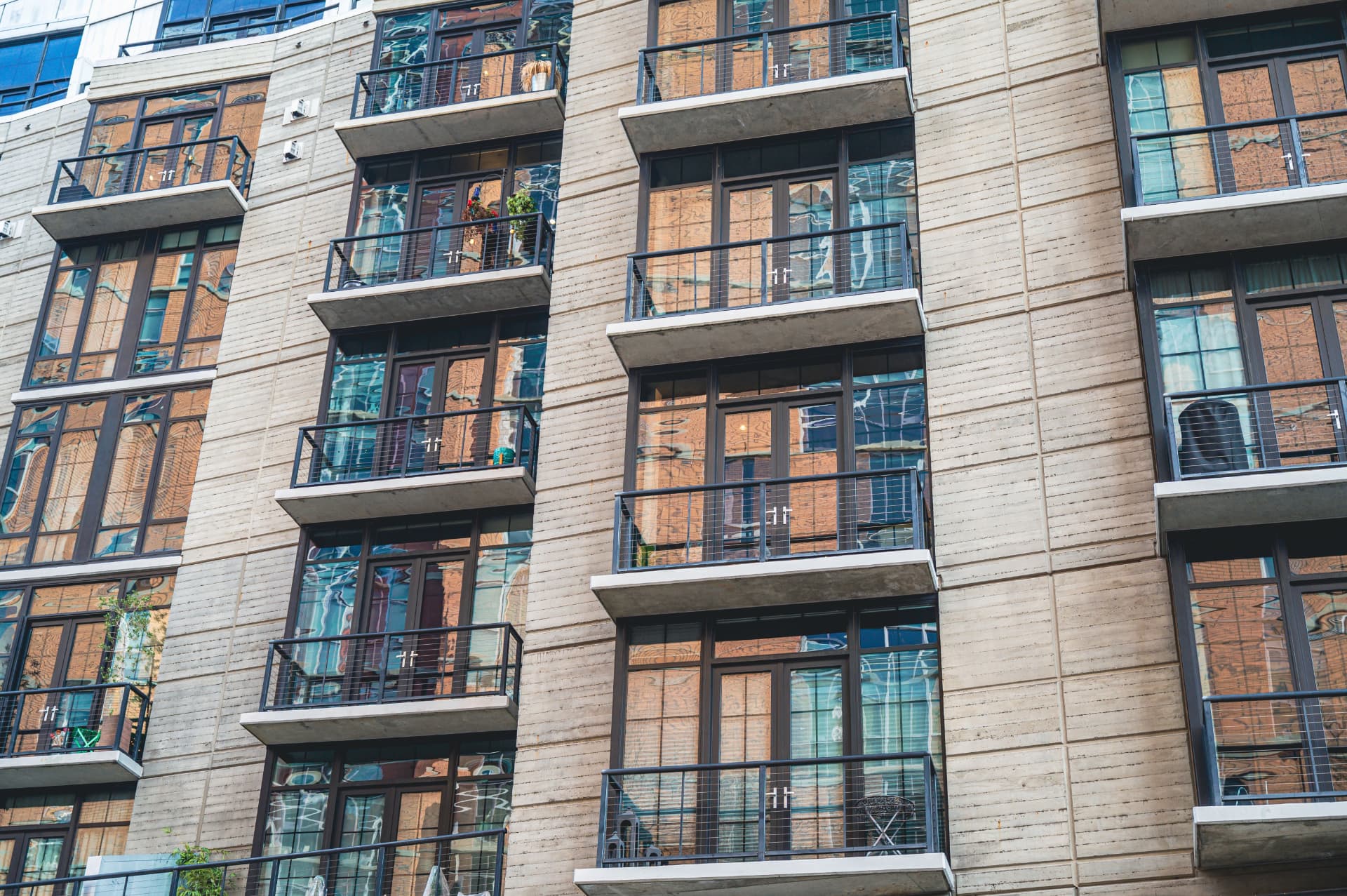
Warehouse construction financing through Thorne CRE provides developers, logistics operators, and owner-occupants with structured ground-up development capital, expansion debt, and comprehensive construction-to-permanent loan facilities. We fund industrial warehouses, distribution hubs, cold storage facilities, and flex-industrial parks across the United States. Our capital programs offer loan-to-cost (LTC) ratios up to 75% to 85%, competitive construction pricing, and seamless transitions into long-term permanent mortgages.
Warehouse Construction Thorne Eligibility & Underwriting Conditions
Securing competitive capital for ground-up warehouse development requires satisfying structured underwriting standards designed around project feasibility, sponsor net worth, and delivery timelines. When assessing a prospective warehouse build, our capital markets advisory team evaluates four primary pillars:
- Sponsor Financial Strength and Experience: Developers must demonstrate a minimum net worth equal to or exceeding the requested loan balance, alongside post-closing liquidity typically covering 9 to 12 months of principal, interest, taxes, and insurance (PITI). A proven track record of delivering light industrial or warehouse projects on schedule and within budget is mandatory.
- Loan-to-Cost (LTC) and Loan-to-Value (LTV): Senior construction facilities generally fund between 65% and 80% LTC. When combined with subordinate capital or programmatic equity, leverage can reach 85% to 90% of total qualified project costs. As-stabilized LTV covenants typically cap between 65% and 75%.
- Debt Service Coverage Ratio (DSCR): Underwritten pro-forma operations must project a minimum stabilized DSCR of 1.25x to 1.35x based on prevailing market cap rates and documented lease assumptions. For projects generating post-stabilization revenue, our guide on DSCR loans fueling growth for income-producing real estate details how coverage ratios govern exit debt sizing.
- Pre-Leasing & Market Feasibility: Speculative warehouse construction requires stringent submarket absorption metrics and low industrial vacancy rates. Owner-user facilities require verifiable business operations, while multitenant or logistics hubs benefit substantially from partial pre-leasing commitments.
Warehouse Construction Financing Structures & Benchmark Metrics
Industrial builds vary from single-tenant regional distribution centers to high-clearance speculative logistics centers. The table below illustrates standard 2024–2025 underwriting benchmarks across our primary warehouse debt options:
| Financing Structure | Typical LTC Range | Pricing & Interest Structure | Term Length | Best Suited For |
|---|---|---|---|---|
| Conventional Senior Construction | 65% – 75% LTC | SOFR + 275–425 bps (Floating) | 24 – 36 months (with extensions) | Experienced developers building speculative or pre-leased industrial assets. |
| SBA 504 Construction-to-Perm | Up to 90% LTC | Fixed rate on debenture, Prime on interim | 20 – 25 years (Permanent note) | Owner-occupants occupying ≥ 51% of the warehouse facility upon completion. |
| Mezzanine / Preferred Equity Stretch | 75% – 88% LTC | 11.00% – 14.50% All-in coupon/PIK | Co-terminus with senior loan | Developers optimizing equity yields or bridging capital gaps in large-scale builds. |
| Bridge-to-Stabilization Facility | Up to 80% LTC / As-is value | SOFR + 350–550 bps | 12 – 24 months | Repositioning, structural expansions, or fast close land acquisitions prior to permit issuance. |
Worked Example: Ground-Up Distribution Center Financing
Consider an experienced logistics sponsor executing a 120,000-square-foot modern tilt-up distribution center with a total project budget of $18,500,000 (including horizontal sitework, hard construction, soft costs, and a 10% contingency reserve):
- Senior Construction Facility (70% LTC): $12,950,000 funded on a milestone draw schedule across an 18-month construction period, followed by a 12-month lease-up extension.
- Mezzanine Debt Tranche (15% LTC): $2,775,000 structured to minimize initial equity requirements.
- Sponsor Equity (15% LTC): $2,775,000 in unencumbered sponsor cash and imputed land value.
- Stabilized Takeout Plan: Upon 92% tenant occupancy and clear certificates of occupancy, the facility refinances into long-term fixed debt. Borrowers evaluating this transition can review expert tips for choosing the right commercial loan to lock in viable takeout structures.
Direct Steps to Begin Your Warehouse Financing Request
To initiate a loan sizing or obtain an indicative term sheet for your warehouse construction project, our team requires an initial project package. Contact us through the direct channels below with the following materials:
- Executive Summary & Site Plan: Parcel acreage, zoning status, clear heights, dock doors, and building plans approved or submitted to local municipalities according to standards recognized by the Commercial Real Estate Development Association (NAIOP).
- Detailed Sources & Uses: Line-item hard costs, architect/engineering soft fees, development reserves, and carrying costs.
- Sponsor Financials: Personal financial statements (PFS), scheduled real estate owned (SREO), and resumes of the general contractor and developer.
- Market & Lease Strategy: Feasibility studies, letters of intent (LOIs), or executed tenant leases.
Contact Thorne CRE: Commercial Real Estate Financing Specialists
To contact Thorne CRE for commercial real estate financing inquiries or immediate project analysis, reach out by phone at (555) 123-4567, email at [email protected], or complete our online inquiry intake form below. Our corporate lending desk is located at 123 Main Street, Suite 400, Anytown, USA 12345, open Monday through Friday from 9:00 AM to 5:00 PM EST.
Primary Contact Methods
- Phone: Call (555) 123-4567 during standard business hours to connect immediately with a capital advisor regarding industrial or commercial financing.
- Email: Send preliminary budgets, pro formas, and offering packages to [email protected] for a formal review within one business day.
- Online Form: Submit initial project details online anytime to arrange an advisory consultation regarding your commercial capital stack.
Office Location and Business Hours
Thorne CRE Headquarters
123 Main Street, Suite 400
Anytown, USA 12345
- Monday – Friday: 9:00 AM – 5:00 PM EST
- Saturday – Sunday: Closed
- Public Holidays: Closed
Comprehensive Commercial Real Estate Financing Products
Thorne CRE provides structured debt and equity solutions tailored to commercial property investments and industrial developments, assisting sponsors in navigating complex capital stacks efficiently:
- Warehouse & Industrial Construction Loans: Milestone-based progressive draw funding for ground-up developments, build-to-suits, cold storage hubs, and substantial logistics additions.
- Commercial Mortgage Loans: Permanent debt financing for stabilized acquisitions, portfolio additions, and cash-out recapitalizations. Learn more by reviewing our guide on 5 signs your business is ready for a commercial mortgage.
- Owner-Occupied SBA Facilities: Cost-effective government-backed programs such as SBA 504 vs 7(a) owner-occupied property loans administered via the U.S. Small Business Administration. We also structure SBA 504 refinancing for owner-occupied commercial real estate.
- Bridge Financing: Short-term, flexible debt designed to bridge land entitlement phases, repositioning periods, or expedited property acquisitions.
- Mezzanine Debt & Preferred Equity: Subordinated loan structures positioned behind senior construction debt to preserve liquidity and boost internal rates of return (IRR).
- Revolving Credit & Working Capital: Flexible credit tools to cover site prep or payroll buffers; explore our analysis on custom credit lines for operational flexibility.
- Broker Referral Network: We collaborate with dealmakers across the country, honoring established standards outlined in our breakdown of SBA loan referral fees for commercial real estate brokers.
- Permanent DSCR Facilities: Non-recourse and portfolio instruments designed around property cash flows; review our detailed look at DSCR loans for income-producing properties.
Frequently Asked Questions
What types of warehouse construction projects does Thorne CRE finance?
We finance a comprehensive variety of industrial properties, including high-cube regional logistics distribution centers, cold-storage and refrigerated warehouses, flex-space industrial parks, last-mile delivery terminals, and owner-occupied manufacturing plants.
Can I obtain warehouse construction financing with less than 20% equity?
Yes. Owner-occupants utilizing the SBA 504 program can often contribute as little as 10% to 15% equity toward total eligible project costs (land, construction, and equipment). For commercial developers, we can structure senior construction debt alongside mezzanine debt or programmatic preferred equity to limit the direct sponsor equity requirement to 10% to 15% LTC.
How does the draw inspection process work during warehouse construction?
Construction funds are disbursed monthly on a progress-draw schedule. After work is performed, your general contractor submits AIA G702/G703 forms and lien waivers. An independent third-party inspector visits the job site to verify completed work, after which funds are released within 3 to 5 business days.
Why should a developer choose a boutique CRE debt advisor over a direct bank?
Working with a boutique firm allows you to access institutional capital across national life insurance companies, debt funds, regional balance sheet lenders, and SBA programs simultaneously. For an in-depth view of how this provides leverage, read our insights on why choose boutique CRE finance with Thorne CRE.
How long does it take to close a warehouse construction loan?
From complete submission of construction plans, budget, and environmental reports, closing typically takes between 45 and 75 calendar days. Accelerated bridge funding for shovel-ready land acquisitions can close in as few as 21 to 30 days.
Connect with Thorne CRE Online
Follow company updates, economic insights, and industrial lending market commentary directly through our corporate channels. Reach out to our team today to evaluate your upcoming warehouse development.