
In short
Fix-and-flip bridge loans are often the same kind of short-term real estate debt, but the name alone does not tell an investor if renovation money is included. Choose a structure that matches the acquisition, rehab funding method, valuation basis, project timeline and repayment plan, then test it against a delayed sale or refinance.
- A bridge loan may fund only the purchase, while a fix-and-flip structure may also commit a rehabilitation budget.
- ARV can affect loan sizing, but ARV is a projection and does not replace a complete scope, cash reserve or sale plan.
- Draw timing matters because contractors need cash before the finished property can create the value assumed in underwriting.
- A bridge structure is only as sound as its exit plan, including the ability to sell or refinance before maturity.
Contents
- Are a fix-and-flip loan and a bridge loan the same thing?
- Does the loan include money for the renovation?
- How do ARV, loan-to-cost and draws change the decision?
- What exit must repay the loan?
- What should you compare before accepting a term sheet?
- Common questions about fix-and-flip bridge loans
- What should you do before making an offer?
Are a fix-and-flip loan and a bridge loan the same thing?

Yes, sometimes. A fix-and-flip loan is often a bridge-style structure when it has a short maturity and repayment depends on a sale or refinance after value creation.
The meaningful difference is not the label on the marketing page. It is what the loan agreement actually funds and what must happen before the debt comes due.
An acquisition bridge loan can be appropriate when the property needs to close quickly, the investor can fund the work separately, and the exit is clear. A renovation-focused loan can be more appropriate when the project budget needs to be part of the financing request from the start.
Ask four direct questions before treating two offers as comparable:
- Does the loan fund only the purchase, or does it include a committed rehabilitation budget?
- If it includes rehab funds, are they advanced at closing or released after work is completed?
- Is the loan sized from current value, purchase cost, projected finished value, or a combination?
- Is repayment expected from a resale, a rental refinance, another property sale, or borrower liquidity?
A loan can be called a bridge loan and still work well for a flip. It can also be called a fix-and-flip loan while leaving the investor to fund part of the project out of pocket.
For a broader explanation of temporary real estate debt, review these bridge loan fundamentals before comparing project-specific offers.
The right comparison is between cash needs and repayment sources, not between two loan names.
Does the loan include money for the renovation?
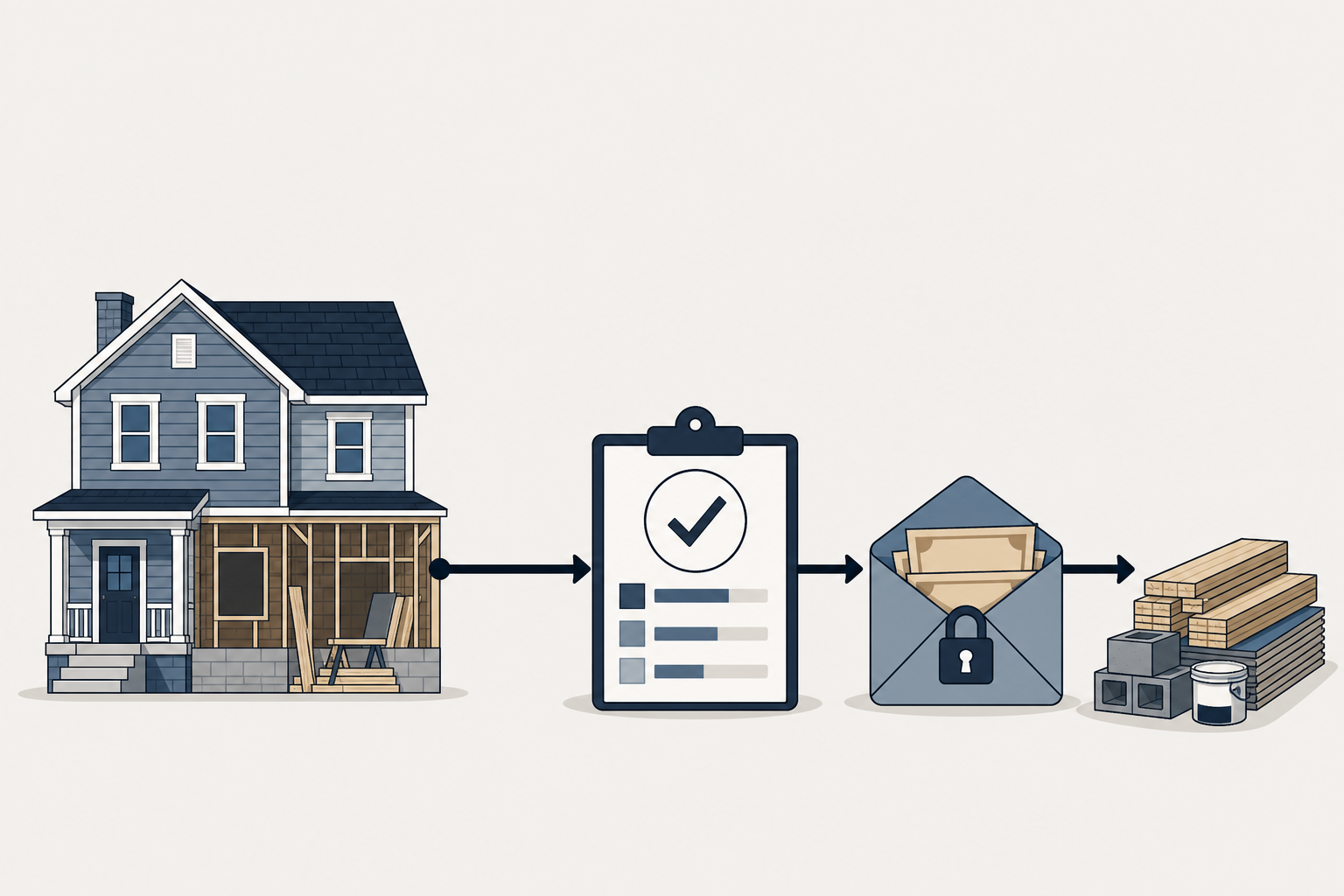
Not always. A bridge loan can be funded only at closing, while a rehab-oriented facility may reserve a renovation budget and release it through draws as work is completed.
That distinction changes the investor's cash requirement, contractor schedule and ability to finish the project on time. A rehab budget that exists only in an estimate is not the same as a committed source of capital.
Public banking guidance describes standard and progress-payment draw plans in which advances are tied to documented work stages and inspections. The same guidance emphasizes that draw controls help confirm that funds are used for the financed project and that advances remain aligned with completed improvements. (occ.treas.gov)
For an investor, the practical question is simple: can the project keep moving while the next draw is being reviewed? If the contractor needs a deposit now but the lender reimburses only completed work, the borrower may need working cash to bridge that gap.
Review the draw process in writing:
- Required inspection, invoice and lien-waiver documentation
- Minimum and maximum draw amounts
- Draw request timing and any processing fees
- Whether the first draw is available at closing
- Which line items are eligible for reimbursement
- What happens if the project scope or budget changes
The loan's renovation feature is only useful when its draw process fits the real construction sequence.
How do ARV, loan-to-cost and draws change the decision?
ARV, loan-to-cost and draws answer different questions, and mixing them together can make a deal look safer than it is. Current value supports the acquisition decision, projected ARV supports the finished-value case, and draw timing determines when renovation cash is actually available.
A lender may consider one or more of these measures, but the investor still has to carry the project through the period between purchase and exit.
What is ARV in real estate? ARV is the estimated value after the planned work is complete, based on the finished condition assumed in the scope and comparable-sale analysis. ARV is not a guaranteed sale price, and it does not pay holding costs while the property is under construction or listed.
Keep three calculations separate:
- Acquisition basis: purchase price, closing costs and immediate cash needed to control the property.
- Project cost basis: acquisition basis plus hard costs, soft costs, financing costs, carrying costs and a contingency reserve.
- Exit basis: a conservative resale or refinance outcome after the work, marketing period and transaction costs.
Federal banking guidance flags speculative real estate credit that depends on collateral appreciation for repayment and calls for credible support for repayment schedules. That is a useful discipline for flips: the deal should still have a defined repayment plan if appreciation is slower or weaker than expected. (fdic.gov)
An ARV-based headline can be helpful, but it should never obscure the cash required before the ARV exists.
What exit must repay the loan?
A fix-and-flip bridge loan normally needs a defined exit before maturity, most often a sale or refinance. The borrower should identify the exit before applying, then test what happens if that exit takes longer than planned.
A sale exit depends on completed work, marketable condition, buyer demand, pricing and closing timing. A refinance exit depends on the finished property, the new lender's underwriting and the investor's ability to qualify when the time comes.
If the property will become a rental after renovation, a longer-term rental loan may be part of the plan. A DSCR loan guide can help investors understand one income-based financing route for eligible rental properties, but it does not replace confirming the refinance criteria before closing the bridge loan.
Build the exit test around three questions:
- What event repays the loan?
- What evidence makes that event credible today?
- What cash, time or alternate financing remains available if it slips?
A strong renovation plan is not enough if the repayment event has no realistic timing buffer.
What should you compare before accepting a term sheet?

Compare the full structure, not just the maximum loan amount. Two offers with the same headline leverage can create very different cash needs, deadlines and consequences if the project changes.
The best term sheet is the one that funds the actual plan while leaving the borrower able to manage normal delays without relying on an optimistic resale outcome.
Use this comparison list before choosing a lender:
- Loan purpose: acquisition only, acquisition plus rehab, refinance, or a combination.
- Rehab funding: committed budget, draw mechanics, documentation, inspection requirements and timing.
- Valuation method: purchase price, as-is value, ARV or the lower of several measures.
- Cash to close: down payment, points, fees, reserves, prepaid items and renovation cash needed before the first draw.
- Payment structure: interest-only or another payment method, plus the amount of monthly carrying cost.
- Maturity and extensions: exact payoff date, extension conditions, extension fees and the consequences of missing maturity.
- Exit assumptions: sale price, refinance terms, time to market and the cash reserve available if the exit is delayed.
- Guaranties and recourse: who is responsible if the project does not perform as planned.
The Office of the Comptroller of the Currency notes that higher costs and completion delays can weaken repayment capacity in development and construction lending. That warning applies to a flip's practical financing plan even when the loan product has a different name. (occ.treas.gov)
A term sheet should make the investor's required cash and deadline risk clearer, not harder to see.
Common questions about fix-and-flip bridge loans
The answers below address common questions, but a lender's written term sheet and the investor's own legal, tax and financial advisers should guide a specific transaction.
Are fix and flip loans worth it?
Fix-and-flip loans are worth considering only when the expected project margin still covers financing, purchase, rehab, holding, selling and contingency costs after a conservative exit value. The decision is not whether debt is cheap. The decision is whether the project remains viable if work takes longer or the exit price is lower than planned.
What credit score do you need for a fix and flip loan?
Fix-and-flip lenders set their own qualification standards, so no single score guarantees approval. The Consumer Financial Protection Bureau says a credit score is only one factor in mortgage decisions, and federal commentary does not prescribe a minimum score that every creditor must apply. Ask how credit, liquidity, experience, property and exit plan are weighed. (consumerfinance.gov)
What does Dave Ramsey say about bridge loans?
Ramsey's published consumer home-buying guidance characterizes bridge loans tied to two home sales as extra risky because timing is unpredictable. That advice addresses personal home moves, not a business-purpose flip facility. The caution still applies: do not borrow against an exit that cannot be carried if the sale is delayed. (ramseysolutions.com)
How long do fix and flip loans last?
No universal term applies to fix-and-flip loans. Choose a maturity that covers acquisition, permitted rehab time, marketing, sale or refinance, plus a realistic delay buffer. Confirm extension availability, extension pricing, maturity payoff and default provisions before closing, because a strong project can still lose flexibility near a hard maturity date.
What should you do before making an offer?
Before making an offer, line up the purchase price, detailed rehab scope, draw schedule, cash-to-close estimate and one credible repayment path. If the plan only works under the best possible timeline and resale price, the financing is too tight.
For a deal-specific review of bridge financing and fix-and-flip loan structures, contact Thorne CRE with the property, purchase contract, renovation budget, timeline and intended exit. This article is educational and is not legal, tax, investment or lending advice.
The best fix-and-flip bridge loan is the one that funds the work, preserves enough cash to finish it and can be repaid without an optimistic assumption doing all the work.