
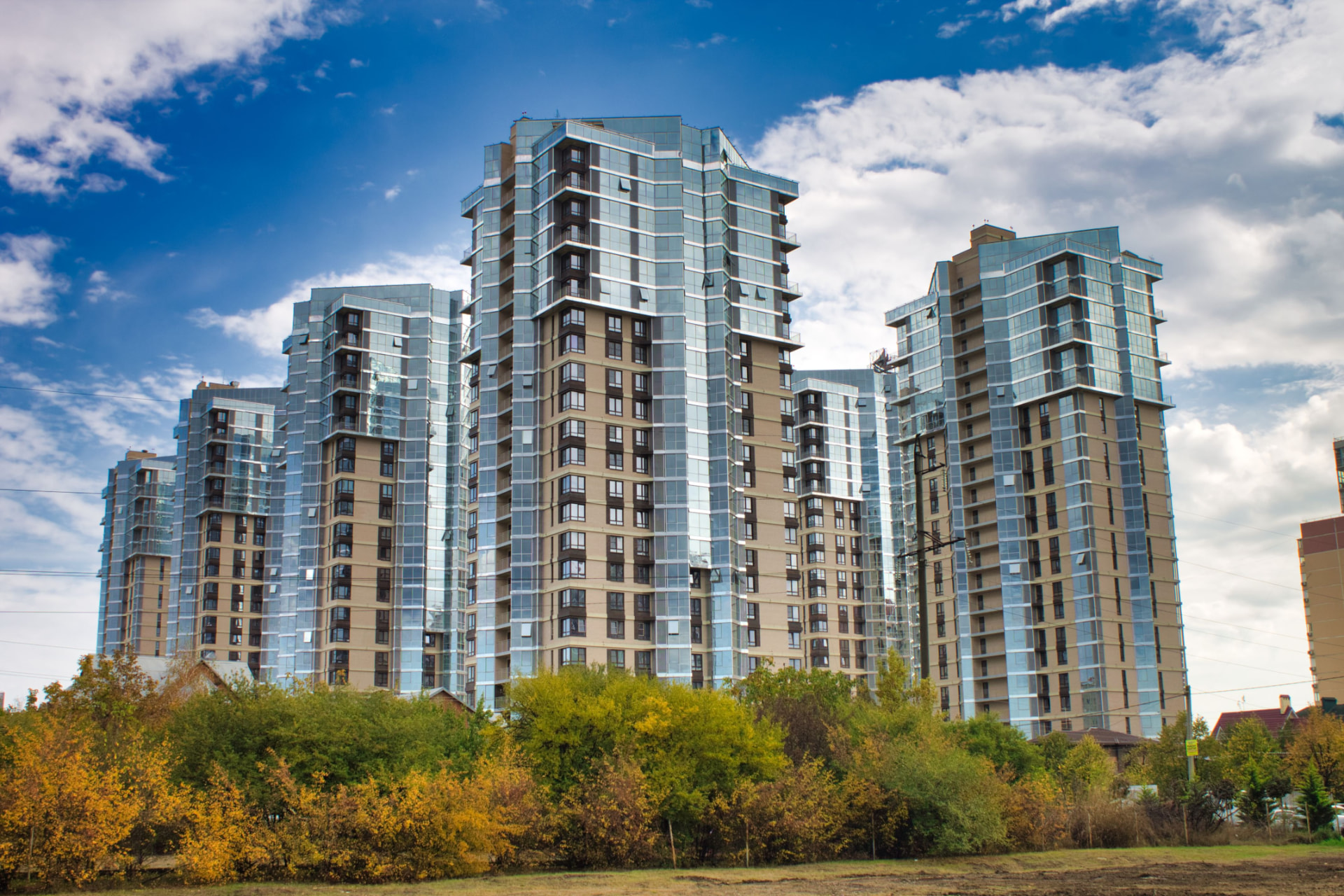
Ground-up construction loans in Philadelphia provide short-term financing covering land acquisition, site development, hard costs, and soft costs. Typical terms range from 12 to 36 months, offering up to 80% to 85% Loan-to-Cost with milestone-based draw schedules.
Key Takeaways
- Leverage Limits: Depository banks finance 65% to 75% LTC with recourse, while private debt funds provide 75% to 85% LTC on a non-recourse basis.
- Local Timing Requirements: Philadelphia Department of Licenses and Inspections (L&I) and Philadelphia Water Department (PWD) reviews require an additional 3 to 6 months of capitalized carry and interest reserves.
- Land Equity Value: Unencumbered sites owned for 12+ months receive equity credit based on appraised “as-is” market value rather than acquisition cost, often covering 100% of the sponsor’s required cash equity.
- Draw Administration: Capital is disbursed monthly via AIA G702/G703 progress billing subject to third-party engineering audits, title bring-downs, and a mandatory 10% retainage withhold.
What Are the Core Terms for Ground-Up Construction Loans in Philadelphia?
Ground-up construction loans in Philadelphia provide short-term financing covering land acquisition, site development, hard costs, and soft costs. Typical terms range from 12 to 36 months, offering up to 80% to 85% Loan-to-Cost (LTC) with milestone-based draw schedules. Most facilities are structured on an interest-only basis, backed by an interest reserve sized to service debt throughout the construction phase.
Commercial construction loan: A short-term financing facility designed to fund the horizontal site work, vertical building costs, and carry charges of a new real estate development project, disbursing capital in increments as construction milestones are verified.
While macro leverage limits generally scale to 85% LTC, executable leverage in the Philadelphia market depends heavily on the project asset class, the regulatory entitlements in place, and the sponsor’s historical completion track record. Depository institutions restrict leverage to lower bands, whereas non-bank private debt funds finance higher risk-adjusted tiers. In the City of Philadelphia, specific regulatory variables—such as approvals through the Department of Licenses and Inspections (L&I), Philadelphia Water Department (PWD) stormwater approvals, and union versus non-union labor agreements—can extend completion timelines by 90 to 180 days relative to surrounding counties. Consequently, lenders underwriting urban infill projects mandate an additional three to six months of capitalized interest and carry reserves compared to suburban Pennsylvania developments.
To establish baseline parameters for new projects, we evaluate four core underwriting benchmarks across all urban developments:
- Loan-to-Cost (LTC): Standard bank financing ranges between 65% and 75% LTC. Specialty non-bank debt platforms and private credit funds extend up to 80% to 85% LTC on multifamily and student housing assets. Developers seeking layered capital often combine senior debt with mezzanine financing to minimize common equity requirements.
- Loan-to-Stabilized-Value (LTARV / LTV): Capped between 60% and 70% of the independent “as-completed” appraised value to protect lenders against post-stabilization valuation compression.
- Interest Rates: Floating-rate spreads benchmarked to 30-day SOFR (Secured Overnight Financing Rate), ranging from SOFR + 2.75% for balance-sheet depository executions up to SOFR + 7.50% for high-leverage private debt. Fixed-rate options remain available primarily through life insurance companies at 6.25% to 7.00%.
- Facility Term: Initial terms span 18 to 36 months, frequently structured with one to two 6-month or 12-month extension options conditioned on construction completion milestones and fee payments (typically 25 to 50 basis points per extension).
For a detailed breakdown of macro capital stack options across asset classes, review our foundational guide on ground-up construction and development financing or explore alternatives like commercial bridge loans for existing property transitions.
Regional Banks vs. Private Debt Funds: Comparing Capital Sources
Regional depository institutions in Pennsylvania offer low pricing between SOFR + 2.75% and SOFR + 3.75% capped at 65% to 75% LTC, requiring full recourse and deposit relationships. In contrast, private debt funds provide 75% to 85% LTC at pricing ranging from SOFR + 5.50% to SOFR + 7.50% on a non-recourse basis with bad-boy carve-outs and flexible covenants.
Choosing between balance-sheet banking debt and institutional alternative capital hinges on the developer’s internal rate of return (IRR) hurdle, equity availability, and tolerance for personal liability. Regional banks operate under federal and state regulatory constraints that monitor commercial real estate (CRE) portfolio concentration levels—particularly the interagency guidance recommending supervisory attention when total CRE loans exceed 300% of risk-based capital or construction debt exceeds 100%. As these thresholds are approached, regional banks tighten underwriting criteria, demand depository accounts representing 10% to 20% of the loan amount, and insist on personal payment guarantees.
Private debt funds and debt-focused family offices operate outside regulatory CRE concentration caps. They underwrite strictly to the underlying real estate fundamentals, the viability of the contractor’s Guaranteed Maximum Price (GMP) contract, and exit debt yields. While their cost of capital is 250 to 450 basis points higher, they allow developers to preserve balance sheet flexibility, eliminate joint-and-several guarantor exposure, and conserve equity for simultaneous development starts.
| Underwriting Metric | Regional Depository Banks | Private Debt Funds | Life Insurance Companies |
|---|---|---|---|
| Maximum Loan-to-Cost (LTC) | 65.0% – 75.0% | 75.0% – 85.0% | 55.0% – 65.0% |
| Base Pricing | 30-Day SOFR + 2.75% to 3.75% | 30-Day SOFR + 5.50% to 7.50% | Fixed 6.25% to 7.00% |
| Recourse Requirements | Full personal recourse standard | Non-recourse (bad-boy carve-outs) | Non-recourse standard |
| Minimum Exit Debt Yield | 9.0% – 10.0% | 8.0% – 8.5% | 9.5% – 10.5% |
| Closing Timeline | 60 to 90 days | 30 to 45 days | 75 to 120 days |
| Deposit Covenants | Mandatory operating accounts | None required | None required |
| Interest Rate Floor | 5.50% – 6.50% | 7.50% – 8.50% | None (Fixed Rate) |
When selecting a capital source, sponsors must evaluate whether the lower interest rate of a bank compensates for the higher equity requirement. For instance, a sponsor requiring $3,000,000 in additional equity to satisfy a 65% bank LTC constraint may generate lower blended project returns than if they closed an 80% LTC facility with a debt fund, freeing that $3,000,000 for alternative allocations.
Sponsor Liquidity, Net Worth, and Balance Sheet Requirements
Underwriting guidelines in the middle-market construction sector require the borrowing entity or primary guarantor team to present a minimum aggregate net worth equal to 100% of the loan amount, accompanied by unencumbered post-closing liquidity equal to at least 10% of total loan exposure.
Post-closing liquidity: Cash, cash equivalents, or publicly traded marketable securities held free of any pledge, lien, or capital call obligation following the settlement and payment of all initial closing equity commitments.
These balance sheet standards apply across asset classes, whether constructing a multi-family complex in Fishtown, an industrial warehouse in Northeast Philadelphia, or a life sciences facility in University City. For example, a sponsor securing a $9,600,000 construction facility must present verified personal financial statements (PFS) reflecting a net worth of at least $9,600,000, excluding unverified future equity or speculative asset appreciation. Concurrently, the guarantor must hold at least $960,000 in liquid capital after funding their required upfront equity at closing.
Lenders enforce liquidity tests quarterly throughout the loan term. If a sponsor draws down liquidity to fund unforeseen site work, they face covenant default unless secondary guarantors step in. Beyond personal guarantor liquidity, construction facilities necessitate an explicit hard-cost contingency budget integrated into the project capitalization. We analyze these requirements in detail in our sponsor guide on commercial construction loan sponsor liquidity and net worth requirements.
How Does Land Equity Function as Down Payment Credit in Philadelphia?
Lenders allow unencumbered land to serve as developer equity credited against the project’s total capitalization. If the property has been titled for 12 months or longer and has received building entitlements, lenders credit the parcel based on its current “as-is” appraised market value rather than the original acquisition price.
Land equity credit: The non-cash equity value assigned to a development site, calculated as the current appraised market value (or acquisition basis) minus any outstanding mortgages or municipal liens, used to offset the cash equity required to fund the total project budget.
A crucial timing condition applies: the 12-month seasoning period. If a developer bought an assemblage in Philadelphia six months before loan application, institutional underwriters generally restrict the land credit to the lower of cost or market value. In that scenario, land basis is calculated strictly as the initial purchase price plus documented, soft-cost capital investments (e.g., architectural design, phase I environmental studies, and civil engineering costs for PWD stormwater reviews). Once ownership crosses the 12-month mark, lenders commission an independent appraisal to determine current market value, allowing developers to capture the economic appreciation created through zoning approvals.
In the City of Philadelphia, entitlement enhancements often deliver value. Navigating a zoning change or obtaining an approved variance through the Zoning Board of Adjustment (ZBA)—such as converting an I-2 light industrial parcel to CMX-3 or IRMX for mixed-use development—can increase the land’s market value. Lenders treat this market increment as equivalent to cash equity, provided all appeal windows have closed and full construction permits can be secured through Philadelphia L&I.
Land Equity Conversion Example: 24-Unit Multifamily Development in Northern Liberties
Project Assumptions:
- Site Acquisition Basis (purchased 18 months prior for cash): $1,200,000
- Entitlement Process: Complete CMX-3 zoning approval secured with zero debt encumbrance
- Independent “As-Is” Certified Appraisal: $2,400,000
- Approved Hard and Soft Construction Budget: $9,600,000
- Total Development Cost (TDC including land appraisal): $12,000,000
Underwriting and Capital Stack Structuring:
- Agreed Senior Facility Terms: 80% LTC via institutional private debt platform
- Senior Construction Loan Amount: $9,600,000 (80% of $12,000,000 TDC)
- Total Required Equity Contribution: $2,400,000 (20% of $12,000,000 TDC)
- Credited Land Equity: $2,400,000 (100% of appraised value, zero liens)
- Required Incremental Cash Outlay at Closing: $0
As demonstrated in this calculation, by creating $1,200,000 in land value through zoning approvals and holding the site past the 12-month seasoning mark, the sponsor finances 100% of vertical hard and soft construction costs through loan proceeds without infusing fresh liquidity at settlement.
Draw Schedule Mechanics, Retainage, and Local City Inspections
Construction loan proceeds are disbursed monthly on a reimbursement basis following certified physical site inspections and title-date-down endorsements. Lenders do not provide construction capital upfront; developers and contractors invoice for work performed in place during the preceding 30-day billing cycle.
AIA G702/G703: Standardized commercial construction billing documents comprising the Contractor’s Application for Payment (G702) and Continuation Sheet (G703), itemizing original budgets, work completed to date, materials stored, and retainage deductions across individual cost codes.
The draw administration process involves multiple parties: the developer, the general contractor, the lender’s loan administrator, an independent third-party construction consulting engineer, and the title insurance company. Every monthly draw request triggers a site visit by the lender’s consulting engineer to confirm that the invoiced percentage of completion matches physical reality. Materials stored off-site are excluded from funding unless housed in a bonded, insured, climate-controlled facility with specific title transfer endorsements.
In Philadelphia, draw disbursements are tied directly to municipal compliance. If Philadelphia L&I issues a Stop Work Order due to site safety infractions, boundary wall issues with adjacent historical rowhomes, or sidewalk closures without valid permits, institutional lenders freeze draw funding immediately. Retainage mechanics are equally rigorous: lenders withhold 10% from every contractor progress payment. This retainage accumulates throughout the project lifecycle and is released only upon complete sign-off, which requires a Certificate of Occupancy, clear final lien waivers, and an updated survey.
To prevent processing delays that disrupt contractor payroll, sponsors should follow a standardized submission protocol for each monthly draw cycle:
- AIA Document Submission: Provide fully executed AIA G702 and G703 forms signed and notarized by the General Contractor and the supervising project Architect.
- Lien Waiver Reconciliation: Submit unconditional partial mechanics lien waivers from the GC and all major trade subcontractors for the preceding draw, alongside conditional waivers for the current draw cycle.
- Third-Party Engineering Inspection: Coordinate the lender’s inspecting engineer site audit within 48 to 72 hours of draw submission.
- Soft Cost Verification: Provide paid invoices, cancelled checks, and architect certifications for any professional fees, testing, or municipal fees requested in the draw.
- Title Bring-Down (Date-Down) Endorsement: The title insurance company updates its municipal and court search to verify that no mechanics’ liens, municipal tax liens, or water revenue judgments have been filed against the property.
- Disbursement of Funds: The lender deducts the mandatory 10% retainage, adjusts for interest reserve draws, and wires net funds to the borrower’s construction disbursement account.
For an expanded analysis of line-item management, contingency allocation rules, and draw timelines, see our comprehensive guide to commercial construction loan draw schedule breakdown or review our commercial real estate underwriting criteria.
Construction-to-Permanent vs. Standalone Construction Debt
A construction-to-permanent loan provides a single-close facility that finances the development phase and automatically converts into an amortizing permanent mortgage upon property stabilization. Standalone construction debt, by contrast, is a short-term, variable-rate loan that requires the sponsor to secure separate take-out debt or sell the property upon completion.
Exit debt yield: A lender’s risk metric calculated by dividing a property’s stabilized Net Operating Income (NOI) by the outstanding or proposed permanent loan amount, independent of the interest rate or amortization term.
The primary advantage of a construction-to-permanent execution is interest rate risk mitigation and fee containment. By executing a single closing, the sponsor eliminates a second set of loan origination fees, appraisal costs, environmental reports, and title insurance premiums, which typically saves between 1.0% and 2.0% of the loan amount. More importantly, it eliminates refinancing risk during uncertain market cycles. If regional capitalization rates expand during a 24-month construction phase, an unhedged standalone construction loan can leave a developer facing a capital shortfall when trying to refinance into long-term permanent commercial mortgages.
However, standalone construction loans remain the standard choice for merchant builders and value-add developers. Sponsors targeting a quick disposition upon achieving 90% occupancy do not want to be locked into long-term yield maintenance or heavy prepayment penalties. Additionally, standalone facilities through private debt funds allow sponsors to maximize initial leverage up to 85% LTC, whereas single-close construction-to-permanent programs from life companies or regional balance-sheet lenders rarely exceed 65% to 70% LTC.
When underwriting standalone debt, lenders stress test the developer’s exit capacity using a minimum stabilized exit debt yield, typically requiring between 8.5% and 9.5%. To model this, the underwriter calculates projected stabilized NOI based on conservative local market comps, applies a 200-to-300-basis-point interest rate stress buffer to current permanent debt indices, and determines whether the property can comfortably qualify for take-out financing at a 1.25x Debt Service Coverage Ratio (DSCR).
How to Structure and Request a Philadelphia Construction Term Sheet
Securing an institutional construction financing term sheet requires presenting an underwriting-ready capitalization package. Lenders assess risk in the initial submission; fragmented budgets, unentitled zoning, and unvetted contractors lead to immediate rejection or conservative terms.
Before issuing a binding term sheet, lenders verify that the developer has addressed local municipal complexities. In Philadelphia, this means validating your zoning approval pathway through the ZBA, preparing your stormwater management submission for the Philadelphia Water Department (PWD), and obtaining a Phase I Environmental Site Assessment compliant with ASTM E1527-21 standards. Given the historical industrial usage throughout Philadelphia’s riverwards, Center City fringes, and rail corridors, lenders routinely scrutinize Phase I assessments for Recognized Environmental Conditions (RECs) that could trigger PA Department of Environmental Protection (PADEP) Act 2 clean-up mandates.
To position your ground-up development for term sheet generation, ensure your submission package contains the following documentation:
- Executive Project Summary: Narrative detailing site location, architectural program, target tenant demographic, proposed unit mix, and market comp analysis.
- Detailed Line-Item Budget: Detailed hard and soft costs broken down by CSI masterformat divisions, with clear breakouts for financing costs, interest reserves, and contingency lines (5% for GMP contracts, 10% for open-book contracts).
- General Contractor Qualification Package: GC resume showcasing at least three completed projects of similar scale and asset class in Philadelphia within the last 5 years, along with an AIA A305 Contractor Qualification Statement and confirmation of bonding capacity.
- Full Architectural & Civil Plans: Minimum schematic design drawings; fully permitted construction plan sets preferred for rapid closing timelines.
- Evidence of Site Control and Entitlement: Recorded deed, fully executed purchase agreement, approved zoning permits issued by Philadelphia L&I, or final non-appealable ZBA notices of decision.
- Sponsor Financial Disclosure: Clean Personal Financial Statements (PFS), Schedule of Real Estate Owned (SREO) detailing debt structures and maturities across all projects, and the preceding two years of tax returns for all key principals.
We work with developers to structure senior debt, mezzanine capital, and programmatic equity tailored to the requirements of the Philadelphia real estate market. To evaluate financing structures, calculate maximum supportable leverage, and secure institutional pricing for your upcoming project, request a construction financing term sheet from our underwriting team or consult our experts on Philadelphia commercial real estate financing.
Frequently Asked Questions
What are the typical loan-to-cost requirements for ground-up construction in Philadelphia?
Commercial construction loan-to-cost (LTC) requirements in Philadelphia generally range from 65% to 75% for balance-sheet depository lenders and up to 80% to 85% for private debt funds. Leverage depends on asset class, sponsor development track record, contract type (such as a Guaranteed Maximum Price contract), and whether recourse is provided.
How do draw schedules work on a commercial construction loan?
Construction draw schedules operate on a monthly progress-billing cycle based on standard AIA G702 and G703 documents. The sponsor submits line-item invoices for completed work, the lender’s third-party engineering inspector conducts an on-site audit to confirm completion, and funds are released minus a standard 10% retainage held until project completion.
Can land equity be used as a down payment for a ground-up development loan?
Yes. Lenders allow unencumbered land to serve as cash-equivalent equity toward the project’s equity requirement. If the property has been held for 12 months or longer and has received entitlements, the credit is typically calculated against the new ‘as-is’ appraised market value rather than the lower initial acquisition cost.
What is the difference between construction-only loans and construction-to-permanent loans?
A construction-only loan is a short-term, interest-only facility (typically 12 to 36 months) that requires the sponsor to secure separate permanent take-out financing or sell the asset upon completion. A construction-to-permanent loan executes as a single closing that automatically converts to an amortizing permanent facility once designated stabilization benchmarks are met.
References
Sources reviewed while researching ground up construction loans philadelphia, taken from the US search results on 2026-10-29.
- Construction Loans — sharonbank.com
Experienced in financing and managing renovation, ground up residential, commercial, or tract development projects … Conversion of construction loans to … - Philadelphia Construction Loans for Home Builders — privatelenderlink.com
Established in 2010, Rehab Financial Group provides 100% financing for residential ground-up construction projects, with a 65% maximum loan-to- … - Ground Up Construction Financing — cv3financial.com
GROUND UP CONSTRUCTION LOAN · Financed full-term interest reserves (non-interest bearing) · Loans up to $5,000,000 (larger loans on exception basis) · Up to 85% … - Ground Up Construction in Philadelphia – Slate Financial — slatefinancial.io
Ground Up Construction for your Philadelphia business, subject to lender approval. Pre-qualify in 60 seconds. Apply Now (843) 290-8928. - Ground-Up Construction — foundationspecialtyfinance.com
Ground-up construction loans with up to 85% LTC, flexible structures, and fast execution for builders and developers ready to move. - Ground Up Construction Loans — bondstreetloans.com
Ground Up Construction loans for builders and developers: milestone-based draws, up to 85% LTC, $150K–$5M+, interest-only terms, 12–24 month terms, … - Ground Up Investment Loans | New Construction Financing — archwestcapital.com
# Ground Up Investment Loans | New Construction Financing
## Ground Up Construction
LOAN STRUCTURE
## Power Your Next Build with Speed and Certainty
– SFR, Condo, Townhome
– Multifamily Up to 9 Units##
- Ground Up Construction Loans in Philadelphia — facebook.com
For ground-up construction in Philadelphia, local direct lenders like Built Lending and Philly Hard Money Loans offer asset-based financing with up to 95% … - Ground-Up Construction Loans – Surge Financial — surge-financial.com
Ground-up construction loans from $50000 to $50000000. Up to 95% loan to cost. Rates starting at 8.75%. Residential, multifamily, mixed-use, and commercial … - Ground Up Construction Loans — convoyhomeloans.com
Finance new 1-4 unit residential construction with ground-up construction loans from Convoy Home Loans: up to 85% LTC and no income documentation.
SERP features this page targets
| Feature | Likelihood | How this page wins it |
|---|---|---|
| Featured Snippet (Paragraph) | 90% | H2 summary block defining ground-up construction financing terms, leverage metrics, and duration right after the introduction. |
| AI Overview | 85% | Structured outline detailing Philadelphia development underwriting criteria, local permitting milestones, and capital stack structures. |
| People Also Ask | 90% | FAQ schema accordion addressing interest reserves, qualification guidelines, down payments, and conversion to permanent debt. |
| Comparison Table | 80% | HTML matrix comparing loan terms, LTC ceilings, typical recourse requirements, and draw disbursement models. |
| Local Pack | 70% | Optimized local landing page with Philadelphia market coverage, localized schema markup, and regional transaction case studies. |