
In short
Buying an apartment complex starts with proving that the property, the borrower and the proposed loan can work together. Build a lender-ready package before making an offer, verify the building's real income and expenses, reserve cash beyond the equity contribution, and make the contract conditional on financing and due diligence results.
- The cash needed to buy an apartment complex includes equity, closing costs, diligence costs, lender-required reserves and an initial repair or operating cushion, not only a down payment.
- A lender will assess both the borrower and the property, with particular attention to income quality, expenses, valuation, liquidity, experience and the business plan.
- Fannie Mae's 2026 multifamily guidance illustrates why rent rolls alone are not enough: lenders may validate rent collections with records such as cash ledgers, deposit evidence and lease audits.
- A stabilized property and a property that needs major repairs or lease-up work may require different financing paths and different closing expectations.
- An offer should preserve time and exit rights for inspections, environmental review, title work, loan approval and document verification.
Table of contents
- How much cash do you need before you can buy an apartment complex?
- What will a lender underwrite before approving the loan?
- How do you screen an apartment complex before making an offer?
- What should the offer and purchase contract protect?
- Which financing route fits the property-condition and business plan?
- What due diligence can change the deal?
- What happens between application and closing?
- Frequently asked questions
- What is the next action before making an offer?
An apartment complex purchase is a commercial real estate acquisition, even when the property feels familiar because it provides housing. The decision is less about finding a building first and more about confirming that the existing income, physical condition, sponsor strength and loan structure support the price.
The order matters. A buyer who understands likely loan sizing and required cash before negotiating can write a cleaner offer, request the right records and avoid spending heavily on diligence for a deal that cannot meet lender underwriting.
How much cash do you need before you can buy an apartment complex?
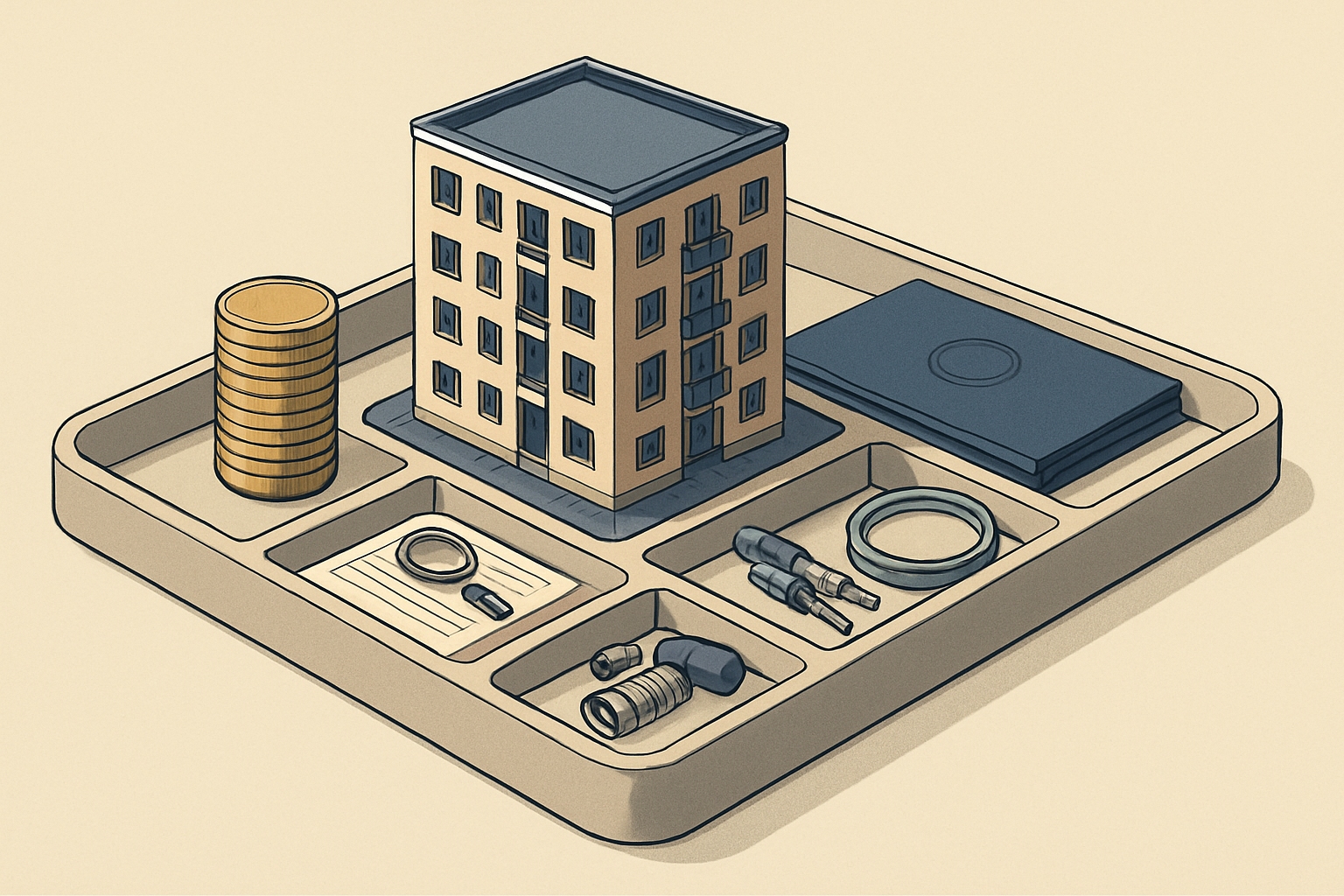
The amount of cash needed to buy an apartment complex is deal-specific, because the loan amount depends on property income, value, condition, borrower strength and the chosen financing program. Do not treat the equity contribution as the whole acquisition budget.
Start with five cash buckets:
- Equity contribution. This is the amount left after the final loan amount, seller credits if any, and other approved sources are applied to the purchase price.
- Loan and closing costs. Appraisal, legal work, title and survey items, lender charges, third-party reports and local transfer or recording charges can be material. Ask the lender and closing team for estimates early rather than relying on a rule of thumb from another market.
- Due-diligence costs. Property-condition, environmental, legal, market and financial reviews happen before closing. Some reports are required by a lender; others are a buyer protection.
- Replacement and repair capital. Deferred maintenance can consume cash immediately after closing, especially when life-safety, roofing, plumbing, electrical or unit-turn work cannot wait.
- Liquidity after closing. A property may be able to pay debt service on paper while still needing a cash cushion for vacancy, delinquency, insurance changes, repairs or a slower-than-expected renovation plan.
The phrase “buy an apartment complex with no money” usually skips these costs. A buyer might reduce the cash equity requirement through seller financing, partners, preferred equity or a negotiated structure, but somebody still has to fund the purchase, closing costs, reserves and business plan. Raising money from passive investors can also create legal and securities-law considerations, so use qualified legal counsel before soliciting capital.
A useful first-pass budget is not a percentage. It is a written sources-and-uses schedule that lists the proposed loan, equity, every transaction cost, lender reserve assumption and the cash remaining after closing. Update it when the appraisal, inspection reports and lender term sheet arrive.
The practical takeaway is simple: the right question is not “What down payment do I need?” but “How much cash must remain available after the transaction closes?”
What will a lender underwrite before approving the loan?
A lender underwrites two connected risks: whether the apartment complex can reliably service the debt and whether the borrower can execute the plan when performance changes. A strong borrower cannot fix weak property records, and a strong property does not eliminate questions about liquidity, ownership structure or experience.
At the property level, underwriting normally begins with historical operating results, the current rent roll, occupancy, lease terms, recurring expenses, capital needs, location and valuation. The lender will create its own view of sustainable income and expenses rather than simply accepting a seller's projected return.
Fannie Mae's 2026 Multifamily Guide offers a useful illustration of the level of validation institutional underwriting can require. For rent collections, the guide calls for review of a cash ledger, receipt journal, at least three months of bank statements confirming rent deposits, or similar records; it also calls for discussion of accounts receivable with site management and a lease audit against the rent roll. Those are Fannie Mae lender requirements, not a universal checklist for every loan, but they show why a clean rent roll without supporting deposits is not enough. Read the underlying Fannie Mae rent-collection validation guidance before assuming reported income will be accepted as effective income.
At the borrower level, expect questions about the borrowing entity, ownership percentages, guarantors where applicable, credit history, experience with similar properties, real estate owned, liquidity and contingent obligations. Fannie Mae documentation guidance, for example, calls for a schedule of real estate owned and disclosure of liabilities and contingent liabilities for parties supplying financial statements. A buyer can prepare more effectively by reviewing the commercial loan underwriting items lenders commonly request before circulating incomplete records.
Loan sizing commonly has more than one constraint. The property must support the debt payment from underwritten income, and the loan must also fit the lender's view of value. Fannie Mae states that its underwriting value may not exceed the appraised value, subject to specified adjustments and purchase-history considerations. That is why a purchase price, seller's valuation and lender's loan proceeds can diverge. See Fannie Mae's 2026 underwriting-value requirements for the program-specific framework.
The practical takeaway is simple: prepare the borrower package and the property's source documents at the same time, because underwriting tests both.
How do you screen an apartment complex before making an offer?
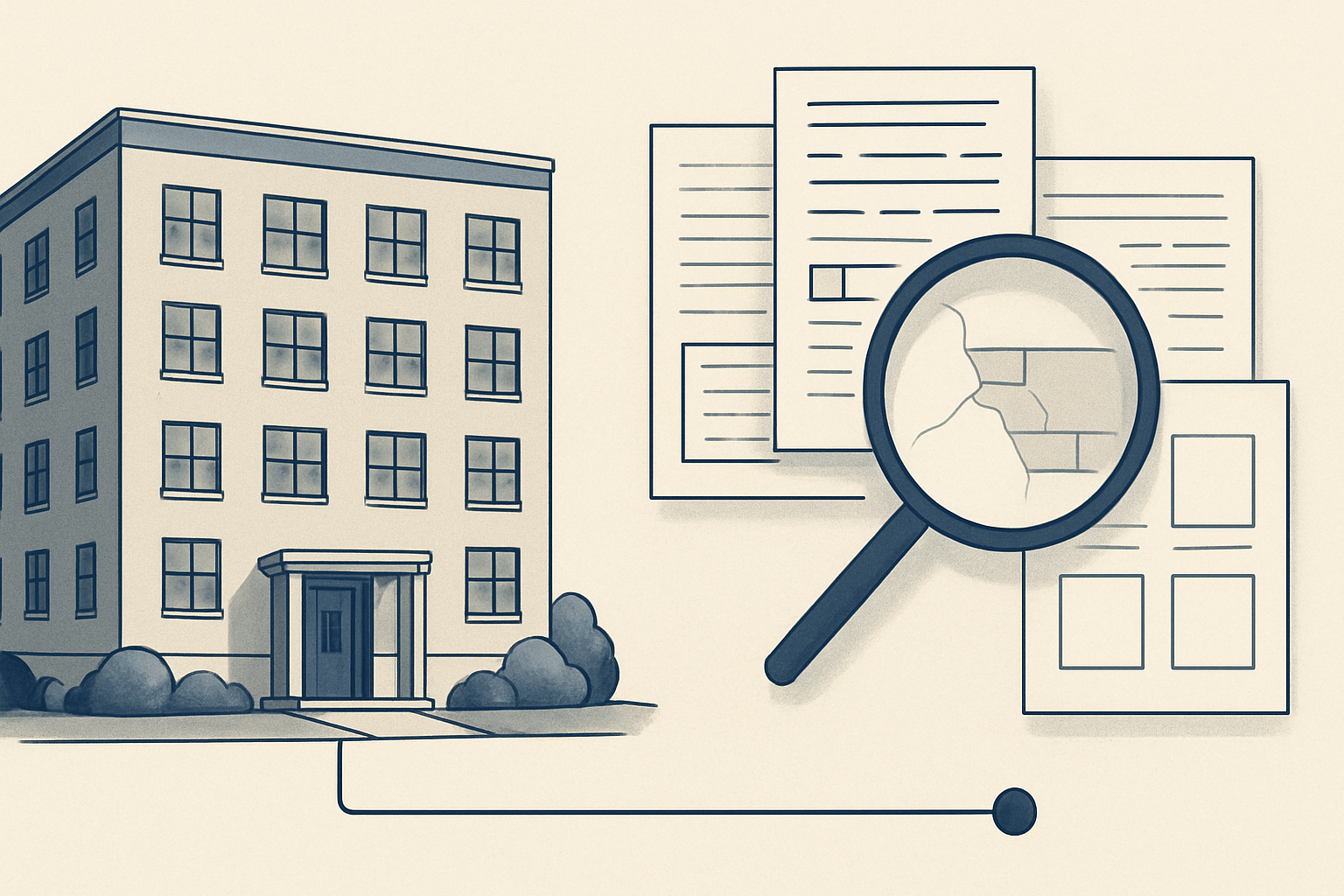
Screen an apartment complex before making an offer by deciding what must be true for the deal to work. The first screen should reject properties with an unworkable price, unclear income, impractical repair scope or financing mismatch before paid diligence begins.
Ask the seller or broker for enough information to make a preliminary underwriting file. At minimum, request a current rent roll, trailing operating statements, recent utility bills where relevant, tax bills, insurance information, a capital-improvement history, lease forms, service contracts, delinquency and bad-debt reports, and details of any major repairs underway or planned.
Then separate the deal into three cases:
- In-place case: What does the property produce today after normalizing expenses and credit loss?
- Conservative case: What happens if rents grow more slowly, vacancy rises, a major expense is higher than expected or planned renovations take longer?
- Business-plan case: What must happen for the projected upside to occur, who will do it, how much will it cost and how will the work be funded?
Do not underwrite projected rents as if they already exist. Compare the proposed rent increase with unit condition, competing supply, leasing pace, tenant turnover cost and the time required to complete renovations. A business plan is credible only when the cost, timing and operating disruption are shown alongside the projected revenue.
This is also the time to identify operating complexity. Are utilities separately metered? Are concessions unusually high? Does the property rely on non-rent income that needs validation? Are there commercial tenants, affordable-housing restrictions, a master lease, short-term rental exposure, aging mechanical systems or an onsite manager whose employment terms must be reviewed? Each can change the lender's analysis and your cash needs.
The practical takeaway is simple: make the first offer only after the in-place case, downside case and business-plan case each have a written answer.
What should the offer and purchase contract protect?
An offer should give the buyer enough control to verify the property and enough exit rights to leave if financing, title or diligence reveals a material problem. The contract should match the specific uncertainty in the deal rather than relying on a generic checklist.
Start with the commercial terms: price, earnest money, deposit timing, the diligence period, financing contingency if negotiated, closing date, extension rights, seller deliverables, access rights and assignment provisions. The exact language and enforceability vary by state, so the purchase agreement should be prepared or reviewed by a real estate attorney licensed in the property's jurisdiction.
Seller deliverables deserve attention because they determine whether you can validate the seller's story. Specify delivery timing for leases and amendments, rent rolls, historical financial statements, service contracts, permits, warranties, utility records, repair history, notices of violations, insurance claims, tenant disputes, environmental reports and material correspondence with government agencies.
Use the diligence period actively. Schedule inspections, request documents in a tracker, compare each lease to the rent roll and raise inconsistencies quickly. A seller's late delivery of key records can be more consequential than a missing marketing package because it affects your ability to complete lender underwriting on schedule.
Do not let the loan process run separately from the contract process. A lender may need appraisal, title, insurance, entity documents, environmental work and third-party reports that have their own timelines. The buyer should know who orders each item, who pays for it, which reports the lender can rely on and what happens if findings require a price reduction, loan restructuring or repair escrow.
The practical takeaway is simple: a good purchase contract does not guarantee a good deal, but it gives the buyer time and rights to discover when the deal is not good enough.
Which financing route fits the property-condition and business plan?
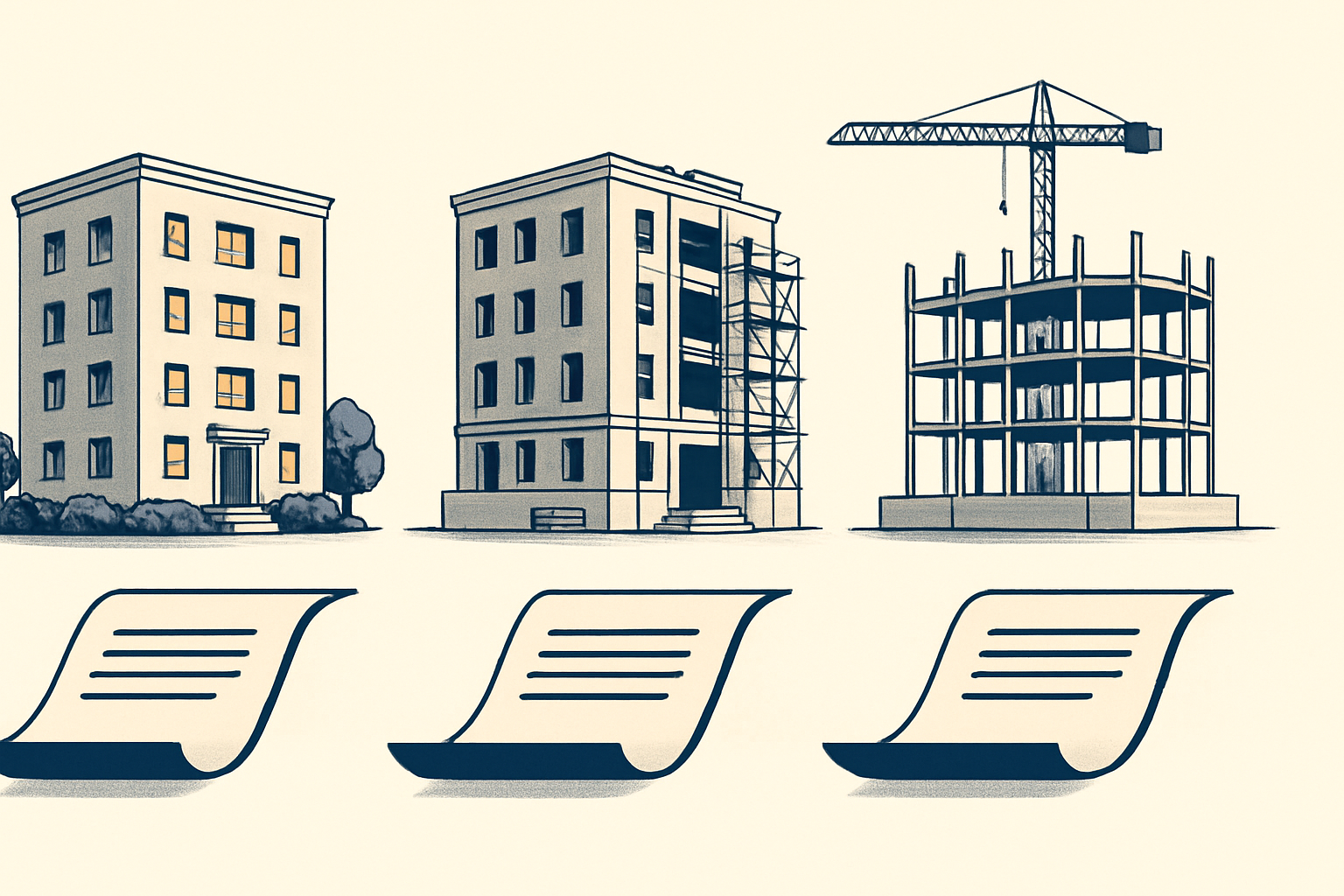
The best financing route depends on whether the apartment complex is stabilized now, needs transitional work, or is still being built or substantially rehabilitated. Match the debt to the property's present condition and the timing of the business plan, not only to the lowest advertised rate.
Stabilized acquisition financing may fit a property with demonstrated occupancy, documented collections, manageable repair needs and income that supports long-term debt. Bank, agency, CMBS and HUD-insured options can have different eligibility, documentation, prepayment and recourse considerations. The right fit depends on the asset, sponsor and execution timeline.
Bridge financing can be relevant when a property needs repairs, lease-up, operational turnaround or another short-term transition before it can qualify for long-term financing. Bridge debt should not be treated as a shortcut. The buyer needs a credible exit plan: what must improve, how the improvement will be financed, when the property could qualify for replacement financing, and what happens if the plan takes longer than expected. Review the decision points in commercial mortgage versus bridge financing before choosing a short-term structure.
Construction or substantial-rehabilitation financing is a different category when the scope is large enough that the asset is not operating as a stable apartment property. HUD's Section 223(f) program description for existing multifamily housing illustrates the distinction: it is for purchase or refinancing of qualifying existing rental housing, requires at least five residential units, generally requires the property to be at least three years old, and does not permit major rehabilitation under that program. Program eligibility changes over time and is fact-specific, so review HUD's Section 223(f) program guidance with a qualified lender and counsel.
A loan proposal should be compared on more than interest rate. Evaluate leverage, required equity, amortization, term, interest-only period if any, reserves, guarantees, reporting requirements, prepayment, extension terms, covenants, closing certainty and the cost of the planned exit.
The practical takeaway is simple: permanent financing fits proven cash flow, while transitional financing requires an equally credible plan to reach the next financing event.
What due diligence can change the deal?
Due diligence can change the purchase price, loan amount, closing timeline, reserve requirement or the decision to terminate the contract. Financial diligence tells you whether the income is real; physical, legal and environmental diligence tells you what could interrupt or absorb that income.
Review financial records line by line. Reconcile the rent roll to signed leases, deposits, tenant ledgers and bank activity. Test reported income against bad debt, concessions, employee units, delinquent balances and move-outs. Review expenses for one-time items, owner-paid costs that will transfer to the buyer, deferred repairs disguised as maintenance, property tax reassessment risk and insurance renewals.
Physical diligence should focus on the systems that can force an unplanned capital call: roofs, foundations, drainage, building envelope, plumbing, electrical, HVAC, fire and life-safety systems, elevators where applicable, paving and accessibility issues. Fannie Mae's 2026 property-condition assessment instructions require a baseline assessment for multifamily properties in that program context and reference the ASTM baseline property-condition assessment process. A lender's scope may differ, but the Fannie Mae property-condition assessment framework is a useful reminder that a walkthrough is not the same as documented condition diligence.
Environmental diligence has a separate purpose. The U.S. Environmental Protection Agency explains that All Appropriate Inquiries evaluates environmental conditions and potential contamination liability before acquisition, and that ASTM E1527-21 is recognized as consistent with the federal rule. A Phase I environmental site assessment does not promise that no contamination exists, but it can identify recognized environmental conditions and may lead to further review. Read the EPA's All Appropriate Inquiries guidance and obtain legal and environmental advice for the specific property.
Legal and title diligence should examine ownership, easements, access, surveys, zoning, certificates of occupancy, licenses, code matters, litigation, lease restrictions and any recorded agreements that limit operations or future plans. Tax treatment is another planning issue. The Internal Revenue Service's 2025 Publication 527 states that residential rental buildings and structural components are generally depreciated over 27.5 years under the General Depreciation System, but land is not depreciable; a tax adviser should determine the allocation and consequences for a specific acquisition. See IRS Publication 527.
The practical takeaway is simple: treat every material diligence finding as a pricing, loan-sizing and cash-reserve question, not merely an item for a closing binder.
What happens between application and closing?
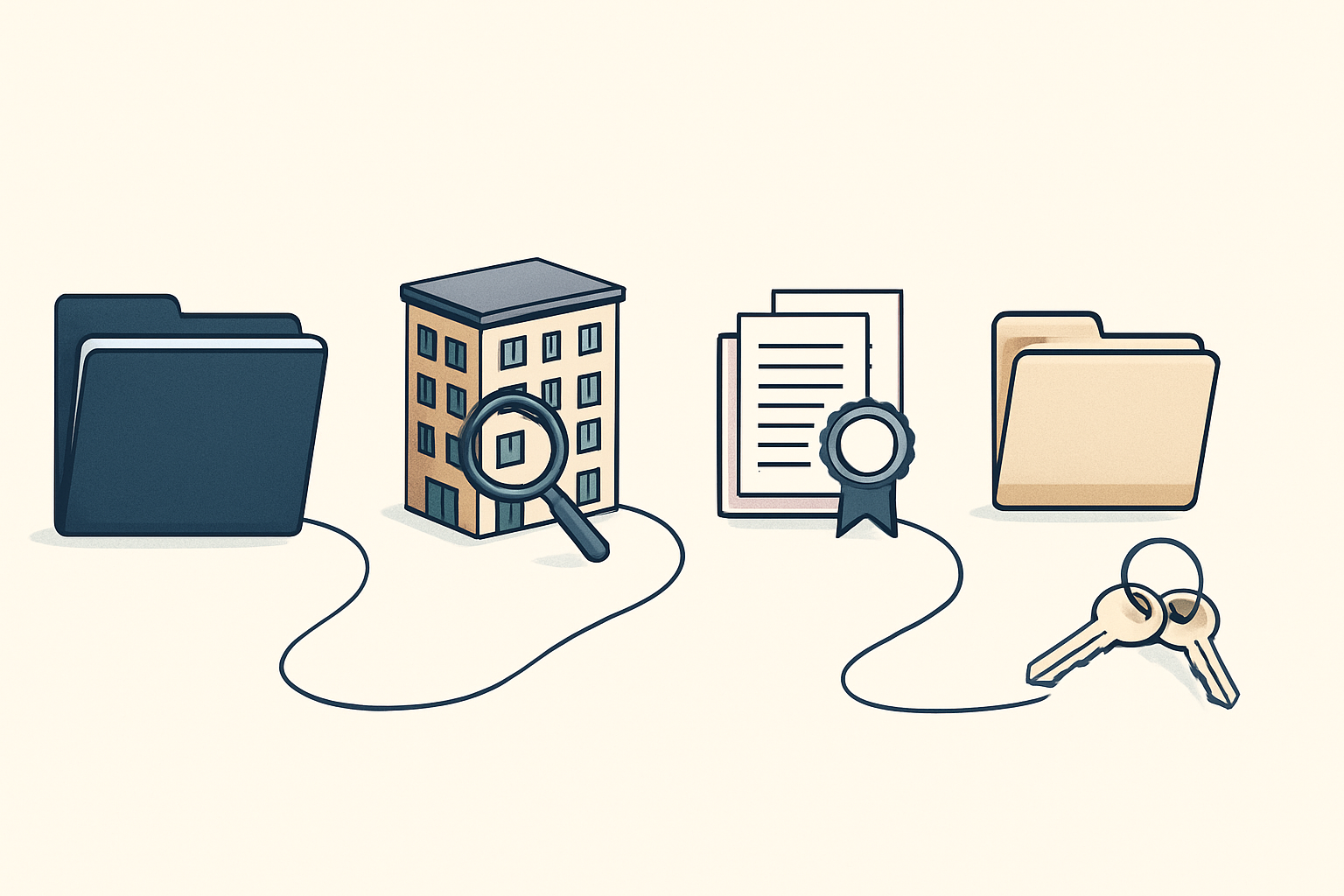
Between application and closing, the buyer, lender, seller, attorneys, title professionals, insurers and third-party consultants turn an initial deal concept into an approved and documented transaction. The process moves fastest when responsibilities, documents and deadlines are visible to everyone.
A typical sequence looks like this:
- Submit the financing package. Provide the purchase contract or letter of intent, borrower information, entity structure, financial statements, real estate owned schedule, rent roll, operating statements and business plan.
- Receive preliminary loan terms. Review the proposed structure and identify the conditions that could change proceeds, pricing, reserves or closing timing.
- Order third-party reports. Depending on the lender and property, this may include appraisal, environmental review, property-condition assessment, survey, title work and insurance review.
- Respond to underwriting questions. Fast, complete responses matter. Explain unusual deposits, vacancy, concessions, repairs, ownership changes, litigation, insurance claims and any difference between seller records and current results.
- Clear closing conditions. Form the borrowing entity, obtain insurance, finalize title and legal documents, fund equity and satisfy lender conditions.
- Close and execute the first 90 days. Transfer leases and deposits, notify tenants as required, take over vendor relationships, confirm bank accounts and begin the operating plan without assuming the pre-closing team will solve post-closing problems.
Create a single diligence-and-closing tracker with each requirement, owner, due date, cost, status and dependency. This is especially useful when the lender's appraisal or inspection findings alter the repair budget or loan structure late in the process. For examples of how financing structures can vary by multifamily transaction, review these multifamily financing case studies alongside the actual terms proposed for your deal.
The practical takeaway is simple: closing is a coordinated evidence-gathering process, and missing records can be as damaging to timing as a missing signature.
Frequently asked questions
Is buying an apartment complex a good investment?
Buying an apartment complex can be a good investment when the purchase price, financing, operating expenses, physical condition and local rental demand support a conservative business plan. It can also be a poor investment when projected rent growth is doing all the work, major repairs are underfunded or debt payments leave no room for volatility. Evaluate the specific property, not the asset class in the abstract.
How much money does it take to buy an apartment complex?
The money needed to buy an apartment complex includes the equity required by the final loan structure plus diligence costs, closing costs, lender reserves, repairs and post-closing operating liquidity. There is no responsible universal dollar amount or percentage because property income, value, condition, loan program and borrower strength affect the total. Build a deal-specific sources-and-uses budget before making an offer.
How profitable is owning an apartment complex?
Apartment-complex profitability depends on collected rent, vacancy, concessions, payroll, utilities, repairs, taxes, insurance, capital expenditures, debt service and the cost of eventual sale or refinancing. A property can show a favorable projected return while producing weak cash flow if expenses or renovation costs are understated. Underwrite historical results, a downside scenario and the business plan separately before relying on a return estimate.
Is it hard to buy an apartment complex?
Buying an apartment complex is demanding because the buyer must coordinate financing, legal work, financial review, inspections, environmental diligence, title, insurance and property takeover. The process becomes more manageable when the buyer begins with lender readiness, requests operating documents early and uses a single tracker for deadlines and conditions. Complexity is a reason to prepare earlier, not a reason to skip diligence.
What is the next action before making an offer?
Before making an offer, assemble the borrower package and request the property's current rent roll, historical operating statements, repair history and lease records. Then have a financing professional test the likely loan structure against the in-place income, downside case and cash needed after closing.
For a deal-specific discussion of multifamily acquisition financing, bring the property address, asking price, rent roll, trailing financials, proposed business plan and a clear estimate of available equity and reserves. The most useful early answer is not a generic rate. It is whether the transaction can close on terms that leave the property able to operate.