
I Want to Own It: SBA 504 Loan & Prepayment Penalty Guide
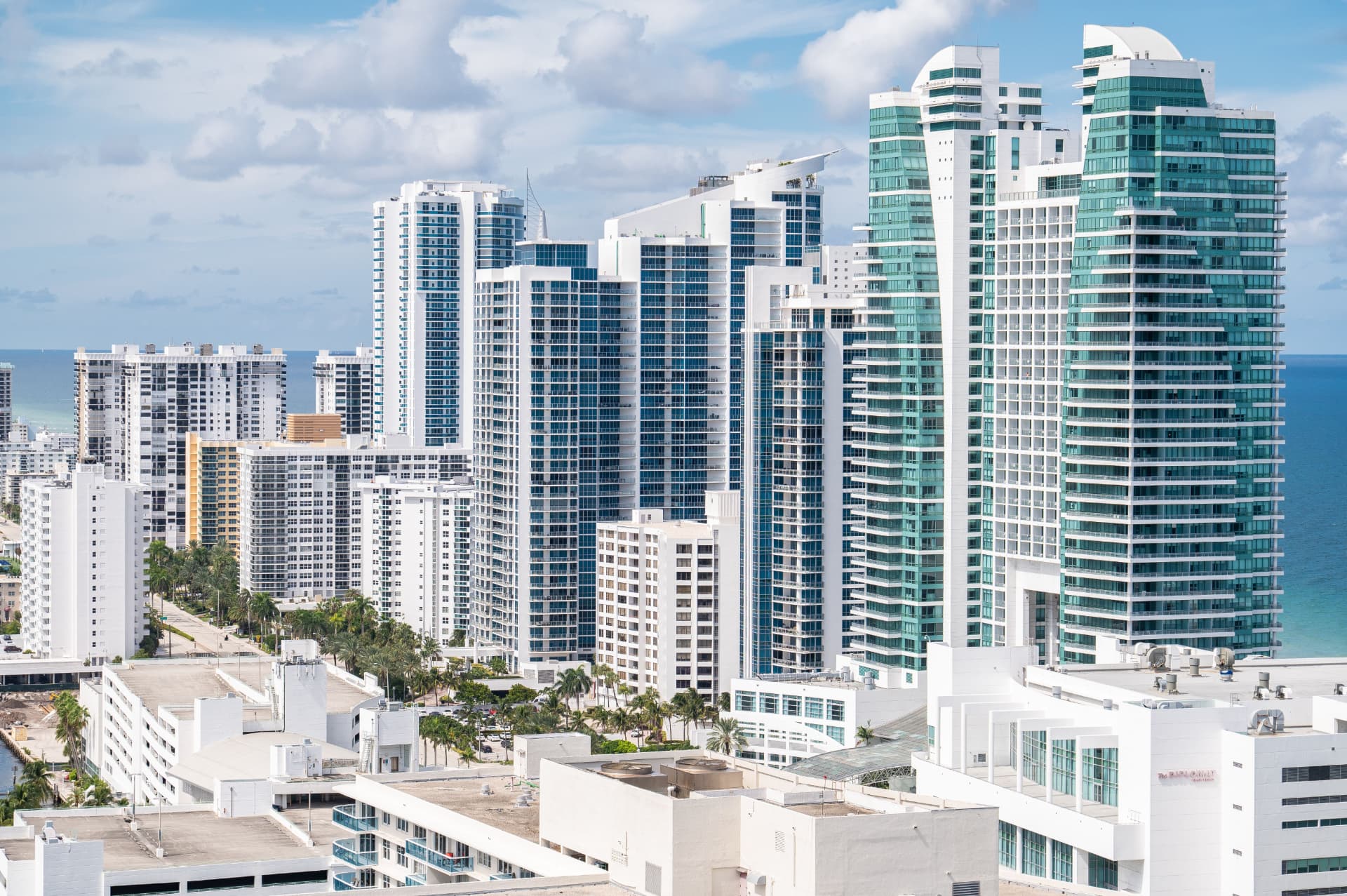
If your reaction to a commercial building is “I want to own it,” the SBA 504 loan program makes commercial real estate ownership achievable with as little as 10% down. We assist business owners in purchasing operating facilities by combining a senior bank mortgage with a government-backed Certified Development Company (CDC) debenture featuring low fixed rates, clear 51% owner-occupancy criteria, and a structured 10-year declining prepayment penalty schedule.
Key Takeaways
- 10% Down Payment Base: Standard owner-occupied purchases require 10% equity, with 15% or 20% required for special-use properties or start-up businesses.
- 51% Occupancy Requirement: To qualify, your business must occupy at least 51% of an existing building or 60% of a ground-up construction project.
- 10-Year Declining Premium: Real estate debentures (20- and 25-year terms) use a 10-year penalty schedule starting at 100% of the debenture coupon rate in Year 1 and stepping down 10% each year to 0% in Year 11.
- Coupon Rate Base: Penalties apply strictly to the 40% CDC debenture portion and are calculated off the base debenture coupon rate, not the higher total effective borrower rate.
- Semi-Annual Payoff Window: Debentures can only be retired on official semi-annual payoff dates (typically May and November), requiring 30 to 50 days advance notice.
“I Want to Own It”: Commercial Property Criteria & Eligibility
When business executives tell us, “I want to own it” when evaluating their company’s facility, moving from leasing to commercial property ownership is often the single most effective way to build long-term corporate wealth. The SBA 504 program was designed specifically to facilitate this transition by minimizing capital outlay while securing stable, long-term financing.
To successfully purchase a commercial facility using an SBA 504 loan, businesses must meet specific federal eligibility criteria and occupancy rules:
- Owner-Occupancy Rule: Your operating business must occupy at least 51% of the total square footage in an existing commercial building. For new ground-up construction projects, the initial occupancy requirement is 60%, with plans to occupy up to 80% over time. Remaining space can be leased to third-party tenants to generate rental revenue.
- Business Size Standards: The applicant company must operate as a for-profit entity with a tangible net worth of no more than $15 million and an average net income after federal income taxes of $5 million or less over the preceding two fiscal years.
- Down Payment Tiers & Exceptions: While standard projects require only a 10% down payment, specific statutory exceptions apply:
- 10% Down: Multi-tenant or standard commercial real estate for an established business (operating for 2+ years).
- 15% Down: Applied if the property is considered a single-purpose / special-use building (e.g., hotels, gas stations, car washes) OR if the borrowing entity is a startup business operating under two years.
- 20% Down: Applied if the project involves both a special-use property AND a startup business.
- Personal Guarantees: Owners with 20% or greater equity in the business must provide personal guarantees. Review our guide on recourse vs. non-recourse debt requirements to understand how guarantees operate across commercial debt.
Understanding the Dual-Tranche SBA 504 Loan Structure
To analyze how debenture prepayment penalties work, we must first examine how an SBA 504 project is financed. Unlike standard conventional mortgages or single-lender government programs, the 504 structure splits property financing into two distinct debt pieces alongside borrower equity:
- Third-Party Lender (Primary Mortgage): A conventional commercial lender—typically a bank, credit union, or non-bank lender—provides a senior loan covering 50% of total project costs. This loan holds the first lien position on the real estate.
- Certified Development Company (CDC / SBA Debenture): A quasi-public non-profit entity authorized by the SBA provides a junior loan covering up to 40% of project costs. This junior loan holds the second lien position and is funded through the issuance of a government-guaranteed debenture sold directly to institutional investors.
- Borrower Equity: The borrower contributes a minimum of 10% equity (or 15% to 20% for special-use properties or startup entities). For a deeper understanding of overall debt strategy, consult our tailored commercial property financing guide.
This dual-tranche financing framework is central to evaluating prepayment risk because federal prepayment rules apply strictly to the 40% CDC debenture portion. The 50% primary mortgage loan from the third-party bank does not fall under SBA prepayment regulations.
Third-party lenders maintain their own independent note terms and prepayment schedules on their first lien position. In practice, a commercial bank may negotiate a 5-4-3-2-1 declining prepayment premium, a yield maintenance clause, a fixed two-year penalty, or even no prepayment penalty at all. When evaluating early payoff scenarios, borrowers must calculate the exit costs of both debt tranches independently.
How the 10-Year Declining Debenture Penalty Schedule Works
The federal prepayment penalty schedule on an SBA 504 debenture is governed by federal regulations designed to compensate institutional debenture buyers for early redemption yield loss. According to official rules outlined by the U.S. Small Business Administration 504 Loan Program, 504 debentures are pooled and sold on Wall Street as fixed-income securities, so investors expect predictable cash flows over a minimum multi-year horizon.
The mathematical formula to determine the prepayment penalty on a CDC debenture relies on three core variables:
Debenture Prepayment Penalty = Remaining Principal Debenture Balance × Fixed Debenture Coupon Rate × Applicable Declining Annual Factor
A vital detail that financial professionals often overlook is the distinction between the overall effective interest rate paid by the borrower and the debenture coupon rate used in the penalty formula.
A borrower’s monthly effective interest rate includes the base debenture note rate plus several ongoing administrative fees:
- The base note rate (Debenture Coupon Rate)
- The CDC servicing fee (typically 0.625% to 1.50%)
- The SBA ongoing guarantee fee (typically 0.44% to 0.55%)
- The Central Servicing Agent (CSA) fee (typically 0.02%)
The SBA 504 debenture prepayment penalty schedule is calculated exclusively using the debenture coupon rate—the fixed base rate established when the bond was sold—rather than the higher effective interest rate. This reduces the total penalty cost relative to the borrower’s total monthly yield.
For standard 20-year and 25-year real estate debentures, the penalty window spans exactly 10 years (120 months) from the date of debenture issuance. After Year 10, the debenture prepayment penalty drops to zero. For 10-year debentures, which are utilized primarily for heavy machinery and equipment purchases, the penalty schedule is compressed into a 5-year declining structure that drops by 20% of the coupon rate per year.
Year-by-Year Prepayment Penalty Schedule Breakdown
For 20-year and 25-year real estate debentures, the penalty factor starts at 100% of the debenture coupon rate in Year 1 and decreases by 10 percentage points every 12 months. By Year 10, the penalty factor is reduced to 10% of the coupon rate. On the first day of Year 11, the debenture prepayment penalty is eliminated completely.
The following table illustrates the exact step-down schedule, showing the percentage reduction factor, the resulting penalty multiplier, and a practical financial calculation for a sample $1,000,000 debenture balance carrying a fixed 5.00% debenture coupon rate across 10-year, 20-year, and 25-year debentures.
| Loan Year | 20 & 25-Yr Factor (%) | 10-Yr Equipment Factor (%) | Penalty Calculation Formula | Effective Penalty Rate | Sample Penalty ($1M Debenture @ 5.0% Coupon) |
|---|---|---|---|---|---|
| Year 1 | 100% | 100% | Balance × Coupon × 1.00 | 5.000% | $50,000 |
| Year 2 | 90% | 80% | Balance × Coupon × 0.90 | 4.500% | $45,000 |
| Year 3 | 80% | 60% | Balance × Coupon × 0.80 | 4.000% | $40,000 |
| Year 4 | 70% | 40% | Balance × Coupon × 0.70 | 3.500% | $35,000 |
| Year 5 | 60% | 20% | Balance × Coupon × 0.60 | 3.000% | $30,000 |
| Year 6 | 50% | 0% | Balance × Coupon × 0.50 | 2.500% | $25,000 |
| Year 7 | 40% | 0% | Balance × Coupon × 0.40 | 2.000% | $20,000 |
| Year 8 | 30% | 0% | Balance × Coupon × 0.30 | 1.500% | $15,000 |
| Year 9 | 20% | 0% | Balance × Coupon × 0.20 | 1.000% | $10,000 |
| Year 10 | 10% | 0% | Balance × Coupon × 0.10 | 0.500% | $5,000 |
| Year 11+ | 0% | 0% | Balance × Coupon × 0.00 | 0.000% | $0 (No Penalty) |
As the table demonstrates, the penalty premium declines linearly each year. On a $1,000,000 debenture with a 5.0% coupon rate, paying off the loan in Year 1 incurs a $50,000 premium. By Year 6, that cost drops by half to $25,000. In Year 10, the premium is reduced to just $5,000 before dissolving entirely in Year 11.
For borrowers financing shorter-term industrial assets under a 10-year debenture, the step-down accelerates faster: Year 1 (100%), Year 2 (80%), Year 3 (60%), Year 4 (40%), Year 5 (20%), and Year 6+ (0%).
Semi-Annual Payoff Dates and Common Timing Traps
Understanding the mathematical percentage schedule is only half of the equation. Commercial borrowers must also navigate the rigid administrative servicing rules governed by federal guidelines set in eCFR 13 CFR Part 120, the Central Servicing Agent (CSA), and individual Certified Development Companies (CDCs).
Unlike conventional bank loans—where an escrow officer requests a payoff demand statement on a Monday and wiring funds settles the balance by Friday—SBA 504 debentures can only be officially retired on designated semi-annual debenture payoff dates.
Because debentures are traded in public secondary market pools, bondholders receive principal and interest payments semi-annually (typically in May and November). Consequently, the SBA allows official debenture payoff accelerations only on these specific semi-annual dates, which usually fall on the third Thursday of May and November.
The Six-Month Interest Penalty Trap
This semi-annual redemption framework creates a major operational pitfall for property owners planning mid-year property sales or debt refinances. If a borrower closes on the sale of their commercial building in July, they cannot simply wire the precise principal balance and end their interest obligations immediately.
Instead, if a loan is paid off outside the official May or November acceleration dates, the borrower must deposit the payoff principal plus all accrued interest through the next upcoming semi-annual debenture payment date into an escrow account held by the CSA. Selling a property in June means paying interest charges straight through to November, even if the building is no longer in the borrower’s possession.
Step-by-Step Guide: How to Pay Off an SBA 504 Debenture Early
To ensure a smooth payoff transaction without incurring unexpected double-interest expenses, commercial property owners should follow a strict administrative timeline, utilizing our essential mortgage broker checklist before initiating payoff proceedings:
- Submit Formal Written Notice: The borrower must submit a formal written request for debenture payoff to their CDC at least 30 to 50 days prior to the target semi-annual payoff date (typically in early October for November payoffs or early April for May payoffs).
- Review CDC Calculations and CSA Verification: The CDC submits the payoff notice to the Central Servicing Agent (CSA). The CSA calculates the exact payoff requirement—including principal, declining prepayment penalty percentage, servicing fees, and interest through the acceleration date.
- Coordinate First Mortgage Payoff: Contact your primary third-party lender to obtain their independent payoff demand statement and confirm if any bank prepayment penalties apply to the senior lien.
- Fund the CSA Escrow Account: Payoff funds must be wired to the CSA multiple business days prior to the semi-annual date to allow for clearing. If funds arrive late, the payoff will be rejected, forcing the borrower to roll over to the next semi-annual cycle six months later.
- Confirm Lien Release: Once the CSA distributes funds to bondholders on the designated semi-annual date, the SBA and CDC issue a full reconveyance and release of the second mortgage deed of trust.
SBA 504 vs. SBA 7(a) Prepayment Penalty Structures
Financial officers comparing government-backed real estate loan programs often contrast the SBA 504 debenture prepayment penalty schedule against the prepayment structure of the SBA 7(a) program. The two programs handle early payoffs quite differently, reflecting their underlying capital market mechanics.
SBA 7(a) loans feature a much shorter prepayment penalty window, but the fee applies to the entire loan balance rather than just a secondary debenture tranche. Under federal guidelines, SBA 7(a) loans with maturity terms of 15 years or longer (used for commercial real estate) carry a 3-year prepayment penalty schedule:
- Year 1: 5% of the total prepaid amount
- Year 2: 3% of the total prepaid amount
- Year 3: 1% of the total prepaid amount
- Year 4+: 0% prepayment penalty
The following comparative analysis details how these structural differences influence long-term capital strategy:
| Feature / Metric | SBA 504 Loan Program | SBA 7(a) Loan Program |
|---|---|---|
| Penalty Duration | 10 Years (20/25-year real estate terms) | 3 Years (15+ year real estate terms) |
| Applied Balance | 40% CDC Debenture Portion Only | Total Loan Balance (75%–90% guaranteed) |
| Declining Penalty Structure | Declines 10% annually based on coupon rate | Fixed step-down: 5% (Yr 1), 3% (Yr 2), 1% (Yr 3) |
| Payoff Timing | Semi-annual dates only (May/Nov) | Any regular business day |
| Calculation Base | Debenture Coupon Rate × Declining Factor | Percentage of total prepaid principal amount |
Frequently Asked Questions
When I say “I want to own it,” how do I start the SBA 504 purchase process?
To acquire commercial real estate under the SBA 504 program, begin by confirming that your business will occupy at least 51% of the building space. Next, prepare two to three years of business and personal tax returns, debt schedules, and property financial statements. Our team can help you structure the dual-tranche debt through a primary lender and CDC.
How is the SBA 504 prepayment penalty calculated?
The SBA 504 prepayment penalty is calculated by multiplying the remaining principal debenture balance by the fixed debenture coupon rate, and then multiplying that figure by the applicable declining annual factor for the loan year. Only the debenture coupon rate—not the total effective borrower interest rate—is used in this formula.
How long is the prepayment penalty on an SBA 504 loan?
The prepayment penalty on an SBA 504 loan lasts for 10 years (120 months) for 20-year and 25-year commercial real estate debentures. For 10-year debentures, which are typically used for heavy machinery and equipment purchases, the prepayment penalty period lasts for 5 years (60 months) before dropping to zero.
Can you pay off an SBA 504 loan early?
Yes, you can pay off an SBA 504 loan early at any time, but doing so during the first 10 years requires paying a declining debenture prepayment premium. Furthermore, payoffs must occur on official semi-annual debenture payoff dates (typically in May and November) with proper advance written notice to your CDC.
What is the prepayment penalty for a 25-year SBA 504 loan?
For a 25-year SBA 504 loan, the debenture prepayment penalty starts at 100% of the debenture coupon rate in Year 1. It decreases by 10 percentage points each year (90% in Year 2, 80% in Year 3, down to 10% in Year 10) before dropping to 0% after Year 10.