
33% of new businesses fail because they run out of cash. That stark fact shows how funding choices shape outcomes and why a clear plan matters before you shop for commercial property in Oklahoma.
This buyer’s guide is for business owners, investors, and operators who are buying, refinancing, or expanding commercial properties. Preparing credit profile details, financial documentation, and deal structure directly affects approval probability. In 2020, 43% of small businesses applied for loans and 20% faced denials due to credit issues. Location also impacts outcomes: rural applicants frequently experience higher approval rates than urban peers.
Understanding what lenders prioritize—cash flow, down payment, collateral value, and borrower strength—enables strategic positioning. For broader comparative perspectives, explore our guides on commercial real estate financing in Ohio and financing strategies in Virginia.
Key Takeaways
- Prepare credit and financial paperwork early to maximize loan approval odds.
- Lenders evaluate debt service coverage, collateral quality, and liquid reserves first.
- Match loan structures to asset types, whether owner-occupied or multi-tenant investment properties.
- Local market conditions directly influence interest rates, terms, and lender appetite.
- Compare regional and national lenders to negotiate competitive pricing and loan covenants.
How Commercial Real Estate Loans Work for Oklahoma Buyers
A commercial real estate loan is a debt financing product secured by a mortgage on commercial property rather than residential real estate, used to acquire, develop, or refinance income-producing assets or business facilities.

Borrower Profile and Structural Differences
Unlike personal residential mortgages, commercial real estate loans typically sit with an operating entity, LLC, partnership, or corporate structure. Lenders evaluate both the entity and individual guarantors, examining operational cash flow and asset performance alongside credit background.
Lifecycle: From Application to Repayment
The standard commercial lending pipeline progresses from initial application through underwriting, formal approval, legal closing, disbursement, and scheduled debt service. Underwriting validates property financial performance, rent rolls, appraisals, and environmental reviews before setting final covenants.
Monthly Payment Structures and Amortization
Monthly debt payments generally encompass principal and interest, often accompanied by escrow accounts for real estate taxes and insurance. Total carrying costs depend on amortization schedules, interest rate structures, and required capital replacement reserves.
| Stage | What Lenders Check | Typical Timing |
|---|---|---|
| Application | Entity formation, sponsor background, preliminary intent | 1–2 weeks |
| Underwriting | Net operating income, appraisal, DSCR, LTV ratios | 2–6 weeks |
| Closing & Disbursement | Title commitments, loan covenants, final funding | 1–3 weeks |
Today’s Oklahoma Commercial Lending Landscape
Commercial capital remains active across diverse property sectors in Oklahoma. Over a recent 90-day period, the market recorded 835 closed loans ranging in transaction size from $100,000 to $381,118,756.

Market Snapshot and Active Lenders
Liquidity spans small-balance owner-occupied acquisitions to large institutional portfolio transactions. Active market lenders include regional players such as MidFirst Bank alongside private capital institutions like Rain City Capital and local community banks.
Strategic Advantages for Prepared Borrowers
- Faster Execution: Complete documentation packages allow underwriters to expedite approvals and secure favorable rate locks.
- Competitive Pricing: Multiple lender quotes enable leverage to lower origination fees and adjust loan covenants.
- Tailored Product Fit: Borrowers can evaluate local banks against national lenders based on flexibility and relationship terms.
Oklahoma Commercial Real Estate Financing Options by Loan Type
Identifying how property generates cash flow determines the optimal debt product and lender risk profile.
Commercial Mortgages for Stabilized Properties
Designed for fully leased or operational facilities with consistent historical cash flow. Standard commercial mortgages offer predictable long-term amortization and competitive fixed interest rates.
Owner-Occupied Mortgages
Targeted at operating businesses occupying at least 51% of the building space. Businesses looking to purchase or expand operating facilities can evaluate SBA 504 loans for owner-occupied real estate.
Investment Property Mortgages
Used for income-generating assets leased to third-party commercial tenants. Lenders mandate conservative leverage, requiring down payments between 20% and 35%.
SBA 504 and Government Programs
Provides long-term, fixed-rate financing for owner-occupied acquisitions, ground-up development, or major property enhancements. The program pairs private senior lenders with certified development companies backed by the U.S. Small Business Administration. Borrowers should review standard SBA 504 loan down payment requirements when planning equity contributions for a commercial real estate purchase.
Construction and Bridge Financing
Construction Loans: Short-term draw structures supporting ground-up builds or repositioning projects backed by detailed contractor schedules.
Bridge Loans: Interim debt providing rapid capital for stabilization, lease-up, or emergency liquidity prior to permanent refinancing.
Choosing the Right Property Types in Oklahoma
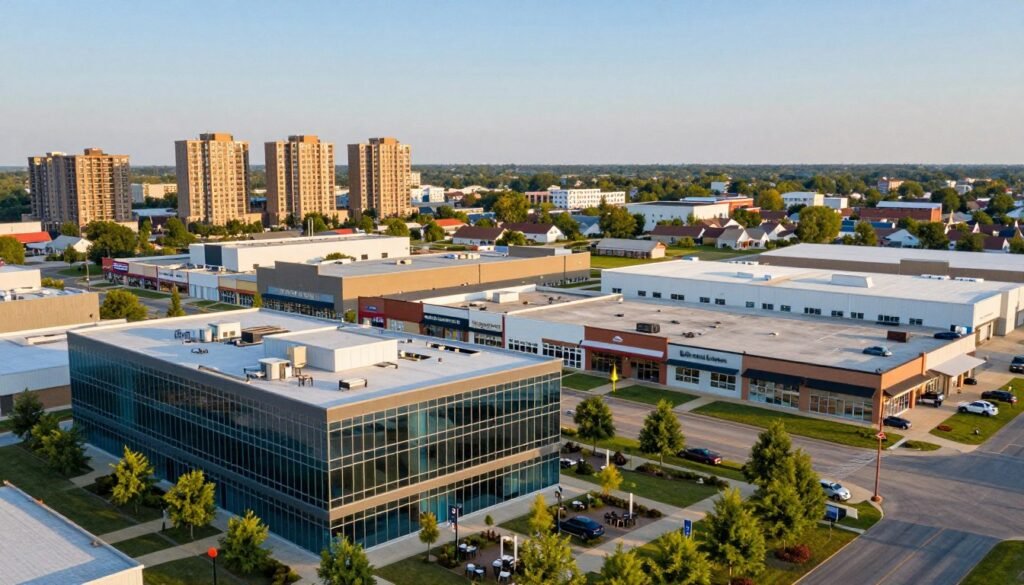
Recent deal distributions in Oklahoma reveal strong lending volume across key commercial sectors: industrial (32 deals), general commercial (30 deals), retail (19 deals), multi-family (8 deals), hotel (5 deals), and medical services (2 deals).
Underwriting Criteria by Asset Class
- Industrial & Logistics: High demand and low vacancy risk yield broad lender acceptance and lower rate spreads.
- Retail & Commercial: Tenant credit quality, lease duration, and site accessibility dictate underwriting terms.
- Multi-Family: Stable residential income streams provide favorable financing, subject to local rent trends and job growth.
- Hospitality: Underwriters closely inspect operational track records and historic occupancy statistics.
- Medical Offices: Specialized build-outs and long-term tenant commitments regularly command top-tier leverage terms.
Evaluating Applications: The Five C’s of Credit
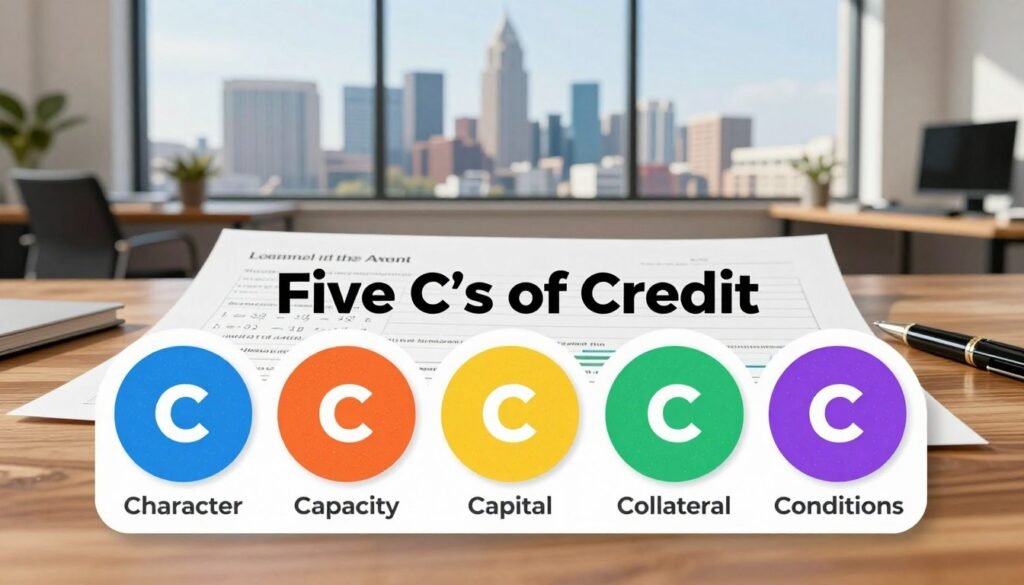
1. Character
Evaluates borrowing history, business reputation, and historical operational performance of company principals.
2. Capital
Assesses the equity commitment and post-closing liquidity reserves available to absorb potential cash flow shortfalls.
3. Collateral
Reflects the appraised market value, physical condition, and re-leasability of the real estate securing the loan.
4. Capacity
Measures recurring net operating income to verify sufficient cash flow to comfortably service proposed debt obligations.
5. Conditions
Considers macroeconomic trends, benchmark interest rates set by the Federal Reserve System, local supply-demand dynamics, and market conditions.
Key Underwriting Metrics That Shape Loan Terms
Debt Service Coverage Ratio (DSCR)
Debt Service Coverage Ratio (DSCR) is a financial metric measuring property cash flow against annual debt obligations, calculated by dividing Net Operating Income (NOI) by total principal and interest payments.
Loan-to-Value (LTV)
Loan-to-Value (LTV) is an underwriting risk assessment ratio comparing the proposed loan amount directly to the appraised market value of the commercial property.
Interest Rate Structures
Commercial loans offer fixed or floating interest rates. Fixed rates provide long-term payment stability, while variable structures offer lower initial index rates combined with potential adjustment risks over time.
Frequently Asked Questions
What DSCR do Oklahoma commercial lenders require?
Most commercial lenders in Oklahoma require a minimum DSCR of 1.20x to 1.25x, meaning net operating income must cover annual loan payments by at least 120% to 125%.
What is the minimum down payment for an Oklahoma commercial property loan?
Down payments typically range from 10% for SBA 504 loans on owner-occupied properties to 20%–35% for conventional investment real estate loans.
How long does it take to close a commercial real estate loan in Oklahoma?
Standard commercial mortgage closings require 45 to 60 days from initial application, allowing time for property appraisals, environmental assessments, and legal underwriting.